Oreo Blueberry & Raspberry Sandwich Biscuits (UK/Asia): Calories, Nutrition and Health Benefits
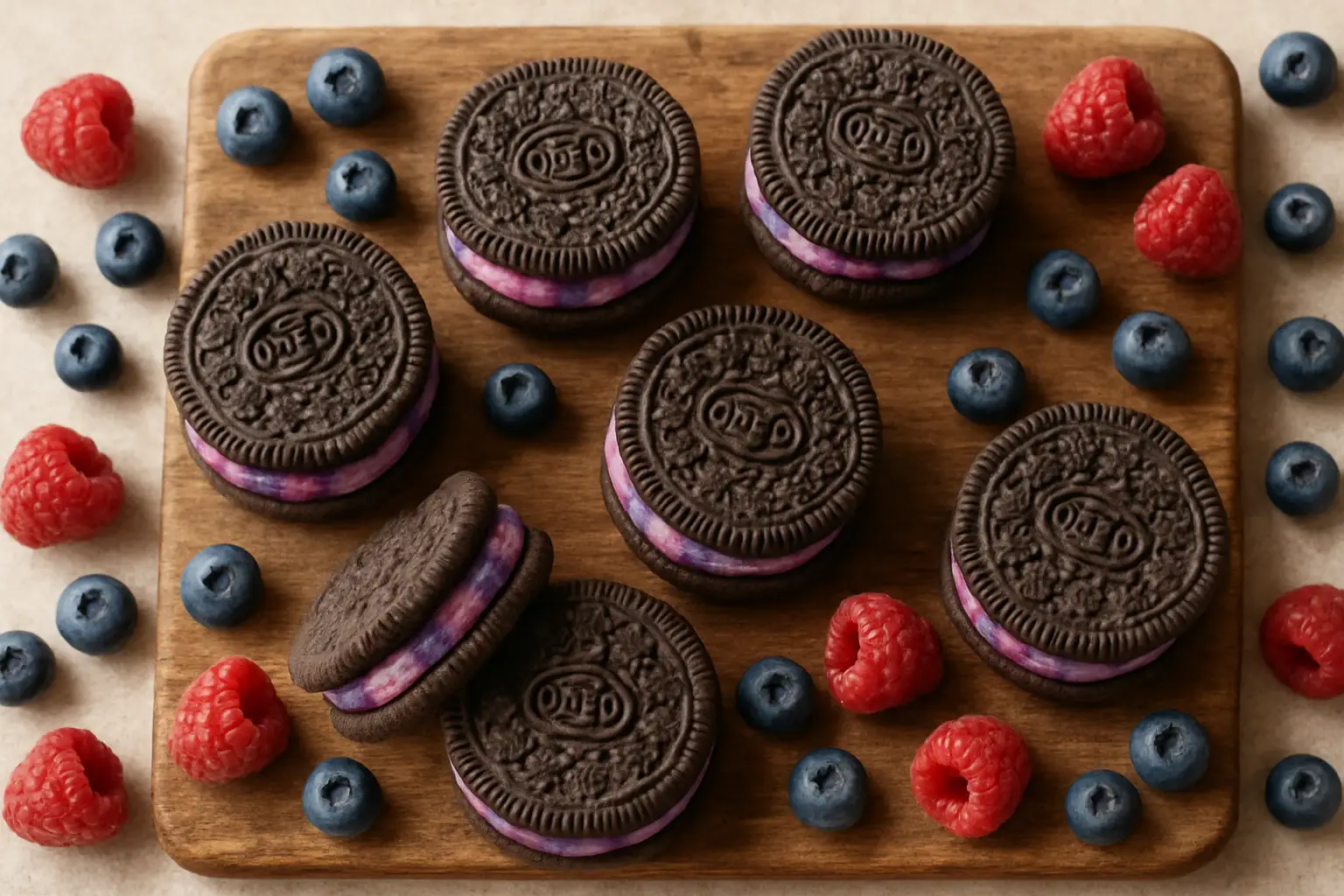
Oreo Blueberry & Raspberry Sandwich Biscuits are a Chinese-manufactured Asia-market exclusive featuring blueberry-and-raspberry-flavoured cream sandwiched between Oreo's signature cocoa biscuit layers. Each 97 g pack (approximately 5 cookies) delivers 474 kcal per 100 g, with three cookies (57 g) providing around 270 calories, 12 g of fat, 39 g of carbs, and 3 g of protein. The berry-flavoured cream uses artificial colours and flavourings rather than real fruit, making this a pure indulgence snack popular in UK Asian grocery stores and among Asian-food enthusiasts globally.
Quick Nutrition Facts
Per 3 cookies
| Nutrient | Amount |
|---|---|
| Calories | 270 kcal |
| Protein | 3g |
| Carbohydrates | 39g |
| Fiber | 0g |
| Sugars | 3g |
| Fat | 12.3g |
| Sodium | 210 mg |
Macronutrient Breakdown
 ChatGPT
  Claude
  AI Mode
  Perplexity
NUTRITIONIST'S INSIGHT
These Asia-import Oreos are an ultra-processed confectionery product — satisfying as an occasional treat but offering minimal nutritional benefit. At roughly 474 kcal per 100 g, the calorie density is high, driven by refined wheat flour, vegetable oil, white sugar, and glucose. Three cookies contain 39 g of carbohydrates with essentially zero dietary fibre and negligible protein, meaning glucose enters the bloodstream rapidly after eating. The glycaemic index of cream-filled biscuits typically falls between 65–75, placing them in the moderate-to-high GI range. The berry cream filling uses food dyes (carmine and gardenia blue for the blueberry-purple hue) rather than real fruit — so there are no antioxidants, vitamins, or fibre from actual blueberries or raspberries despite the name. For calorie-conscious eaters, a 3-cookie serving is manageable within a balanced diet, but portion control is essential: the pack's 97 g size invites finishing it in one sitting at ~460 calories total. People with food dye sensitivities should note the carmine colourant (E120), which is derived from insects and may cause reactions in sensitive individuals or is unsuitable for vegans.
Myth Busters
MYTH #1: These Oreos contain real blueberries and raspberries in the filling
TRUTH: The filling is entirely artificial. The ingredient list from the UK retailer label confirms: blueberry powder is listed (in small amounts), but the blue-purple colour comes from synthetic food dyes — carmine (E120) and gardenia blue. The flavour is entirely from artificial essences. There are no meaningful quantities of real fruit, no natural fruit antioxidants, and no vitamin C from berry sources in the cream filling. Oreo Sandwich Cookies Raspberry & Blueberry — Chinese (97g) Product Page (Sweet Genie UK)
MYTH #2: Asian Oreo variants are lighter in calories than standard Oreos
TRUTH: Asian-market Oreo variants are nutritionally similar to standard Oreos. Standard Oreos contain approximately 471 kcal per 100 g; the Blueberry & Raspberry version comes in at ~474 kcal per 100 g. The flavoured cream adds negligible calorie variation. Consumers who assume 'novelty flavour' means 'lighter product' often underestimate their caloric intake when snacking on import versions. Oreo Blueberry & Raspberry Cookie Sandwich — Nutrition Facts (MyNetDiary); Glycemic Index of Biscuits and Cookies — Systematic Review (PMC 2021)
MYTH #3: Eating one Oreo won't spike your blood sugar because it's a small cookie
TRUTH: At 19 g per cookie, a single Oreo delivers about 13 g of rapidly digesting carbohydrates with zero fibre and minimal fat to slow absorption. Research on cream-filled sandwich biscuits places their GI in the 65–75 range. Three cookies — a typical serving — deliver 39 g of fast-digesting carbs, enough to produce a meaningful postprandial glucose rise, particularly in individuals with reduced insulin sensitivity. Glycemic Index of Biscuits and Cookies — Systematic Review (PMC 2021); Dietary Sugar, Glycemic Index and Disease (PMC 2018)
MYTH #4: These biscuits are appropriate for a healthy snack box or lunchbox because they are small portion-sized
TRUTH: While the individual 97 g pack size may feel like portion control, three cookies still deliver 270 calories, 39 g refined carbs, and no satiating fibre or substantial protein. Children's lunchbox guidelines from public health bodies recommend snacks with at least 1–2 g fibre and ideally some protein or fat to moderate blood sugar response. A cream-filled refined cookie meets none of these criteria and should be treated as an occasional treat rather than a regular snack. Ultra-Processed Foods and Health Outcomes — NOVA Classification (PMC 2020); Dietary Sugar, Glycemic Index and Disease (PMC 2018)
MYTH #5: The food dyes in these biscuits are dangerous and banned in Europe
TRUTH: Carmine (E120) and gardenia blue are approved food colourings in the UK, EU, and most Asian markets. While the EU requires a warning label for certain synthetic dyes (Allura Red, Tartrazine, etc.), carmine is a natural-derived colour from insects and carries no such warning under current EFSA guidance. Gardenia blue is derived from gardenia fruit extract. Neither is banned in the UK or EU, though carmine is unsuitable for vegans and may cause allergic reactions in a small subset of sensitive individuals. Food Additives and Colorants in Processed Foods — Safety Review (EFSA 2022)
NutriScore by Health Goals
| Health Goal | NutriScore | Why This Score? |
|---|---|---|
| Weight Loss |  | At 270 calories per 3-cookie serving with zero fibre and minimal protein, these biscuits provide little satiety relative to their calorie count. The high-GI carb load triggers an insulin spike that may accelerate hunger return within 60–90 minutes. Suitable as a very occasional treat within a calorie-counted diet, but poorly suited as a regular snack for weight loss goals. Glycemic Index of Biscuits and Cookies — Systematic Review (PMC 2021); Ultra-Processed Foods and Health Outcomes — NOVA Classification (PMC 2020) |
| Muscle Gain | | Only 3 g of protein per 3-cookie serving with no leucine-rich amino acid profile and no micronutrients of benefit for muscle synthesis. The fast-digesting carbs could theoretically aid post-workout glycogen replenishment, but superior options (banana, rice cakes, fruit with Greek yoghurt) provide better overall macros for this goal. Oreo Blueberry & Raspberry Cookie Sandwich — Nutrition Facts (MyNetDiary) |
| Heart Health |  | The fat content (12.3 g per 3 cookies) comes primarily from palm or hydrogenated vegetable oil. The Sweet Genie label reports 0 g saturated fat, which is likely a rounding artifact of Chinese nutritional labelling conventions — edible vegetable oil in Chinese biscuits typically contains moderate saturated fat. Zero fibre and refined carbs further limit heart-health credentials. Oreo Sandwich Cookies Raspberry & Blueberry — Chinese (97g) Product Page (Sweet Genie UK); Ultra-Processed Foods and Health Outcomes — NOVA Classification (PMC 2020) |
| Blood Sugar Control | | Zero dietary fibre, 39 g rapidly absorbing refined carbohydrates, and a GI in the 65–75 range combine for a poor profile for blood sugar management. People with type 2 diabetes, prediabetes, or insulin resistance should avoid eating these without pairing with substantial protein or fat, and should factor the full 39 g carb load into meal planning. Glycemic Index of Biscuits and Cookies — Systematic Review (PMC 2021); Dietary Sugar, Glycemic Index and Disease (PMC 2018) |
| Kids Snack | | Children enjoy these biscuits as a fun, novel treat — the berry flavour and colourful cream make them appealing. However, they should be an occasional treat, not a daily lunchbox item. Note the carmine food colouring is animal-derived, which matters for vegetarian/vegan households, and parents of children with food dye sensitivities should check the label carefully. Ultra-Processed Foods and Health Outcomes — NOVA Classification (PMC 2020); Food Additives and Colorants in Processed Foods — Safety Review (EFSA 2022) |
| Budget Nutrition | | At roughly £1.90 for a 97 g pack (Sweet Genie UK) or $2.79 USD (Weee!), the cost per calorie is reasonable. However, the nutritional value per pound/dollar is low — you are paying primarily for novelty and flavour. More nutritious snacks (fruit, nuts, whole grain crackers) deliver more fibre, protein, and vitamins per pound spent. Oreo Sandwich Cookies Raspberry & Blueberry — Chinese (97g) Product Page (Sweet Genie UK); Oreo Sandwich Cookies Blueberry & Raspberry — Weee! Asian Grocery |
PERSONALIZED NUTRITION
Track your meals with NutriScan for personalized NutriScores based on your specific health goals!
Blood Sugar Response to Oreo Blueberry & Raspberry Sandwich Biscuits (UK/Asia)
Understanding how Oreo Blueberry & Raspberry Sandwich Biscuits (UK/Asia) affects blood glucose can help with timing and meal pairing. Glycemic Index of Biscuits and Cookies — Systematic Review (PMC 2021); Dietary Sugar, Glycemic Index and Disease (PMC 2018)
Typical Glucose Response Curve
**Not medical advice**
How to flatten the spike
- Keep the portion to the labelled serving and avoid eating straight from the bag or tray.
- Pair it with a protein or fibre source, such as Greek yogurt, eggs, lentils, beans, salad, or edamame, when you want steadier appetite and glucose control.
- Avoid pairing it with sugary drinks; choose water, unsweetened tea, or coffee so the snack does not become a larger sugar load.
Cultural Significance
Oreo has been the world's best-selling biscuit brand since the 1990s, but its Asia-market strategy is distinctive: Mondelēz International (Oreo's parent company) produces exclusive flavours for Chinese, Japanese, Korean, and Southeast Asian consumers that are rarely found in Western markets. The Blueberry & Raspberry variant is part of this Asia-exclusive lineup — manufactured in China and sold across East and Southeast Asia before gaining international cult status via import retailers in the UK, US, and Australia. The trend of importing Asian-exclusive snack foods has exploded in the 2020s, driven by TikTok food content, Asian grocery delivery apps like Weee!, and dedicated UK import sweet shops like Sweet Genie. These 'exotic' Oreo flavours have become a social media phenomenon — unboxing videos and taste-test reviews of Chinese Oreos regularly clock millions of views. The blueberry-raspberry flavour in particular benefits from the global berry trend, with blueberries carrying health halo associations in Western markets even when, as here, the actual berry content is minimal. This product represents the intersection of globalised snack culture, social media-driven food discovery, and the growing UK market for Asian grocery imports.
Compare & Substitute
Oreo Blueberry & Raspberry Sandwich Biscuits (UK/Asia) vs Similar Foods
| Nutrient | Standard Oreo Original (UK/US) | Oreo Thins (UK/US) | Ryvita Fruit Crunch Crispbreads | Jammy Dodgers (Burton's, UK) | Lotus Biscoff Sandwich Biscuits |
|---|---|---|---|---|---|
| Calories | 150 kcal | 140 kcal | 150 kcal | 150 kcal | 150 kcal |
| Protein | 2g | 1g | 3g | 2g | 2g |
| Carbohydrates | 23g | 21g | 20g | 23g | 23g |
| Fat | 6g | 6g | 6g | 6g | 6g |
Frequently Asked Questions
How many calories are in Oreo Blueberry & Raspberry Sandwich Biscuits?
One cookie (19 g) contains approximately 90 calories. A standard 3-cookie serving (57 g) provides about 270 calories. The full 97 g pack contains roughly 460 calories. Per 100 g, the calorie density is approximately 474 kcal — similar to standard Oreos.
Are these Oreos available in UK supermarkets?
Oreo Blueberry & Raspberry are not part of the standard UK supermarket Oreo range. They are a Chinese-market exclusive sold in the UK through Asian import sweet shops (like Sweet Genie) and Asian grocery delivery services (like Weee!). Occasionally they appear on Amazon UK as third-party imports. They are not a Tesco, Sainsbury's, or Asda regular stock item.
Do these biscuits contain real blueberries or raspberries?
No meaningful amounts of real fruit are present. The filling uses small amounts of blueberry powder for flavour, but the distinctive purple-blue colour comes from artificial food dyes — carmine (from insects) and gardenia blue (from gardenia fruit extract). The berry flavour is primarily from artificial essences and fragrances. There are no measurable antioxidants, vitamins, or fibre from actual blueberries or raspberries.
Are Oreo Blueberry & Raspberry biscuits suitable for vegans?
No. The filling contains carmine (E120), a red food colouring derived from cochineal insects, making this product unsuitable for vegans and vegetarians. The standard Oreo Original in the UK and US is technically vegan (no dairy in the filling), but this Asia-market variant is not due to the insect-derived colouring.
How do Oreo Blueberry & Raspberry compare nutritionally to standard Oreos?
Nutritionally, the two are nearly identical. Standard Oreos contain approximately 471 kcal/100 g; the Blueberry & Raspberry version is ~474 kcal/100 g. The macros are similarly aligned: ~21 g fat, ~67 g carbs, ~5 g protein per 100 g in both variants. The main differences are flavour, colour (food dyes added to the Asian variant's cream), and availability. Neither is nutritionally superior; both are ultra-processed confectionery.




Similar Nutritious Foods
4505 Chicharrones Classic Chili Salt
7 Eleven Japan Crispy Corn Cheese
Explore More Tools
AI Calorie Counter App - Snap a Photo, Get Macros
AI Nutritionist App That Reads Your Logged Meals
Best Protein Supplements for Women
Bulking Meal Plan App That Sets Your Surplus
ChatGPT Calorie Counter Alternative That Keeps the Total
ChatGPT Diet Plan Alternative That Tracks What You Eat
ChatGPT Weight Loss Coach Alternative With a Food Log
Fast Food Calorie Counter App That Reads the Tray
Free Calorie Tracker App with AI Photo Scans | NutriScan
Indian Diet Plan App With Veg and Non Veg Meals
Indian Food Calorie Calculator - Get Instant Nutrition Facts for Desi Meals — 2026
Intermittent Fasting for Women, Timer and Meal Log App
Intermittent Fasting Tracker App - Free Fasting Timer
Macro Tracker App That Fills the Numbers From a Photo
Mediterranean Diet Meal Plan App That Counts the Oil
Micronutrient Tracker App for Vitamins and Minerals
MyFitnessPal Alternative That Stays Free | NutriScan
NutriScore App: A Free Grade on Every Meal | NutriScan
Nutrition Label Scanner App for the Amount You Ate
Second Trimester Protein Guide
Vegetarian Meal Plan App With a Protein Target
Voice Calorie Counter - Speak to Track Meals Hands-Free
Water and Calorie Tracker App - Free Water Log