Pad Kra Pao: Calories, Nutrition and Health Benefits
Thailand's beloved street food staple—a fragrant, spicy stir-fry of holy basil and meat served over rice, delivering bold flavors with solid protein.
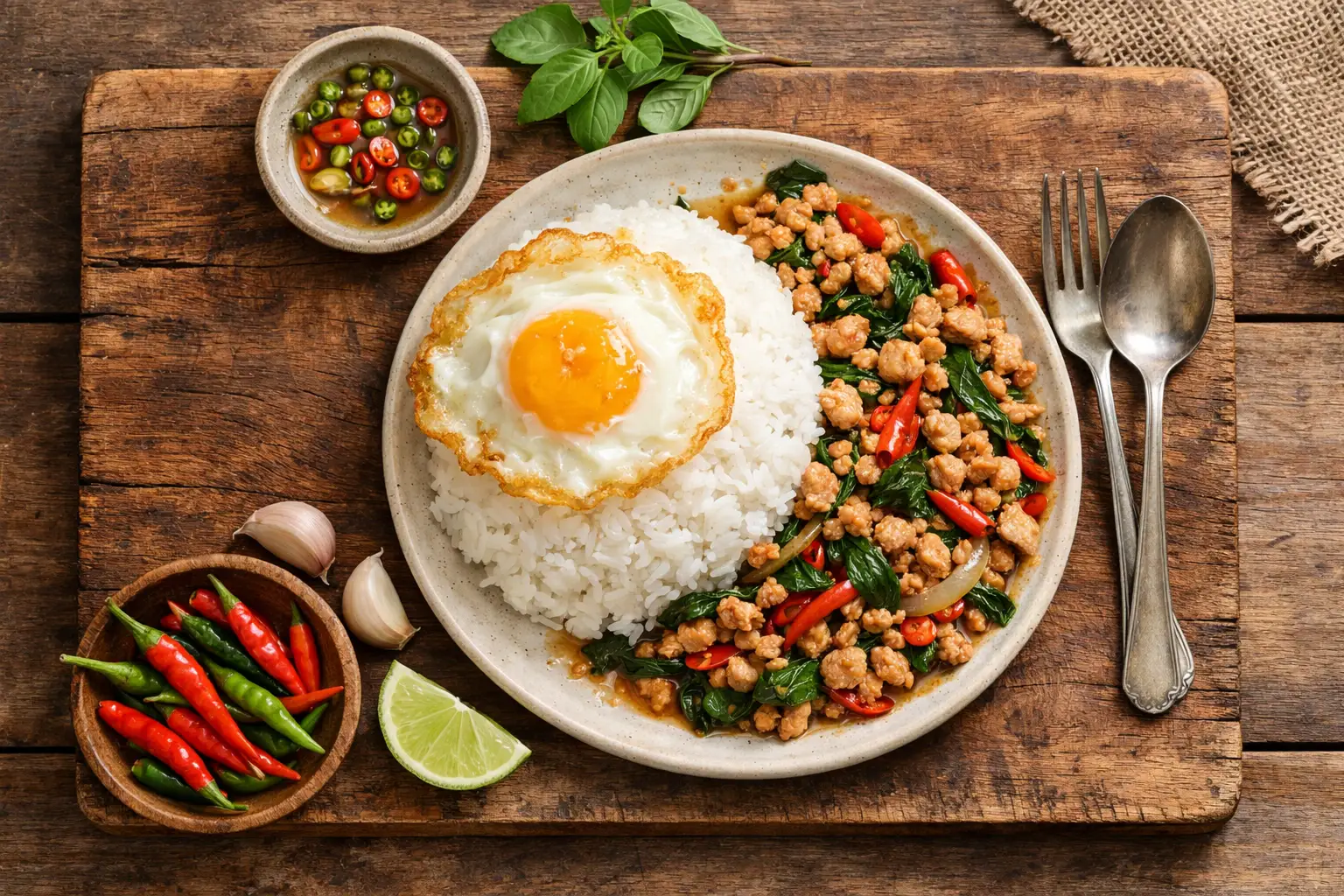
Quick Nutrition Facts
Per 1 Serving with Rice (250g)
| Nutrient | Amount |
|---|---|
| Calories | 350 kcal |
| Protein | 20g |
| Carbohydrates | 40g |
| Fiber | 2g |
| Sugars | 3g |
| Fat | 15g |
| Saturated Fat | 4g |
| Sodium | 850mg |
| Iron | 3mg |
| Vitamin A | 15% DV |
Macronutrient Breakdown
 ChatGPT
  Claude
  AI Mode
  Perplexity
NUTRITIONIST INSIGHT
Pad Kra Pao delivers 20g of complete protein per serving—nearly 40% of daily needs for many adults. The holy basil (kra pao) isn't just for flavor; it has documented antioxidant and adaptogenic properties that support stress response and immune function.
Myth Busters
MYTH #1: Thai Food Is Always Unhealthy
TRUTH: Pad Kra Pao is a protein-rich meal with beneficial herbs. At 350 calories with 20g protein, it's comparable to many "healthy" meal options. The issue is portion size and rice quantity, not the dish itself.
MYTH #2: The Basil Is Just for Flavor
TRUTH: Holy basil (Ocimum tenuiflorum) has been studied for its medicinal properties including anti-inflammatory, antioxidant, and stress-reducing effects. It's not just garnish—it's functional nutrition.
MYTH #3: You Must Avoid Pad Kra Pao on a Diet
TRUTH: The stir-fry itself (without rice) is only about 200 calories with high protein content. Order it with half rice or cauliflower rice, and it becomes a solid diet-friendly meal. Protein promotes satiety better than carbs alone.
MYTH #4: Spicy Food Damages Your Stomach
TRUTH: For most people, capsaicin from chilies has anti-inflammatory benefits and may boost metabolism. Only those with existing gastric issues like GERD should limit spicy foods. The heat is beneficial, not harmful.
MYTH #5: All Pad Kra Pao Is the Same
TRUTH: Calorie content varies significantly based on meat choice (chicken vs pork vs beef), oil amount, and rice portion. Chicken versions average 290-320 calories; pork can reach 400+. Ask for less oil to cut 50-100 calories.
NutriScore by Health Goals
| Health Goal | NutriScore | Why This Score? |
|---|---|---|
| Weight Loss |  | 350 calories with 20g protein promotes fullness. Skip half the rice to reduce to 280 calories. High satiety-to-calorie ratio. |
| Muscle Gain |  | Excellent 20g complete protein per serving. Post-workout friendly with fast-digesting carbs from rice. Add an egg for extra protein. |
| Diabetes Management |  | Jasmine rice has high GI (84-91). Reduce or skip rice; focus on the protein-rich stir-fry. The protein helps moderate glucose response. |
| PCOS Management | | High-GI rice affects insulin. Opt for brown rice or skip entirely. The basil and protein components are beneficial. |
| Pregnancy Nutrition | | Good protein source for fetal development. Protein is crucial during pregnancy. Ensure meat is fully cooked; moderate spice level if experiencing heartburn. |
| Viral/Flu Recovery | | Easy to digest protein, immune-supporting holy basil, and the spice helps clear congestion. Provides energy and nutrients for recovery. |
PERSONALIZED NUTRITION
Track your meals with NutriScan for personalized NutriScores based on your specific health goals!
Blood Sugar Response to Pad Kra Pao
Understanding how Pad Kra Pao affects blood glucose helps you make informed decisions, especially given the high-GI jasmine rice component.
Typical Glucose Response Curve
*This chart shows typical blood glucose response for general healthy individuals. Individual responses may vary. Not medical advice.*
How to Flatten the Spike
Pairing carbs with protein and fiber slows glucose absorption and reduces the peak blood sugar level:
- 🥬 Add vegetables - Request extra morning glory or Chinese broccoli with your order
- 🍳 Add a fried egg - The protein and fat slow glucose absorption
- 🍚 Reduce rice portion - Half the rice means half the carb impact
- 🥗 Start with a salad - Fiber before carbs reduces the spike
The 20g protein in the stir-fry already helps moderate the response compared to rice alone.
Cultural Significance
Pad Kra Pao is Thailand's quintessential street food, found in every market, food court, and restaurant across the country.
In Thailand:
- Considered the national lunch dish—quick, affordable, and satisfying
- "Kra pao" specifically refers to holy basil (Ocimum tenuiflorum), not Thai basil
- Traditionally served with "kai dao" (fried egg) on top
- Street vendors cook it in under 3 minutes over intense wok heat
Global Spread:
- Thai restaurants worldwide feature it, though often with Thai basil substitutes
- Growing popularity in meal prep communities for its high protein content
- Instant versions available in Asian supermarkets globally
- Increasingly found in Western fast-casual Thai chains
Compare & Substitute
Pad Kra Pao vs Similar Dishes (Per 250g Serving)
| Nutrient | 🇹🇭 Pad Kra Pao | 🇹🇭 Pad Thai | 🇨🇳 Kung Pao Chicken | 🇯🇵 Gyudon |
|---|---|---|---|---|
| Calories | 350 kcal | 400 kcal | 430 kcal | 520 kcal |
| Carbs | 40g | 55g | 20g | 70g |
| Fiber | 2g | 2g | 3g | 1g |
| Protein | 20g | 15g | 28g | 22g |
| Fat | 15g | 16g | 25g | 18g |
| Sodium | 850mg | 1200mg | 950mg | 1100mg |
| Sugar | 3g | 12g | 8g | 15g |
| Best For | Balanced protein meal | Carb-heavy energy | High protein, low carb | Quick energy, higher calorie |
Frequently Asked Questions
Is Pad Kra Pao good for weight loss?
Yes, when portion-controlled. At 350 calories with 20g protein, it provides excellent satiety. The stir-fry without rice drops to roughly 200 calories.
Best practices: Order with half rice, choose chicken over pork, request less oil, and add vegetables for volume without calories.
Can diabetics eat Pad Kra Pao?
With modifications, yes. The main concern is jasmine rice (GI 84-91), one of the highest GI rice varieties.
Tips for diabetics:
- Skip or halve the rice portion
- Choose brown rice if available (GI ~50)
- Eat the protein-rich stir-fry first
- Add vegetables to increase fiber
- Monitor blood sugar 2 hours after eating
How much protein is in Pad Kra Pao?
A standard serving contains 20g of protein from the ground meat. This covers about 35-40% of daily protein needs for average adults.
For muscle building, add a fried egg (+6g) or order double meat (+20g) to reach 40-46g protein per meal.
What are the health benefits of holy basil?
Holy basil (Ocimum sanctum/tenuiflorum) has documented benefits:
- Adaptogenic properties: Helps body manage stress
- Antioxidant activity: Protects cells from oxidative damage
- Anti-inflammatory effects: May reduce chronic inflammation
- Immune support: Traditional use for respiratory health
- Neuroprotective potential: Early research shows brain health benefits
Is Pad Kra Pao spicy?
Traditional preparation is quite spicy—Thai chilies pack serious heat. Most restaurants outside Thailand offer adjustable spice levels.
Spice benefits: Capsaicin may boost metabolism by 5-10% temporarily and has anti-inflammatory properties. Request mild if you're sensitive.
What's the difference between holy basil and Thai basil?
Holy Basil (Kra Pao):
- Peppery, clove-like, slightly minty
- Leaves are lighter green, more serrated
- Traditional and authentic for this dish
Thai Basil (Horapa):
- Sweeter, anise/licorice notes
- Darker leaves, purple stems
- Common substitute outside Thailand
For authentic flavor, seek restaurants using actual holy basil.
How can I make Pad Kra Pao healthier?
Healthier modifications:
- Use chicken or tofu instead of pork (saves 50-80 calories)
- Request less oil (saves 50-100 calories)
- Substitute cauliflower rice (saves 100+ calories)
- Add extra vegetables for fiber
- Skip the fried egg or choose poached




Similar Nutritious Foods
4505 Chicharrones Classic Chili Salt
7 Eleven Japan Crispy Corn Cheese
Explore More Nutrition Tools & Resources
AI Calorie Counter App - Snap a Photo, Get Macros
AI Nutritionist App That Reads Your Logged Meals
Best Protein Supplements for Women
Bulking Meal Plan App That Sets Your Surplus
ChatGPT Calorie Counter Alternative That Keeps the Total
ChatGPT Diet Plan Alternative That Tracks What You Eat
ChatGPT Weight Loss Coach Alternative With a Food Log
Fast Food Calorie Counter App That Reads the Tray
Free Calorie Tracker App with AI Photo Scans | NutriScan
Indian Diet Plan App With Veg and Non Veg Meals
Indian Food Calorie Calculator - Get Instant Nutrition Facts for Desi Meals — 2026
Intermittent Fasting for Women, Timer and Meal Log App
Intermittent Fasting Tracker App - Free Fasting Timer
Macro Tracker App That Fills the Numbers From a Photo
Mediterranean Diet Meal Plan App That Counts the Oil
Micronutrient Tracker App for Vitamins and Minerals
MyFitnessPal Alternative That Stays Free | NutriScan
NutriScore App: A Free Grade on Every Meal | NutriScan
Nutrition Label Scanner App for the Amount You Ate
Second Trimester Protein Guide
Vegetarian Meal Plan App With a Protein Target
Voice Calorie Counter - Speak to Track Meals Hands-Free
Water and Calorie Tracker App - Free Water Log