Pan con Aceite: Calories, Nutrition and Health Benefits
Spain's iconic morning staple combining rustic toasted bread with extra virgin olive oil, delivering heart-healthy fats and Mediterranean diet benefits in every bite.
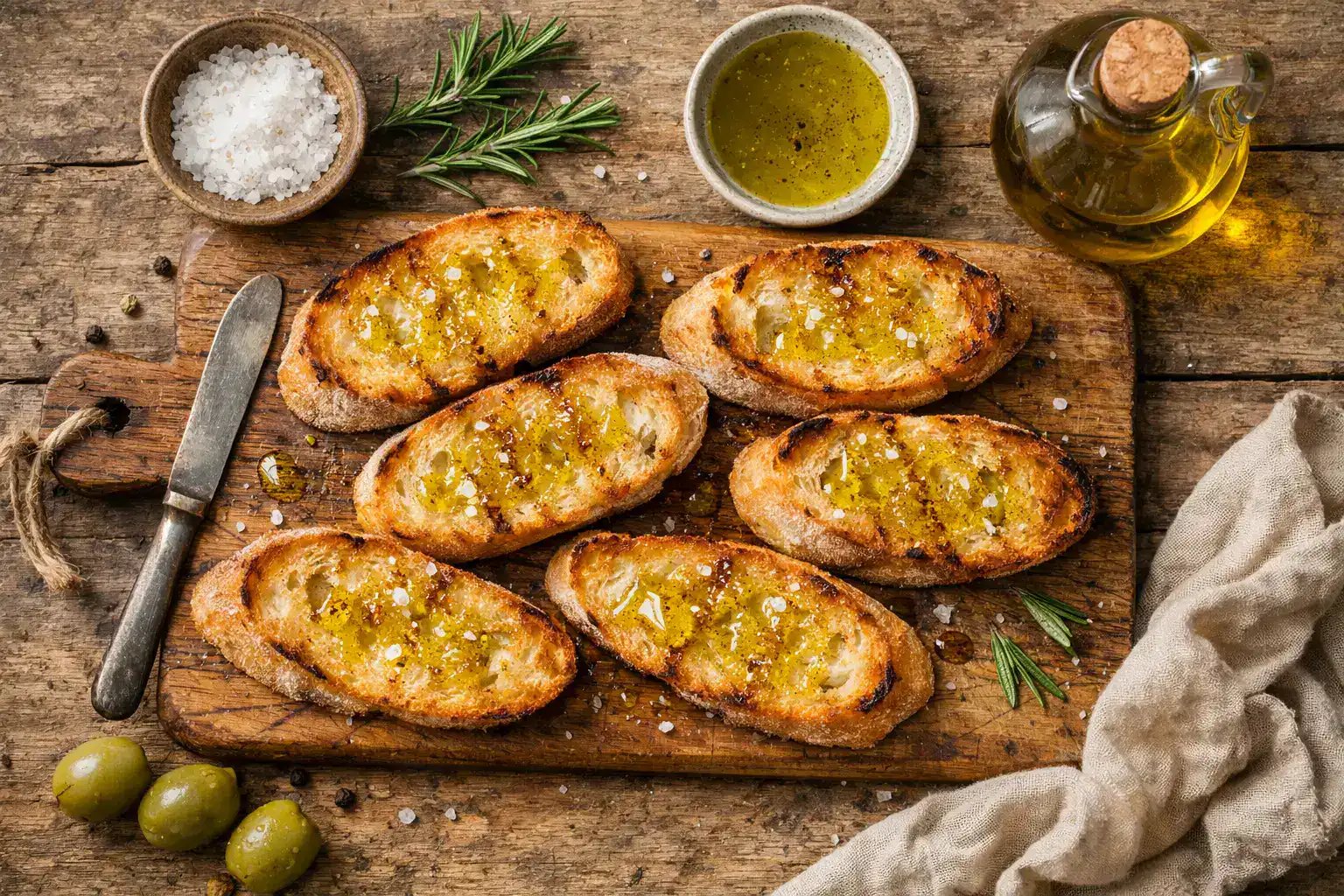
Quick Nutrition Facts
Per 1 Serving (60g bread + 15ml EVOO)
| Nutrient | Amount |
|---|---|
| Calories | 280 kcal |
| Protein | 5g |
| Carbohydrates | 31g |
| Fiber | 1.3g |
| Sugars | 1.5g |
| Fat | 15g |
| Monounsaturated Fat | 10g |
| Vitamin E | 2.1mg |
| Iron | 1.8mg |
| Sodium | 340mg |
Macronutrient Breakdown
 ChatGPT
  Claude
  AI Mode
  Perplexity
NUTRITIONIST INSIGHT
Pan con aceite is a cornerstone of the Mediterranean diet. The extra virgin olive oil delivers polyphenols and monounsaturated fats that reduce cardiovascular disease risk by up to 30%. Adding the oil to bread also slows glucose absorption, making it a smarter carb choice than dry toast.
Myth Busters
MYTH #1: Bread with Oil Is Too Fattening for Breakfast
TRUTH: At 280 calories per serving, pan con aceite is comparable to a bowl of cereal with milk. The monounsaturated fats in olive oil promote satiety and help you eat less later in the day. The PREDIMED trial showed Mediterranean diet with EVOO did not cause weight gain.
MYTH #2: Olive Oil on Bread Spikes Blood Sugar
TRUTH: The opposite is true. Adding olive oil to bread reduces the post-meal glucose spike by up to 51% compared to bread alone. The fat delays gastric emptying and slows carbohydrate absorption.
MYTH #3: All Bread with Oil Is the Same
TRUTH: Extra virgin olive oil contains polyphenols and antioxidants that refined oils lack. EVOO specifically improves insulin secretion and enhances GLP-1 incretin hormone response. Regular olive oil or seed oils do not provide the same metabolic benefits.
MYTH #4: Pan con Aceite Has No Nutritional Value
TRUTH: One serving provides 10g of heart-healthy monounsaturated fats, 2.1mg vitamin E, 1.8mg iron, and 5g protein. The Harvard School of Public Health identifies this Mediterranean staple as part of a diet linked to longer lifespan and lower disease risk.
MYTH #5: You Should Use Butter Instead of Olive Oil
TRUTH: Olive oil provides monounsaturated fats that lower LDL cholesterol, while butter is high in saturated fat. Research shows all fats lower bread's glycemic response, but olive oil uniquely delivers anti-inflammatory polyphenols and cardiovascular protection.
NutriScore by Health Goals
| Health Goal | NutriScore | Why This Score? |
|---|---|---|
| Weight Loss |  | 280 calories per serving with 15g fat. Satisfying but calorie-dense. Limit to 1 slice with 1 tbsp oil. |
| Muscle Gain |  | 31g carbs for energy, healthy fats for hormone production. Add egg or jamón for protein boost. |
| Diabetes Management | | EVOO reduces post-meal glucose spike by 51%. Choose whole grain bread, limit to 1 slice. Women consuming >1 tbsp olive oil/day had 10% lower T2D risk. |
| PCOS Management | | Anti-inflammatory EVOO supports hormonal balance. Use whole grain bread, limit portions. |
| Pregnancy Nutrition |  | ACOG recommends olive oil as a safe plant-based fat during pregnancy. Provides energy, supports placental development, and delivers vitamin E. |
| Viral/Flu Recovery | | Easy to digest, quick energy from carbs, anti-inflammatory olive oil polyphenols support recovery. |
PERSONALIZED NUTRITION
Track your meals with NutriScan for personalized NutriScores based on your specific health goals!
Blood Sugar Response to Pan con Aceite
Understanding how pan con aceite affects your blood glucose helps you optimize when and how to enjoy this Spanish staple.
Typical Glucose Response Curve
*This chart shows typical blood glucose response for general healthy individuals. Individual responses may vary. Not medical advice.*
How to Flatten the Spike
Adding fat to bread significantly lowers its glycemic response. Pan con aceite already benefits from this effect, but you can further reduce the spike:
- 🍅 Add fresh grated tomato - Fiber and lycopene slow absorption further
- 🥚 Pair with a boiled egg or tortilla - Protein blunts glucose response
- 🥑 Add avocado slices - Extra healthy fats and fiber
- 🧀 Top with Manchego cheese - Protein and fat combination for sustained energy
This combination extends energy release and keeps you fuller through the morning.
Cultural Significance
Pan con aceite is one of Spain's most beloved breakfast traditions, rooted in centuries of Mediterranean agricultural life.
In Spain:
- Staple breakfast across Andalusia and much of southern Spain
- Traditionally made with day-old rustic bread, toasted and generously drizzled with EVOO
- Regional variations: pan con tomate (Catalonia), mollete con aceite (Andalusia)
- Olive oil production is central to Spanish identity, with Spain producing nearly half the world's supply
In Indian Context:
- Similar to paratha with ghee, but uses heart-healthier monounsaturated fats
- EVOO is increasingly popular in Indian households for its health benefits
- Ayurveda recognizes olive oil as beneficial for heart and skin health
- Can substitute for butter or ghee on roti for a Mediterranean twist
Global Impact:
- UNESCO recognizes the Mediterranean diet as Intangible Cultural Heritage
- The PREDIMED trial, one of the largest nutrition studies, validated olive oil's cardiovascular benefits
- Pan con aceite has become a global symbol of simple, healthy eating
Compare & Substitute
Pan con Aceite vs Similar Breakfasts (Per Serving)
| Nutrient | 🫒 Pan con Aceite | 🧈 Toast & Butter | 🥑 Avocado Toast | 🍞 Pan con Tomate |
|---|---|---|---|---|
| Calories | 280 kcal | 265 kcal | 290 kcal | 220 kcal |
| Carbs | 31g | 30g | 28g | 32g |
| Fiber | 1.3g | 1.0g | 4.5g | 2.1g |
| Protein | 5g | 5g | 5g | 5g |
| Fat | 15g | 14g | 16g | 8g |
| Sat. Fat | 2g | 8g | 2.5g | 1.2g |
| Mono Fat | 10g | 4g | 10g | 5.5g |
| Vitamin E | 2.1mg | 0.3mg | 2.7mg | 1.8mg |
| Best For | Heart health, Mediterranean diet | Quick energy | Fiber, sustained energy | Lower calorie, vitamin C |
Frequently Asked Questions
How many calories are in pan con aceite?
A typical serving of pan con aceite contains about 280 calories: 160 from the bread (60g) and 120 from extra virgin olive oil (15ml or about 1 tablespoon). Using whole grain bread adds roughly 1-2g more fiber without significantly changing calories.
Is pan con aceite healthy for breakfast?
Yes, pan con aceite is a nutritious breakfast backed by extensive research on the Mediterranean diet. The PREDIMED trial showed that a Mediterranean diet rich in EVOO reduced cardiovascular events by 30%. One serving provides 10g of monounsaturated fats that lower LDL cholesterol and anti-inflammatory polyphenols.
Can diabetics eat pan con aceite?
Diabetics can benefit from pan con aceite. Research shows EVOO reduces the post-meal blood sugar spike by up to 51% compared to bread alone. Choose whole grain bread for lower glycemic index, limit to one slice, and pair with protein like egg or cheese. Always monitor your individual blood sugar response.
What type of bread is best for pan con aceite?
Traditional pan con aceite uses rustic white bread (pan de pueblo or mollete). For better nutrition, choose whole grain or sourdough bread, which has a lower glycemic index and more fiber. Sourdough fermentation also improves mineral absorption and may benefit gut health.
Is extra virgin olive oil better than regular olive oil?
For pan con aceite, always use extra virgin olive oil (EVOO). EVOO retains polyphenols and antioxidants lost during refining. Studies show EVOO specifically improves insulin secretion and incretin hormone response, benefits not found in refined olive oil or seed oils.
What is the difference between pan con aceite and pan con tomate?
Pan con aceite is bread drizzled only with olive oil, while pan con tomate adds grated fresh tomato rubbed onto the bread. Pan con tomate has fewer calories from fat but adds vitamin C, lycopene, and fiber from the tomato. Both are traditional Spanish breakfast staples, often served together.




Similar Nutritious Foods
4505 Chicharrones Classic Chili Salt
7 Eleven Japan Crispy Corn Cheese
Explore More Nutrition Tools & Resources
AI Calorie Counter App - Snap a Photo, Get Macros
AI Nutritionist App That Reads Your Logged Meals
Best Protein Supplements for Women
Bulking Meal Plan App That Sets Your Surplus
ChatGPT Calorie Counter Alternative That Keeps the Total
ChatGPT Diet Plan Alternative That Tracks What You Eat
ChatGPT Weight Loss Coach Alternative With a Food Log
Fast Food Calorie Counter App That Reads the Tray
Free Calorie Tracker App with AI Photo Scans | NutriScan
Indian Diet Plan App With Veg and Non Veg Meals
Indian Food Calorie Calculator - Get Instant Nutrition Facts for Desi Meals — 2026
Intermittent Fasting for Women, Timer and Meal Log App
Intermittent Fasting Tracker App - Free Fasting Timer
Macro Tracker App That Fills the Numbers From a Photo
Mediterranean Diet Meal Plan App That Counts the Oil
Micronutrient Tracker App for Vitamins and Minerals
MyFitnessPal Alternative That Stays Free | NutriScan
NutriScore App: A Free Grade on Every Meal | NutriScan
Nutrition Label Scanner App for the Amount You Ate
Second Trimester Protein Guide
Vegetarian Meal Plan App With a Protein Target
Voice Calorie Counter - Speak to Track Meals Hands-Free
Water and Calorie Tracker App - Free Water Log