Pepsi Prebiotic Soda: Calories, Nutrition and Health Benefits
The first prebiotic cola from a legacy brand: just 30 calories, 3g of prebiotic fiber, and 80% less sugar than regular Pepsi per 355ml can.
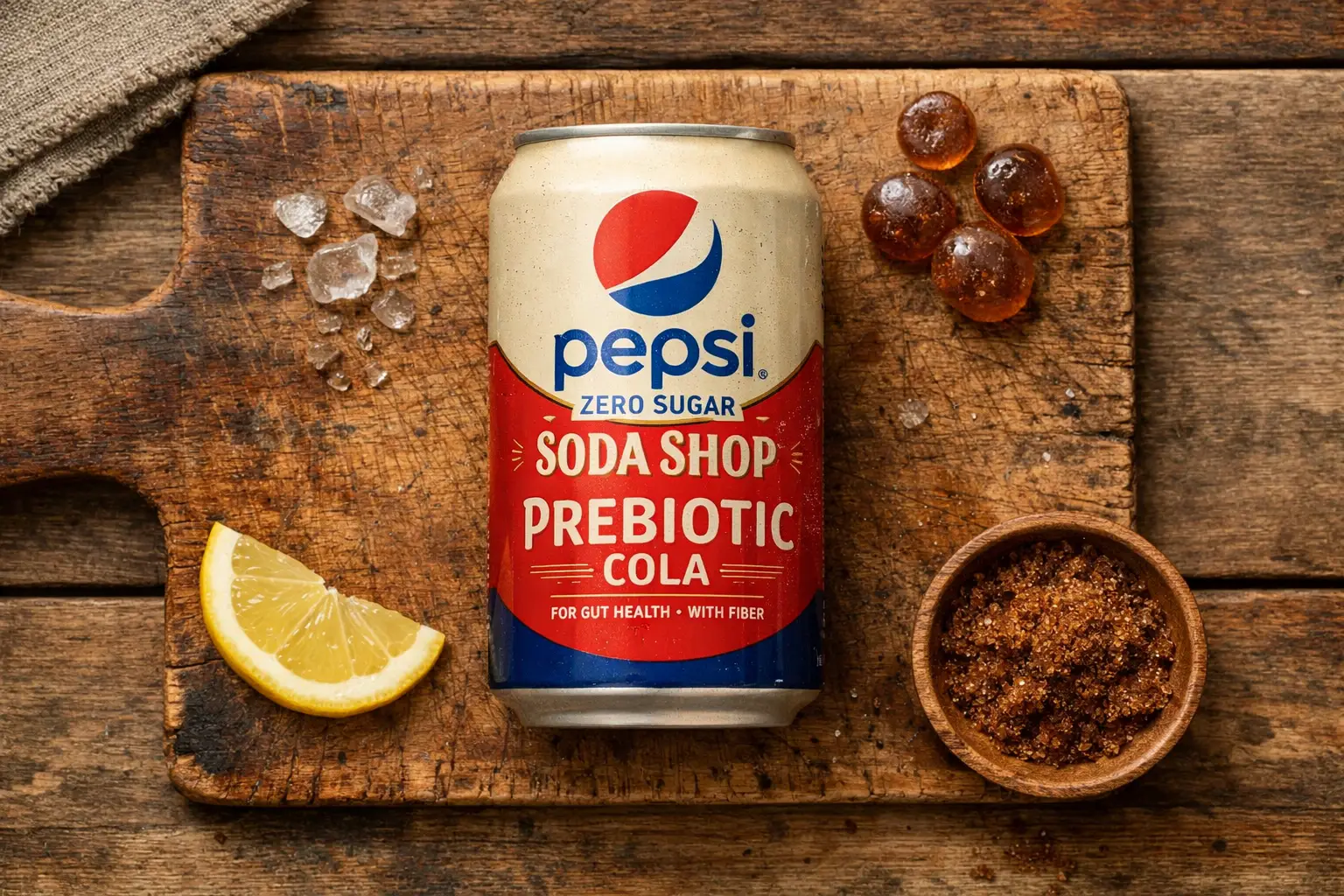
Quick Nutrition Facts
Per 1 Can (355ml / 12 fl oz)
| Nutrient | Amount |
|---|---|
| Calories | 30 kcal |
| Protein | 0g |
| Carbohydrates | 6g |
| Fiber | 3g |
| Sugars | 5g |
| Fat | 0g |
| Sodium | 35mg |
| Caffeine | 38mg |
| Phosphorus | 50mg |
Macronutrient Breakdown
 ChatGPT
  Claude
  AI Mode
  Perplexity
NUTRITIONIST INSIGHT
At only 30 calories with 3g prebiotic fiber per can, Pepsi Prebiotic Soda is a significant improvement over regular cola. However, 3g is the minimum effective prebiotic dose. For meaningful gut health benefits, pair with whole food fiber sources like fruits, vegetables, and legumes to reach the recommended 25-38g daily fiber intake.
Myth Busters
MYTH #1: Prebiotic Soda Is a Health Drink
TRUTH: While 3g of prebiotic fiber is real and beneficial, experts note it is the minimum effective dose. One can provides 12% of daily fiber needs. It is a better soda choice, not a health food replacement.
MYTH #2: Pepsi Prebiotic Soda Has No Sugar
TRUTH: It contains 5g of cane sugar per can (about 1 teaspoon). Combined with stevia extract, this gives 80% less sugar than regular Pepsi (41g). Low sugar is not zero sugar.
MYTH #3: Prebiotic Soda Fixes Your Gut Health
TRUTH: Prebiotic fiber supports gut microbiota diversity, but clinical studies use 5-15g daily doses. One can at 3g is supplementary. A Poppi class-action lawsuit highlighted that 2-3g fiber in soda does not meaningfully transform gut health alone.
MYTH #4: Stevia in Soda Is Harmful
TRUTH: Stevia extract is FDA GRAS (Generally Recognized As Safe) and has a glycemic index of 0. Research shows stevia at food-additive levels has a neutral effect on gut microbiota and does not raise blood sugar.
MYTH #5: Prebiotic Sodas Are All the Same
TRUTH: Fiber content varies widely: Olipop has 9g (chicory root inulin), Simply Pop has 6g, Poppi has 2g, and Pepsi Prebiotic has 3g. The prebiotic type also matters: inulin has more clinical research than soluble corn fiber.
NutriScore by Health Goals
| Health Goal | NutriScore | Why This Score? |
|---|---|---|
| Weight Loss |  | Only 30 calories per can with 3g fiber. A smart swap from regular soda (saves 120 calories per can). |
| Muscle Gain |  | Minimal protein (0g) and carbs (6g). Not useful for recovery or muscle building. Choose whole foods instead. |
| Diabetes Management |  | Only 5g sugar and 3g net carbs per can. Prebiotic fiber may modestly improve postprandial glucose. Count carbs toward daily intake. |
| PCOS Management | | Low sugar and calories minimize insulin spikes. Better than regular soda, but water remains the best beverage choice. |
| Pregnancy Nutrition | | 38mg caffeine per can is within ACOG's 200mg/day limit. Limit to 1 can/day and track total caffeine. No nutritional benefit for fetal development. |
| Viral/Flu Recovery | | Provides mild hydration and quick energy. No vitamins or minerals to support immune function. Choose herbal tea or broth instead. |
PERSONALIZED NUTRITION
Track your meals with NutriScan for personalized NutriScores based on your specific health goals!
Blood Sugar Response to Pepsi Prebiotic Soda
Understanding how Pepsi Prebiotic Soda affects your blood glucose helps you make informed beverage choices.
Typical Glucose Response Curve
*This chart shows typical blood glucose response for general healthy individuals. Individual responses may vary. Not medical advice.*
How to Flatten the Spike
Pairing sugary beverages with protein or fiber-rich foods slows glucose absorption and reduces peak blood sugar:
- 🥜 Handful of almonds or walnuts - Healthy fats and protein slow sugar absorption
- 🧀 Cheese or string cheese - Protein-rich pairing for a snack
- 🥗 Alongside a fiber-rich meal - Vegetables and whole grains buffer the glucose response
- 🫘 Hummus with vegetables - Fiber and protein combination
With only 5g sugar per can, the glucose spike from Pepsi Prebiotic Soda is minimal compared to regular soda. The 3g prebiotic fiber also helps moderate the response.
Cultural Significance
Pepsi Prebiotic Soda represents a watershed moment in the carbonated beverage industry, marking the first time a legacy cola brand has embraced the prebiotic soda movement.
The Prebiotic Soda Revolution:
- 2018: Olipop launched as the first major prebiotic soda brand
- 2020: Poppi gained mainstream attention after appearing on Shark Tank
- 2023: Prebiotic soda category grew 301.5% in dollar sales (SPINS data)
- March 2025: PepsiCo acquired Poppi for $1.95 billion
- November 2025: Pepsi Prebiotic Soda debuted on Black Friday and sold out
- February 2026: Nationwide US rollout of Original Cola and Cherry Vanilla
Market Context:
- US prebiotic soda market: $171.6 million in 2024, projected $268.8 million by 2030
- Gen Z is the primary driver, moving away from traditional sodas toward functional beverages
- The category faces scrutiny: experts caution that 2-3g fiber in soda is no substitute for the 25-38g daily fiber recommended from whole foods
India Relevance:
- Growing awareness of gut health and probiotics in urban India
- Prebiotic sodas represent an alternative to traditional cola in health-conscious segments
- Fiber-fortified beverages align with Ayurvedic emphasis on digestive health
Compare & Substitute
Pepsi Prebiotic Soda vs Similar Beverages (Per 355ml / 12 fl oz Can)
| Nutrient | 🥤 Pepsi Prebiotic | 🥤 Olipop Classic Cola | 🥤 Poppi Cola | 🥤 Regular Pepsi |
|---|---|---|---|---|
| Calories | 30 kcal | 35 kcal | 35 kcal | 150 kcal |
| Carbs | 6g | 16g | 9g | 41g |
| Fiber | 3g | 9g | 2g | 0g |
| Protein | 0g | 0g | 0g | 0g |
| Fat | 0g | 0g | 0g | 0g |
| Sugar | 5g | 2g | 5g | 41g |
| Caffeine | 38mg | 50mg | 35mg | 38mg |
| Best For | Classic cola taste, low cal | Highest fiber, gut health | ACV benefits, fruity flavors | Traditional cola taste |
Frequently Asked Questions
Is Pepsi Prebiotic Soda good for gut health?
Pepsi Prebiotic Soda contains 3g of soluble corn fiber per can, which is the minimum effective prebiotic dose (3-10g daily recommended). While it can supplement daily fiber intake, whole food sources remain superior for gut health benefits.
Best approach: Use as a soda swap, not a fiber supplement. Pair with a fiber-rich diet of fruits, vegetables, and legumes to reach 25-38g daily.
How many calories are in Pepsi Prebiotic Soda?
30 calories per 12 fl oz can (355ml). That is 80% fewer calories than regular Pepsi (150 calories) and comparable to Olipop (35 calories) and Poppi (35 calories).
Per 100ml: approximately 8.5 calories, 1.7g carbs, 0.85g fiber.
Can diabetics drink Pepsi Prebiotic Soda?
Yes, in moderation. With only 5g sugar and 3g net carbs per can, the glycemic load is very low, comparable to a small piece of fruit.
Tips for diabetics:
- Count 5g sugar and 3g net carbs toward daily carbohydrate intake
- The 3g prebiotic fiber may help moderate blood sugar response
- Limit to 1 can per day
- Monitor blood sugar 2 hours after consumption
Always consult your healthcare provider.
Is Pepsi Prebiotic Soda better than Olipop or Poppi?
Each has different strengths:
- Olipop has more fiber (9g vs 3g) and uses chicory root inulin with more clinical research
- Poppi includes apple cider vinegar as its functional ingredient
- Pepsi Prebiotic has the most authentic cola taste, lowest calories (30), and uses stevia instead of artificial sweeteners
Choose based on your priority: fiber content (Olipop), taste authenticity (Pepsi), or ACV benefits (Poppi).
Does Pepsi Prebiotic Soda have artificial sweeteners?
No. It uses cane sugar (5g) combined with stevia extract, a natural plant-based zero-calorie sweetener. No aspartame, sucralose, or acesulfame-K.
Is Pepsi Prebiotic Soda safe during pregnancy?
Pepsi Prebiotic Soda contains 38mg caffeine per can, which is 19% of the ACOG-recommended 200mg daily limit during pregnancy. All ingredients are FDA GRAS.
Pregnancy guidelines:
- Limit to 1 can per day maximum
- Track total daily caffeine from all sources (coffee, tea, chocolate)
- All ingredients (stevia, soluble corn fiber, cane sugar) are considered safe in pregnancy
- Provides no nutritional benefit for fetal development. Choose nutrient-dense beverages like milk or fortified juice when possible




Similar Nutritious Foods
4505 Chicharrones Classic Chili Salt
7 Eleven Japan Crispy Corn Cheese
Explore More Nutrition Tools & Resources
AI Calorie Counter App - Snap a Photo, Get Macros
AI Nutritionist App That Reads Your Logged Meals
Best Protein Supplements for Women
Bulking Meal Plan App That Sets Your Surplus
ChatGPT Calorie Counter Alternative That Keeps the Total
ChatGPT Diet Plan Alternative That Tracks What You Eat
ChatGPT Weight Loss Coach Alternative With a Food Log
Fast Food Calorie Counter App That Reads the Tray
Free Calorie Tracker App with AI Photo Scans | NutriScan
Indian Diet Plan App With Veg and Non Veg Meals
Indian Food Calorie Calculator - Get Instant Nutrition Facts for Desi Meals — 2026
Intermittent Fasting for Women, Timer and Meal Log App
Intermittent Fasting Tracker App - Free Fasting Timer
Macro Tracker App That Fills the Numbers From a Photo
Mediterranean Diet Meal Plan App That Counts the Oil
Micronutrient Tracker App for Vitamins and Minerals
MyFitnessPal Alternative That Stays Free | NutriScan
NutriScore App: A Free Grade on Every Meal | NutriScan
Nutrition Label Scanner App for the Amount You Ate
Second Trimester Protein Guide
Vegetarian Meal Plan App With a Protein Target
Voice Calorie Counter - Speak to Track Meals Hands-Free
Water and Calorie Tracker App - Free Water Log