Pili Nuts (Cacao): Calories, Nutrition and Health Benefits
The ultimate keto-friendly nut from the Philippines, coated in rich cacao for a decadent low-carb treat packed with magnesium and heart-healthy fats.
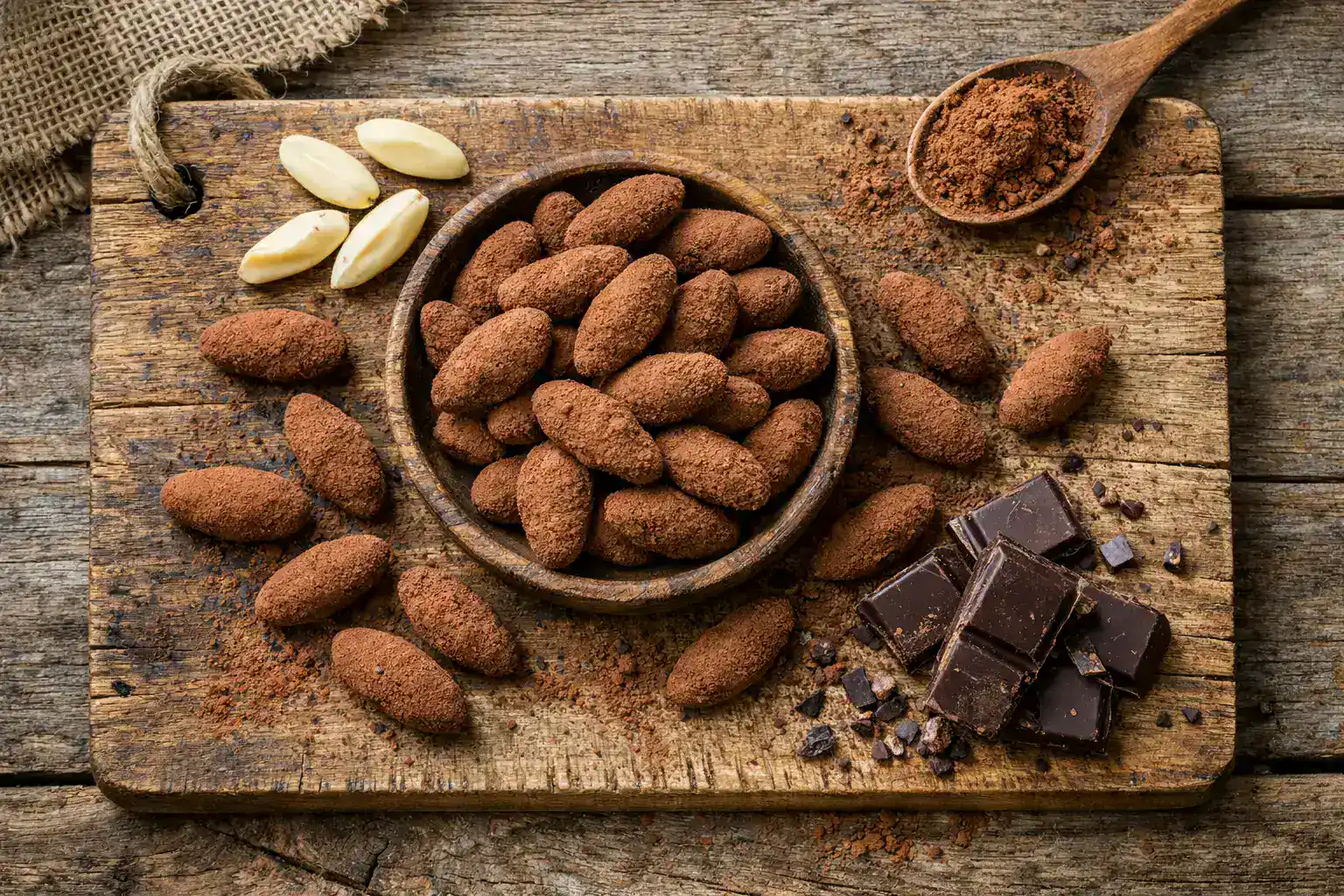
Quick Nutrition Facts
Per 1 oz Serving (28g)
| Nutrient | Amount |
|---|---|
| Calories | 210 kcal |
| Protein | 3g |
| Carbohydrates | 4g |
| Fiber | 1g |
| Net Carbs | 3g |
| Fat | 22g |
| Saturated Fat | 9g |
| Magnesium | 85mg |
| Phosphorus | 161mg |
| Thiamin (B1) | 0.26mg |
Macronutrient Breakdown
 ChatGPT
  Claude
  AI Mode
  Perplexity
NUTRITIONIST INSIGHT
Pili nuts contain the highest magnesium content of any nut (302mg per 100g). The cacao coating adds antioxidants while keeping carbs minimal, making this the perfect keto indulgence.
Myth Busters
MYTH #1: Pili Nuts Are Too High in Fat to Be Healthy
TRUTH: The 79g fat per 100g is predominantly heart-healthy monounsaturated fat (49%). Research shows tree nuts with high MUFA content reduce cardiovascular disease risk and improve cholesterol profiles.
MYTH #2: Cacao Coating Makes Them Unhealthy
TRUTH: Raw cacao is one of the richest sources of flavonoid antioxidants. Unlike milk chocolate, dark cacao coating adds minimal sugar while providing polyphenols that support heart and brain health.
MYTH #3: High Saturated Fat Means Heart Problems
TRUTH: Pili nut saturated fat comes primarily from palmitic and stearic acids. When consumed as part of a balanced diet with adequate fiber, these don't raise cardiovascular risk the way processed saturated fats do.
MYTH #4: Pili Nuts Are Too Expensive to Eat Regularly
TRUTH: While pricier than common nuts, a 1 oz serving provides exceptional nutrient density. The high satiety from fat and protein means smaller portions satisfy, making them cost-effective per serving.
MYTH #5: All Nuts Are the Same for Keto
TRUTH: Pili nuts have the lowest carb content of any nut (1g net carbs per oz vs 2-4g for macadamia, 4-6g for almonds). For strict keto, pili nuts are the superior choice for staying in ketosis.
MYTH #6: Pili Nuts Cause Weight Gain
TRUTH: Despite being calorie-dense (719 kcal/100g), studies show nut consumption is associated with lower body weight. The combination of fat, protein, and fiber promotes satiety and reduces overall calorie intake.
NutriScore by Health Goals
| Health Goal | NutriScore | Why This Score? |
|---|---|---|
| Weight Loss |  | High satiety from fat/protein, but calorie-dense. Stick to 1 oz portions for effective weight management. |
| Muscle Gain | | Good protein (3g/oz), excellent magnesium for muscle function, calorie-dense for bulking phases. |
| Diabetes Management |  | Ultra-low carb (1g net), minimal blood sugar impact. Tree nuts improve glycemic control in diabetics. |
| PCOS Management | | Low glycemic impact, healthy fats support hormone balance. Excellent for insulin-resistant conditions. |
| Pregnancy Nutrition | | Rich in folate (60mcg/100g), magnesium prevents cramps. Adequate magnesium intake supports healthy pregnancy outcomes. |
| Viral/Flu Recovery | | Easy to eat, provides sustained energy, zinc supports immune function. |
PERSONALIZED NUTRITION
Track your meals with NutriScan for personalized NutriScores based on your specific health goals!
Blood Sugar Response to Pili Nuts
Understanding how pili nuts affect your blood glucose helps explain why they're ideal for diabetics and keto dieters.
Typical Glucose Response Curve
This chart shows typical blood glucose response for general healthy individuals. Individual responses may vary. Not medical advice.
How to Minimize Blood Sugar Impact
Pairing high-fat foods with fiber-rich options further stabilizes glucose:
- 🥬 Dark leafy greens - Add fiber without carbs
- 🫐 Low-sugar berries - Raspberries, blackberries pair well
- 🧀 Aged cheese - Zero carbs, adds protein variety
- ☕ Black coffee or tea - Enhances metabolic benefits
Pili nuts already have minimal glucose impact; these pairings optimize your overall meal.
Cultural Significance
Pili nuts are native to the Philippines and hold deep cultural importance in Filipino cuisine and traditions.
In the Philippines:
- Endemic to the Bicol region, where pili trees thrive in volcanic soil
- Used in traditional desserts like "turrones de pili" and "mazapan de pili"
- The entire pili tree is utilized: nuts, oil, resin, and wood
- Annual Pili Festival celebrates the harvest in Sorsogon province
Global Emergence:
- Gaining popularity in Western markets as a premium keto snack
- Featured by wellness influencers for its exceptional nutrient profile
- Sustainably harvested by local farming communities
- Growing demand drives fair trade initiatives in the Philippines
Compare & Substitute
Pili Nuts vs Other Keto Nuts (Per 28g/1oz)
| Nutrient | 🥜 Pili Nuts | 🥜 Macadamia | 🥜 Pecans | 🥜 Almonds |
|---|---|---|---|---|
| Calories | 210 kcal | 204 kcal | 196 kcal | 164 kcal |
| Net Carbs | 1g | 2g | 1g | 3g |
| Fiber | 1g | 2g | 3g | 4g |
| Protein | 3g | 2g | 3g | 6g |
| Fat | 22g | 22g | 20g | 14g |
| Magnesium | 85mg | 37mg | 34mg | 76mg |
| Best For | Strict keto, magnesium needs | Keto, creamy texture | Keto baking, lower calories | Higher protein needs |
Frequently Asked Questions
Are pili nuts good for keto diet?
Yes, pili nuts are arguably the best nut for keto. With only 1g net carbs per ounce and 22g of healthy fats, they help maintain ketosis while providing sustained energy and exceptional satiety.
Keto advantages:
- Lowest net carbs of any nut
- 79% fat by calories
- High magnesium prevents keto flu symptoms
Can diabetics eat pili nuts?
Pili nuts are excellent for diabetics. The ultra-low carb content (1g net carbs per oz) causes virtually no blood sugar spike.
Tips for diabetics:
- Enjoy 1 oz as a satisfying snack
- Pair with cheese or vegetables for a complete mini-meal
- The high fat content promotes satiety and stable energy
- Monitor portions as they're calorie-dense
How much protein is in pili nuts?
A 1 oz (28g) serving contains 3g of protein. While not the highest among nuts, pili nuts provide complete amino acids and are valued primarily for their exceptional healthy fat profile and mineral content.
For higher protein, combine with Greek yogurt or pair with almonds.
What are the main health benefits of pili nuts?
Key Benefits:
- Highest Magnesium Content: 302mg per 100g (86% DV) supports muscle function, sleep, and heart health
- Heart-Healthy Fats: 49% monounsaturated fat reduces LDL cholesterol
- Bone Health: High phosphorus (575mg/100g) strengthens bones
- Energy Metabolism: Thiamin (B1) at 91% DV supports cellular energy
- Antioxidant Rich: Cacao coating adds flavonoids for cardiovascular protection
- Keto-Perfect: Lowest carb nut maintains ketosis
Where do pili nuts come from?
Pili nuts are native to the Philippines, specifically the Bicol region. They grow on pili trees (Canarium ovatum) which thrive in tropical volcanic soil. The Philippines remains the world's primary producer.
The nuts are harvested by hand, cracked carefully to preserve the delicate kernel, and often processed into various products including cacao-coated snacks.
How many pili nuts can I eat per day?
General Guidelines:
- 1 oz (28g) daily - Most people (210 calories, excellent nutrition)
- 1-2 oz daily - Athletes, those with higher caloric needs
- 0.5-1 oz daily - Strict calorie restriction, weight loss
Avoid excess: More than 2 oz daily adds significant calories (420+) which may hinder weight goals despite the healthy fat profile.
Track your intake with NutriScan app to see how pili nuts fit your personal nutrition goals.
Are pili nuts allergen-safe?
Pili nuts are tree nuts and may cause reactions in those with tree nut allergies. However, some people allergic to common tree nuts (almonds, cashews) can tolerate pili nuts - always consult your allergist first.
For those without allergies, pili nuts are naturally:
- Gluten-free
- Dairy-free
- Paleo and Whole30 compliant


Similar Nutritious Foods
4505 Chicharrones Classic Chili Salt
7 Eleven Japan Crispy Corn Cheese
Explore More Nutrition Tools & Resources
AI Calorie Counter App - Snap a Photo, Get Macros
AI Nutritionist App That Reads Your Logged Meals
Best Protein Supplements for Women
Bulking Meal Plan App That Sets Your Surplus
ChatGPT Calorie Counter Alternative That Keeps the Total
ChatGPT Diet Plan Alternative That Tracks What You Eat
ChatGPT Weight Loss Coach Alternative With a Food Log
Fast Food Calorie Counter App That Reads the Tray
Free Calorie Tracker App with AI Photo Scans | NutriScan
Indian Diet Plan App With Veg and Non Veg Meals
Indian Food Calorie Calculator - Get Instant Nutrition Facts for Desi Meals — 2026
Intermittent Fasting for Women, Timer and Meal Log App
Intermittent Fasting Tracker App - Free Fasting Timer
Macro Tracker App That Fills the Numbers From a Photo
Mediterranean Diet Meal Plan App That Counts the Oil
Micronutrient Tracker App for Vitamins and Minerals
MyFitnessPal Alternative That Stays Free | NutriScan
NutriScore App: A Free Grade on Every Meal | NutriScan
Nutrition Label Scanner App for the Amount You Ate
Second Trimester Protein Guide
Vegetarian Meal Plan App With a Protein Target
Voice Calorie Counter - Speak to Track Meals Hands-Free
Water and Calorie Tracker App - Free Water Log