Poke Bowl: Calories, Nutrition and Health Benefits
Hawaii's iconic raw fish bowl delivers exceptional protein, omega-3 fatty acids, and vibrant nutrition in every colorful serving.
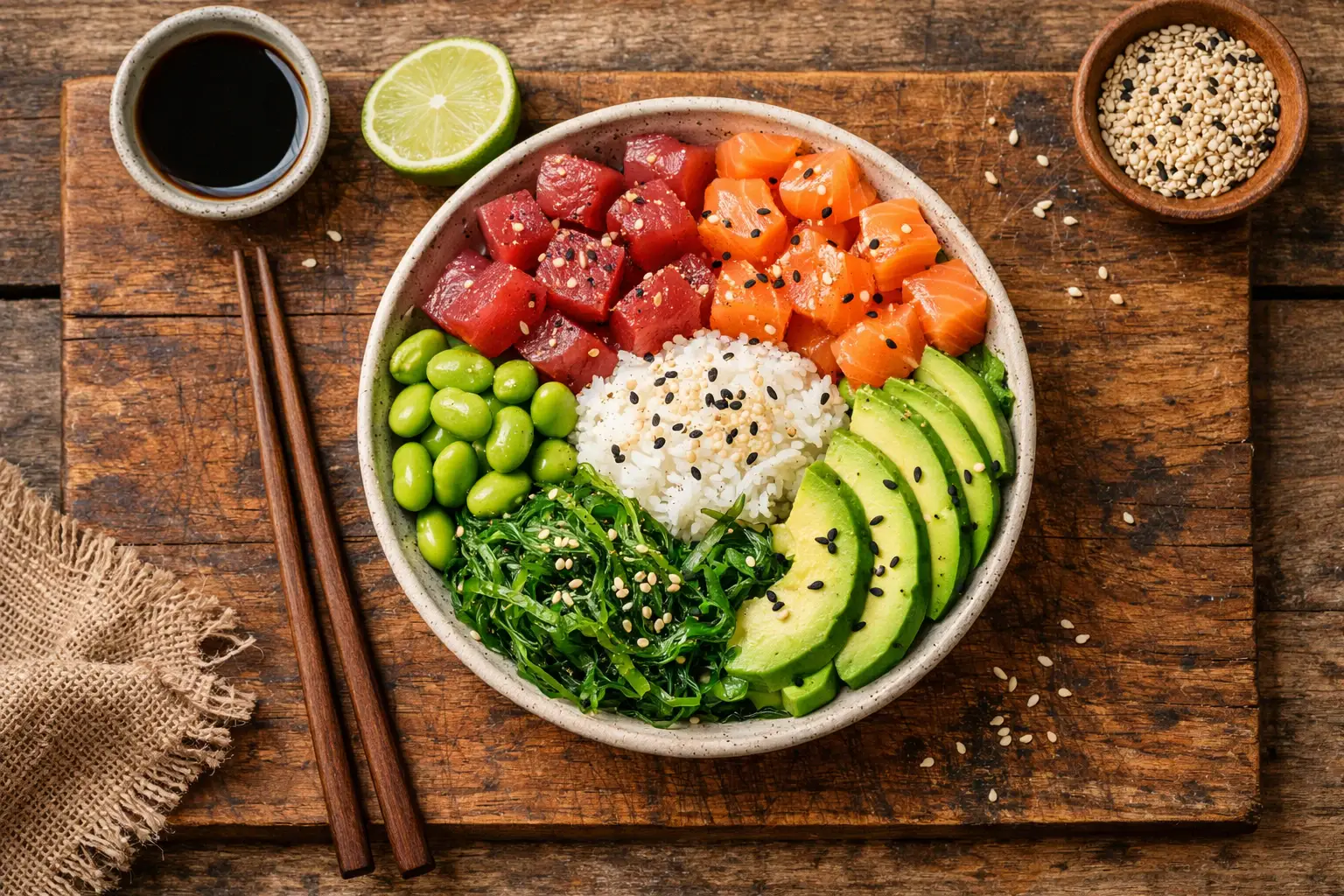
Quick Nutrition Facts
Per 1 Large Poke Bowl (450g)
| Nutrient | Amount |
|---|---|
| Calories | 470 kcal |
| Protein | 42g |
| Carbohydrates | 39g |
| Fiber | 4g |
| Sugars | 6g |
| Fat | 12g |
| Omega-3 | 1.5g |
| Sodium | 680mg |
| Selenium | 55mcg |
| Vitamin B12 | 4.8mcg |
Macronutrient Breakdown
 ChatGPT
  Claude
  AI Mode
  Perplexity
NUTRITIONIST INSIGHT
Poke bowls deliver 42g of complete protein and heart-healthy omega-3s in one satisfying meal. The raw fish provides highly bioavailable protein and essential fatty acids that support brain and cardiovascular health.
Myth Busters
MYTH #1: Poke Bowls Are Too High in Calories
TRUTH: A standard poke bowl has 470 calories with 42g protein - excellent for a complete meal. The issue is oversized portions or calorie-dense additions. Skip mayo-based sauces and extra rice to keep it balanced.
MYTH #2: Raw Fish Is Dangerous to Eat
TRUTH: Sushi-grade fish is flash-frozen to kill parasites, making it safe for most people. Reputable poke shops source properly handled fish. Risk is mainly for pregnant women and immunocompromised individuals.
MYTH #3: Poke Bowls Are Just Empty Carbs
TRUTH: While rice adds carbs, poke bowls are protein-rich (42g) with omega-3 fats, fiber from vegetables, and micronutrients. The protein-to-carb ratio is actually better than many "healthy" meals.
MYTH #4: All Poke Bowls Are Healthy
TRUTH: Not all poke bowls are created equal. Avoid bowls with fried toppings, excessive mayo-based sauces (spicy mayo adds 200+ calories), and white rice in large portions. Customize for nutrition goals.
MYTH #5: Poke Is Only for Fitness Enthusiasts
TRUTH: Poke bowls suit anyone wanting a balanced, nutrient-dense meal. The customizable nature means you can adjust portions and toppings for weight loss, maintenance, or muscle gain goals.
NutriScore by Health Goals
| Health Goal | NutriScore | Why This Score? |
|---|---|---|
| Weight Loss |  | 42g protein promotes satiety, moderate calories. Choose brown rice or salad base, skip creamy sauces. |
| Muscle Gain | | Excellent protein quality with all essential amino acids. Fish protein has high bioavailability for muscle synthesis. |
| Diabetes Management |  | High protein moderates blood sugar response. Choose brown rice (GI 55) over white rice (GI 64) or cauliflower rice base. |
| PCOS Management | | Omega-3s support hormone balance. Choose low-carb base options and avoid sweet sauces. |
| Pregnancy Nutrition |  | Avoid raw fish during pregnancy - choose cooked shrimp or tofu poke instead. |
| Viral/Flu Recovery | | High protein supports immune recovery. Selenium and B12 boost immunity. Best with cooked fish option. |
PERSONALIZED NUTRITION
Track your meals with NutriScan for personalized NutriScores based on your specific health goals!
Blood Sugar Response to Poke Bowl
Understanding how poke bowls affect your blood glucose can help you make informed decisions about base choices and portion sizes.
Typical Glucose Response Curve
This chart shows typical blood glucose response for general healthy individuals. Individual responses may vary. Not medical advice.
How to Flatten the Spike
Pairing carbs with protein and healthy fats slows glucose absorption and reduces the peak blood sugar level:
- 🍚 Choose brown rice or quinoa base - Lower GI than white rice
- 🥬 Add extra vegetables - Fiber slows carb absorption
- 🥑 Include avocado - Healthy fats moderate glucose response
- 🍃 Request cauliflower rice - Ultra-low carb alternative
This combination not only reduces the glucose spike but also extends energy release, keeping you fuller for longer.
Cultural Significance
Poke (pronounced "poh-kay") originated in Hawaii centuries ago as a simple fisherman's snack of cubed raw reef fish seasoned with sea salt and seaweed.
Hawaiian Origins:
- Native Hawaiians created poke using fresh catch seasoned with kukui nut and limu (seaweed)
- "Poke" means "to slice" or "cut crosswise into pieces" in Hawaiian
- Traditional preparation was much simpler than modern versions
- Integral part of Hawaiian food culture and family gatherings
Global Evolution:
- Japanese immigrants added soy sauce, sesame, and rice influences
- Mainland US poke boom started around 2012-2016
- Now one of the fastest-growing food trends worldwide
- Modern variations include vegan tofu poke and cooked salmon options
Compare & Substitute
Poke Bowl vs Similar Meals (Per Serving)
| Nutrient | 🐟 Poke Bowl | 🍣 Sushi (8 pcs) | 🥗 Salmon Salad | 🍚 Chirashi |
|---|---|---|---|---|
| Calories | 470 kcal | 350 kcal | 380 kcal | 520 kcal |
| Carbs | 39g | 52g | 12g | 58g |
| Fiber | 4g | 2g | 6g | 3g |
| Protein | 42g | 18g | 35g | 32g |
| Fat | 12g | 8g | 22g | 14g |
| Omega-3 | 1.5g | 0.8g | 2.0g | 1.2g |
| Sodium | 680mg | 1100mg | 450mg | 850mg |
| Best For | High protein, customizable | Portion control, variety | Low carb, omega-3 focus | Japanese tradition, variety |
Frequently Asked Questions
Are poke bowls good for weight loss?
Yes, poke bowls support weight loss effectively. 42g protein promotes satiety while 470 calories is reasonable for a complete meal.
Best practices: Choose brown rice or salad base, skip mayo-based sauces (spicy mayo adds 200+ calories), load up on vegetables, and watch portion sizes at build-your-own shops.
Can diabetics eat poke bowls?
Diabetics can enjoy poke bowls with smart modifications. The high protein content helps moderate blood sugar response.
Tips for diabetics:
- Choose brown rice (GI 55) or cauliflower rice instead of white rice (GI 64)
- Request half rice portion
- Add extra protein and vegetables
- Avoid sweet sauces like eel sauce or teriyaki
Monitor blood sugar 2 hours after eating. Always consult your healthcare provider.
How much protein is in a poke bowl?
A large poke bowl contains 42g of protein - primarily from raw tuna or salmon. This provides about 84% of daily protein needs for most adults.
For muscle gain, poke bowls are excellent post-workout meals due to the high-quality complete protein with all essential amino acids.
What are the main health benefits of poke bowls?
Key Benefits:
- Heart Health: Omega-3 fatty acids reduce inflammation and support cardiovascular function
- Brain Function: DHA from fish supports cognitive health and memory
- Muscle Building: Complete protein with all essential amino acids
- Thyroid Support: 55mcg selenium (100% DV) supports thyroid function
- Energy Production: B12 and iron support metabolism
Is poke bowl safe during pregnancy?
Avoid raw fish poke during pregnancy. Raw fish carries risk of parasites and listeria bacteria that can harm the developing baby.
Safe alternatives for pregnant women:
- Cooked shrimp poke
- Seared or cooked salmon poke
- Tofu poke bowl
- Cooked chicken or crab options
Is poke bowl healthier than sushi?
Poke bowls typically offer better macros than sushi:
- More protein: 42g vs 18g per serving
- Less sodium: 680mg vs 1100mg (no soy sauce dipping)
- More customizable: Control toppings and portions
- More vegetables: Standard bowls include greens
Both can be healthy - poke bowls just offer more protein per calorie and easier customization.
How often can I eat poke bowls?
General Guidelines:
- 2-3 times per week - Safe for most adults
- Mercury consideration: Limit to 2x/week if choosing ahi tuna frequently
- Lower mercury options: Salmon, octopus, or tofu for more frequent consumption
- Variety: Rotate fish types to minimize mercury exposure
Track your meals with NutriScan app to balance poke bowls with your weekly nutrition goals.
What's the best poke bowl for muscle gain?
Optimal muscle-building poke bowl:
- Double protein: Extra tuna or salmon (60g+ protein)
- White rice: Fast-digesting carbs post-workout
- Edamame topping: Additional plant protein
- Avocado: Healthy fats for hormone production
Best consumed within 2 hours of resistance training for maximum muscle protein synthesis.


Similar Nutritious Foods
4505 Chicharrones Classic Chili Salt
7 Eleven Japan Crispy Corn Cheese
Explore More Nutrition Tools & Resources
AI Calorie Counter App - Snap a Photo, Get Macros
AI Nutritionist App That Reads Your Logged Meals
Best Protein Supplements for Women
Bulking Meal Plan App That Sets Your Surplus
ChatGPT Calorie Counter Alternative That Keeps the Total
ChatGPT Diet Plan Alternative That Tracks What You Eat
ChatGPT Weight Loss Coach Alternative With a Food Log
Fast Food Calorie Counter App That Reads the Tray
Free Calorie Tracker App with AI Photo Scans | NutriScan
Indian Diet Plan App With Veg and Non Veg Meals
Indian Food Calorie Calculator - Get Instant Nutrition Facts for Desi Meals — 2026
Intermittent Fasting for Women, Timer and Meal Log App
Intermittent Fasting Tracker App - Free Fasting Timer
Macro Tracker App That Fills the Numbers From a Photo
Mediterranean Diet Meal Plan App That Counts the Oil
Micronutrient Tracker App for Vitamins and Minerals
MyFitnessPal Alternative That Stays Free | NutriScan
NutriScore App: A Free Grade on Every Meal | NutriScan
Nutrition Label Scanner App for the Amount You Ate
Second Trimester Protein Guide
Vegetarian Meal Plan App With a Protein Target
Voice Calorie Counter - Speak to Track Meals Hands-Free
Water and Calorie Tracker App - Free Water Log