Pulpy Orange Juice: Calories, Nutrition and Health Benefits
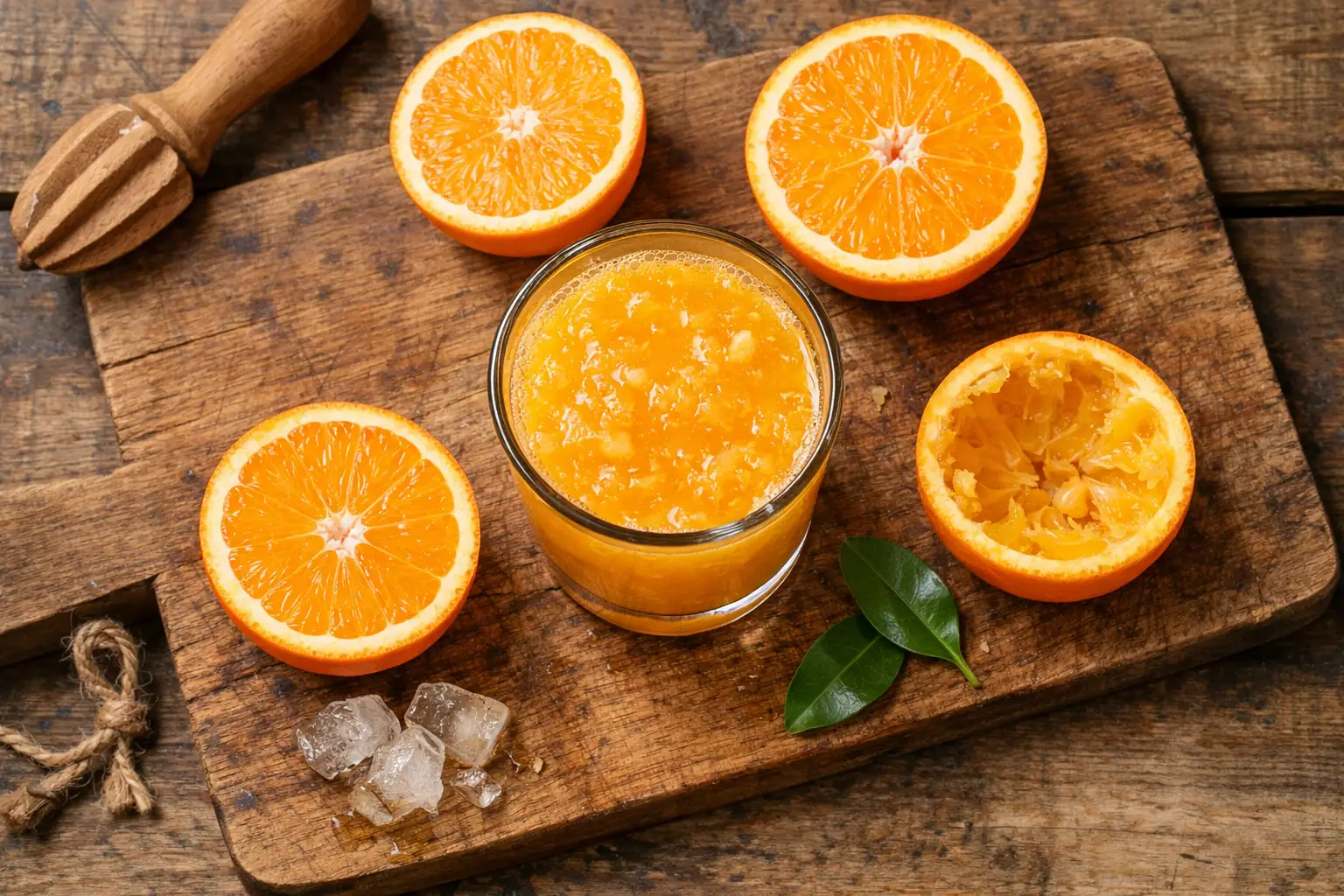
A refreshing, nutrient-dense beverage bursting with vitamin C, natural citrus flavonoids, and the added fiber benefits of real orange pulp.
Quick Nutrition Facts
Per 1 Cup Fresh Squeezed (248g)
| Nutrient | Amount |
|---|---|
| Calories | 112 kcal |
| Protein | 1.7g |
| Carbohydrates | 26g |
| Fiber | 0.5g |
| Sugars | 20.8g |
| Fat | 0.5g |
| Vitamin C | 124mg |
| Potassium | 496mg |
| Folate | 74mcg |
| Thiamin | 0.22mg |
Macronutrient Breakdown
 ChatGPT
  Claude
  AI Mode
  Perplexity
NUTRITIONIST INSIGHT
Pulpy orange juice delivers 124% of your daily vitamin C in a single cup. The retained pulp provides hesperidin and flavonoids that improve nutrient absorption and may support cardiovascular health. Always choose fresh-squeezed over reconstituted for maximum antioxidant benefit.
Myth Busters
MYTH #1: Orange Juice Is Just Sugar Water
TRUTH: Fresh squeezed pulpy orange juice delivers 124mg vitamin C (124% DV), 496mg potassium (10% DV), and 74mcg folate (19% DV) per cup. Unlike soda, its natural sugars come packaged with bioavailable antioxidants and flavonoids that reduce oxidative stress.
MYTH #2: Drinking Orange Juice Causes Diabetes
TRUTH: 100% orange juice has a moderate glycemic index (46-53). Studies show orange juice produces a lower glycemic response than sugar-sweetened beverages with matched sugar content. Moderate intake (1 cup/day) is not linked to increased diabetes risk in healthy adults.
MYTH #3: Pulp-Free Is the Same as Pulpy
TRUTH: Pulp contains additional fiber, hesperidin, and flavonoids stripped during filtration. Adding orange pomace (pulp fiber) back into juice significantly attenuates the postprandial glucose peak response.
MYTH #4: Orange Juice Destroys Tooth Enamel
TRUTH: While citric acid can soften enamel temporarily, drinking with meals and rinsing with water afterward minimizes risk. The calcium and vitamin C in orange juice actually support oral tissue health when consumed properly.
MYTH #5: You Should Never Give Orange Juice to Kids
TRUTH: The American Academy of Pediatrics allows 4-6 oz of 100% juice daily for children aged 4-6. Fresh squeezed pulpy juice provides essential vitamin C and hydration without added sugars found in juice "drinks."
NutriScore by Health Goals
| Health Goal | NutriScore | Why This Score? |
|---|---|---|
| Weight Loss |  | 112 cal per cup with 21g sugar. Limit to 1 small glass (4oz/56 cal). Eat whole oranges when possible for more fiber. |
| Muscle Gain |  | Quick carbs (26g) for post-workout glycogen, 496mg potassium prevents cramps. Pair with protein shake. |
| Diabetes Management | | Moderate GI (46-53). 100% OJ shows lower glycemic response than sugar-matched drinks. Limit to 4oz with meals, choose pulpy. |
| PCOS Management | | Natural sugars can affect insulin levels. Limit to 4oz daily, always pair with protein/fat. |
| Pregnancy Nutrition |  | Excellent folate source (74mcg/cup, 19% DV), vitamin C aids iron absorption. Ensure juice is pasteurized. |
| Viral/Flu Recovery | | 124% DV vitamin C per cup boosts immune function. Hydrating, easy to consume, electrolytes support recovery. |
PERSONALIZED NUTRITION
Track your meals with NutriScan for personalized NutriScores based on your specific health goals!
Blood Sugar Response to Pulpy Orange Juice
Understanding how pulpy orange juice affects your blood glucose helps you make informed decisions about portion size and timing.
Typical Glucose Response Curve
This chart shows typical blood glucose response for general healthy individuals. Individual responses may vary. Not medical advice.
How to Flatten the Spike
Pairing orange juice with protein or healthy fat slows glucose absorption and reduces the peak blood sugar level:
- 🥚 Eggs or cheese omelette - Protein and fat buffer sugar absorption
- 🥜 Handful of almonds or walnuts - Healthy fats slow glucose uptake
- 🥣 Oatmeal with seeds - Soluble fiber extends energy release
- 🥑 Avocado toast - Healthy fats and fiber pair naturally with citrus
Drinking juice with a meal rather than alone can reduce the glucose spike by up to 30%.
Cultural Significance
Orange juice has been a breakfast staple worldwide for over a century, with deep roots in both agriculture and daily nutrition.
In the Americas:
- Florida and Brazil produce over 80% of the world's orange juice supply
- Became a breakfast icon in the 1920s when Sunkist promoted "Drink an Orange" campaigns
- USDA included it as a recommended daily fruit serving in the 1940s
- Fresh-squeezed with pulp remains the gold standard in juice bars across Latin America
In India and South Asia:
- Nagpur (Maharashtra) is India's "Orange City" producing Nagpur oranges
- Fresh squeezed orange juice is a popular roadside beverage (mosambi juice variants)
- Ayurveda values citrus for digestive fire (agni) and seasonal immunity
- Street vendors serve it fresh with a pinch of black salt (kala namak) or chaat masala
Global Impact:
- Orange juice is the most consumed fruit juice globally (over 2 billion liters annually)
- Vitamin C fortification of orange juice helped reduce scurvy in developing nations
- Pulpy varieties gained popularity as consumers shifted toward less processed options
Compare & Substitute
Pulpy Orange Juice vs Similar Beverages (Per 100g)
| Nutrient | 🍊 Pulpy OJ | 🍋 Lemonade | 🍎 Apple Juice | 🥥 Coconut Water |
|---|---|---|---|---|
| Calories | 45 kcal | 40 kcal | 46 kcal | 19 kcal |
| Carbs | 10.4g | 10.6g | 11.3g | 3.7g |
| Fiber | 0.2g | 0g | 0.1g | 1.1g |
| Protein | 0.7g | 0.1g | 0.1g | 0.7g |
| Fat | 0.2g | 0g | 0.1g | 0.2g |
| Vitamin C | 50mg | 18mg | 0.9mg | 2.4mg |
| Potassium | 200mg | 15mg | 101mg | 250mg |
| Sugar | 8.4g | 9.6g | 9.6g | 2.6g |
| Best For | Immunity, vitamin C boost | Hydration, low-calorie option | Quick energy, kid-friendly | Hydration, electrolyte replenishment |
Frequently Asked Questions
How many calories are in fresh squeezed orange juice?
Fresh squeezed pulpy orange juice contains about 45 calories per 100g (112 calories per 1 cup/248g). The calories come primarily from natural sugars (86% carbs, 7% protein, 7% fat).
Per serving comparison:
- 4 oz glass (small): 56 calories
- 8 oz glass (standard cup): 112 calories
- 12 oz glass (large): 168 calories
Is pulpy orange juice good for weight loss?
Pulpy orange juice can fit a weight loss plan when consumed in moderation. One cup has 112 calories with minimal fiber (0.5g), so it won't fill you up like whole oranges.
Best practices: Limit to 4-6 oz per day, drink with breakfast (not alone), choose pulpy over smooth for extra fiber, and count it toward your daily calorie goals.
Can diabetics drink orange juice?
Diabetics should consume orange juice cautiously but don't need to avoid it completely. Fresh squeezed OJ has a moderate GI of 46-53, and studies show lower glycemic response compared to sugar-matched beverages.
Tips for diabetics:
- Limit to 4 oz (half cup) per serving
- Always drink with a meal containing protein and fat
- Choose pulpy varieties for slightly better glucose response
- Monitor blood sugar 2 hours after drinking
What vitamins are in orange juice?
Key nutrients per cup (248g):
- Vitamin C: 124mg (124% DV) for immune function and collagen synthesis
- Potassium: 496mg (10% DV) for blood pressure regulation
- Folate: 74mcg (19% DV) for cell growth and pregnancy health
- Thiamin (B1): 0.22mg (18% DV) for energy metabolism
Is pulpy orange juice healthier than smooth?
Pulpy juice retains more of the orange's natural fiber, hesperidin, and flavonoids. Research shows adding pulp fiber back into juice attenuates postprandial glucose peaks. The pulp also contains naringin and nobiletin, flavonoids with anti-inflammatory properties.
Bottom line: Choose pulpy when available for marginally better nutrition and slower sugar absorption.
When is the best time to drink orange juice?
Depends on your goal:
- Immunity: Morning with breakfast for peak vitamin C absorption
- Exercise: 30 minutes pre-workout for quick energy and hydration
- Iron absorption: With iron-rich meals (vitamin C enhances non-heme iron uptake)
- Avoid: On empty stomach if you have acid reflux or GERD
IMPORTANT NOTE
Always choose pasteurized orange juice during pregnancy. Avoid calcium-fortified OJ when taking iron supplements, as calcium reduces iron absorption.


Similar Nutritious Foods
4505 Chicharrones Classic Chili Salt
7 Eleven Japan Crispy Corn Cheese
Explore More Nutrition Tools & Resources
AI Calorie Counter App - Snap a Photo, Get Macros
AI Nutritionist App That Reads Your Logged Meals
Best Protein Supplements for Women
Bulking Meal Plan App That Sets Your Surplus
ChatGPT Calorie Counter Alternative That Keeps the Total
ChatGPT Diet Plan Alternative That Tracks What You Eat
ChatGPT Weight Loss Coach Alternative With a Food Log
Fast Food Calorie Counter App That Reads the Tray
Free Calorie Tracker App with AI Photo Scans | NutriScan
Indian Diet Plan App With Veg and Non Veg Meals
Indian Food Calorie Calculator - Get Instant Nutrition Facts for Desi Meals — 2026
Intermittent Fasting for Women, Timer and Meal Log App
Intermittent Fasting Tracker App - Free Fasting Timer
Macro Tracker App That Fills the Numbers From a Photo
Mediterranean Diet Meal Plan App That Counts the Oil
Micronutrient Tracker App for Vitamins and Minerals
MyFitnessPal Alternative That Stays Free | NutriScan
NutriScore App: A Free Grade on Every Meal | NutriScan
Nutrition Label Scanner App for the Amount You Ate
Second Trimester Protein Guide
Vegetarian Meal Plan App With a Protein Target
Voice Calorie Counter - Speak to Track Meals Hands-Free
Water and Calorie Tracker App - Free Water Log