Q Mochi Lychee Calories & Nutrition Facts (80g, 8 pieces)
Q Mochi Lychee is a Japanese-style rice cake snack by Royal Family Food Co. (Taiwan), sold at Tesco UK in an 80g pack of 8 chewy lychee-filled mochi pieces. Per pack: ~270 kcal, 1g protein, 64g carbs (28.5g sugar), 1g fat. The fruit-based lychee filling makes it markedly lower in fat than the chocolate variant, but it's still a high-sugar, high-carb confectionery treat best enjoyed in moderation.
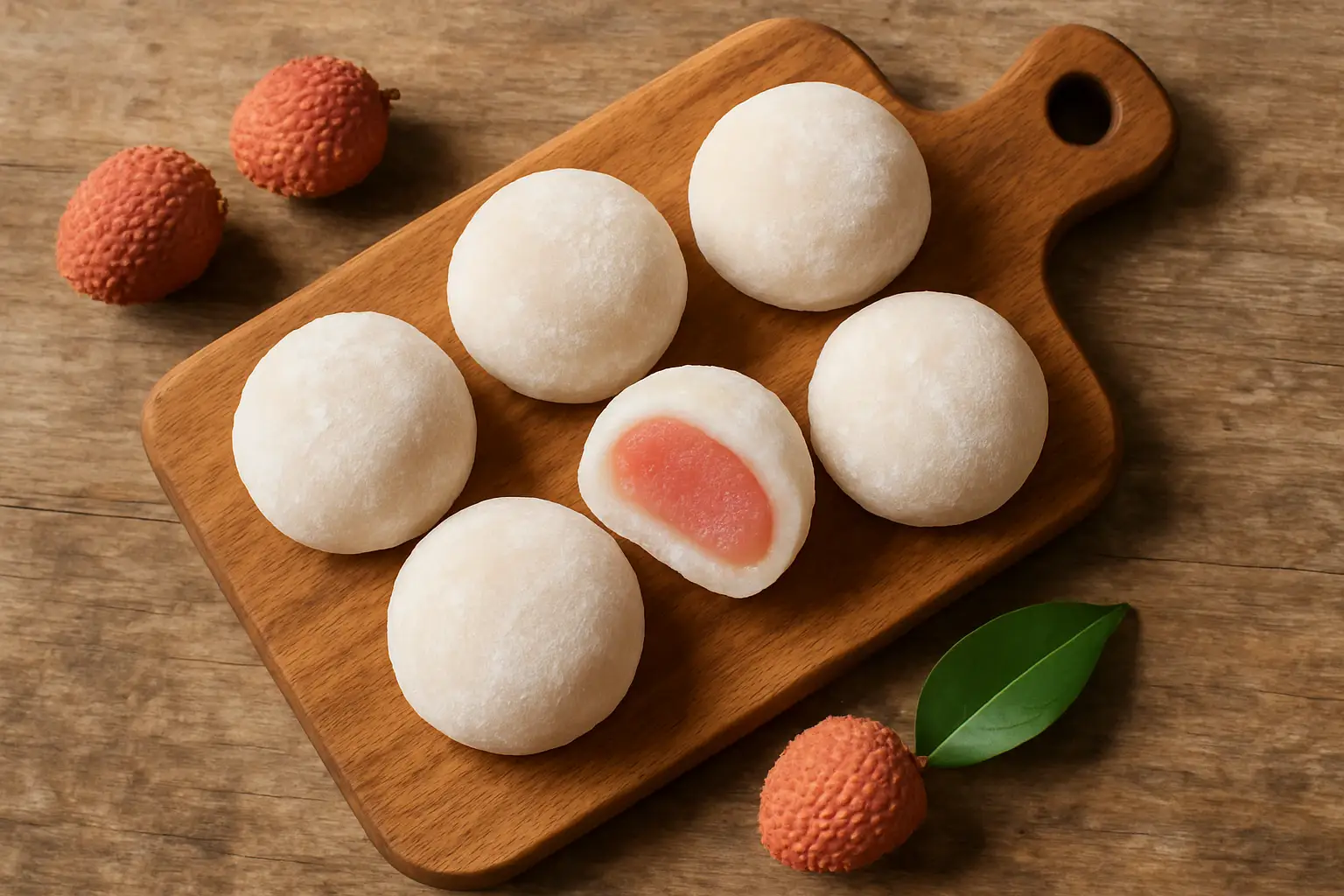
Quick Nutrition Facts
Per 1 pack (80g / 8 pieces)
| Nutrient | Amount |
|---|---|
| Calories | 270 kcal |
| Protein | 1g |
| Carbohydrates | 64.3g |
| Fiber | 0.2g |
| Sugars | 28.5g |
| Fat | 1g |
| Sodium | 3 mg |
Macronutrient Breakdown
 ChatGPT
  Claude
  AI Mode
  Perplexity
NUTRITIONIST'S INSIGHT
Q Mochi Lychee is the leanest of the Tesco Q Mochi range at just 1g fat per pack — but that's largely because the lychee filling is sugar-based rather than cream or chocolate. With 64g of carbs and 28.5g of sugar per 80g pack, this snack drives a rapid blood-glucose rise. Glutinous rice has a high glycaemic index (GI ~70–85), and the maltose-sugar dough amplifies this further. Two pieces (20g, ~68 kcal) is a sensible portion for blood-sugar management. The near-zero fat and sodium content is a relative positive, but this is still an ultra-processed confectionery snack with minimal fibre or micronutrient value.
Myth Busters
MYTH #1: Lychee mochi is a light, fruity snack with few calories
TRUTH: While lychee mochi is lower in fat than chocolate varieties, it is very high in carbohydrates and sugar. At ~337 kcal/100g, it is calorie-dense. The 'fruitiness' comes mostly from flavouring and a small lychee ingredient (10%), not a significant amount of real fruit. Open Food Facts — Mochi au Litchi, Royal Family Food Co., 210g (barcode 4711931007223); USDA FoodData Central — Mochi, rice cake (reference)
MYTH #2: Because it's low in fat, it won't raise blood sugar much
TRUTH: Fat actually slows glucose absorption — so the very low fat content of Q Mochi Lychee (1g/80g) means there is nothing to blunt the blood-sugar spike from 64g of carbs. The high-GI glutinous rice base combined with maltose causes a rapid glucose rise. PubMed — Glycemic index of glutinous rice products (rice cake base); Harvard T.H. Chan School of Public Health — Added Sugar in the Diet
MYTH #3: Japanese snacks are naturally healthier than Western confectionery
TRUTH: Q Mochi Lychee is an ultra-processed product containing maltose, sugar, modified starch, and palm oil. Its sugar content (35.6g/100g) is comparable to many Western gummy sweets and chocolate bars. Open Food Facts — Mochi au Litchi, Royal Family Food Co., 210g (barcode 4711931007223); Harvard T.H. Chan School of Public Health — Added Sugar in the Diet
MYTH #4: Eating just one or two pieces means you've had a negligible amount of sugar
TRUTH: Each piece contains roughly 3.6g of sugar. Two pieces (the often-assumed 'taster') adds up to ~7g sugar — nearly two teaspoons. The WHO recommends limiting free sugars to under 25g/day for health benefits. Harvard T.H. Chan School of Public Health — Added Sugar in the Diet; Open Food Facts — Mochi au Litchi, Royal Family Food Co., 210g (barcode 4711931007223)
NutriScore by Health Goals
| Health Goal | NutriScore | Why This Score? |
|---|---|---|
| Weight Loss |  | High calorie density from sugar and refined carbs; negligible protein and fibre means poor satiety. Small portions only. Open Food Facts — Mochi au Litchi, Royal Family Food Co., 210g (barcode 4711931007223); Harvard T.H. Chan School of Public Health — Added Sugar in the Diet |
| Muscle Gain | | Only ~1g protein per 80g pack. No meaningful contribution to muscle-building goals. Open Food Facts — Mochi au Litchi, Royal Family Food Co., 210g (barcode 4711931007223) |
| Blood Sugar Control | | High-GI glutinous rice plus 28.5g sugar per pack with near-zero fat or fibre to blunt the spike. Not suitable for those managing diabetes or insulin resistance. PubMed — Glycemic index of glutinous rice products (rice cake base); Harvard T.H. Chan School of Public Health — Added Sugar in the Diet |
| Heart Health |  | Extremely low sodium (~3mg/pack) and low saturated fat (0.8g/pack). A relative positive among confectionery snacks for cardiovascular markers. Open Food Facts — Mochi au Litchi, Royal Family Food Co., 210g (barcode 4711931007223) |
| General Balanced Diet |  | Acceptable as an occasional small treat within a varied diet. Provides no meaningful micronutrients, fibre, or protein. Harvard T.H. Chan School of Public Health — Added Sugar in the Diet |
PERSONALIZED NUTRITION
Track your meals with NutriScan for personalized NutriScores based on your specific health goals!
Blood Sugar Response to Q Mochi Lychee
Understanding how Q Mochi Lychee affects blood glucose can help with timing and meal pairing. PubMed — Glycemic index of glutinous rice products (rice cake base); Harvard T.H. Chan School of Public Health — Added Sugar in the Diet
Typical Glucose Response Curve
**Not medical advice**
How to flatten the spike
- Keep the portion to the labelled serving and avoid eating straight from the bag or tray.
- Pair it with a protein or fibre source, such as Greek yogurt, eggs, lentils, beans, salad, or edamame, when you want steadier appetite and glucose control.
- Avoid pairing it with sugary drinks; choose water, unsweetened tea, or coffee so the snack does not become a larger sugar load.
Cultural Significance
Mochi (餅) has been central to Japanese culinary culture for over 1,000 years, originally made by pounding glutinous rice (mochigome) at New Year and ceremonial occasions. Royal Family Food Co. (Taiwan, est. 1987) popularised the modern convenience format of individually-wrapped, cream- or fruit-filled mochi, becoming one of Asia's best-known mochi exporters. The lychee (荔枝, lìzhī) flavour draws on the iconic summer fruit of southern China and Southeast Asia, beloved for its floral sweetness. The lychee variant is especially popular in markets where lighter, fruit-flavoured confectionery is preferred over richer chocolate styles. Its arrival at Tesco UK in 2026, alongside chocolate and strawberry variants, reflects Britain's growing appetite for East Asian snack culture.
Compare & Substitute
Q Mochi Lychee vs Similar Foods
| Nutrient | Fresh lychee fruit | Plain unfilled mochi (wagashi-style) | Lychee sorbet (homemade or low-sugar) | Rice crackers with fruit jam |
|---|---|---|---|---|
| Calories | 75 kcal | 120 kcal | 150 kcal | 110 kcal |
| Protein | 0.8g | 2g | 3g | 2g |
| Carbohydrates | 19g | 27g | 20g | 24g |
| Fat | 0.4g | 0.5g | 6g | 1g |
Frequently Asked Questions
How many calories are in one piece of Q Mochi Lychee?
Each 10g piece contains approximately 34 kcal, ~0.1g protein, 8g carbs (3.6g sugar), and 0.1g fat.
Is Q Mochi Lychee suitable for vegans?
The lychee variant does not list dairy ingredients in the known formulation (unlike the chocolate variant which contains milk powder). However, the Tesco 80g pack label should be checked for allergen declarations, including possible traces, as production may be shared with non-vegan variants.
Does Q Mochi contain gluten?
Glutinous rice (the main ingredient) is naturally gluten-free despite the name. However, cross-contamination with gluten-containing products is possible in shared manufacturing facilities. Those with coeliac disease should check the packaging allergen statement before consuming.
Why does the lychee flavour have far fewer calories than the chocolate flavour?
The difference is almost entirely due to fat. The chocolate variant contains palm oil and cocoa-based filling (8.7g fat/80g = ~78 kcal from fat), while the lychee variant uses a fruit-based filling with near-zero fat (1g fat/80g = ~9 kcal from fat). Carbohydrates in the lychee version are actually higher per gram.
Where can I buy Q Mochi Lychee in the UK?
Q Mochi Lychee is sold at Tesco stores and on Tesco.com as part of their new Japanese snack range. The 80g pack (8 pieces) retails at £2.75, or £2.35 with a Tesco Clubcard.




Similar Nutritious Foods
4505 Chicharrones Classic Chili Salt
7 Eleven Japan Crispy Corn Cheese
Explore More Tools
AI Calorie Counter App - Snap a Photo, Get Macros
AI Nutritionist App That Reads Your Logged Meals
Best Protein Supplements for Women
Bulking Meal Plan App That Sets Your Surplus
ChatGPT Calorie Counter Alternative That Keeps the Total
ChatGPT Diet Plan Alternative That Tracks What You Eat
ChatGPT Weight Loss Coach Alternative With a Food Log
Fast Food Calorie Counter App That Reads the Tray
Free Calorie Tracker App with AI Photo Scans | NutriScan
Indian Diet Plan App With Veg and Non Veg Meals
Indian Food Calorie Calculator - Get Instant Nutrition Facts for Desi Meals — 2026
Intermittent Fasting for Women, Timer and Meal Log App
Intermittent Fasting Tracker App - Free Fasting Timer
Macro Tracker App That Fills the Numbers From a Photo
Mediterranean Diet Meal Plan App That Counts the Oil
Micronutrient Tracker App for Vitamins and Minerals
MyFitnessPal Alternative That Stays Free | NutriScan
NutriScore App: A Free Grade on Every Meal | NutriScan
Nutrition Label Scanner App for the Amount You Ate
Second Trimester Protein Guide
Vegetarian Meal Plan App With a Protein Target
Voice Calorie Counter - Speak to Track Meals Hands-Free
Water and Calorie Tracker App - Free Water Log