Roasted Beets: Calories, Nutrition and Health Benefits
Blood pressure-friendly root vegetable loaded with nitrates, betalain antioxidants, and essential folate for heart health and exercise performance.
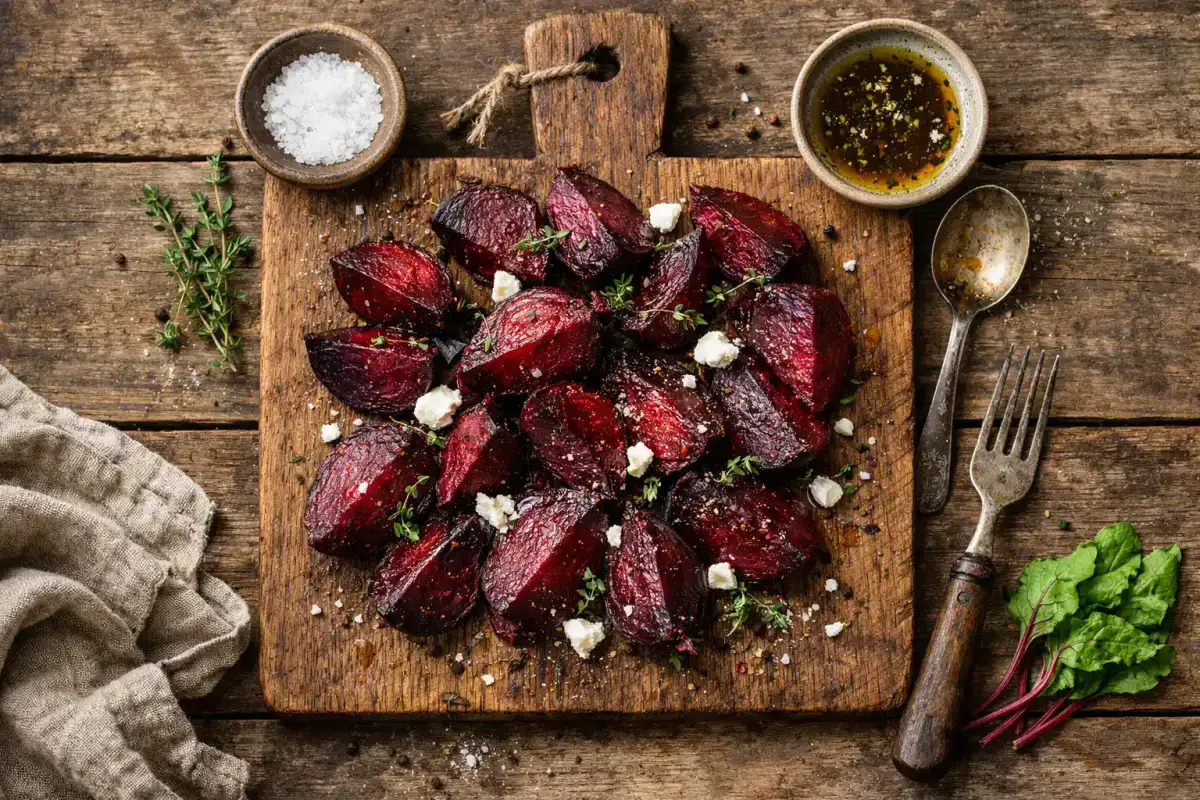
Quick Nutrition Facts
Per 1 Cup Sliced Roasted Beets (170g)
| Nutrient | Amount |
|---|---|
| Calories | 75 kcal |
| Protein | 2.9g |
| Carbohydrates | 17g |
| Fiber | 3.4g |
| Sugars | 13.6g |
| Fat | 0.3g |
| Folate | 136mcg |
| Potassium | 518mg |
| Manganese | 0.56mg |
| Iron | 1.3mg |
Macronutrient Breakdown
 ChatGPT
  Claude
  AI Mode
  Perplexity
NUTRITIONIST INSIGHT
Roasted beets are one of the best natural sources of dietary nitrates, which convert to nitric oxide and help lower blood pressure. Just one cup provides 34% of your daily folate and 11% of potassium needs, making them a powerhouse for heart health and pregnancy nutrition.
Myth Busters
MYTH #1: Beets Are Too High in Sugar for Healthy Eating
TRUTH: Roasted beets have only 44 calories and 8g sugar per 100g. The natural sugars come packaged with fiber, folate, and powerful betalain antioxidants that reduce inflammation. Their glycemic load is just 5, far lower than most fruits.
MYTH #2: Cooking Beets Destroys All Their Nutrients
TRUTH: Roasting preserves most of beets' key nutrients. Betalains and nitrates remain largely intact after cooking. While some vitamin C is reduced, the improved digestibility and concentrated flavors make roasted beets an excellent nutritional choice.
MYTH #3: Beets Will Dangerously Raise Blood Sugar
TRUTH: Despite a medium GI of 64, beets have a very low glycemic load (5) because they contain only 10g carbs per 100g. Studies show beetroot consumption may actually improve glycemic control in type 2 diabetes patients when consumed in reasonable portions.
MYTH #4: Red Urine After Eating Beets Means a Health Problem
TRUTH: Beeturia (red/pink urine after eating beets) affects 10-14% of people and is completely harmless. It occurs because betalain pigments pass through without full breakdown. It is not a sign of any medical condition.
MYTH #5: Beets Are Only Good for Athletes
TRUTH: While beets do boost exercise performance through nitrate-driven nitric oxide production, their benefits extend far beyond sports. They support blood pressure regulation, liver health, anti-inflammatory pathways, and cognitive function in all populations.
NutriScore by Health Goals
| Health Goal | NutriScore | Why This Score? |
|---|---|---|
| Weight Loss |  | Only 44 cal/100g, 3.4g fiber per cup promotes fullness, natural sweetness curbs cravings. Excellent low-calorie side dish. |
| Muscle Gain |  | Dietary nitrates boost exercise performance and oxygen efficiency. Good carb source for glycogen, but low protein requires pairing. |
| Diabetes Management | | Low glycemic load (5). Studies show beetroot may improve glycemic control and insulin sensitivity. Pair with protein for best results. |
| PCOS Management | | Anti-inflammatory betalains help manage PCOS inflammation. Low calorie density supports weight management goals. |
| Pregnancy Nutrition | | Rich in folate (136mcg per cup) critical for neural tube development, plus iron and potassium for maternal health. |
| Viral/Flu Recovery | | Easy to digest, anti-inflammatory betalains, immune-supporting vitamin C and iron, electrolytes for hydration. |
PERSONALIZED NUTRITION
Track your meals with NutriScan for personalized NutriScores based on your specific health goals!
Blood Sugar Response to Roasted Beets
Understanding how roasted beets affect your blood glucose can help you make informed decisions about when and how to eat them.
Typical Glucose Response Curve
*This chart shows typical blood glucose response for general healthy individuals. Individual responses may vary. Not medical advice.*
How to Flatten the Spike
Pairing beets with protein or healthy fat slows glucose absorption and reduces the peak blood sugar level:
- 🧀 Goat cheese or feta - Adds protein and healthy fats, classic beet pairing
- 🥜 Walnuts or pecans - Healthy fats, fiber, and satisfying crunch
- 🥗 Olive oil drizzle - Monounsaturated fats slow carb absorption
- 🥚 Hard-boiled eggs - Complete protein source for balanced meals
This combination not only reduces the glucose spike but also extends energy release, keeping you fuller for longer.
Cultural Significance
Beets have been cultivated for over 4,000 years, with roots in the Mediterranean and Middle Eastern regions.
In India:
- Beetroot (chukandar) is popular in salads, raita, and halwa desserts
- Used in Ayurveda as a blood purifier and liver tonic
- Common ingredient in North Indian winter cuisine
- Beetroot juice is a traditional remedy for anemia and fatigue
Global Impact:
- Russia and Eastern Europe: Central to borscht, a cultural staple soup
- Ancient Romans used beets medicinally for fevers and blood disorders
- Modern sports nutrition relies on beetroot juice for performance gains
- Beet sugar production accounts for 20% of global sugar supply
Compare & Substitute
Roasted Beets vs Similar Vegetables (Per 100g)
| Nutrient | 🟣 Roasted Beets | 🥕 Roasted Carrots | 🍠 Sweet Potato | 🟢 Roasted Broccoli |
|---|---|---|---|---|
| Calories | 44 kcal | 41 kcal | 86 kcal | 35 kcal |
| Carbs | 10g | 10g | 20g | 7g |
| Fiber | 2g | 2.8g | 3g | 2.6g |
| Protein | 1.7g | 0.9g | 1.6g | 2.4g |
| Fat | 0.2g | 0.2g | 0.1g | 0.4g |
| Potassium | 305mg | 320mg | 337mg | 316mg |
| Folate | 80mcg | 19mcg | 11mcg | 63mcg |
| Sugar | 8g | 4.7g | 4.2g | 1.7g |
| Best For | Blood pressure, heart health | Eye health, vitamin A | Sustained energy, vitamin A | Low-calorie, vitamin C |
Frequently Asked Questions
Are roasted beets good for weight loss?
Yes, roasted beets are excellent for weight loss. One cup of sliced roasted beets has only 75 calories with 3.4g of fiber that promotes satiety. The natural sweetness helps satisfy cravings without excess calories, and dietary nitrates may enhance exercise performance for better calorie burn.
Best practices: Enjoy 1 cup as a side dish, pair with leafy greens and goat cheese for a balanced meal, avoid adding excessive oil or sugar-heavy glazes.
Can diabetics eat roasted beets?
Diabetics can safely eat roasted beets in moderation. Despite a medium GI of 64, the glycemic load is only about 5 because beets contain just 10g of carbs per 100g.
Tips for diabetics:
- Enjoy 1/2 to 1 cup per serving (8-17g carbs)
- Always pair with protein or healthy fat
- Best timing: lunch or dinner as part of a mixed meal
- Monitor blood sugar 2 hours after eating
Studies suggest beetroot may actually help improve insulin sensitivity. Always consult your healthcare provider.
Do roasted beets lower blood pressure?
Beets are one of the richest dietary sources of nitrates. These convert to nitric oxide in the body, which relaxes blood vessels and improves blood flow. Research shows regular beetroot consumption can reduce systolic blood pressure by 4-10 mmHg, comparable to some medications.
For best results: Consume 1-2 cups of beets daily or 250ml of beetroot juice for consistent nitrate intake.
What are the main health benefits of roasted beets?
Key Benefits:
- Blood Pressure Regulation: Dietary nitrates produce nitric oxide for vasodilation
- Anti-Inflammatory: Betalain pigments reduce chronic inflammation
- Folate Powerhouse: 136mcg per cup supports cell growth and pregnancy
- Digestive Health: 3.4g fiber per cup supports regular bowel movements
- Exercise Performance: Nitrates improve oxygen efficiency during workouts
- Liver Support: Betaine content supports liver detoxification pathways
Are roasted beets healthier than raw beets?
Both forms offer excellent nutrition. Roasting makes beets easier to digest and concentrates their natural sweetness.
Roasted Beets:
- Easier to digest, softer texture
- Slightly reduced vitamin C
- Betalains and nitrates largely preserved
- Better flavor for most people
Raw Beets:
- Maximum vitamin C content
- More crunchy texture for salads
- May cause digestive discomfort for some
- Higher resistant starch content
Recommendation: Rotate between both forms. Roast for meals and sides, use raw grated in salads and juices.
How many beets should I eat per day?
General Guidelines:
- 1 cup sliced daily - Most people (75 calories, 11% potassium, 34% folate)
- 1/2 cup daily - Kidney stone risk or oxalate sensitivity
- 1-2 cups daily - Athletes seeking performance benefits
Caution: Beets contain oxalates. If you have a history of kidney stones, limit intake and drink plenty of water. People on blood thinners should consult their doctor due to vitamin K content.
Track your meals with NutriScan app to see how roasted beets fit your personal nutrition goals.




Similar Nutritious Foods
4505 Chicharrones Classic Chili Salt
7 Eleven Japan Crispy Corn Cheese
Explore More Nutrition Tools & Resources
AI Calorie Counter App - Snap a Photo, Get Macros
AI Nutritionist App That Reads Your Logged Meals
Best Protein Supplements for Women
Bulking Meal Plan App That Sets Your Surplus
ChatGPT Calorie Counter Alternative That Keeps the Total
ChatGPT Diet Plan Alternative That Tracks What You Eat
ChatGPT Weight Loss Coach Alternative With a Food Log
Fast Food Calorie Counter App That Reads the Tray
Free Calorie Tracker App with AI Photo Scans | NutriScan
Indian Diet Plan App With Veg and Non Veg Meals
Indian Food Calorie Calculator - Get Instant Nutrition Facts for Desi Meals — 2026
Intermittent Fasting for Women, Timer and Meal Log App
Intermittent Fasting Tracker App - Free Fasting Timer
Macro Tracker App That Fills the Numbers From a Photo
Mediterranean Diet Meal Plan App That Counts the Oil
Micronutrient Tracker App for Vitamins and Minerals
MyFitnessPal Alternative That Stays Free | NutriScan
NutriScore App: A Free Grade on Every Meal | NutriScan
Nutrition Label Scanner App for the Amount You Ate
Second Trimester Protein Guide
Vegetarian Meal Plan App With a Protein Target
Voice Calorie Counter - Speak to Track Meals Hands-Free
Water and Calorie Tracker App - Free Water Log