Rugbrød (Danish Rye Bread): Calories, Nutrition and Health Benefits
Denmark's beloved whole grain sourdough rye bread—dense, fiber-rich, and perfect for smørrebrød with its low glycemic index and satisfying nutrition.
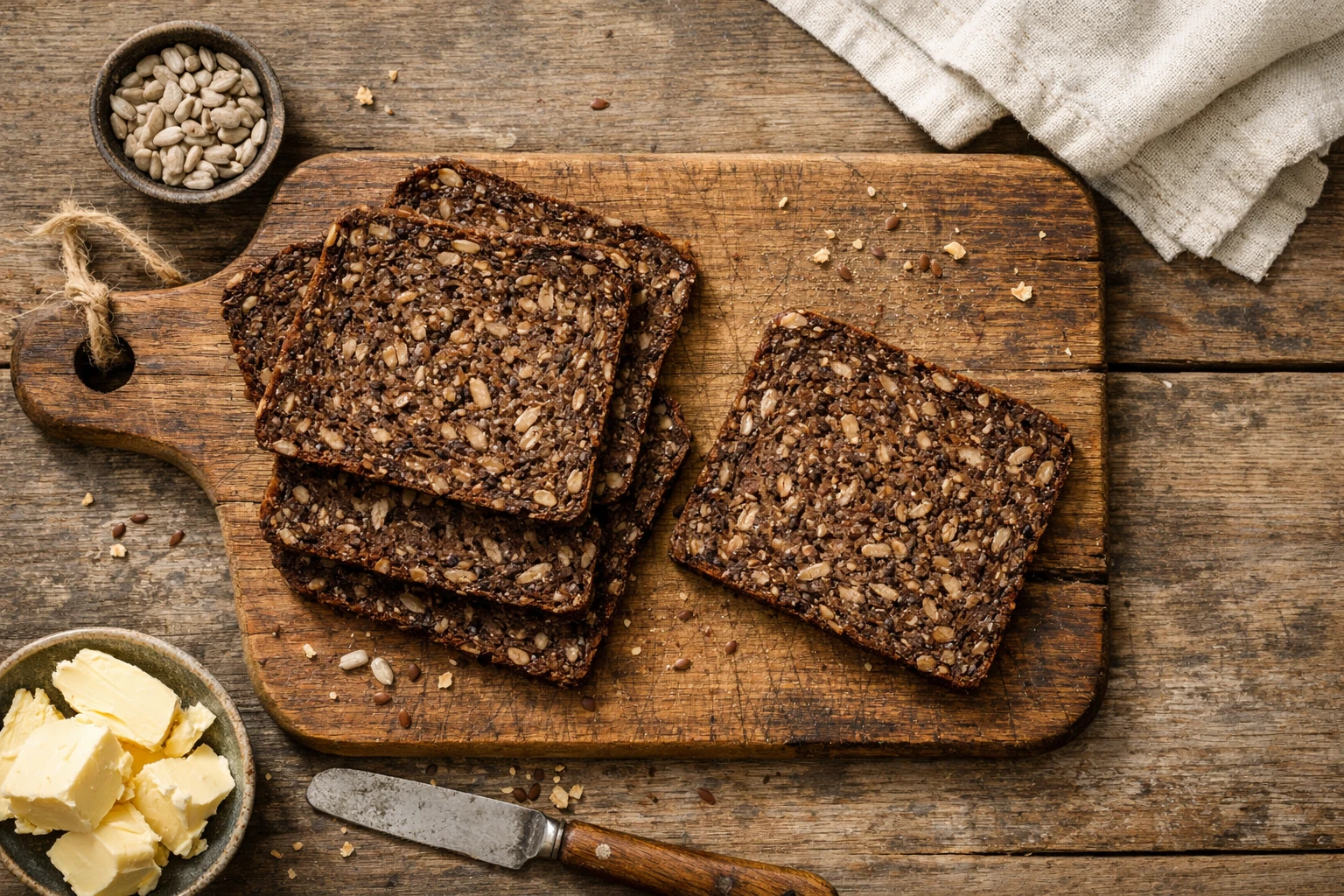
Quick Nutrition Facts
Per 100g (2 slices)
| Nutrient | Amount |
|---|---|
| Calories | 210 kcal |
| Protein | 7g |
| Carbohydrates | 40g |
| Fiber | 8g |
| Sugars | 3g |
| Fat | 2g |
| Iron | 2.5mg |
| Magnesium | 60mg |
| B Vitamins | 15% DV |
| Resistant Starch | High |
Macronutrient Breakdown
 ChatGPT
  Claude
  AI Mode
  Perplexity
NUTRITIONIST INSIGHT
Rugbrød provides 32% of daily fiber needs in just 100g. Sourdough fermentation increases mineral bioavailability and creates beneficial organic acids that support gut health and blood sugar control.
Myth Busters
MYTH #1: All Bread Causes Weight Gain
TRUTH: Rugbrød's 8g fiber per 100g promotes fullness and prevents overeating. High-fiber rye bread improves satiety better than white bread, helping control total calorie intake. Limit to 2-3 slices daily for weight management.
MYTH #2: Diabetics Should Avoid All Bread
TRUTH: Rye bread has a low glycemic index (GI 41-55) compared to white bread (GI 75). The fiber and sourdough fermentation slow glucose absorption, making Rugbrød diabetes-friendly when paired with protein.
MYTH #3: Dense Bread Is Less Nutritious
TRUTH: Rugbrød's dense texture comes from whole rye kernels and seeds, not processing. This density provides more fiber, minerals, and resistant starch per slice than fluffy white bread.
MYTH #4: Sourdough Is Just a Flavor Trend
TRUTH: Sourdough fermentation in Rugbrød breaks down phytic acid, improving iron and zinc absorption. It also creates lactic acid bacteria that support gut microbiome health.
MYTH #5: You Can't Build Muscle on Bread
TRUTH: Rugbrød provides complex carbs (40g per 100g) for glycogen replenishment after workouts, plus 7g protein. Pair with protein-rich toppings (eggs, fish, cheese) for complete post-workout nutrition.
MYTH #6: Dark Bread Is Always Healthier
TRUTH: Only if it's whole grain. Rugbrød uses whole rye flour, not white flour with coloring. Check labels: look for "whole rye" as the first ingredient and at least 6g fiber per 100g.
NutriScore by Health Goals
| Health Goal | NutriScore | Why This Score? |
|---|---|---|
| Weight Loss |  | 210 calories with 8g fiber promotes fullness and reduces overall calorie intake. Low GI prevents blood sugar spikes. Limit to 2-3 slices daily, pair with protein. |
| Muscle Gain | | Complex carbs (40g) for glycogen replenishment, 7g protein, B vitamins for energy metabolism. Best post-workout or with meals. |
| Diabetes Management |  | Low GI (41-55) and high fiber slow glucose absorption. Sourdough fermentation improves insulin response. Pair with protein and healthy fats. |
| PCOS Management | | Low GI supports insulin sensitivity. High fiber aids hormone balance. Limit to 2 slices daily, choose organic when possible. |
| Pregnancy Nutrition | | Rich in iron (2.5mg) for preventing pregnancy anemia, folate, magnesium, and B vitamins essential for fetal development. |
| Viral/Flu Recovery | | Easy to digest, provides steady energy, supports gut health with fermented benefits. Iron and B vitamins support immune function. |
PERSONALIZED NUTRITION
Track your meals with NutriScan for personalized NutriScores based on your specific health goals!
Blood Sugar Response to Rugbrød
Understanding how Rugbrød affects blood glucose helps optimize meal timing and pairing strategies.
Typical Glucose Response Curve
*This chart shows typical blood glucose response for healthy individuals. Individual responses may vary. Not medical advice.*
How to Optimize Blood Sugar Control
Pairing rye bread with protein and fat further stabilizes glucose:
- 🥚 Eggs or smoked salmon - Complete protein and healthy fats
- 🧀 Cheese (Danish Havarti) - Protein and calcium
- 🥑 Avocado - Healthy fats and fiber
- 🥜 Nut butter (almond, cashew) - Protein and healthy fats
These toppings create classic Danish smørrebrød while slowing carbohydrate absorption and extending satiety.
Cultural Significance
Rugbrød is the cornerstone of Danish culinary tradition, eaten daily by most Danes for over 400 years.
In Denmark:
- Consumed at breakfast, lunch, and dinner
- Foundation of smørrebrød (open-faced sandwiches)
- Each Danish family has a preferred recipe or bakery
- Traditionally baked fresh daily or every other day
- Symbol of Danish simplicity and wholesome eating
Smørrebrød Tradition:
- Single slice topped with protein, vegetables, and garnish
- Classic combinations: pickled herring, roast pork, egg/shrimp
- Layering technique creates balanced, beautiful meals
- Eaten with knife and fork, never with hands
Nordic Health Philosophy:
- Part of Scandinavian "lagom" balanced lifestyle
- Whole grain foundation of Nordic diet (linked to longevity)
- Supports hygge culture: simple, comforting, nourishing food
Compare & Substitute
Rugbrød vs Other Whole Grain Breads (Per 100g)
| Nutrient | 🍞 Rugbrød | 🌾 Whole Wheat | 🥖 Pumpernickel | 🌰 Ezekiel Bread |
|---|---|---|---|---|
| Calories | 210 kcal | 247 kcal | 250 kcal | 240 kcal |
| Carbs | 40g | 49g | 47g | 43g |
| Fiber | 8g | 6g | 7g | 5g |
| Protein | 7g | 10g | 8g | 9g |
| Fat | 2g | 3g | 3g | 3g |
| Iron | 2.5mg | 2.5mg | 3mg | 2mg |
| Glycemic Index | 41-55 | 69-74 | 46-50 | 36 |
| Best For | Diabetes control | General use | Long fermentation | Sprouted grains |
Frequently Asked Questions
Is Rugbrød good for weight loss?
Yes, Rugbrød supports weight loss when eaten in moderation. A 100g serving has 210 calories with 8g fiber that promotes fullness, stabilizes blood sugar, and prevents overeating; the dense texture naturally limits portion size.
Best practices: Limit to 2-3 slices daily; top with lean protein (eggs, fish, turkey); avoid high-calorie spreads; eat at breakfast or lunch for sustained energy and satiety.
Can diabetics eat Rugbrød?
Diabetics can eat Rugbrød safely. With a glycemic index of 41-55 (low) and 8g fiber per 100g, it causes minimal blood sugar spikes compared to white bread.
Tips for diabetics: Eat 1-2 slices per meal; always pair with protein and healthy fat (eggs, cheese, avocado); choose authentic Danish or German brands; monitor blood sugar 2 hours after eating to understand individual response.
How much fiber is in Rugbrød?
A 100g serving of Rugbrød contains 8 grams of dietary fiber, providing approximately 32% of the daily fiber requirement for adults. This includes both soluble fiber (supports blood sugar control) and insoluble fiber (promotes digestive health).
What are the main health benefits of Rugbrød?
Key Benefits:
- Blood Sugar Control: Low GI (41-55) prevents glucose spikes
- Digestive Health: 8g fiber supports regular bowel movements and gut microbiome
- Heart Health: Whole grains reduce cardiovascular disease risk
- Weight Management: High fiber promotes satiety and reduces calorie intake
- Mineral Absorption: Sourdough fermentation increases iron, zinc, magnesium bioavailability
- Sustained Energy: Complex carbs provide steady glucose release
When is the best time to eat Rugbrød?
Depends on your goal:
- Weight Loss: Breakfast or lunch (high fiber keeps you full until next meal). Avoid dinner.
- Muscle Gain: Post-workout with protein (carbs replenish glycogen stores).
- Diabetes: Breakfast or lunch paired with protein and fat. Monitor evening consumption.
- General Health: Breakfast (traditional Danish way) for sustained morning energy.
IMPORTANT NOTE
Store Rugbrød in a cool, dry place. It stays fresh for 5-7 days due to low moisture content. Slice as needed to maintain freshness.
Is rye bread healthier than whole wheat bread?
Both are healthy whole grain options with unique benefits—choose based on health priorities.
Rugbrød (Rye Bread):
- Lower glycemic index (41-55 vs 69-74)
- Higher fiber (8g vs 6g per 100g)
- Better blood sugar control
- More resistant starch for gut health
- Denser, more filling texture
Whole Wheat Bread:
- Slightly higher protein (10g vs 7g per 100g)
- Milder flavor
- Softer texture
- More widely available
Recommendation: Diabetes/weight loss = Rugbrød (rye). General nutrition/muscle gain = both work well. Rotate for variety.
How many slices of Rugbrød should I eat per day?
General Guidelines:
- 2-3 slices daily - Most people (balanced carb intake)
- 1-2 slices daily - Weight loss or low-carb diets
- 3-4 slices daily - Athletes, high activity levels, pregnancy (higher carb needs)
Important: Each slice = ~50g = 105 calories, 4g fiber, 20g carbs. Pair with protein and vegetables for balanced meals.
Track your meals with NutriScan app to see how Rugbrød fits your personal nutrition goals.
Can I make Rugbrød at home?
Yes, authentic Rugbrød can be made at home with patience.
Basic ingredients: Whole rye flour, sourdough starter, water, salt, seeds (sunflower, flax, pumpkin).
Key steps: Mix ingredients; long fermentation (12-24 hours); bake at low temperature (300-325°F) for 60-90 minutes; cool completely before slicing.
Tips: Use a sourdough starter for authentic flavor; patience is essential (fermentation can't be rushed); dense texture is correct; invest in a bread pan with lid for proper shape.




Similar Nutritious Fruits
4505 Chicharrones Classic Chili Salt
7 Eleven Japan Crispy Corn Cheese
Explore More Nutrition Tools & Resources
AI Calorie Counter App - Snap a Photo, Get Macros
AI Nutritionist App That Reads Your Logged Meals
Best Protein Supplements for Women
Bulking Meal Plan App That Sets Your Surplus
ChatGPT Calorie Counter Alternative That Keeps the Total
ChatGPT Diet Plan Alternative That Tracks What You Eat
ChatGPT Weight Loss Coach Alternative With a Food Log
Fast Food Calorie Counter App That Reads the Tray
Free Calorie Tracker App with AI Photo Scans | NutriScan
Indian Diet Plan App With Veg and Non Veg Meals
Indian Food Calorie Calculator - Get Instant Nutrition Facts for Desi Meals — 2026
Intermittent Fasting for Women, Timer and Meal Log App
Intermittent Fasting Tracker App - Free Fasting Timer
Macro Tracker App That Fills the Numbers From a Photo
Mediterranean Diet Meal Plan App That Counts the Oil
Micronutrient Tracker App for Vitamins and Minerals
MyFitnessPal Alternative That Stays Free | NutriScan
NutriScore App: A Free Grade on Every Meal | NutriScan
Nutrition Label Scanner App for the Amount You Ate
Second Trimester Protein Guide
Vegetarian Meal Plan App With a Protein Target
Voice Calorie Counter - Speak to Track Meals Hands-Free
Water and Calorie Tracker App - Free Water Log