Smørrebrød (Danish Open Sandwich): Calories, Nutrition and Health Benefits
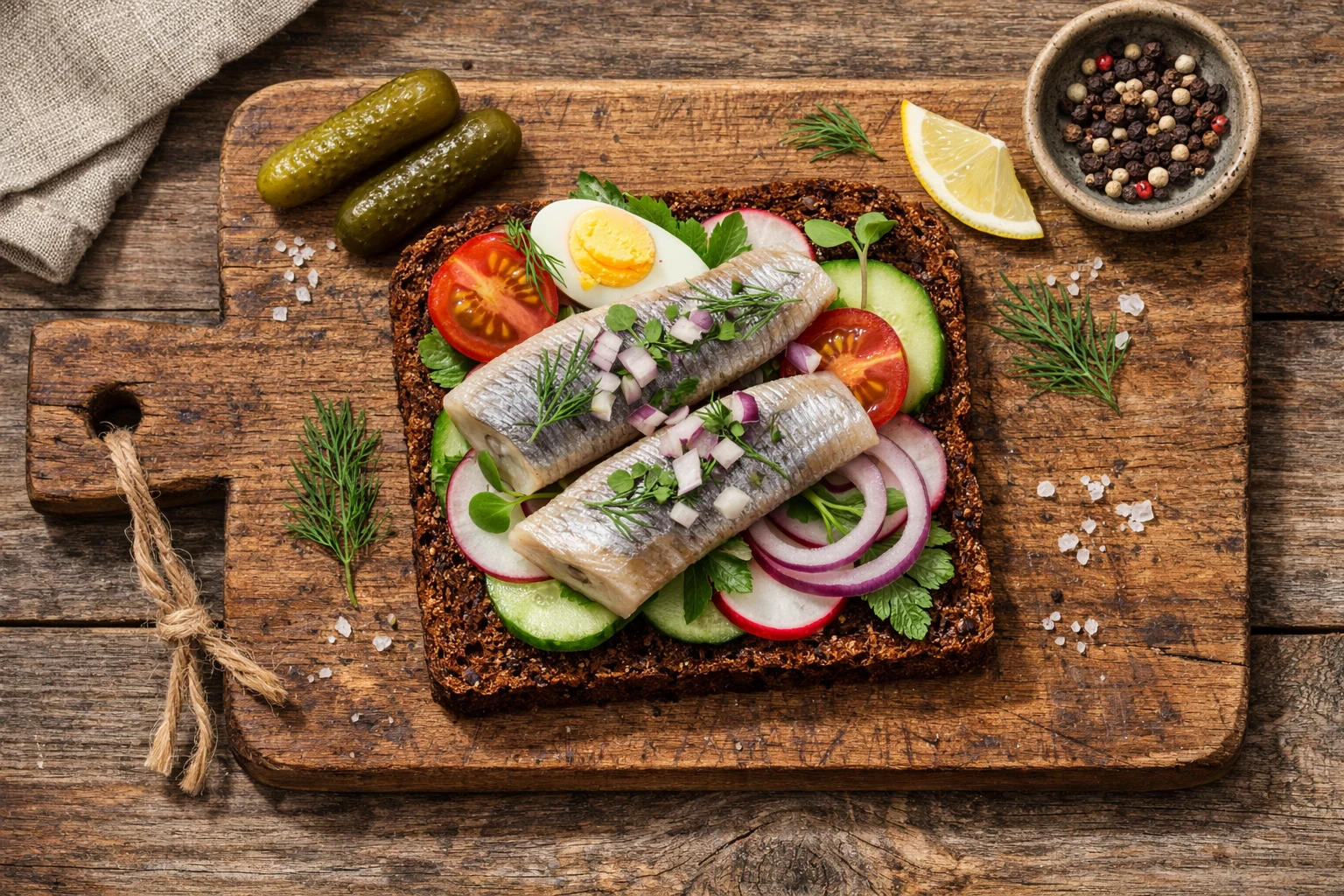
Denmark's beloved open-face sandwich featuring dense rye bread topped with fish, meat, or vegetables—a nutritious Nordic tradition combining fiber, protein, and healthy fats.
Quick Nutrition Facts
Per 1 Smørrebrød (150g, with fish topping)
| Nutrient | Amount |
|---|---|
| Calories | 350 kcal |
| Protein | 15g |
| Carbohydrates | 30g |
| Fiber | 5g |
| Sugars | 2g |
| Fat | 18g |
| Omega-3 | 1.2g |
| Sodium | 650mg |
| Vitamin D | 4mcg |
| Iron | 2.5mg |
Macronutrient Breakdown
 ChatGPT
  Claude
  AI Mode
  Perplexity
NUTRITIONIST INSIGHT
Smørrebrød's rye bread base provides better blood sugar control than white bread thanks to high fiber content and lower glycemic response. The open-face design naturally limits carbs while highlighting nutrient-dense toppings.
Myth Busters
MYTH #1: Smørrebrød Is Too High in Calories for Weight Loss
TRUTH: At 350 calories with 15g protein and 5g fiber, Smørrebrød promotes satiety better than many 400-500 calorie closed sandwiches. The high protein content increases fullness, helping control overall calorie intake throughout the day.
MYTH #2: Rye Bread Spikes Blood Sugar Like White Bread
TRUTH: Rye bread has a glycemic index of 50-58 compared to 75+ for white bread. Studies show rye induces lower insulin response in the postprandial phase, making it suitable for blood sugar management.
MYTH #3: The Fat Content Makes Smørrebrød Unhealthy
TRUTH: Most fat in traditional Smørrebrød comes from healthy sources—omega-3 rich fish like herring or salmon. Omega-3 fatty acids support heart health and reduce cardiovascular disease risk.
MYTH #4: You Need Butter on Every Smørrebrød
TRUTH: Traditional recipes use thin butter layers, but many modern versions skip it entirely. Fish naturally contains healthy fats, and adding vegetables like cucumber or radish provides moisture without extra calories.
MYTH #5: Smørrebrød Is Just a Snack, Not a Meal
TRUTH: With 15-20g protein, 30g complex carbs, and 5g fiber, Smørrebrød provides balanced macros for a complete meal. Danes traditionally eat 2-3 pieces as lunch, making it substantial and satisfying.
MYTH #6: All Smørrebrød Toppings Are Equally Healthy
TRUTH: Fish-based versions (herring, salmon, shrimp) provide omega-3s and lean protein. Butter-heavy or mayo-loaded options can add 200+ extra calories. Choose wisely based on your health goals.
NutriScore by Health Goals
| Health Goal | NutriScore | Why This Score? |
|---|---|---|
| Weight Loss |  | 350 calories with 15g protein and 5g fiber promotes satiety; open-face design uses half the bread of regular sandwiches. Choose fish toppings over butter-heavy options. |
| Muscle Gain |  | 15-20g protein per sandwich supports muscle synthesis; rye bread provides sustained energy; omega-3s aid recovery. |
| Diabetes Management | | Rye bread's low glycemic index (50-58) and high fiber slow glucose absorption; protein toppings stabilize blood sugar. |
| PCOS Management | | Low glycemic rye bread supports insulin sensitivity; omega-3 from fish reduces inflammation. Monitor sodium in cured fish toppings. |
| Pregnancy Nutrition | | Omega-3 from fish supports fetal brain development; vitamin D and iron from fish aid maternal health; fiber prevents constipation. |
| Viral/Flu Recovery | | Easy to digest, high protein supports immune function, omega-3 reduces inflammation. Avoid heavily salted versions if dehydrated. |
PERSONALIZED NUTRITION
Track your meals with NutriScan for personalized NutriScores based on your specific health goals!
Blood Sugar Response to Smørrebrød
Understanding how Smørrebrød affects your blood glucose can help you make informed decisions about toppings and timing.
Typical Glucose Response Curve
This chart shows typical blood glucose response for general healthy individuals. Individual responses may vary. Not medical advice.
How to Optimize Blood Sugar Response
The combination of rye bread fiber and protein toppings naturally moderates glucose spikes:
- 🐟 Fish toppings (herring, salmon, mackerel) - Adds omega-3 and protein
- 🥚 Hard-boiled eggs - Complete protein source slows digestion
- 🥒 Fresh vegetables (cucumber, radish, tomato) - Extra fiber with minimal calories
- 🧀 Light cheese (cottage cheese, quark) - Protein without excessive fat
This natural balance makes Smørrebrød an excellent choice for stable energy throughout the day.
Cultural Significance
Smørrebrød dates back to medieval Denmark when workers carried buttered rye bread to work, later adding leftovers as toppings.
In Denmark:
- Centerpiece of Danish lunch culture and "frokost" tradition
- Over 250 classic topping combinations documented
- Served at celebrations, business lunches, and daily meals
- Restaurant "smørrebrødsjomfruer" (sandwich maidens) are culinary artists
- National pride: featured prominently in hygge lifestyle
Nordic Influence:
- Swedish smörgås and Norwegian smørbrød share similar traditions
- Open sandwich concept spread throughout Scandinavia
- Modern Nordic cuisine elevates it to fine dining status
- Symbol of sustainable eating: minimal waste, whole foods focus
Compare & Substitute
Smørrebrød vs Similar Sandwiches (Per 100g)
| Nutrient | 🥪 Smørrebrød (Fish) | 🥖 Bánh Mì | 🥙 Falafel Wrap | 🍞 Club Sandwich |
|---|---|---|---|---|
| Calories | 233 kcal | 252 kcal | 290 kcal | 280 kcal |
| Carbs | 20g | 30g | 38g | 25g |
| Fiber | 3.3g | 2g | 4g | 1.8g |
| Protein | 10g | 12g | 8g | 15g |
| Fat | 12g | 10g | 12g | 14g |
| Omega-3 | 800mg | 50mg | 100mg | 80mg |
| Sodium | 433mg | 550mg | 480mg | 620mg |
| Best For | Heart health, diabetes | Quick lunch, street food | Vegetarian, fiber | High protein, convenience |
Frequently Asked Questions
Is Smørrebrød good for weight loss?
Yes, Smørrebrød supports weight loss when made with lean proteins. One sandwich provides 15g protein and 5g fiber for sustained fullness using only 350 calories. The open-face design eliminates 100-150 calories compared to regular sandwiches. Choose fish-based versions (herring, salmon, shrimp) over butter-heavy options; limit to 1-2 sandwiches per meal; add extra vegetables for volume without calories.
Can diabetics eat Smørrebrød?
Diabetics can safely eat Smørrebrød. Rye bread has a glycemic index of 50-58, significantly lower than white bread (75+), and high fiber content (5g per serving) slows glucose absorption. Best practices: choose whole-grain dense rye base; pair with protein-rich toppings like fish or eggs; add vegetables for extra fiber; avoid sweet or jam-based toppings; monitor portion to 1-2 pieces per meal.
How much protein is in Smørrebrød?
Smørrebrød contains 15-20g protein per sandwich depending on topping. Fish-based versions provide highest protein: salmon or herring 18-22g; shrimp 16-20g; meat options like roast beef or chicken 15-20g; vegetarian with egg or cheese 12-15g. The rye bread base adds 3-4g protein beyond toppings.
What are the main health benefits of Smørrebrød?
Key Benefits:
- Blood Sugar Control: Rye fiber and low GI prevent glucose spikes
- Heart Health: Omega-3 from fish toppings support cardiovascular function
- Digestive Health: 5g fiber promotes regular bowel movements and gut health
- Satiety: High protein content increases fullness and reduces snacking
- Nutrient Density: Whole grains, fish, and vegetables provide vitamins and minerals
- Weight Management: Open-face design naturally limits carb portions
What is the best Smørrebrød topping for health?
Fish-based toppings are healthiest. Herring provides 1,500mg omega-3 per serving plus vitamin D; salmon offers 1,200mg omega-3 and B vitamins; shrimp delivers lean protein (20g) with only 90 calories; mackerel provides vitamin D and selenium. Add fresh vegetables like cucumber (hydration), radish (vitamin C), dill (antioxidants), or tomato (lycopene) for extra nutrients without calories. Avoid mayonnaise-heavy salads; use light spreads.
Is Smørrebrød healthier than regular sandwiches?
Yes, Smørrebrød is generally healthier. The open-face design uses half the bread, reducing carbs by 15-20g and calories by 100-150 per serving compared to closed sandwiches. Rye bread provides 3x more fiber and lower glycemic index than white bread. Traditional toppings emphasize whole foods—fresh fish, vegetables, eggs—over processed meats and condiments. Portion control is built-in; visual presentation encourages mindful eating.
How many Smørrebrød should I eat per day?
General Guidelines:
- 1-2 sandwiches daily - Most people (350-700 calories total)
- 2-3 sandwiches per meal - Active adults, athletes (traditional Danish lunch)
- 1 sandwich daily - Weight loss, portion control
- 3-4 smaller pieces - Entertaining, varied toppings
Considerations: Monitor sodium if eating cured fish varieties daily; choose different toppings for nutrient variety; balance with vegetables and other protein sources throughout the day.
Can I eat Smørrebrød on a low-carb diet?
Modified Smørrebrød fits low-carb eating. Use thin rye slices (15g carbs vs 30g) or substitute with low-carb bread alternatives; focus on protein and fat-rich toppings like salmon, herring, eggs, or cheese; add generous vegetables; skip the bread entirely and serve toppings on cucumber slices or lettuce for ultra-low-carb (under 5g carbs). Traditional Smørrebrød with full rye bread provides 30g carbs—moderate, not low-carb.


Similar Nutritious Fruits
4505 Chicharrones Classic Chili Salt
7 Eleven Japan Crispy Corn Cheese
Explore More Nutrition Tools & Resources
AI Calorie Counter App - Snap a Photo, Get Macros
AI Nutritionist App That Reads Your Logged Meals
Best Protein Supplements for Women
Bulking Meal Plan App That Sets Your Surplus
ChatGPT Calorie Counter Alternative That Keeps the Total
ChatGPT Diet Plan Alternative That Tracks What You Eat
ChatGPT Weight Loss Coach Alternative With a Food Log
Fast Food Calorie Counter App That Reads the Tray
Free Calorie Tracker App with AI Photo Scans | NutriScan
Indian Diet Plan App With Veg and Non Veg Meals
Indian Food Calorie Calculator - Get Instant Nutrition Facts for Desi Meals — 2026
Intermittent Fasting for Women, Timer and Meal Log App
Intermittent Fasting Tracker App - Free Fasting Timer
Macro Tracker App That Fills the Numbers From a Photo
Mediterranean Diet Meal Plan App That Counts the Oil
Micronutrient Tracker App for Vitamins and Minerals
MyFitnessPal Alternative That Stays Free | NutriScan
NutriScore App: A Free Grade on Every Meal | NutriScan
Nutrition Label Scanner App for the Amount You Ate
Second Trimester Protein Guide
Vegetarian Meal Plan App With a Protein Target
Voice Calorie Counter - Speak to Track Meals Hands-Free
Water and Calorie Tracker App - Free Water Log