Starbucks Bacon Egg & Cheese Sandwich: Calories, Nutrition and Health Facts
High-protein breakfast sandwich with cage-free egg patty, applewood-smoked bacon, and aged white cheddar on an artisan roll.
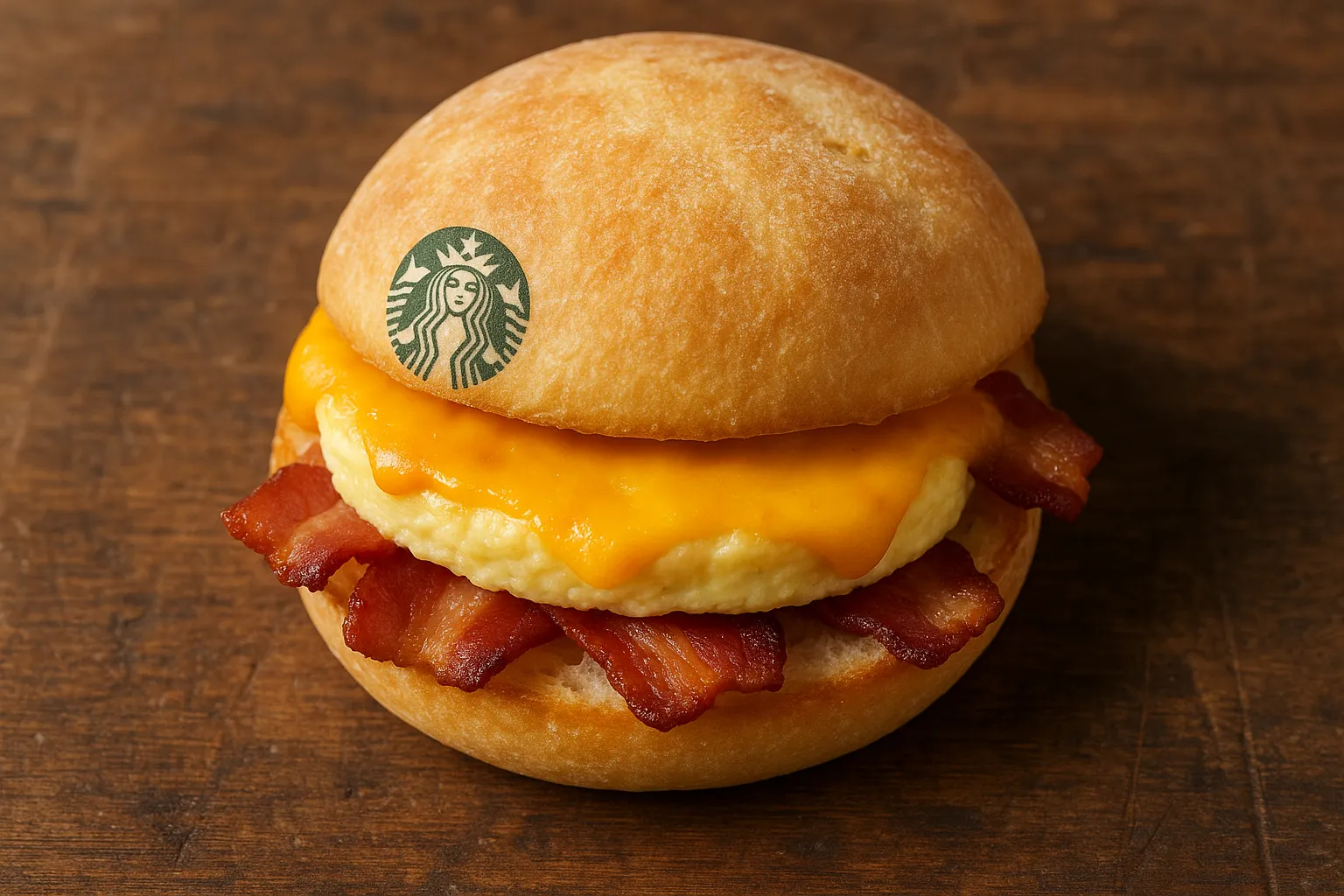
Quick Nutrition Facts
Per 1 Sandwich (145g)
| Nutrient | Amount |
|---|---|
| Calories | 450 kcal |
| Protein | 21g |
| Carbohydrates | 44g |
| Fiber | 3g |
| Sugars | 4g |
| Fat | 20g |
| Saturated Fat | 9g |
| Sodium | 1050mg |
| Cholesterol | 185mg |
| Calcium | 250mg |
Macronutrient Breakdown
 ChatGPT
  Claude
  AI Mode
  Perplexity
NUTRITIONIST INSIGHT
With 21g protein per sandwich, this breakfast provides lasting satiety for 3-4 hours. The protein-to-calorie ratio (42% daily value in 450 calories) makes it more filling than carb-heavy alternatives. Watch sodium at 1050mg (44% daily limit).
Myth Busters
MYTH #1: Breakfast Sandwiches Are Always Unhealthy
TRUTH: Not all breakfast sandwiches are equal. This sandwich provides 21g protein supporting muscle maintenance and satiety. While 450 calories and 20g fat require portion awareness, the balanced macros make it nutritionally superior to pastries or sugary breakfast items.
MYTH #2: Bacon Is Pure Fat With No Nutrition
TRUTH: Bacon provides complete protein, B vitamins (especially B12), selenium, and phosphorus. Two strips contain about 6g protein and 80 calories. Problems arise from excessive consumption; moderate amounts in balanced meals fit healthy diets.
MYTH #3: Eggs Raise Cholesterol Dangerously
TRUTH: Dietary cholesterol has minimal impact on blood cholesterol for most people. The 185mg cholesterol in this sandwich falls within daily limits (300mg). Eggs provide choline, vitamin D, and complete protein - benefits outweigh concerns for healthy individuals.
MYTH #4: You Should Avoid Cheese for Weight Loss
TRUTH: Cheese provides calcium, protein, and CLA (conjugated linoleic acid) supporting fat metabolism. The 5g protein from cheddar contributes to satiety. Portion matters - the moderate amount in this sandwich fits weight loss plans when total calories are controlled.
MYTH #5: All Fast Food Breakfast Is Nutrient-Empty
TRUTH: This sandwich provides 25% daily calcium, 42% protein, 15% iron, and B vitamins. While not as nutrient-dense as homemade versions with vegetables, it offers substantially more nutrition than donuts or sugary cereals.
NutriScore by Health Goals
| Health Goal | NutriScore | Why This Score? |
|---|---|---|
| Weight Loss |  | 450 calories with 21g protein provides excellent satiety. Fits 1500-2000 calorie diets as main meal. Balance with lighter lunch/dinner. |
| Muscle Gain |  | Excellent post-workout option with 21g complete protein, 44g carbs for glycogen replenishment. Add fruit for extra carbs if needed. |
| Diabetes Management |  | 44g carbs require monitoring, but 21g protein and 20g fat moderate blood sugar spike. Pair with vegetables or low-carb sides. |
| PCOS Management | | High protein supports hormone balance and satiety. Moderate carbs better than typical breakfast items. Watch sodium if dealing with fluid retention. |
| Pregnancy Nutrition | | Provides 21g protein, 25% calcium, choline from eggs, and B12 from bacon. Supports fetal development excellently. |
| Viral/Flu Recovery | | High protein aids immune function and tissue repair. Easy to eat when appetite is low. Provides energy without heavy digestion burden. |
PERSONALIZED NUTRITION
Track your meals with NutriScan for personalized NutriScores based on your specific health goals!
Blood Sugar Response to Bacon Egg & Cheese Sandwich
Understanding how this protein-rich sandwich affects blood glucose compared to carb-heavy breakfasts.
Typical Glucose Response Curve
This chart shows typical blood glucose response for general healthy individuals. Individual responses may vary. Not medical advice.
Why The Response Is Moderate
The combination of protein (21g) and fat (20g) significantly slows carbohydrate absorption, resulting in:
- Slower glucose peak - Reaches maximum around 60-90 minutes vs 30-45 for plain carbs
- Lower peak height - 20-30% lower than equivalent carb-only breakfast
- Extended energy - Prevents mid-morning crash common with sugary breakfasts
- Better satiety - Protein triggers fullness hormones (CCK, GLP-1)
Additional tips: Add vegetables (tomato, spinach) for extra fiber; avoid sugary beverages; pair with black coffee or unsweetened tea.
Cultural Significance
The breakfast sandwich emerged in American culture during the 1970s fast food revolution, becoming a cornerstone of on-the-go morning nutrition.
In American Culture:
- Symbol of convenience breakfast culture
- Popularized by McDonald's Egg McMuffin (1972), later adapted by all major chains
- Starbucks version emphasizes "artisan" positioning with cage-free eggs and premium ingredients
- Represents evolution from donuts to protein-focused morning meals
Global Impact:
- Breakfast sandwiches now standard in 50+ countries through international chains
- Adapted regionally (halal bacon in Middle East, vegetarian versions in India)
- Reflects growing global awareness of protein's role in sustained energy
Compare & Substitute
Starbucks Bacon Egg & Cheese vs Similar Breakfast Items (Per 100g)
| Nutrient | 🥪 Bacon Egg Cheese | 🍔 McMuffin | 🥐 Egg Croissant | 🌯 Breakfast Burrito |
|---|---|---|---|---|
| Calories | 310 kcal | 295 kcal | 340 kcal | 198 kcal |
| Carbs | 30g | 29g | 24g | 22g |
| Fiber | 2g | 2g | 1g | 1.5g |
| Protein | 14.5g | 17g | 11g | 8.5g |
| Fat | 14g | 12g | 22g | 10g |
| Sodium | 724mg | 820mg | 590mg | 420mg |
| Best For | Balanced breakfast, protein | Classic fast food, protein | Indulgent treat, high-fat | Lower calorie, portable |
Frequently Asked Questions
How many calories are in Starbucks Bacon Egg & Cheese Sandwich?
A Starbucks Bacon, Egg & Cheese Sandwich contains 450 calories per sandwich (145g). This breaks down to 21g protein (84 calories), 44g carbs (176 calories), and 20g fat (180 calories).
Is Starbucks Bacon Egg & Cheese Sandwich good for weight loss?
At 450 calories with 21g protein, it can fit weight loss plans when balanced properly. The high protein provides satiety for 3-4 hours, reducing mid-morning snacking.
Weight loss tips: Use as breakfast on 1500-2000 calorie diets; balance with lighter lunch and dinner; avoid high-calorie beverages (sweetened lattes add 200+ calories); pair with black coffee or green tea; track total daily calories with NutriScan app.
Can diabetics eat Starbucks Bacon Egg & Cheese Sandwich?
Diabetics can eat this sandwich with portion awareness. The 44g carbs require monitoring, but the 21g protein and 20g fat help moderate blood sugar spikes significantly compared to carb-only breakfasts.
Best practices: Monitor blood sugar 2 hours after eating; pair with non-starchy vegetables; consider eating half if on strict carb limits (22g carbs); time for mid-morning rather than first thing; choose unsweetened beverages only.
How much protein is in Starbucks Bacon Egg & Cheese?
A Starbucks Bacon, Egg & Cheese Sandwich contains 21g protein, coming from cage-free eggs (~6g), bacon (~6g), and aged cheddar cheese (~5g), plus the artisan roll (~4g). This represents about 42% of daily protein needs for a 2000-calorie diet.
Is Starbucks Bacon Egg & Cheese Sandwich healthy?
It offers balanced macros with substantial protein, making it healthier than many fast food breakfast options. However, considerations include 20g fat (9g saturated, 45% daily limit), 1050mg sodium (44% daily limit), and 185mg cholesterol.
Healthier for: Active individuals, muscle builders, those needing sustained energy. Less ideal for: Sodium-sensitive individuals, those with heart disease risk factors. Frequency: 2-3 times weekly maximum if watching heart health.
What ingredients are in Starbucks Bacon Egg & Cheese?
Main ingredients: Cage-free egg patty (whole eggs, water, modified food starch, salt); applewood-smoked bacon strips; aged white cheddar cheese; artisan roll (enriched flour, water, yeast, salt).
Notable: No artificial preservatives in eggs; bacon is applewood-smoked; cheese is aged for flavor depth.
How does it compare to making breakfast at home?
Homemade versions typically contain 300-350 calories with better sodium control (500-700mg vs 1050mg) and more vegetables. However, Starbucks offers convenience and consistent portions.
Cost comparison: Starbucks ~$5-6; homemade ~$2-3. Time: Starbucks 2 min; homemade 10-15 min.
Can I eat this on keto diet?
Borderline compatible. At 44g net carbs, it exceeds strict keto limits (20-30g daily). However, for moderate low-carb diets (50-100g daily), it fits as the main carb source of the day. Remove the roll to make it keto-friendly (~6g net carbs).


Similar Breakfast Foods
4505 Chicharrones Classic Chili Salt
7 Eleven Japan Crispy Corn Cheese
Explore More Nutrition Tools & Resources
AI Calorie Counter App - Snap a Photo, Get Macros
AI Nutritionist App That Reads Your Logged Meals
Best Protein Supplements for Women
Bulking Meal Plan App That Sets Your Surplus
ChatGPT Calorie Counter Alternative That Keeps the Total
ChatGPT Diet Plan Alternative That Tracks What You Eat
ChatGPT Weight Loss Coach Alternative With a Food Log
Fast Food Calorie Counter App That Reads the Tray
Free Calorie Tracker App with AI Photo Scans | NutriScan
Indian Diet Plan App With Veg and Non Veg Meals
Indian Food Calorie Calculator - Get Instant Nutrition Facts for Desi Meals — 2026
Intermittent Fasting for Women, Timer and Meal Log App
Intermittent Fasting Tracker App - Free Fasting Timer
Macro Tracker App That Fills the Numbers From a Photo
Mediterranean Diet Meal Plan App That Counts the Oil
Micronutrient Tracker App for Vitamins and Minerals
MyFitnessPal Alternative That Stays Free | NutriScan
NutriScore App: A Free Grade on Every Meal | NutriScan
Nutrition Label Scanner App for the Amount You Ate
Second Trimester Protein Guide
Vegetarian Meal Plan App With a Protein Target
Voice Calorie Counter - Speak to Track Meals Hands-Free
Water and Calorie Tracker App - Free Water Log