Sunflower Seed Butter: Calories, Nutrition and Health Benefits
The allergy-friendly powerhouse packed with vitamin E, magnesium, and healthy fats — a nut-free spread perfect for every health goal.
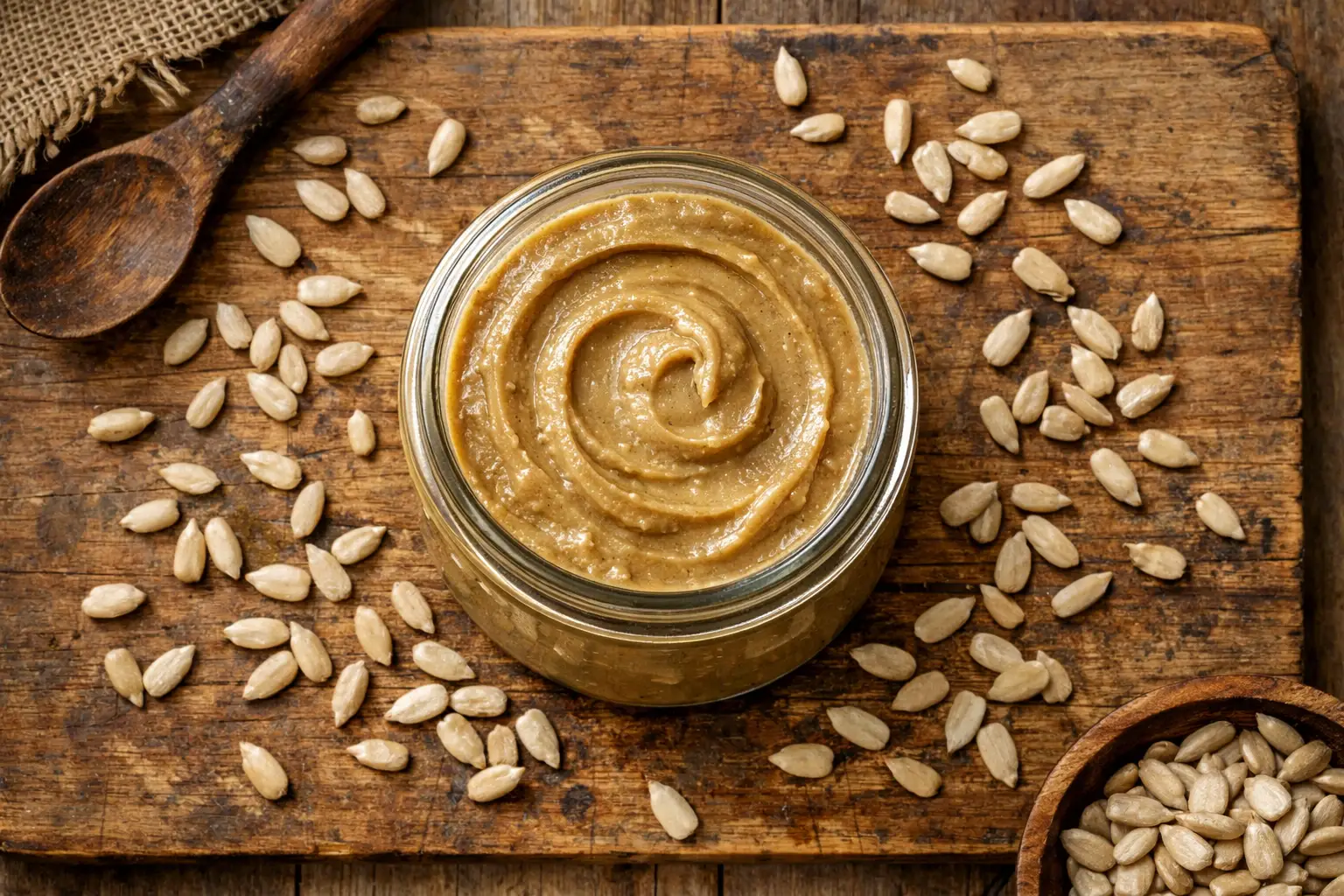
Quick Nutrition Facts
Per 2 Tablespoons (32g)
| Nutrient | Amount |
|---|---|
| Calories | 197 kcal |
| Protein | 5.5g |
| Carbohydrates | 5.6g |
| Fiber | 1.3g |
| Sugars | 2.1g |
| Fat | 17.7g |
| Vitamin E | 11.8mg |
| Magnesium | 37mg |
| Phosphorus | 118mg |
| Selenium | 19.4mcg |
Macronutrient Breakdown
 ChatGPT
  Claude
  AI Mode
  Perplexity
NUTRITIONIST INSIGHT
Sunflower seed butter delivers 8x more vitamin E than peanut butter — just 2 tablespoons cover 79% of your daily vitamin E needs. Its chlorogenic acid content may help regulate blood sugar, making it an excellent choice for those managing diabetes or insulin resistance.
Myth Busters
MYTH #1: Sunflower Seed Butter Is Just for People with Allergies
TRUTH: While it's the top nut-free alternative, sunflower seed butter outperforms peanut butter in vitamin E, iron, magnesium, zinc, copper, and selenium. It's a nutritional upgrade for everyone, not just those with allergies.
MYTH #2: Sunflower Seed Butter Is Too High in Fat
TRUTH: The 17.7g of fat per serving is predominantly heart-healthy monounsaturated and polyunsaturated fats. These unsaturated fats support cardiovascular health, reduce LDL cholesterol, and improve nutrient absorption. Saturated fat is lower than peanut butter.
MYTH #3: Sunflower Seed Butter Raises Blood Sugar
TRUTH: Sunflower seed butter has a low glycemic index and only 5.6g carbs per 2 tablespoons. The chlorogenic acid in sunflower seeds inhibits glucose-6-phosphatase, reducing glucose production and potentially improving blood sugar control.
MYTH #4: All Nut/Seed Butters Are the Same Nutritionally
TRUTH: Sunflower seed butter has distinct phytochemical and nutrient profiles — significantly more vitamin E (37mg/100g vs 4.6mg in peanut butter), more iron, and unique compounds like chlorogenic acid and caffeic acid not found in peanut or almond butters.
MYTH #5: Sunflower Seed Butter Tastes Bad
TRUTH: Modern sunflower seed butters have a naturally sweet, slightly earthy flavor. The green tint that sometimes appears when baking is harmless — caused by chlorogenic acid reacting with baking soda, not spoilage.
NutriScore by Health Goals
| Health Goal | NutriScore | Why This Score? |
|---|---|---|
| Weight Loss |  | 197 cal per 2 tbsp with 5.5g protein and healthy fats that promote satiety. Stick to 1 tbsp (99 cal) for calorie control. |
| Muscle Gain |  | 5.5g protein per serving, rich in magnesium for muscle function and recovery. Excellent calorie-dense post-workout fuel. |
| Diabetes Management | | Low GI, only 5.6g carbs per serving. Chlorogenic acid may help regulate blood glucose. Pair with whole grain for balanced meals. |
| PCOS Management | | Anti-inflammatory fats, low sugar. Selenium supports thyroid and hormonal balance. Limit to 2 tbsp daily. |
| Pregnancy Nutrition | | Rich in vitamin E (79% DV), folate, iron, and magnesium essential for fetal development. Nut-free safe option. |
| Viral/Flu Recovery | | Vitamin E and selenium boost immune function, zinc supports recovery. Easy to eat when appetite is low. |
PERSONALIZED NUTRITION
Track your meals with NutriScan for personalized NutriScores based on your specific health goals!
Blood Sugar Response to Sunflower Seed Butter
Understanding how sunflower seed butter affects your blood glucose can help you make informed decisions about when and how to eat it.
Typical Glucose Response Curve
This chart shows typical blood glucose response for general healthy individuals. Individual responses may vary. Not medical advice.
How to Flatten the Spike
Pairing high-fat foods with fiber and protein slows glucose absorption and reduces the peak blood sugar level:
- 🍞 Whole grain bread or crackers - Adds fiber to slow absorption
- 🍎 Apple or celery slices - Provides fiber and crunchy texture
- 🥣 Oatmeal or chia pudding - Combines complex carbs with fiber
- 🥛 Greek yogurt - Adds protein and probiotics
This combination not only reduces the glucose spike but also extends energy release, keeping you fuller for longer.
Cultural Significance
Sunflower seed butter emerged from a rich agricultural heritage — sunflowers were first domesticated by Native Americans over 4,000 years ago for food, oil, and dye.
In North America:
- SunButter was developed in partnership with USDA in 2003 as the first school-safe nut-free spread
- Sunflower seeds are a top crop in the Dakotas, Kansas, and Colorado
- The nut-free movement made sunflower seed butter a lunchbox staple
- Growing popularity in allergy-aware communities and Whole30/paleo diets
Global Impact:
- Ukraine and Russia are the world's largest sunflower seed producers
- Sunflower seed butter (halva-based spreads) are traditional in Eastern European cuisines
- Rising adoption in Australia and UK as nut-allergy awareness grows
- Sustainable crop that supports pollinators and improves soil health
Compare & Substitute
Sunflower Seed Butter vs Similar Spreads (Per 100g)
| Nutrient | 🌻 Sunflower Seed Butter | 🥜 Peanut Butter | 🌰 Almond Butter | 🎃 Pumpkin Seed Butter |
|---|---|---|---|---|
| Calories | 617 kcal | 588 kcal | 614 kcal | 559 kcal |
| Carbs | 17.6g | 20g | 18.8g | 14.7g |
| Fiber | 4.0g | 6.0g | 10.5g | 1.8g |
| Protein | 17.3g | 25.1g | 21g | 30.2g |
| Fat | 55.2g | 50g | 55.5g | 43.4g |
| Vitamin E | 37mg | 4.6mg | 24.2mg | 2.2mg |
| Iron | 3.8mg | 1.7mg | 3.4mg | 8.1mg |
| Magnesium | 115mg | 154mg | 279mg | 535mg |
| Best For | Nut-free, vitamin E, allergies | Protein, budget-friendly | Heart health, fiber | Protein, magnesium, zinc |
Frequently Asked Questions
Is sunflower seed butter good for weight loss?
Sunflower seed butter can support weight loss when portion-controlled. One tablespoon has 99 calories with 2.8g protein and healthy fats that promote satiety.
Best practices: Stick to 1 tablespoon per serving for weight loss, pair with fruits or vegetables instead of bread, choose unsweetened varieties, and track portions with NutriScan.
Can diabetics eat sunflower seed butter?
Yes, sunflower seed butter is excellent for diabetics. It has a low glycemic index, only 5.6g carbs per 2 tablespoons, and contains chlorogenic acid that may improve insulin sensitivity.
Tips for diabetics:
- Choose no-sugar-added varieties (avoid sweetened versions)
- Pair with whole grain bread or vegetables for balanced meals
- Use as a snack with apple slices to prevent blood sugar dips
- Monitor blood sugar 2 hours after eating to learn your response
The high magnesium content also supports insulin function. Always consult your healthcare provider.
Is sunflower seed butter safe for nut allergies?
Sunflower seed butter is free from peanuts and tree nuts, making it the top allergy-friendly alternative. It is safe for most school nut-free policies.
Important precautions:
- Choose brands manufactured in dedicated nut-free facilities
- Check labels for cross-contamination warnings
- Popular nut-free brands: SunButter, 88 Acres
- Always confirm with your allergist before introducing new foods
How does sunflower seed butter compare to peanut butter?
Sunflower seed butter outperforms peanut butter in several nutrients: 8x more vitamin E, 4x more iron, more magnesium, phosphorus, zinc, copper, and selenium. It also has more monounsaturated fat and less saturated fat.
Peanut butter has more protein (25g vs 17g per 100g) and more fiber. Calorie content is similar. For those without nut allergies, rotating between both maximizes nutrient diversity.
What are the main health benefits of sunflower seed butter?
Key Benefits:
- Immune Support: 37mg vitamin E per 100g (247% DV) boosts immune cell function
- Heart Health: Monounsaturated fats and phytosterols lower LDL cholesterol
- Blood Sugar Control: Chlorogenic acid may help regulate glucose metabolism
- Skin Health: Vitamin E and selenium protect against oxidative damage and UV
- Bone & Muscle: Magnesium and phosphorus support bone density and muscle recovery
- Allergy-Friendly: Free from top 8 allergens (when made in nut-free facilities)
How much sunflower seed butter should I eat per day?
General Guidelines:
- 2 tablespoons daily - Most adults (197 calories, 79% vitamin E DV)
- 1 tablespoon daily - Weight loss or calorie-restricted diets (99 calories)
- 3-4 tablespoons daily - Athletes, muscle gain, or higher calorie needs
Watch for: Excessive omega-6 intake if your diet is already high in seed oils. Balance with omega-3 sources like chia seeds, flaxseed, or fatty fish.
Track your meals with NutriScan app to see how sunflower seed butter fits your personal nutrition goals.


Similar Nutritious Foods
4505 Chicharrones Classic Chili Salt
7 Eleven Japan Crispy Corn Cheese
Explore More Nutrition Tools & Resources
AI Calorie Counter App - Snap a Photo, Get Macros
AI Nutritionist App That Reads Your Logged Meals
Best Protein Supplements for Women
Bulking Meal Plan App That Sets Your Surplus
ChatGPT Calorie Counter Alternative That Keeps the Total
ChatGPT Diet Plan Alternative That Tracks What You Eat
ChatGPT Weight Loss Coach Alternative With a Food Log
Fast Food Calorie Counter App That Reads the Tray
Free Calorie Tracker App with AI Photo Scans | NutriScan
Indian Diet Plan App With Veg and Non Veg Meals
Indian Food Calorie Calculator - Get Instant Nutrition Facts for Desi Meals — 2026
Intermittent Fasting for Women, Timer and Meal Log App
Intermittent Fasting Tracker App - Free Fasting Timer
Macro Tracker App That Fills the Numbers From a Photo
Mediterranean Diet Meal Plan App That Counts the Oil
Micronutrient Tracker App for Vitamins and Minerals
MyFitnessPal Alternative That Stays Free | NutriScan
NutriScore App: A Free Grade on Every Meal | NutriScan
Nutrition Label Scanner App for the Amount You Ate
Second Trimester Protein Guide
Vegetarian Meal Plan App With a Protein Target
Voice Calorie Counter - Speak to Track Meals Hands-Free
Water and Calorie Tracker App - Free Water Log