Sushi Burrito: Calories, Nutrition and Health Benefits
Instagram's favorite handheld fusion meal combining sushi's omega-3s with burrito convenience—perfect for Gen Z and Millennials seeking portable, protein-rich nutrition.
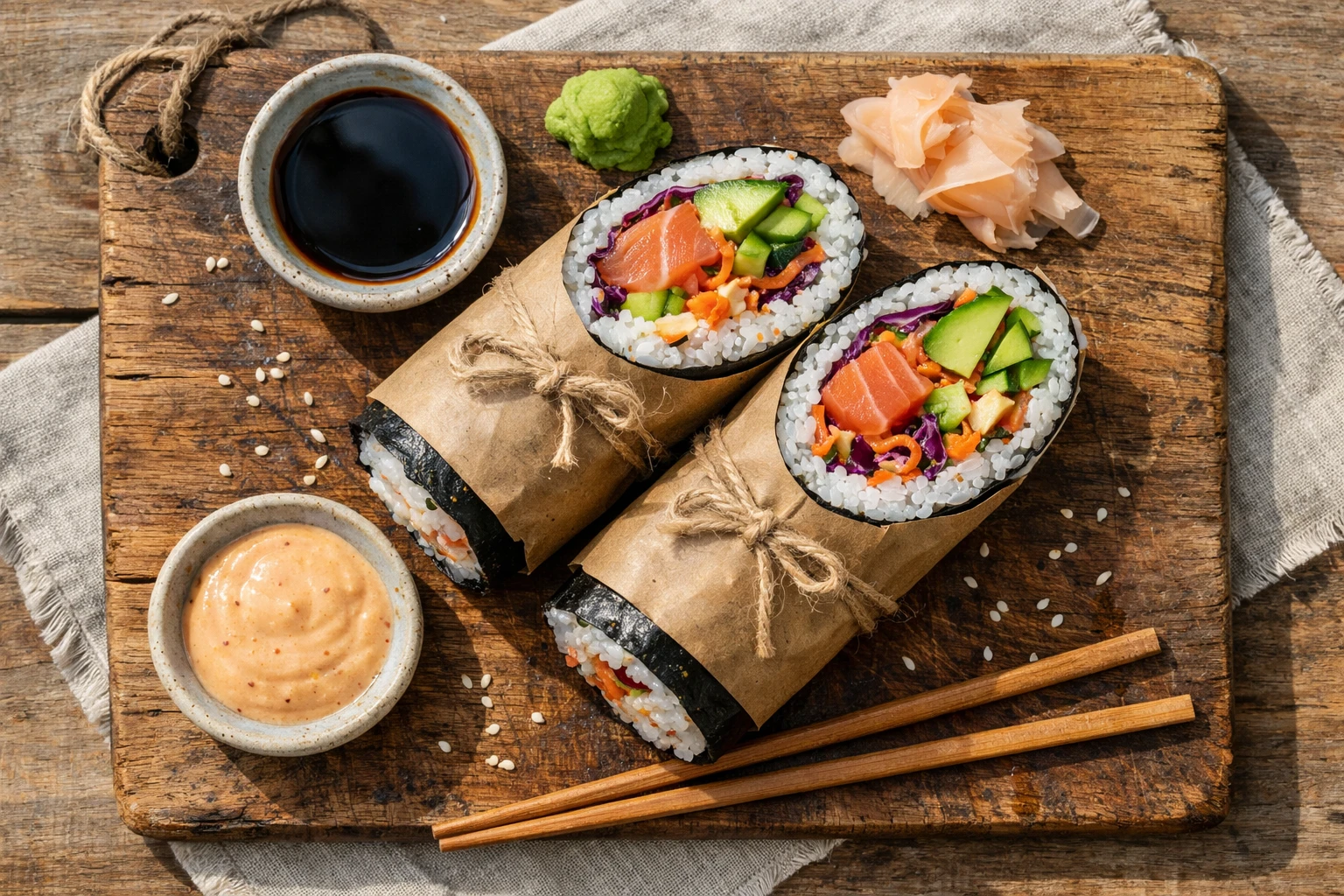
Quick Nutrition Facts
Per 1 Sushi Burrito (365g, salmon-avocado)
| Nutrient | Amount |
|---|---|
| Calories | 570 kcal |
| Protein | 23g |
| Carbohydrates | 62g |
| Fiber | 4g |
| Sugars | 6g |
| Fat | 19g |
| Omega-3s | 1200mg |
| Sodium | 890mg |
| Vitamin B12 | 4.8mcg |
| Iodine | 45mcg |
Macronutrient Breakdown
 ChatGPT
  Claude
  AI Mode
  Perplexity
NUTRITIONIST INSIGHT
Sushi burritos provide 1000-1500mg omega-3 fatty acids from salmon, supporting heart health and reducing inflammation. The rice vinegar in sushi rice delays gastric emptying and reduces blood sugar spikes by 15-18%.
Myth Busters
MYTH #1: Sushi Burritos Are Always Healthy
TRUTH: A tempura shrimp sushi burrito can contain 800+ calories with 30g fat. Choose maki-style rolls with salmon or tuna, skip tempura and mayo-based sauces, and add extra vegetables. The healthiest options have 500-570 calories with lean protein.
MYTH #2: All Sushi Has the Same Glycemic Impact
TRUTH: Maki rolls contain 27g carbs versus 38g in uramaki (inside-out rolls), a 29% difference. Rice type matters too—cooling rice increases resistant starch by 250%, reducing glucose response by 18%.
MYTH #3: Soy Sauce Is the Only Sodium Concern
TRUTH: Sushi rice seasoning adds 200-300mg sodium, pickled ginger adds 99mg per tablespoon, and wasabi contributes 678mg sodium per tablespoon. A complete sushi meal can deliver 1500-2000mg sodium—approaching the 2300mg daily limit.
MYTH #4: Diabetics Should Avoid Sushi Completely
TRUTH: Meal sequencing—eating protein and vegetables before rice—reduces glucose spikes by 15-17%. Diabetics can enjoy sushi by choosing maki rolls, consuming edamame first, and monitoring portions. The moderate glycemic load of 27-28 makes sushi suitable with proper planning.
MYTH #5: Raw Fish Is Risky for Pregnancy
TRUTH: FDA-approved sushi-grade fish frozen at -20°C for 7 days kills parasites. Salmon provides DHA omega-3s essential for fetal brain development. Pregnant women can eat sushi from reputable restaurants, avoiding high-mercury fish like tuna. Choose salmon, cooked shrimp, or vegetarian options.
MYTH #6: Sushi Burritos Are Just a Trendy Gimmick
TRUTH: Created in 2008 by Sushirrito in San Francisco, sushi burritos provide 23g protein and portable nutrition for busy professionals. The fusion format makes sushi accessible as a complete meal, offering more vegetables and protein than traditional rolls while maintaining authentic Japanese ingredients.
NutriScore by Health Goals
| Health Goal | NutriScore | Why This Score? |
|---|---|---|
| Weight Loss |  | 570 calories with 23g protein promotes satiety. Choose maki style, skip sauces, eat half with salad for 400-calorie meal. |
| Muscle Gain |  | 23g protein plus 62g carbs ideal post-workout for glycogen replenishment and recovery. Omega-3s reduce exercise inflammation. |
| Diabetes Management |  | Moderate GI (55), glycemic load 27-28. Consume edamame first for meal sequencing benefits. |
| PCOS Management | | Omega-3s reduce inflammation; 62g carbs require portion control. Choose maki rolls, eat half, pair with protein-rich appetizers. |
| Pregnancy Nutrition | | DHA from salmon supports fetal brain development; B12, iodine for thyroid. |
| Viral/Flu Recovery | | 23g protein supports immune function, ginger reduces nausea, omega-3s fight inflammation. Easy to digest, nutrient-dense. |
PERSONALIZED NUTRITION
Track your meals with NutriScan for personalized NutriScores based on your specific health goals!
Blood Sugar Response to Sushi Burrito
Understanding how sushi burritos affect blood glucose helps you make informed decisions about portions and meal timing.
Typical Glucose Response Curve
This chart shows typical blood glucose response for general healthy individuals. Individual responses may vary. Not medical advice.
How to Flatten the Spike
Eating protein and vegetables before rice reduces glucose spikes by 15-17% through delayed gastric emptying:
- 🫛 Edamame - 9g protein, 4g fiber per half-cup serving
- 🥗 Seaweed salad - Fiber and minerals slow glucose absorption
- 🐟 Sashimi appetizer - Pure protein with zero carbs
- 🥒 Cucumber slices with salmon - Hydrating, low-calorie preload
This meal sequencing strategy works best for metabolically healthy individuals. Those with insulin resistance may need stricter carbohydrate limits.
Cultural Significance
The sushi burrito represents a modern fusion innovation that bridges Japanese culinary tradition with American fast-casual dining culture.
Origins & Evolution:
- Created in 2008 by Peter Yen at Sushirrito in San Francisco
- Born from frustration with limited, low-quality downtown lunch options
- First physical location opened 2011; food trucks spread across West Coast
- Instagram and social media amplified popularity 2015-2016 during "foodie" culture boom
Cultural Impact:
- Millennial & Gen Z appeal: 161% Millennial appeal index for portable, photogenic fusion meals
- Accessibility: Transformed sushi from sit-down dining to grab-and-go format
- Inclusivity: Build-your-own model accommodates dietary preferences and restrictions
- Global expansion: Now available in NYC, LA, Tokyo, London with localized ingredient variations
Modern Variations:
- Traditional oversized maki rolls with salmon, tuna, or cooked shrimp
- Asian-Latin fusion with bulgogi, kimchi, or pulled pork
- Vegetarian options with tofu, tempeh, and extra vegetables
- Keto versions wrapped in cucumber or soy paper instead of rice
Compare & Substitute
Sushi Burrito vs Similar Fusion Foods (Per 100g)
| Nutrient | 🍣 Sushi Burrito | 🌯 Chipotle Chicken Burrito | 🥙 Poke Bowl | 🌮 Fish Taco |
|---|---|---|---|---|
| Calories | 156 kcal | 210 kcal | 140 kcal | 180 kcal |
| Carbs | 17g | 23g | 15g | 18g |
| Fiber | 1.1g | 3.2g | 1.5g | 2.1g |
| Protein | 6.3g | 8.5g | 9.2g | 7.8g |
| Fat | 5.2g | 8.9g | 4.3g | 7.5g |
| Omega-3s | 330mg | 45mg | 410mg | 280mg |
| Sodium | 244mg | 387mg | 290mg | 310mg |
| Sugar | 1.6g | 2.8g | 2.1g | 2.3g |
| Best For | Omega-3s, post-workout | High protein, fiber | Low-calorie, customizable | Lower carbs, street food |
Frequently Asked Questions
Are sushi burritos good for weight loss?
Sushi burritos can support weight loss when chosen strategically. A maki-style burrito with salmon provides 570 calories, 23g protein, and 4g fiber. The protein promotes satiety; omega-3s reduce inflammation that can interfere with weight loss.
Best practices: Choose maki rolls (less rice); select salmon or tuna over tempura; skip mayo-based sauces; eat half with a side salad for 400-calorie meal; consume edamame appetizer first to increase fullness. Avoid sweet sauces that add 50-100 empty calories.
Can diabetics eat sushi burritos?
Diabetics can eat sushi burritos with modifications. The moderate glycemic load (27-28) suits balanced meal patterns when portioned correctly.
Tips for diabetics:
- Choose maki rolls containing 27g carbs versus 38g in uramaki rolls
- Eat edamame or seaweed salad first for meal sequencing (reduces glucose spike 15-17%)
- Avoid tempura and sweet sauces
- Monitor blood sugar 90-120 minutes after eating
- Consider eating half the burrito
Insulin-resistant individuals show 152-179% higher glucose responses to refined carbs; consult your healthcare provider for personalized guidance.
How much protein is in a sushi burrito?
A typical sushi burrito contains 23-30g protein from salmon, tuna, or shrimp. This high-quality complete protein provides all essential amino acids for muscle synthesis and repair.
Protein comparison by fish type:
- Salmon burrito: 23g (plus 1200mg omega-3s)
- Tuna burrito: 28g (higher protein, lower fat)
- Shrimp burrito: 25g (lowest calorie option)
- Vegetarian tofu burrito: 12-15g (incomplete protein)
For muscle gain, consume within 60 minutes post-workout to maximize protein synthesis and glycogen replenishment from the 62g carbohydrates.
What are the main health benefits of sushi burritos?
Key Benefits:
- Heart Health: 1000-1500mg omega-3 fatty acids lower triglycerides and reduce cardiovascular risk
- Muscle Support: 23g complete protein for recovery and maintenance
- Thyroid Function: Iodine from nori seaweed supports hormone production
- Brain Health: DHA omega-3s improve cognitive function and mood
- Blood Sugar Control: Rice vinegar delays gastric emptying, reducing glucose spikes
- Anti-Inflammatory: Omega-3s and ginger reduce systemic inflammation
When is the best time to eat a sushi burrito?
Depends on your goal:
- Weight Loss: Lunch (12-2pm) with vegetable appetizer; provides sustained energy without late-day carbs.
- Muscle Gain: Post-workout within 60 minutes for protein synthesis and glycogen replenishment.
- Diabetes: After consuming edamame or salad first; mid-afternoon (2-4pm) when insulin sensitivity peaks.
- Energy: Pre-workout (90 minutes before) for sustained carbohydrate fuel.
IMPORTANT NOTE
Avoid late dinner (after 8pm) if watching carbohydrate intake; 62g carbs before bed may interfere with fat burning overnight.
What makes sushi burritos healthier than regular burritos?
Sushi burritos offer several nutritional advantages over traditional Mexican burritos:
Sushi Burrito Benefits:
- Omega-3 fatty acids: 1200mg from salmon versus minimal in beef/chicken burritos
- Lower saturated fat: 3-4g versus 8-12g from cheese, sour cream, beef
- Seaweed wrap minerals: Iodine, magnesium, calcium from nori
- Raw vegetables: Retain more vitamins compared to cooked beans/rice
- Rice vinegar benefit: Reduces postprandial glucose by 15-18%
Trade-offs: Regular burritos provide more fiber from beans (8-12g versus 4g) and can be customized with nutrient-dense ingredients like black beans, fajita vegetables, and guacamole.
How do I reduce sodium in sushi burritos?
Sushi burritos can contain 890-1500mg sodium from rice seasoning, soy sauce, and pickled ingredients.
Reduction strategies:
- Request low-sodium soy sauce or use sparingly (440mg per tablespoon versus 879mg regular)
- Skip pickled ginger (99mg per tablespoon) or limit to garnish
- Avoid wasabi paste (678mg per tablespoon)
- Choose fresh vegetables over pickled daikon
- Make at home controlling rice vinegar seasoning (reduce salt by 50%)
These modifications can reduce sodium by 400-600mg per serving while maintaining flavor through ginger, wasabi, and citrus.


Similar Nutritious Fusion Foods
4505 Chicharrones Classic Chili Salt
7 Eleven Japan Crispy Corn Cheese
Explore More Nutrition Tools & Resources
AI Calorie Counter App - Snap a Photo, Get Macros
AI Nutritionist App That Reads Your Logged Meals
Best Protein Supplements for Women
Bulking Meal Plan App That Sets Your Surplus
ChatGPT Calorie Counter Alternative That Keeps the Total
ChatGPT Diet Plan Alternative That Tracks What You Eat
ChatGPT Weight Loss Coach Alternative With a Food Log
Fast Food Calorie Counter App That Reads the Tray
Free Calorie Tracker App with AI Photo Scans | NutriScan
Indian Diet Plan App With Veg and Non Veg Meals
Indian Food Calorie Calculator - Get Instant Nutrition Facts for Desi Meals — 2026
Intermittent Fasting for Women, Timer and Meal Log App
Intermittent Fasting Tracker App - Free Fasting Timer
Macro Tracker App That Fills the Numbers From a Photo
Mediterranean Diet Meal Plan App That Counts the Oil
Micronutrient Tracker App for Vitamins and Minerals
MyFitnessPal Alternative That Stays Free | NutriScan
NutriScore App: A Free Grade on Every Meal | NutriScan
Nutrition Label Scanner App for the Amount You Ate
Second Trimester Protein Guide
Vegetarian Meal Plan App With a Protein Target
Voice Calorie Counter - Speak to Track Meals Hands-Free
Water and Calorie Tracker App - Free Water Log