Sushi Cups: Calories, Nutrition and Health Benefits
Viral TikTok snack combining sushi rice, fresh fish, and colorful toppings in portable, portion-controlled cups perfect for meal prep and parties.
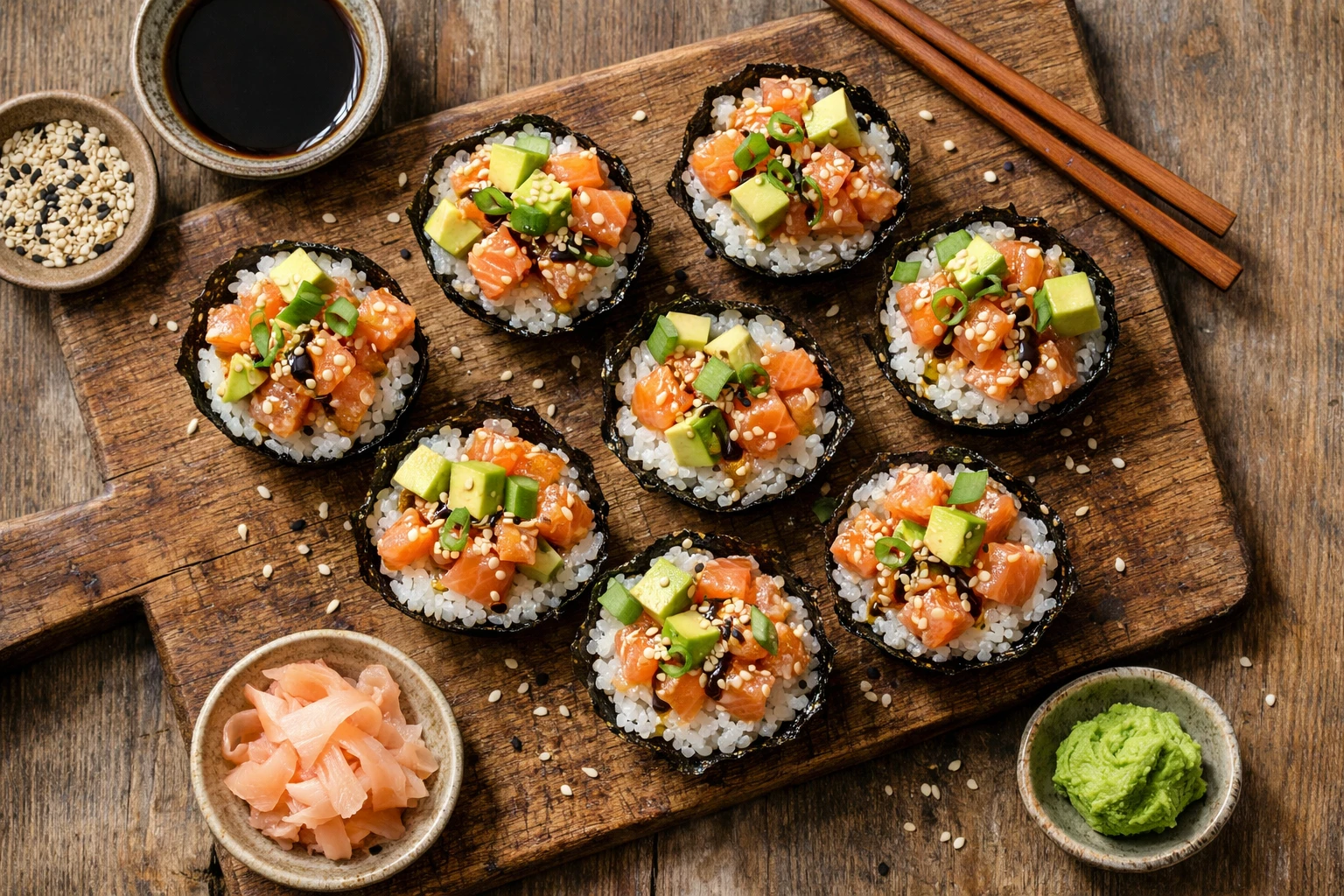
Quick Nutrition Facts
Per 1 Serving Sushi Cups (150g)
| Nutrient | Amount |
|---|---|
| Calories | 210 kcal |
| Protein | 12g |
| Carbohydrates | 28g |
| Fiber | 1.5g |
| Sugars | 3g |
| Fat | 6g |
| Omega-3 | 500mg |
| Sodium | 380mg |
| Vitamin D | 8mcg |
| Selenium | 22mcg |
Macronutrient Breakdown
 ChatGPT
  Claude
  AI Mode
  Perplexity
NUTRITIONIST INSIGHT
Sushi cups deliver 12g protein per serving with omega-3 fatty acids from salmon. Use brown rice for added fiber and slower glucose release. Perfect for portion control and meal prep.
Myth Busters
MYTH #1: Sushi Cups Are High in Calories
TRUTH: A typical serving contains only 180-250 calories. The portion-controlled format actually helps with calorie management compared to traditional sushi rolls. Fish provides lean protein with minimal saturated fat.
MYTH #2: Raw Fish in Sushi Is Unsafe
TRUTH: Sushi-grade fish is flash-frozen to kill parasites, making it safe for consumption. The FDA requires freezing at -4°F for 7 days for raw fish sold commercially. Properly handled sushi is safe for most healthy adults.
MYTH #3: Sushi Rice Is Just Empty Carbs
TRUTH: Sushi rice provides complex carbohydrates for sustained energy. When cooled, it develops resistant starch that benefits gut health. The vinegar used in preparation may help with blood sugar control.
MYTH #4: You Can't Eat Sushi on a Diet
TRUTH: Sushi cups are diet-friendly due to portion control and lean protein content. Skip heavy mayo-based sauces and focus on fresh fish and vegetables for a balanced, low-calorie meal.
NutriScore by Health Goals
| Health Goal | NutriScore | Why This Score? |
|---|---|---|
| Weight Loss |  | 210 calories with 12g protein promotes satiety; portion-controlled format helps manage intake. |
| Muscle Gain | | Complete protein from fish plus carbs for energy; add extra fish or edamame for 18-20g protein. |
| Diabetes Management |  | White rice has moderate GI (65); use brown rice or cauliflower rice for better blood sugar control. |
| PCOS Management | | Choose low-GI rice alternatives; omega-3s from salmon may help reduce inflammation. |
| Pregnancy Nutrition | | Omega-3 DHA supports fetal brain development; choose low-mercury fish like salmon; avoid high-mercury options. |
| Viral/Flu Recovery | | Easy to digest, provides protein for recovery, and selenium supports immune function. |
PERSONALIZED NUTRITION
Track your meals with NutriScan for personalized NutriScores based on your specific health goals!
Blood Sugar Response to Sushi Cups
Understanding how sushi cups affect your blood glucose can help you make informed decisions about when and how to eat them.
Typical Glucose Response Curve
*This chart shows typical blood glucose response for general healthy individuals. Individual responses may vary. Not medical advice.*
How to Flatten the Spike
Pairing sushi cups with protein-rich sides slows glucose absorption and reduces the peak blood sugar level:
- 🥑 Extra avocado - Adds healthy fats and fiber
- 🫛 Edamame side - Provides additional protein and fiber
- 🥗 Seaweed salad - Adds fiber with minimal calories
- 🥒 Cucumber slices - Low-calorie volume with hydration
This combination not only reduces the glucose spike but also extends energy release, keeping you fuller for longer.
Cultural Significance
Sushi cups represent the fusion of traditional Japanese sushi with modern snacking culture, popularized through social media in the 2020s.
Origins:
- Traditional sushi dates back to 8th century Japan as a preservation method
- Modern sushi cups emerged as a TikTok trend in 2023-2024
- Combines Japanese culinary traditions with Western meal prep culture
Global Impact:
- Viral on TikTok with millions of views for recipe videos
- Popular for parties, meal prep, and kid-friendly meals
- Customizable format appeals to diverse dietary preferences
- Reduces food waste through portion control
Compare & Substitute
Sushi Cups vs Similar Foods (Per 150g Serving)
| Nutrient | 🍣 Sushi Cups | 🍱 California Roll | 🥗 Poke Bowl | 🍚 Onigiri |
|---|---|---|---|---|
| Calories | 210 kcal | 255 kcal | 350 kcal | 180 kcal |
| Carbs | 28g | 38g | 40g | 35g |
| Fiber | 1.5g | 2g | 3g | 0.5g |
| Protein | 12g | 9g | 25g | 5g |
| Fat | 6g | 7g | 12g | 2g |
| Sodium | 380mg | 520mg | 650mg | 400mg |
| Best For | Portion control, snacking | Traditional sushi experience | High protein, meal | Quick grab-and-go |
Frequently Asked Questions
Are sushi cups good for weight loss?
Yes, sushi cups support weight loss with 180-250 calories and 12g protein per serving. The portion-controlled format prevents overeating. Choose salmon or tuna over tempura; skip mayo-based sauces; add extra vegetables for volume.
How many calories are in sushi cups?
A typical serving (150g) contains 210 calories with 12g protein, 28g carbs, and 6g fat. Calories vary based on toppings: salmon adds omega-3s; avocado adds healthy fats; spicy mayo increases calories by 50-80.
Can diabetics eat sushi cups?
Diabetics can enjoy sushi cups with modifications. Use brown rice or cauliflower rice for lower glycemic impact (GI 50 vs 65). The protein from fish slows glucose absorption. Limit sweet sauces; monitor portions.
What makes sushi cups a TikTok trend?
Sushi cups went viral for their visual appeal, easy preparation, and customizable nature. They're perfect for meal prep, parties, and kid-friendly meals. The bite-sized format photographs well and satisfies sushi cravings without rolling skills.
Are sushi cups safe during pregnancy?
Pregnant women can eat sushi cups made with cooked fish or low-mercury options like salmon. Avoid high-mercury fish (tuna, swordfish) and raw preparations unless fish is properly frozen. DHA from salmon supports fetal brain development.
How to make sushi cups at home?
Press seasoned sushi rice into muffin cups; bake at 400°F for 15-20 minutes until crispy. Top with your choice of sashimi-grade fish, avocado, cucumber, and drizzle with soy sauce. Refrigerate for up to 3 days.




Similar Nutritious Foods
4505 Chicharrones Classic Chili Salt
7 Eleven Japan Crispy Corn Cheese
Explore More Nutrition Tools & Resources
AI Calorie Counter App - Snap a Photo, Get Macros
AI Nutritionist App That Reads Your Logged Meals
Best Protein Supplements for Women
Bulking Meal Plan App That Sets Your Surplus
ChatGPT Calorie Counter Alternative That Keeps the Total
ChatGPT Diet Plan Alternative That Tracks What You Eat
ChatGPT Weight Loss Coach Alternative With a Food Log
Fast Food Calorie Counter App That Reads the Tray
Free Calorie Tracker App with AI Photo Scans | NutriScan
Indian Diet Plan App With Veg and Non Veg Meals
Indian Food Calorie Calculator - Get Instant Nutrition Facts for Desi Meals — 2026
Intermittent Fasting for Women, Timer and Meal Log App
Intermittent Fasting Tracker App - Free Fasting Timer
Macro Tracker App That Fills the Numbers From a Photo
Mediterranean Diet Meal Plan App That Counts the Oil
Micronutrient Tracker App for Vitamins and Minerals
MyFitnessPal Alternative That Stays Free | NutriScan
NutriScore App: A Free Grade on Every Meal | NutriScan
Nutrition Label Scanner App for the Amount You Ate
Second Trimester Protein Guide
Vegetarian Meal Plan App With a Protein Target
Voice Calorie Counter - Speak to Track Meals Hands-Free
Water and Calorie Tracker App - Free Water Log