Japanese Egg Sandwich (Tamago Sando): Calories, Nutrition and Health Benefits
Japan's beloved konbini classic: fluffy egg salad on soft milk bread delivering 280 calories, 10g protein, and comfort in every bite.
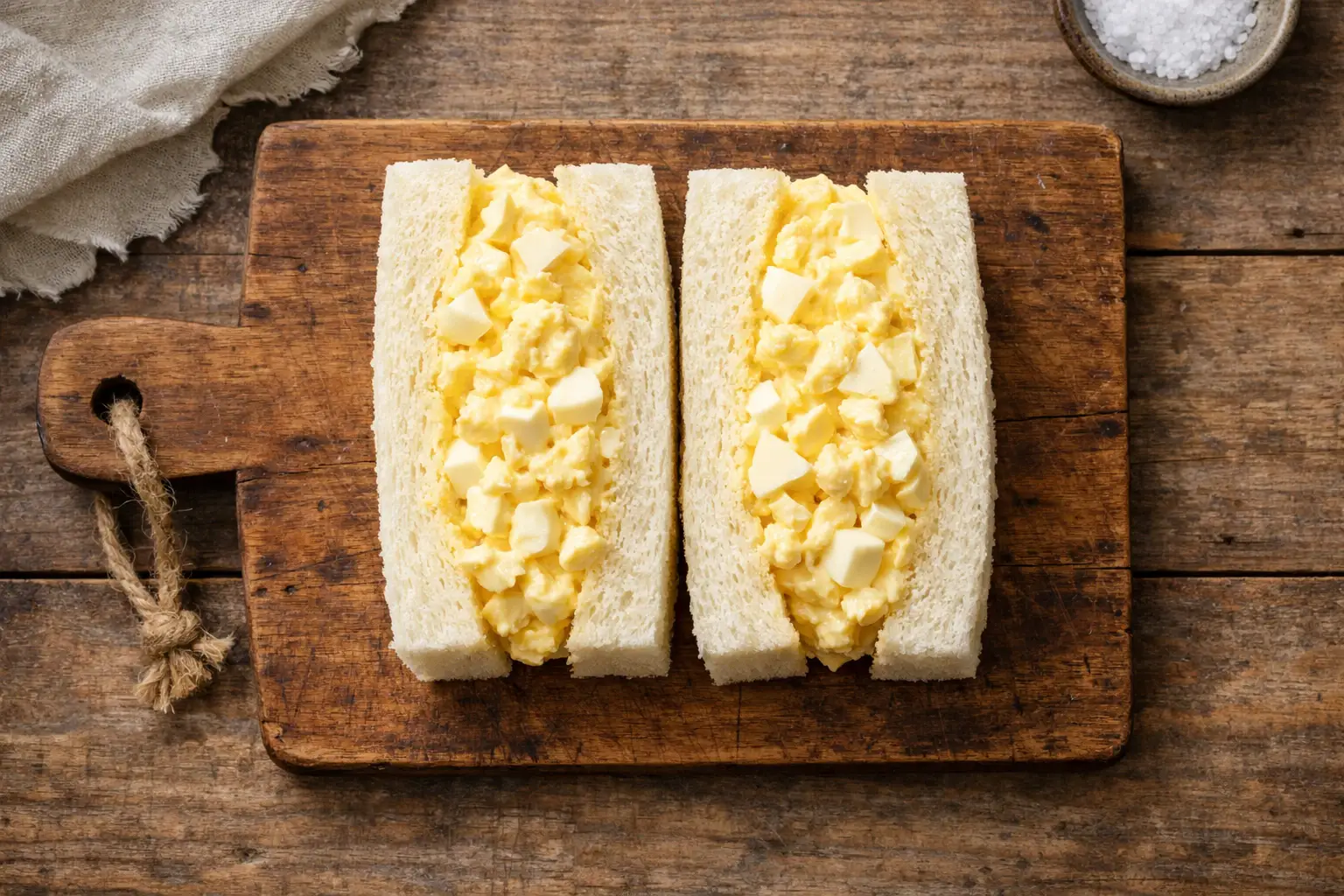
Quick Nutrition Facts
Per 1 Sandwich (150g)
| Nutrient | Amount |
|---|---|
| Calories | 280 kcal |
| Protein | 10g |
| Carbohydrates | 28g |
| Fiber | 1g |
| Sugars | 4g |
| Fat | 14g |
| Saturated Fat | 3.5g |
| Cholesterol | 210mg |
| Sodium | 420mg |
| Choline | 147mg |
Macronutrient Breakdown
 ChatGPT
  Claude
  AI Mode
  Perplexity
NUTRITIONIST INSIGHT
Tamago sando delivers 147mg of choline per sandwich — 27% of the daily value — a nutrient critical for brain health that most adults don't get enough of. The egg protein helps moderate the blood sugar response from the milk bread, making it a more balanced snack than bread alone.
Myth Busters
MYTH #1: Egg Sandwiches Are Unhealthy Because of Cholesterol
TRUTH: One tamago sando contains about 210mg cholesterol from eggs. Research shows that dietary cholesterol has a smaller effect on blood cholesterol than the mix of fats in your diet. Up to one egg per day is not associated with increased heart disease risk in healthy individuals.
MYTH #2: White Bread Makes Tamago Sando Junk Food
TRUTH: While shokupan (milk bread) is refined, the egg protein and fat significantly slow glucose absorption, reducing the glycemic impact. A tamago sando with protein is metabolically different from eating white bread alone.
MYTH #3: Mayonnaise Makes Egg Sandwiches Fattening
TRUTH: Japanese mayo (Kewpie) uses egg yolks and rice vinegar, providing a richer flavor with less per serving. The 14g total fat in a tamago sando is mostly monounsaturated and polyunsaturated — healthy fats that don't increase heart disease risk when consumed in moderation.
MYTH #4: Tamago Sando Has No Nutritional Value
TRUTH: Eggs are a complete protein source containing all essential amino acids, plus choline for brain health, lutein and zeaxanthin for eye health, and vitamin D. A single tamago sando provides 10g protein and significant B vitamins.
MYTH #5: You Should Never Eat Egg Sandwiches at Night
TRUTH: There's no scientific evidence that eating eggs at night is harmful. The protein in tamago sando can actually promote satiety and stable blood sugar overnight. Timing matters less than total daily intake.
NutriScore by Health Goals
| Health Goal | NutriScore | Why This Score? |
|---|---|---|
| Weight Loss |  | 280 calories with 14g fat from mayo. Moderate — eat as a light meal, not a snack. Use reduced-fat mayo to cut 50+ calories. |
| Muscle Gain |  | 10g complete protein with 28g carbs for glycogen. Add an extra egg white for 13g+ protein. Good post-workout option. |
| Diabetes Management | | White bread raises GI, but egg protein and fat moderate the glucose spike. Choose whole wheat bread and eat half portions. |
| PCOS Management | | Refined carbs affect insulin sensitivity. Swap shokupan for whole grain, limit to half sandwich, pair with vegetables. |
| Pregnancy Nutrition | | Excellent source of choline (147mg) critical for fetal brain development, plus protein and B vitamins. Ensure eggs are fully cooked. |
| Viral/Flu Recovery | | Easy to eat, gentle on stomach, provides protein for immune function and quick energy from carbs. |
PERSONALIZED NUTRITION
Track your meals with NutriScan for personalized NutriScores based on your specific health goals!
Blood Sugar Response to Tamago Sando
Understanding how tamago sando affects your blood glucose can help you make informed decisions about when and how to eat it.
Typical Glucose Response Curve
This chart shows typical blood glucose response for general healthy individuals. Individual responses may vary. Not medical advice.
How to Flatten the Spike
Pairing carbohydrate-rich foods with protein and fat slows glucose absorption and reduces the peak blood sugar level:
- 🥗 Add leafy greens or cucumber - Fiber slows digestion and adds volume without calories
- 🥑 Avocado slices - Healthy fats further moderate the glucose curve
- 🍵 Green tea (unsweetened) - Catechins may improve insulin sensitivity
- 🥜 A handful of almonds on the side - Protein, fiber, and healthy fats for sustained energy
This combination not only reduces the glucose spike but also extends energy release, keeping you fuller for longer.
Cultural Significance
Tamago sando is one of Japan's most iconic konbini (convenience store) foods, with roots tracing back to the early 20th century when Western-style sandwiches were adapted to Japanese tastes.
In Japan:
- Found in every konbini (7-Eleven, Lawson, FamilyMart) — sold millions daily
- Uses shokupan (milk bread), a uniquely soft Japanese bread developed in the 1800s using the tangzhong method
- Two main styles: egg salad (mashed) from Kanto region and thick omelet (dashimaki tamago) from Kansai
- Considered a quintessential comfort food and late-night snack
Global Impact:
- Japanese konbini culture has spread worldwide, bringing tamago sando to international audiences
- Featured in countless food travel shows and social media as the "perfect sandwich"
- Inspired egg sandwich variations in Korea, Taiwan, and Western countries
- Part of the broader Japanese shokuiku (food education) philosophy that values balanced, simple meals
Compare & Substitute
Tamago Sando vs Similar Sandwiches (Per Serving)
| Nutrient | 🥚 Tamago Sando | 🥪 Classic Egg Salad Sandwich | 🧀 Grilled Cheese | 🥑 Avocado Toast |
|---|---|---|---|---|
| Calories | 280 kcal | 350 kcal | 370 kcal | 250 kcal |
| Carbs | 28g | 30g | 28g | 26g |
| Fiber | 1g | 2g | 1g | 5g |
| Protein | 10g | 13g | 14g | 6g |
| Fat | 14g | 19g | 22g | 14g |
| Cholesterol | 210mg | 280mg | 55mg | 0mg |
| Sodium | 420mg | 580mg | 720mg | 320mg |
| Best For | Light meal, balanced snack | Higher protein needs | Comfort food, calcium | Fiber, heart-healthy fats |
Frequently Asked Questions
How many calories are in a tamago sando?
A typical tamago sando contains about 280 calories per sandwich. The calorie count ranges from 215-460 depending on mayo quantity, number of eggs, and bread thickness.
Calorie breakdown: 28g carbs from milk bread, 14g fat mostly from mayo, and 10g protein from eggs.
Is tamago sando healthy?
Tamago sando provides complete protein, choline, B vitamins, and moderate calories. The main nutritional concern is refined white bread and mayonnaise fat.
To make it healthier: Use whole grain bread, reduced-fat mayo, add vegetables like lettuce or cucumber, and limit to one sandwich per sitting.
Can diabetics eat tamago sando?
Diabetics can eat tamago sando in moderation. The egg protein and fat help moderate the glycemic response from the bread.
Tips for diabetics:
- Choose whole wheat bread instead of shokupan
- Eat half a sandwich at a time
- Pair with a side salad or vegetables for added fiber
- Monitor blood sugar 2 hours after eating
Always consult your healthcare provider for personalized dietary advice.
What makes tamago sando different from a regular egg sandwich?
Tamago sando uses Japanese milk bread (shokupan) which is softer and slightly sweeter than regular sandwich bread, thanks to the tangzhong (roux) method. The egg filling uses Japanese mayo (Kewpie), which is made with egg yolks only and rice vinegar, giving a richer, tangier flavor. Crusts are always removed.
Is tamago sando good for weight loss?
At 280 calories, tamago sando can fit into a weight loss plan as a light meal. The 10g protein promotes satiety.
Weight loss tips: Use reduced-fat mayo, add lettuce and cucumber for volume, choose whole grain bread, and eat mindfully as a meal rather than a snack.
How much protein is in a tamago sando?
A standard tamago sando provides about 10g of protein per sandwich. The protein comes from eggs (6g per egg) and milk bread (3-4g per serving). For higher protein, add an extra egg white to the filling.
Track your meals with NutriScan app to see how tamago sando fits your personal nutrition goals.


Similar Nutritious Foods
4505 Chicharrones Classic Chili Salt
7 Eleven Japan Crispy Corn Cheese
Explore More Nutrition Tools & Resources
AI Calorie Counter App - Snap a Photo, Get Macros
AI Nutritionist App That Reads Your Logged Meals
Best Protein Supplements for Women
Bulking Meal Plan App That Sets Your Surplus
ChatGPT Calorie Counter Alternative That Keeps the Total
ChatGPT Diet Plan Alternative That Tracks What You Eat
ChatGPT Weight Loss Coach Alternative With a Food Log
Fast Food Calorie Counter App That Reads the Tray
Free Calorie Tracker App with AI Photo Scans | NutriScan
Indian Diet Plan App With Veg and Non Veg Meals
Indian Food Calorie Calculator - Get Instant Nutrition Facts for Desi Meals — 2026
Intermittent Fasting for Women, Timer and Meal Log App
Intermittent Fasting Tracker App - Free Fasting Timer
Macro Tracker App That Fills the Numbers From a Photo
Mediterranean Diet Meal Plan App That Counts the Oil
Micronutrient Tracker App for Vitamins and Minerals
MyFitnessPal Alternative That Stays Free | NutriScan
NutriScore App: A Free Grade on Every Meal | NutriScan
Nutrition Label Scanner App for the Amount You Ate
Second Trimester Protein Guide
Vegetarian Meal Plan App With a Protein Target
Voice Calorie Counter - Speak to Track Meals Hands-Free
Water and Calorie Tracker App - Free Water Log