Tesco Finest Thick Cut Rump Steak with Green Peppercorn Melt: Calories & Nutrition Facts
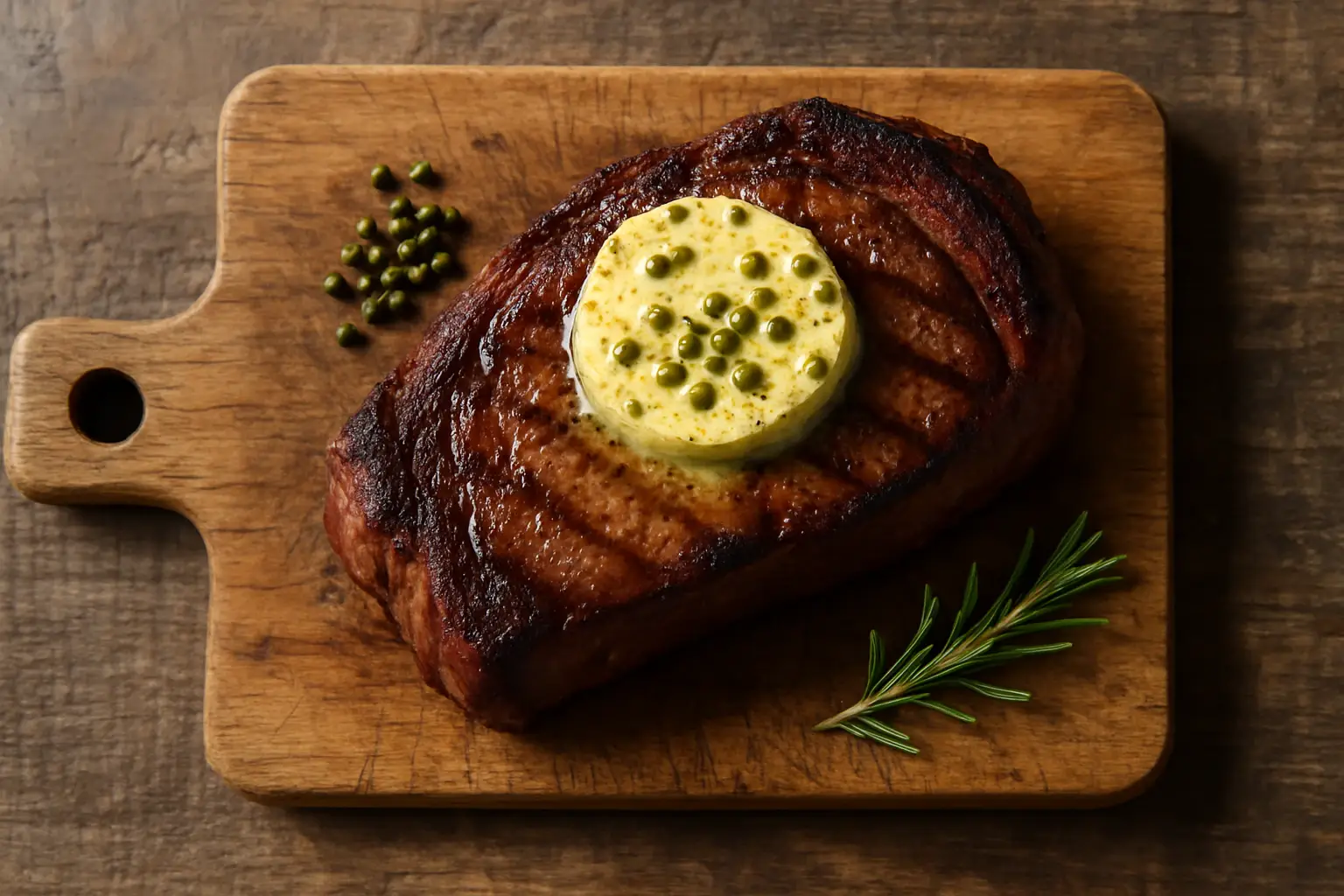
Tesco Finest Thick Cut Rump Steak with Green Peppercorn Melt is a 382g premium British beef steak, 30-day matured, with an American-inspired dry rub and a green peppercorn butter melt. Each steak delivers 493 kcal, ~77g protein, 19g fat, and only ~3g carbs. The high protein-to-calorie ratio makes it a lean, satiating meal choice for muscle maintenance. The butter melt adds modest richness without dramatically raising fat.
Quick Nutrition Facts
Per 1 steak (382g pack)
| Nutrient | Amount |
|---|---|
| Calories | 493 kcal |
| Protein | 77g |
| Carbohydrates | 3g |
| Fiber | 0g |
| Sugars | 1g |
| Fat | 19.2g |
| Sodium | 590 mg |
Macronutrient Breakdown
 ChatGPT
  Claude
  AI Mode
  Perplexity
NUTRITIONIST'S INSIGHT
At ~77g protein and 493 kcal per steak, this product delivers an exceptional protein-to-calorie ratio: roughly 1g protein per 6.4 kcal. That puts it among the most protein-dense prepared meat products available in UK supermarkets. The green peppercorn butter melt is a thin compound butter — it adds flavour and a small amount of saturated fat (~7g estimated) but keeps total fat modest at 19g for a 382g steak. The dry rub includes cornflour, brown sugar, yeast extract, and spices, contributing roughly 3g carbs and 1g sugar per serving — nutritionally negligible. The main consideration for regular consumers is sodium: soya sauce and sea salt in the marinade add up to an estimated ~590mg sodium (~25% of the UK 2.4g daily reference intake). Pairing with potassium-rich sides (roasted sweet potato, steamed spinach, grilled courgette) helps offset the sodium load. For individuals monitoring saturated fat, this steak is relatively lean compared to ribeye or sirloin cuts.
Myth Busters
MYTH #1: The butter melt makes this steak high in fat.
TRUTH: The green peppercorn melt is a thin compound butter applied to the surface — it adds modest richness but the total fat per 382g steak is only 19.2g. By comparison, a plain Tesco Finest rump 255g has 25.5g fat. The thick-cut lean rump muscle plus thin butter melt keeps fat well within a reasonable range for a full steak. Tesco Finest Thick Cut Rump Steak with Green Peppercorn Melt 382g — Tesco Groceries Product Page; Tesco Rump Steak Calories and Nutrition — CalorieKing UK
MYTH #2: Steak is a bad choice for weight loss because it is calorie-dense.
TRUTH: At 493 kcal for a complete, satisfying meal with 77g protein, this steak is highly satiating. High-protein meals activate satiety hormones (GLP-1, PYY, CCK) that reduce subsequent calorie intake. Many processed 'diet' foods deliver similar or higher calories with far less protein and satiety effect. Protein and satiety — review, Current Opinion in Clinical Nutrition and Metabolic Care
MYTH #3: Red meat spikes blood sugar due to its richness.
TRUTH: Beef steak has a glycaemic index of effectively 0 because it contains negligible carbohydrates. The ~3g carbs from the peppercorn melt seasoning produce a glycaemic load close to zero. Steak does not raise blood glucose in the same way carbohydrate foods do. Glycaemic index and glycaemic load values — Atkinson FS et al., Diabetes Care (2008)
MYTH #4: Processed and unprocessed red meat carry the same health risks.
TRUTH: Research consistently distinguishes between unprocessed red meat (like this steak: beef, butter, spices) and processed red meat (bacon, sausages, deli meats cured with nitrates). The cardiovascular and cancer risk associations are substantially stronger for processed meat. This steak is unprocessed. Red and processed meat consumption and risk of incident coronary heart disease, stroke, and diabetes mellitus — Pan A et al., Circulation (2012)
MYTH #5: Cooking a thick steak well-done is nutritionally the same as medium-rare.
TRUTH: Cooking method affects both nutrient retention and compound formation. Well-done beef loses more B vitamins (particularly B12 and B6) through heat degradation and has higher formation of heterocyclic amines (HCAs), compounds associated with cancer risk at high intake. Medium or medium-rare cooking preserves more nutrients and forms fewer HCAs. Red and processed meat consumption and risk of incident coronary heart disease, stroke, and diabetes mellitus — Pan A et al., Circulation (2012)
NutriScore by Health Goals
| Health Goal | NutriScore | Why This Score? |
|---|---|---|
| Weight Loss |  | High protein (77g) maximises satiety per calorie, which supports calorie control. At 493 kcal for a complete meal, it represents a reasonable main course. The butter melt is minor. Sodium is moderate and may cause transient water retention. Protein and satiety — review, Current Opinion in Clinical Nutrition and Metabolic Care |
| Muscle Gain |  | 77g complete protein per serving with all essential amino acids including leucine — the primary trigger for muscle protein synthesis. This is one of the highest-protein single-serve products available in UK retail. Ideal for post-workout or high-protein diet protocols. Protein and satiety — review, Current Opinion in Clinical Nutrition and Metabolic Care |
| Heart Health |  | Unprocessed lean beef is better than processed meat for heart health, and the fat profile is relatively lean (19g fat, ~7g saturated). However, red meat at high frequency (≥1/day) is associated with modest increased cardiovascular risk. Occasional consumption in the context of a vegetable-rich diet is reasonable. Red and processed meat consumption and risk of incident coronary heart disease, stroke, and diabetes mellitus — Pan A et al., Circulation (2012) |
| Diabetes Management | | Near-zero glycaemic load (GI ≈ 0, ~3g carbs) means this steak will not raise blood glucose. High protein supports glycaemic stability by slowing gastric emptying. Suitable for low-carb and diabetic meal plans. Sodium should be monitored for those with hypertension comorbidity. Glycaemic index and glycaemic load values — Atkinson FS et al., Diabetes Care (2008); Protein and satiety — review, Current Opinion in Clinical Nutrition and Metabolic Care |
| General Wellness | | Rich in complete protein, zinc, B12, iron, and selenium. A nutrient-dense whole-food meal. Best enjoyed 2–3 times per week alongside diverse vegetables, fish, and legumes rather than as a daily staple. Beef, raw, rump centre nutrition facts — NutritionValue.org; Red and processed meat consumption and risk of incident coronary heart disease, stroke, and diabetes mellitus — Pan A et al., Circulation (2012) |
| Low-Carb / Keto | | Only ~3g carbs and ~1g sugar per full serving. Nearly zero carbohydrate, high fat and protein profile fits keto and low-carb dietary frameworks perfectly. The butter melt adds compliant fat. Tesco Finest Thick Cut Rump Steak with Green Peppercorn Melt 382g — Tesco Groceries Product Page; Glycaemic index and glycaemic load values — Atkinson FS et al., Diabetes Care (2008) |
PERSONALIZED NUTRITION
Track your meals with NutriScan for personalized NutriScores based on your specific health goals!
Blood Sugar Response to Tesco Finest Thick Cut Rump Steak with Green Peppercorn Melt (UK)
Understanding how Tesco Finest Thick Cut Rump Steak with Green Peppercorn Melt (UK) affects blood glucose can help with timing and meal pairing. Glycaemic index and glycaemic load values — Atkinson FS et al., Diabetes Care (2008)
Typical Glucose Response Curve
**Not medical advice**
How to flatten the spike
- Keep the portion to the labelled serving and avoid eating straight from the bag or tray.
- Pair it with a protein or fibre source, such as Greek yogurt, eggs, lentils, beans, salad, or edamame, when you want steadier appetite and glucose control.
- Avoid pairing it with sugary drinks; choose water, unsweetened tea, or coffee so the snack does not become a larger sugar load.
Cultural Significance
Rump steak with a peppercorn sauce is a staple of British and continental European steakhouse cuisine. The green peppercorn cream sauce (sauce au poivre vert) has French origins, popularised in Parisian brasseries in the 1960s and adopted across UK restaurants through the 1970s–80s. Tesco's 'Finest' range was launched in 1998 to bring premium food hall quality to supermarkets; the thick-cut format and compound butter melt bring a restaurant-style experience home. The '30-day matured' claim reflects dry-aging or wet-aging techniques that tenderise the muscle and concentrate flavour, associated with premium steakhouse culture.
Compare & Substitute
Tesco Finest Thick Cut Rump Steak with Green Peppercorn Melt (UK) vs Similar Foods
| Nutrient | Tesco Finest AA Salt Dry Aged Beef Rump Steak | Sirloin steak with homemade green peppercorn butter | Tesco Finest Aberdeen Angus Rump Steak | Chicken breast (220g) with peppercorn sauce |
|---|---|---|---|---|
| Calories | 280 kcal | 280 kcal | 280 kcal | 280 kcal |
| Protein | 26g | 26g | 26g | 32g |
| Carbohydrates | 1g | 1g | 1g | 5g |
| Fat | 19g | 19g | 19g | 14g |
Frequently Asked Questions
How many calories are in Tesco Finest Thick Cut Rump Steak with Green Peppercorn Melt?
The whole 382g steak contains 493 kcal (2070 kJ). Per 100g, that is approximately 129 kcal. This includes the green peppercorn butter melt.
Is this rump steak high in protein?
Yes — approximately 77g protein per steak (382g). That is one of the highest protein totals for a single retail protein product in the UK. Beef rump is a lean, dense muscle with ~20g protein per 100g raw weight.
How much sodium is in this steak?
Estimated ~590mg sodium (~1.5g salt) per serving, derived from sea salt dry rub, soya sauce, yeast extract, and seasoning in the marinade. This represents about 25% of the UK 2.4g daily salt reference intake. To balance, serve with potassium-rich sides like sweet potato or leafy greens.
Can I eat this steak on a low-carb or keto diet?
Yes. The steak contains only ~3g carbohydrates and ~1g sugar per serving — primarily from the dry rub ingredients (cornflour, brown sugar, spices). This fits well within keto daily carb limits (typically 20–50g).
Is the green peppercorn butter melt high in saturated fat?
The total fat is 19.2g per 382g steak, with saturated fat estimated at approximately 7–8g (from both the butter melt and intramuscular beef fat). That is ~35–40% of the UK 20g daily reference intake for saturated fat — moderate, not extreme.
How should I cook this steak for best results?
Remove from the refrigerator 20–30 minutes before cooking. Season lightly (it is already seasoned with dry rub). Cook in a hot cast-iron or stainless pan for 3–4 minutes per side for medium-rare on a 3–4cm thick steak. Rest for 5 minutes before cutting. The peppercorn butter melt can be added during resting or served separately. Avoid well-done cooking to preserve moisture and nutrients.




Similar Nutritious Foods
4505 Chicharrones Classic Chili Salt
7 Eleven Japan Crispy Corn Cheese
Explore More Tools
AI Calorie Counter App - Snap a Photo, Get Macros
AI Nutritionist App That Reads Your Logged Meals
Best Protein Supplements for Women
Bulking Meal Plan App That Sets Your Surplus
ChatGPT Calorie Counter Alternative That Keeps the Total
ChatGPT Diet Plan Alternative That Tracks What You Eat
ChatGPT Weight Loss Coach Alternative With a Food Log
Fast Food Calorie Counter App That Reads the Tray
Free Calorie Tracker App with AI Photo Scans | NutriScan
Indian Diet Plan App With Veg and Non Veg Meals
Indian Food Calorie Calculator - Get Instant Nutrition Facts for Desi Meals — 2026
Intermittent Fasting for Women, Timer and Meal Log App
Intermittent Fasting Tracker App - Free Fasting Timer
Macro Tracker App That Fills the Numbers From a Photo
Mediterranean Diet Meal Plan App That Counts the Oil
Micronutrient Tracker App for Vitamins and Minerals
MyFitnessPal Alternative That Stays Free | NutriScan
NutriScore App: A Free Grade on Every Meal | NutriScan
Nutrition Label Scanner App for the Amount You Ate
Second Trimester Protein Guide
Vegetarian Meal Plan App With a Protein Target
Voice Calorie Counter - Speak to Track Meals Hands-Free
Water and Calorie Tracker App - Free Water Log