Tomato: Calories, Nutrition and Health Benefits
Low-calorie superfood packed with lycopene, vitamin C, and antioxidants for heart health, cancer prevention, and radiant skin.
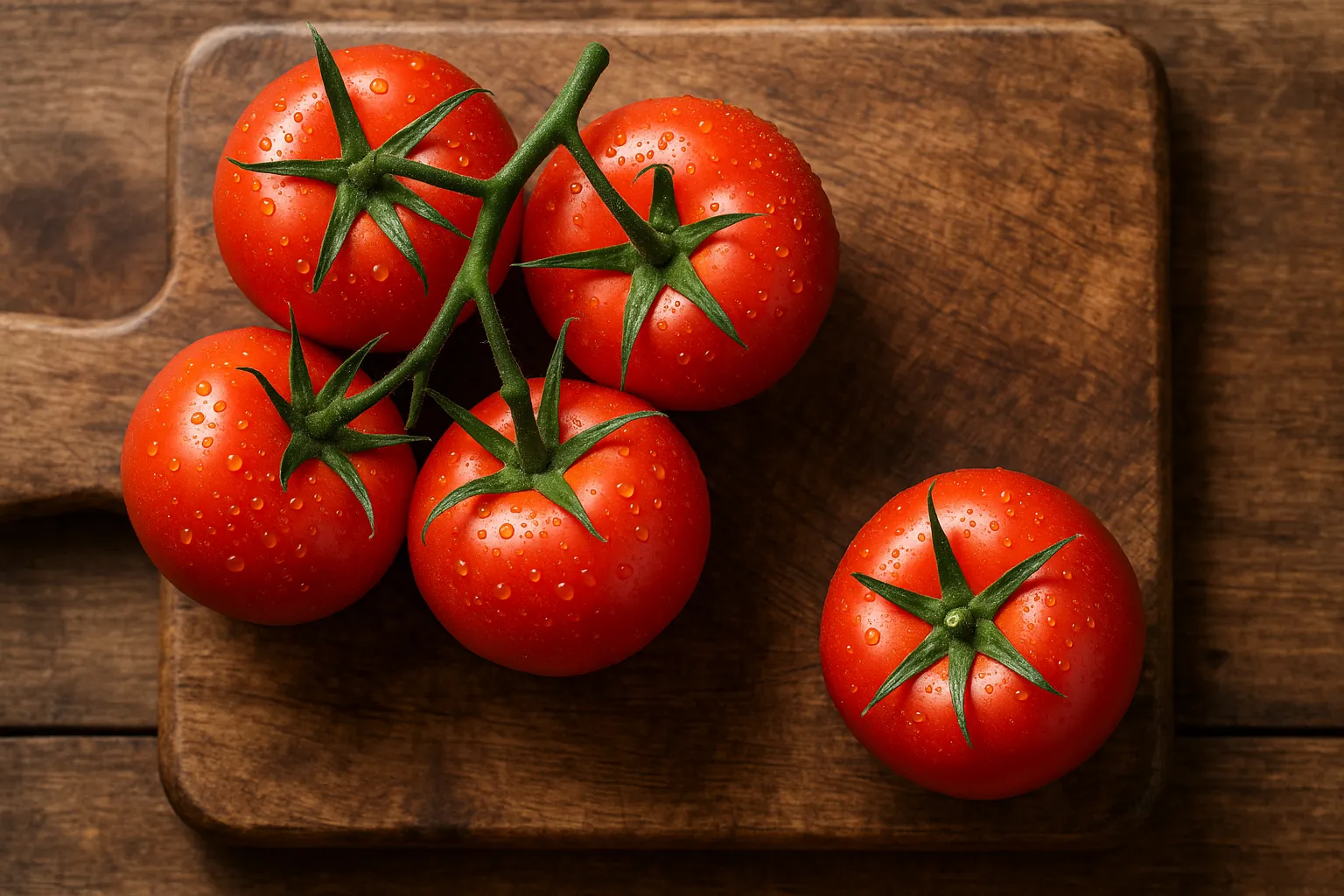
Quick Nutrition Facts
Per 1 Medium Tomato (123g)
| Nutrient | Amount |
|---|---|
| Calories | 22 kcal |
| Protein | 1.1g |
| Carbohydrates | 4.8g |
| Fiber | 1.5g |
| Sugars | 3.2g |
| Fat | 0.25g |
| Vitamin C | 16.9mg |
| Lycopene | 3,165mcg |
| Potassium | 291mg |
| Vitamin K | 9.7mcg |
Macronutrient Breakdown
 ChatGPT
  Claude
  AI Mode
  Perplexity
NUTRITIONIST INSIGHT
Tomatoes are 95% water yet incredibly nutrient-dense. The powerful antioxidant lycopene (3,165mcg per tomato) becomes more bioavailable when cooked—making tomato sauce and cooked dishes even more beneficial than raw consumption for heart health and cancer prevention.
Myth Busters
MYTH #1: Tomatoes Are Too Acidic to Eat Daily
TRUTH: While acidic (pH 4.3-4.9), tomatoes are safe for daily consumption for most people. The alkalizing minerals they contain help balance pH in the body. Only avoid if you have diagnosed GERD or acid reflux—even then, cooked tomatoes may be tolerable.
MYTH #2: Tomatoes Cause Kidney Stones
TRUTH: Despite containing oxalates, tomatoes don't significantly increase kidney stone risk for most people. The potassium and water content actually help prevent stones. Only restrict if you have a history of oxalate stones—consult your doctor first.
MYTH #3: Green Tomatoes Are Poisonous
TRUTH: Green tomatoes contain tomatine but in amounts too small to cause harm in normal consumption. Cooking reduces tomatine further. Green tomatoes are safe to eat and popular in Southern cuisine (fried green tomatoes).
MYTH #4: Tomato Seeds Should Be Removed
TRUTH: Tomato seeds are perfectly safe and nutritious, containing fiber and additional nutrients. The gel around seeds is rich in glutamate (natural MSG) that enhances umami flavor. Keep them for maximum nutrition and taste.
MYTH #5: Cooked Tomatoes Lose All Nutrients
TRUTH: Cooking actually increases lycopene bioavailability by 2-3 times by breaking down cell walls. While vitamin C decreases slightly, the enhanced absorption of lycopene and other antioxidants makes cooked tomatoes extremely beneficial.
MYTH #6: Tomatoes Worsen Arthritis
TRUTH: No scientific evidence supports this claim. Tomatoes' anti-inflammatory properties may actually reduce arthritis symptoms. The lycopene and vitamin C support joint health. Only avoid if you have a nightshade sensitivity.
NutriScore by Health Goals
| Health Goal | NutriScore | Why This Score? |
|---|---|---|
| Weight Loss |  | Only 22 calories with 95% water content. High volume, low calories, rich nutrients. Eat 2-3 daily without guilt. |
| Muscle Gain |  | Low protein (1.1g) but excellent post-workout for hydration and antioxidants. Pair with protein sources. |
| Diabetes Management | | Low GI, minimal carbs (4.8g), supports blood sugar control. Consume freely—1-3 tomatoes daily. |
| Heart Health | | Lycopene reduces cardiovascular disease risk, potassium regulates blood pressure. Eat daily for optimal benefits. |
| Cancer Prevention | | Lycopene linked to 40% reduced prostate cancer risk. Antioxidants protect cells. Consume cooked tomatoes regularly. |
| Skin Health | | Vitamin C for collagen, lycopene protects from UV damage, antioxidants fight aging. Daily consumption improves skin quality. |
PERSONALIZED NUTRITION
Track your meals with NutriScan for personalized NutriScores based on your specific health goals!
Blood Sugar Response to Tomato
Tomatoes have a low glycemic index and minimal impact on blood sugar, making them ideal for diabetes management.
Typical Glucose Response Curve
This chart shows minimal blood glucose response due to tomatoes' low calorie and carb content. Individual responses may vary. Not medical advice.
Blood Sugar Benefits
Tomatoes support stable blood sugar through:
- 🍅 Low Glycemic Load - Only 4.8g carbs per tomato with minimal glucose impact
- 💧 High Water Content (95%) - Dilutes natural sugars for slower absorption
- 🌾 Fiber Content - 1.5g fiber slows glucose release into bloodstream
- ⚡ Rich in Chromium - Trace mineral that enhances insulin sensitivity
Tomatoes can be eaten freely by diabetics—1-3 daily provide nutrients without blood sugar concerns.
Cultural Significance
Tomatoes originated in western South America and were cultivated by Aztecs and Incas before global spread.
In India:
- Introduced by Portuguese in 16th century, now essential in Indian cuisine
- Called "tamatar" (Hindi), "thakkali" (Tamil), "tomato" across regions
- Foundation of gravies, curries, chutneys, and sambar
- Major producer: Karnataka, Andhra Pradesh, Maharashtra, Madhya Pradesh
Global Impact:
- 180+ million tons produced annually worldwide
- Most consumed vegetable globally (technically a fruit botanically)
- Italian cuisine transformed by tomato introduction in 16th century
- "Miracle fruit" that revolutionized global cooking and nutrition
Compare & Substitute
Tomato vs Similar Vegetables (Per 100g)
| Nutrient | 🍅 Tomato | 🌶️ Bell Pepper (Red) | 🥒 Cucumber | 🥕 Carrot |
|---|---|---|---|---|
| Calories | 18 kcal | 31 kcal | 15 kcal | 41 kcal |
| Carbs | 3.9g | 6g | 3.6g | 10g |
| Fiber | 1.2g | 2.1g | 0.5g | 2.8g |
| Protein | 0.9g | 1g | 0.7g | 0.9g |
| Fat | 0.2g | 0.3g | 0.1g | 0.2g |
| Vitamin C | 13.7mg | 127.7mg | 2.8mg | 5.9mg |
| Lycopene | 2,573mcg | 0mcg | 0mcg | 1mcg |
| Potassium | 237mg | 211mg | 147mg | 320mg |
| Vitamin A | 833 IU | 3,131 IU | 105 IU | 16,706 IU |
| Best For | Cancer prevention, low calorie | Vitamin C, antioxidants, immune boost | Ultra-low calorie, hydration, skin | Beta-carotene, eye health, fiber |
Frequently Asked Questions
Are tomatoes good for weight loss?
Yes, tomatoes are ideal for weight loss with only 22 calories per medium tomato and 95% water content. They provide volume, nutrients, and satisfaction without excess calories; the fiber (1.5g) promotes fullness.
Best practices: Eat 2-3 tomatoes daily as snacks or in meals, add to salads for volume without calories, use tomato-based sauces instead of cream sauces, combine with protein and healthy fats for balanced meals.
What is lycopene and why is it important?
Lycopene is a powerful carotenoid antioxidant (3,165mcg per medium tomato) that gives tomatoes their red color. Research shows it reduces prostate cancer risk by up to 40%, protects heart health, prevents cellular damage, and supports skin health against UV damage.
Maximize absorption: Cook tomatoes to increase bioavailability 2-3x, consume with healthy fats (olive oil) for better absorption, eat tomato paste or sauce for concentrated lycopene, include in diet 4-5 times weekly for optimal protection.
Can diabetics eat tomatoes?
Absolutely. Tomatoes are excellent for diabetics with low glycemic index, only 4.8g carbs per tomato, and nutrients that support blood sugar control and reduce diabetes complications.
Tips for diabetics: Consume 1-3 tomatoes daily freely, pair with protein or healthy fat for balanced meals, use in place of high-carb vegetables, monitor blood sugar but expect minimal impact, choose fresh over canned (less sodium).
Are cooked or raw tomatoes healthier?
Both are healthy—include both in your diet. Raw tomatoes retain maximum vitamin C (16.9mg) and live enzymes; cooked tomatoes have 2-3 times more bioavailable lycopene due to heat breaking down cell walls, making antioxidants more absorbable.
Recommendations: Eat raw tomatoes in salads for vitamin C, cook tomatoes for lycopene and cancer protection, use tomato sauce or paste for concentrated benefits, combine both forms for comprehensive nutrition.
How much vitamin C is in a tomato?
One medium tomato (123g) provides 16.9mg of vitamin C—about 19% of your daily needs. This supports immune function, collagen production for skin health, iron absorption, and antioxidant protection.
For higher vitamin C intake, pair tomatoes with bell peppers or citrus fruits; eat 2-3 tomatoes daily to contribute significantly to vitamin C requirements.
Can you eat tomatoes every day?
Yes, eating 1-3 tomatoes daily is safe and highly beneficial for most people. Daily consumption provides consistent antioxidants, vitamins, and minerals that support heart health, cancer prevention, and overall wellness.
When to limit: Acid reflux or GERD (cooked may be tolerable), history of oxalate kidney stones (consult doctor first), nightshade sensitivity (rare), tomato allergy. Otherwise, consume freely—no upper limit for healthy individuals.
Do tomatoes help with skin health?
Yes, tomatoes significantly support skin health. Vitamin C (16.9mg) promotes collagen production for firmness; lycopene protects skin from UV damage and reduces sunburn; antioxidants fight free radicals that cause premature aging.
For best results: Consume 1-2 tomatoes daily, eat cooked tomatoes for maximum lycopene, combine with healthy fats for absorption, apply topically as masks for additional benefits, be consistent for 6-8 weeks to see improvements.


Similar Nutritious Foods
4505 Chicharrones Classic Chili Salt
7 Eleven Japan Crispy Corn Cheese
Explore More Nutrition Tools & Resources
AI Calorie Counter App - Snap a Photo, Get Macros
AI Nutritionist App That Reads Your Logged Meals
Best Protein Supplements for Women
Bulking Meal Plan App That Sets Your Surplus
ChatGPT Calorie Counter Alternative That Keeps the Total
ChatGPT Diet Plan Alternative That Tracks What You Eat
ChatGPT Weight Loss Coach Alternative With a Food Log
Fast Food Calorie Counter App That Reads the Tray
Free Calorie Tracker App with AI Photo Scans | NutriScan
Indian Diet Plan App With Veg and Non Veg Meals
Indian Food Calorie Calculator - Get Instant Nutrition Facts for Desi Meals — 2026
Intermittent Fasting for Women, Timer and Meal Log App
Intermittent Fasting Tracker App - Free Fasting Timer
Macro Tracker App That Fills the Numbers From a Photo
Mediterranean Diet Meal Plan App That Counts the Oil
Micronutrient Tracker App for Vitamins and Minerals
MyFitnessPal Alternative That Stays Free | NutriScan
NutriScore App: A Free Grade on Every Meal | NutriScan
Nutrition Label Scanner App for the Amount You Ate
Second Trimester Protein Guide
Vegetarian Meal Plan App With a Protein Target
Voice Calorie Counter - Speak to Track Meals Hands-Free
Water and Calorie Tracker App - Free Water Log