White Rice: Calories, Nutrition and Health Benefits
The world's most consumed grain - versatile, affordable, and essential to billions. Understanding its nutrition helps you make informed choices for your health goals.
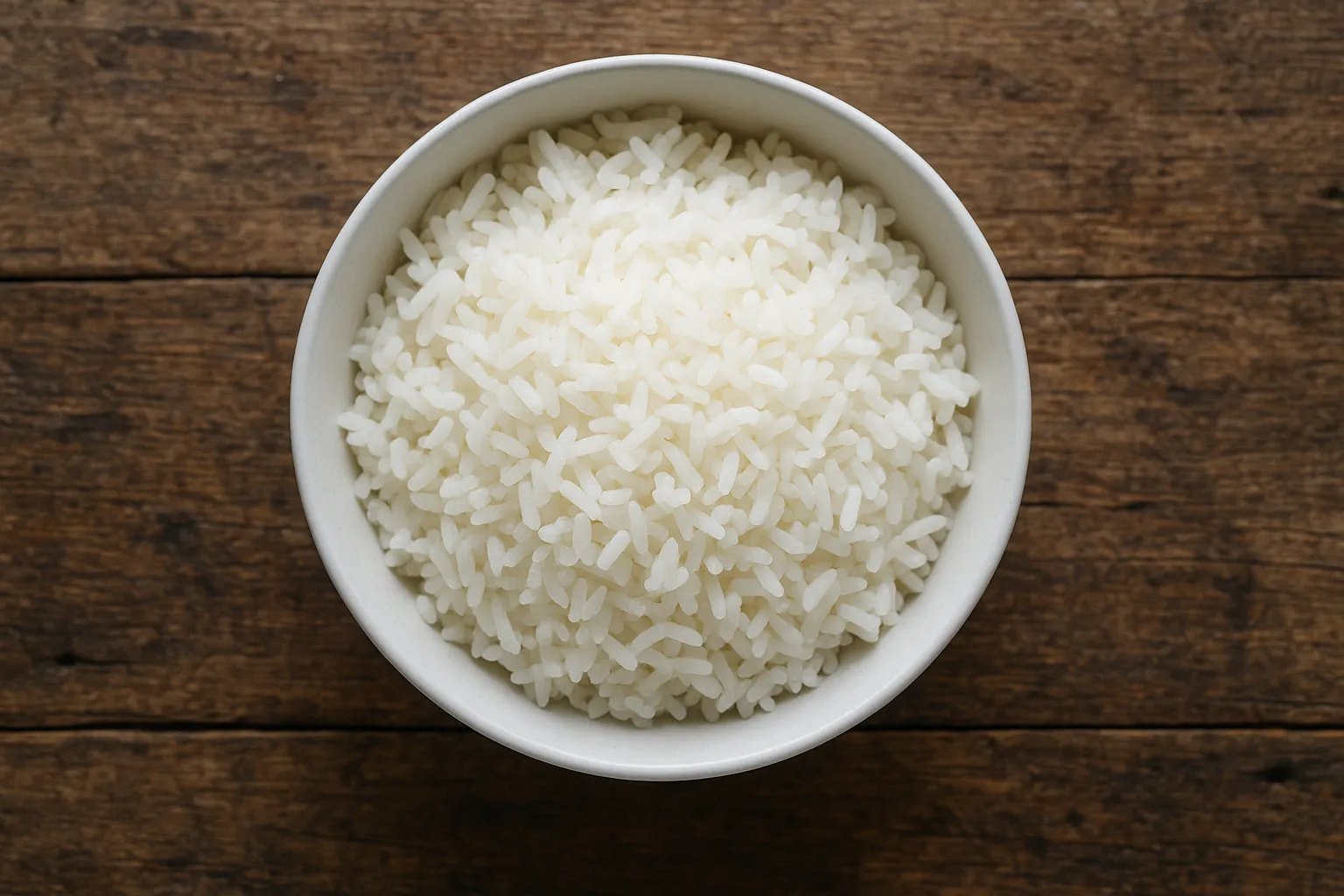
Quick Nutrition Facts
Per 1 Cup Cooked White Rice (158g)
| Nutrient | Amount |
|---|---|
| Calories | 205 kcal |
| Protein | 4.2g |
| Carbohydrates | 45g |
| Fiber | 0.6g |
| Sugars | 0.1g |
| Fat | 0.4g |
| Iron | 1.9mg |
| Thiamin (B1) | 0.3mg |
| Folate | 77mcg |
| Niacin (B3) | 2.3mg |
Macronutrient Breakdown
 ChatGPT
  Claude
  AI Mode
  Perplexity
NUTRITIONIST INSIGHT
White rice is enriched with B vitamins and iron after processing. While it has less fiber than brown rice, it's easier to digest and perfect for quick energy replenishment. Pair with protein and vegetables to balance the glycemic response.
Myth Busters
MYTH #1: White Rice Has No Nutritional Value
TRUTH: While processing removes some nutrients, white rice is enriched with iron, thiamin, niacin, and folate. One cup provides 19% daily iron and 19% daily folate. It's not nutritionally empty, just different from brown rice.
MYTH #2: White Rice Causes Diabetes
TRUTH: High white rice consumption (5+ servings/week) is associated with 17% increased diabetes risk, but rice itself doesn't cause diabetes. The issue is portion size, frequency, and lack of fiber/protein pairing. Moderate intake (2-3 servings weekly) with vegetables is safe.
MYTH #3: You Must Avoid White Rice for Weight Loss
TRUTH: White rice can fit into weight loss diets. At 205 calories per cup, it's moderate. The key is portion control (1/2 cup servings) and pairing with lean protein, fiber-rich vegetables, and healthy fats to prevent overeating.
MYTH #4: White Rice Is "Bad Carbs"
TRUTH: White rice is a refined grain with a high glycemic index (73), but "bad" depends on context. For athletes and post-workout recovery, the quick glucose absorption aids glycogen replenishment. Timing and pairing matter more than the food itself.
MYTH #5: All White Rice Has the Same Glycemic Index
TRUTH: Glycemic index varies by variety. Basmati white rice (GI 58) is lower than jasmine (GI 89). Long-grain typically has lower GI than short-grain. Cooking method also matters - parboiled rice has 30% lower GI than regular white rice.
MYTH #6: Rinsing Rice Removes All Nutrients
TRUTH: Rinsing removes surface starch (improving texture) but modern enriched rice has nutrients added to the grain itself, not just the surface. Rinsing 2-3 times is fine and actually recommended for better texture and reduced glycemic load.
NutriScore by Health Goals
| Health Goal | NutriScore | Why This Score? |
|---|---|---|
| Weight Loss |  | Moderate calories (205/cup) but high GI (73) causes hunger spikes. Limit to 1/2 cup portions with protein/vegetables. |
| Muscle Gain |  | Excellent post-workout carb source (45g/cup) for glycogen replenishment. Quick absorption helps muscle recovery. |
| Diabetes Management |  | High GI (73) causes significant blood sugar spikes. 5+ servings weekly increases diabetes risk 17%. Choose brown rice or limit to 1/4 cup. |
| PCOS Management | | High GI worsens insulin resistance. Substitute with brown rice, quinoa, or cauliflower rice for better blood sugar control. |
| Pregnancy Nutrition | | Enriched with folate (77mcg/cup) and iron (1.9mg/cup) essential for fetal development. Easy to digest for morning sickness. |
| Viral/Flu Recovery |  | Gentle on digestion, provides quick energy, easy to eat when appetite is low. Pair with broth and vegetables for balanced recovery nutrition. |
PERSONALIZED NUTRITION
Track your meals with NutriScan for personalized NutriScores based on your specific health goals!
Blood Sugar Response to White Rice
Understanding how white rice affects blood glucose helps you make smart pairing choices to minimize spikes.
Typical Glucose Response Curve
*This chart shows typical blood glucose response for healthy individuals. Individual responses may vary. Not medical advice.*
How to Flatten the Spike
Pairing white rice with protein, fat, and fiber significantly reduces blood sugar spikes:
- 🥦 Add vegetables first - Eat salad or vegetables before rice to slow absorption
- 🍗 Include lean protein - Chicken, fish, tofu, or legumes reduce glycemic response
- 🥑 Add healthy fats - Olive oil, avocado, or nuts slow digestion
- 🥒 Vinegar trick - Adding 1-2 tbsp vinegar reduces post-meal blood sugar by 20-30%
The "Carb Last" eating sequence (protein/vegetables first, rice last) can lower blood sugar spikes by up to 40%.
Cultural Significance
Rice has been cultivated for over 10,000 years and remains the primary food source for 3.5 billion people globally.
In India:
- White rice (chawal) is sacred in Hindu rituals and weddings
- Different regions prefer different varieties: Basmati (North), Sona Masuri (South), Kolam (West)
- Traditional Ayurvedic practice uses rice water for digestion and hydration
- Rice is offered to deities in pujas and served during festivals
- "Anna" (cooked rice) represents life and sustenance in Indian culture
Global Impact:
- 90% of the world's rice is consumed in Asia
- China and India produce 50% of global rice supply
- Over 40,000 varieties exist worldwide
- Rice feeds more people than any other crop
- Staple food in 65+ countries across 6 continents
Compare & Substitute
White Rice vs Similar Grains (Per 100g Cooked)
| Nutrient | 🍚 White Rice | 🍚 Brown Rice | 🌾 Quinoa | 🌾 Cauliflower Rice |
|---|---|---|---|---|
| Calories | 130 kcal | 112 kcal | 120 kcal | 25 kcal |
| Carbs | 28g | 24g | 21g | 5g |
| Fiber | 0.4g | 1.8g | 2.8g | 2g |
| Protein | 2.7g | 2.6g | 4.4g | 2g |
| Fat | 0.3g | 0.9g | 1.9g | 0.3g |
| Iron | 1.2mg | 0.4mg | 1.5mg | 0.4mg |
| GI | 73 (high) | 68 (medium) | 53 (low) | 15 (very low) |
| Best For | Quick energy | Blood sugar | Complete protein | Low-carb diets |
Frequently Asked Questions
Is white rice good for weight loss?
White rice can fit into weight loss diets with proper portion control. At 130 calories per 100g, it's moderate in energy density. The challenge is the high glycemic index (73) causing rapid blood sugar spikes followed by hunger.
Best practices for weight loss: Limit portions to 1/2 cup cooked (103 calories); pair with 4-6 oz lean protein and 2-3 cups non-starchy vegetables; eat vegetables first (slows absorption); avoid late-night rice consumption; choose basmati over jasmine (lower GI).
Can diabetics eat white rice?
Diabetics can eat white rice in very small portions with caution. Research shows 5+ servings weekly increases diabetes risk by 17%. The high glycemic index (73) causes significant blood sugar spikes.
Tips for diabetics: Limit to 1/4-1/2 cup per meal (max 2-3x weekly); always pair with protein and fiber; choose parboiled basmati (lower GI); eat vegetables before rice; monitor blood sugar 2 hours after meals; consider substituting with brown rice, quinoa, or cauliflower rice for better glycemic control.
What is the glycemic index of white rice?
White rice has an average glycemic index of 73 (high), though this varies by variety. Short-grain white rice can reach GI 89, while basmati white rice is lower at GI 58-65. Parboiled (converted) rice has GI 38-47 due to resistant starch formation.
GI Comparison: Jasmine rice (GI 89), Arborio risotto rice (GI 69), Long-grain white rice (GI 56), Basmati white rice (GI 58). Cooking method matters - rice cooled and reheated has lower GI due to resistant starch formation.
Is white rice or brown rice healthier?
Brown rice is generally healthier for most people due to higher fiber (1.8g vs 0.6g per 100g), lower glycemic index (68 vs 73), more magnesium (44mg vs 12mg), and more antioxidants.
When white rice is better: Easier to digest (no phytic acid), lower arsenic content (50-60% less), fortified with iron and B vitamins, better for post-workout glycogen replenishment, safer during digestive issues (IBS, Crohn's), preferred taste and texture.
Both can be part of a healthy diet in moderation.
How many calories are in white rice?
Cooked white rice: 130 calories per 100g, 205 calories per 1 cup (158g), 103 calories per 1/2 cup serving.
Uncooked white rice: 365 calories per 100g, but it expands 2-3x when cooked. 1/2 cup uncooked = 1.5 cups cooked = 307 calories.
Portion confusion: Restaurant servings are often 1.5-2 cups (307-410 calories), not the standard 1/2 cup serving size. Measure portions for accurate tracking.
Should I rinse white rice before cooking?
Yes, rinsing white rice 2-3 times until water runs clear removes excess surface starch. This prevents clumping, creates fluffier texture, and may slightly reduce the glycemic load by removing quick-absorbing starches.
Benefits: Better texture (less sticky), removes debris and dust, may reduce glycemic impact by 10-15%, improves taste.
Enriched nutrients: Modern enriched rice has vitamins/minerals added to the grain itself, not just surface coating, so rinsing doesn't remove significant nutrition.
How should I store cooked white rice?
Refrigerator: Store in airtight container for 4-6 days at 40°F or below. Cool rice quickly (within 1 hour of cooking) to prevent Bacillus cereus bacteria growth.
Freezer: Store in portions for up to 6 months. Reheat from frozen or thaw in refrigerator overnight.
Safety warning: Never leave cooked rice at room temperature for more than 2 hours. Fried rice syndrome (Bacillus cereus food poisoning) is caused by improper rice storage.




Similar Nutritious Foods
4505 Chicharrones Classic Chili Salt
7 Eleven Japan Crispy Corn Cheese
Explore More Nutrition Tools & Resources
AI Calorie Counter App - Snap a Photo, Get Macros
AI Nutritionist App That Reads Your Logged Meals
Best Protein Supplements for Women
Bulking Meal Plan App That Sets Your Surplus
ChatGPT Calorie Counter Alternative That Keeps the Total
ChatGPT Diet Plan Alternative That Tracks What You Eat
ChatGPT Weight Loss Coach Alternative With a Food Log
Fast Food Calorie Counter App That Reads the Tray
Free Calorie Tracker App with AI Photo Scans | NutriScan
Indian Diet Plan App With Veg and Non Veg Meals
Indian Food Calorie Calculator - Get Instant Nutrition Facts for Desi Meals — 2026
Intermittent Fasting for Women, Timer and Meal Log App
Intermittent Fasting Tracker App - Free Fasting Timer
Macro Tracker App That Fills the Numbers From a Photo
Mediterranean Diet Meal Plan App That Counts the Oil
Micronutrient Tracker App for Vitamins and Minerals
MyFitnessPal Alternative That Stays Free | NutriScan
NutriScore App: A Free Grade on Every Meal | NutriScan
Nutrition Label Scanner App for the Amount You Ate
Second Trimester Protein Guide
Vegetarian Meal Plan App With a Protein Target
Voice Calorie Counter - Speak to Track Meals Hands-Free
Water and Calorie Tracker App - Free Water Log