Wildbrine Red Beet Sauerkraut with Pears: Calories, Nutrition and Health Benefits
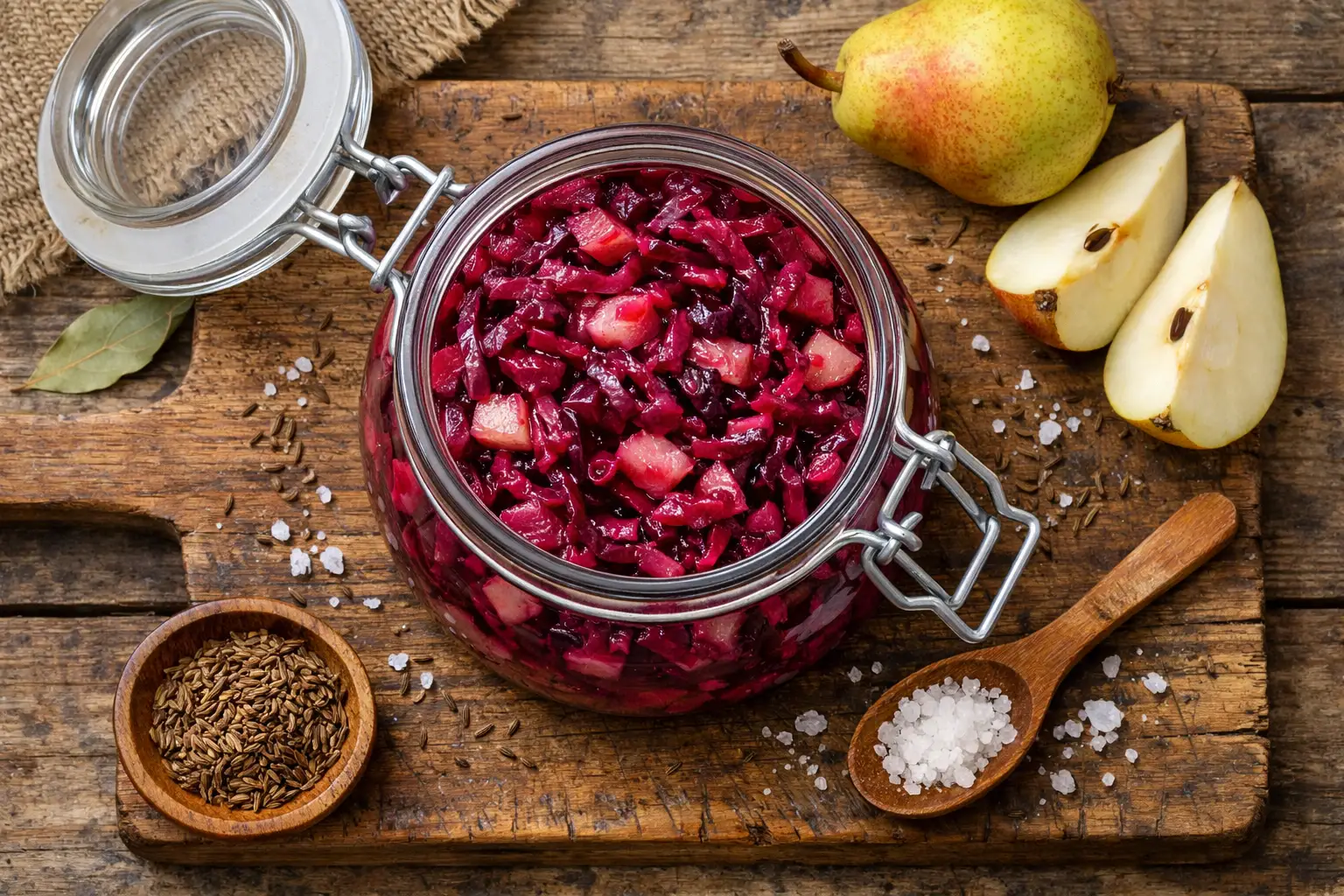
A probiotic-rich fermented kraut blending organic red cabbage, beets, and pears for just 10 calories per serving with gut-boosting live cultures.
Quick Nutrition Facts
Per 2 Tablespoons (30g)
| Nutrient | Amount |
|---|---|
| Calories | 10 kcal |
| Protein | 0g |
| Carbohydrates | 2g |
| Fiber | 1g |
| Sugars | 1g |
| Fat | 0g |
| Sodium | 250mg |
| Potassium | 70mg |
| Calcium | 10mg |
| Iron | 0.2mg |
Macronutrient Breakdown
 ChatGPT
  Claude
  AI Mode
  Perplexity
NUTRITIONIST INSIGHT
Wildbrine Red Beet Sauerkraut combines three nutritional powerhouses: live probiotic cultures from fermentation, betalain antioxidants from red beets, and prebiotic fiber from cabbage. At just 10 calories per serving, it adds gut-friendly nutrition to any meal without impacting calorie goals.
Myth Busters
MYTH #1: All Sauerkraut Is the Same
TRUTH: Raw, unpasteurized sauerkraut like Wildbrine contains live probiotic bacteria that support gut microbiome diversity. Pasteurized shelf-stable varieties lose most beneficial bacteria during heat processing.
MYTH #2: Sauerkraut Is Too High in Sodium to Be Healthy
TRUTH: While sauerkraut contains 250mg sodium per 2 tbsp serving, the probiotic and anti-inflammatory benefits outweigh sodium concerns for most people. Those monitoring sodium can rinse sauerkraut briefly before eating.
MYTH #3: Fermented Foods Are Unsafe During Pregnancy
TRUTH: Fermented foods like sauerkraut are generally considered safe and can support digestive health during pregnancy. ACOG recommends checking that foods are properly stored. Consult your healthcare provider about raw unpasteurized varieties.
MYTH #4: Sauerkraut Causes Bloating for Everyone
TRUTH: Initial bloating may occur as your gut adjusts to new probiotic strains and increased fiber. Start with 1 tablespoon daily and gradually increase. Most people adapt within 1-2 weeks.
MYTH #5: Red Beet Sauerkraut Has Too Much Sugar from Beets
TRUTH: With only 1g sugar per serving, the beet and pear additions are minimal. Fermentation actually converts sugars into organic acids, reducing overall sugar content compared to raw beets.
NutriScore by Health Goals
| Health Goal | NutriScore | Why This Score? |
|---|---|---|
| Weight Loss |  | Only 10 calories per serving with 1g fiber. Probiotic-rich foods linked to healthy weight management. Use as a zero-guilt flavor booster. |
| Muscle Gain |  | Negligible protein and calories. Useful as a condiment for gut health but not a significant macronutrient source for muscle building. |
| Diabetes Management | | Very low GI with just 2g carbs per serving. Fermented foods may improve insulin sensitivity and support blood sugar regulation. |
| PCOS Management | | Ultra-low calorie, low-carb, anti-inflammatory. Probiotics may help balance gut bacteria linked to hormonal health. |
| Pregnancy Nutrition |  | Provides probiotics and iron. Consult your provider about raw fermented foods during pregnancy. Pasteurized options are safer. |
| Viral/Flu Recovery | | Probiotics support immune function, easy to digest, and anti-inflammatory betalains from beets aid recovery. |
PERSONALIZED NUTRITION
Track your meals with NutriScan for personalized NutriScores based on your specific health goals!
Blood Sugar Response to Wildbrine Red Beet Sauerkraut
Understanding how sauerkraut affects your blood glucose helps optimize your fermented food intake.
Typical Glucose Response Curve
*This chart shows typical blood glucose response for general healthy individuals. Individual responses may vary. Not medical advice.*
How to Maximize Gut Benefits
Pairing sauerkraut with fiber and protein enhances probiotic survival and nutrient absorption:
- 🥗 On top of salads - Adds probiotics and tangy flavor to fresh vegetables
- 🥚 With eggs or avocado toast - Protein and healthy fats support probiotic colonization
- 🍲 As a side with grains - Pair with brown rice or quinoa for prebiotic fiber
- 🥩 Alongside grilled protein - Aids digestion of heavier meals
Eating sauerkraut at the start of a meal can prime your digestive system for better nutrient absorption.
Cultural Significance
Sauerkraut has been a staple of food preservation for centuries, with roots in ancient fermentation practices.
European Heritage:
- Germany and Eastern Europe perfected cabbage fermentation over 500+ years
- Sauerkraut sustained sailors on long voyages, preventing scurvy with its vitamin C
- Captain James Cook credited sauerkraut for keeping his crew healthy during Pacific explorations
- Traditional German, Polish, and Russian cuisines center sauerkraut as a dietary staple
Modern Revival:
- Artisanal brands like Wildbrine revive raw, unpasteurized fermentation methods
- Growing scientific interest in gut microbiome has boosted fermented food popularity
- Beet sauerkraut blends combine European fermentation with root vegetable nutrition
- Global fermented foods market valued at over $800 billion, driven by health-conscious consumers
Compare & Substitute
Wildbrine Red Beet Sauerkraut vs Similar Fermented Foods (Per 100g)
| Nutrient | 🥬 Wildbrine Beet Sauerkraut | 🥬 Regular Sauerkraut | 🌶️ Kimchi | 🥒 Pickles |
|---|---|---|---|---|
| Calories | 33 kcal | 19 kcal | 15 kcal | 11 kcal |
| Carbs | 6.7g | 4.3g | 2.4g | 2.3g |
| Fiber | 3.3g | 2.9g | 1.6g | 1.2g |
| Protein | 0g | 0.9g | 1.1g | 0.3g |
| Fat | 0g | 0.1g | 0.5g | 0.2g |
| Sodium | 833mg | 661mg | 498mg | 1208mg |
| Sugar | 3.3g | 1.8g | 1.1g | 1.1g |
| Potassium | 233mg | 170mg | 151mg | 23mg |
| Best For | Gut health, antioxidants | Classic probiotic support | Spicy probiotic kick | Low-calorie crunch |
Frequently Asked Questions
Is Wildbrine Red Beet Sauerkraut good for weight loss?
10 calories per serving makes this an ideal condiment for weight loss. The 1g fiber promotes satiety and probiotics support healthy gut bacteria linked to weight management.
Best practices: Use 2-4 tablespoons as a topping on salads, bowls, or alongside protein. The tangy flavor satisfies cravings without adding significant calories.
Can diabetics eat Wildbrine Red Beet Sauerkraut?
2g carbs per serving and a very low glycemic index make this excellent for diabetes management. Fermented foods may improve insulin sensitivity over time.
Tips for diabetics:
- Enjoy freely as a condiment (2-4 tablespoons per meal)
- Monitor sodium if managing blood pressure alongside diabetes
- Pair with protein and vegetables for balanced meals
- The probiotics may support blood sugar regulation with regular consumption
How many probiotics are in Wildbrine Sauerkraut?
Wildbrine sauerkraut is raw and unpasteurized, containing live Lactobacillus bacteria naturally produced during fermentation. Raw sauerkraut typically provides billions of beneficial CFUs per serving, though exact counts vary by batch and storage conditions.
What makes Wildbrine different from regular sauerkraut?
Wildbrine uses organic ingredients with added red beets for betalain antioxidants and pears for subtle natural sweetness. It is raw, unpasteurized, and contains no vinegar or preservatives, preserving maximum live probiotic cultures.
Key differences: Organic certification, no added vinegar, raw fermentation preserves live cultures, beet and pear additions provide extra antioxidants and flavor complexity.
Is sauerkraut safe during pregnancy?
Pasteurized sauerkraut is generally safe during pregnancy. For raw unpasteurized varieties like Wildbrine, consult your healthcare provider as raw fermented foods carry a small contamination risk.
Benefits during pregnancy: Probiotics support digestive health, iron from beets aids blood volume, and fiber helps with pregnancy-related constipation.
IMPORTANT NOTE
Start with small amounts (1 tablespoon daily) and increase gradually. Excessive fermented food intake can cause bloating or gas as your gut adjusts to new probiotic strains.
How much sauerkraut should I eat daily?
General Guidelines:
- 1-2 tablespoons daily - Beginners (let gut adjust to probiotics)
- 2-4 tablespoons daily - Regular consumers (optimal probiotic intake)
- Up to 1/2 cup daily - Fermented food enthusiasts (monitor sodium)
Watch sodium: 250mg per 2 tbsp serving adds up. If eating larger amounts, choose low-sodium meals for the rest of the day.
Track your meals with NutriScan app to see how sauerkraut fits your personal nutrition goals.




Similar Nutritious Foods
4505 Chicharrones Classic Chili Salt
7 Eleven Japan Crispy Corn Cheese
Explore More Nutrition Tools & Resources
AI Calorie Counter App - Snap a Photo, Get Macros
AI Nutritionist App That Reads Your Logged Meals
Best Protein Supplements for Women
Bulking Meal Plan App That Sets Your Surplus
ChatGPT Calorie Counter Alternative That Keeps the Total
ChatGPT Diet Plan Alternative That Tracks What You Eat
ChatGPT Weight Loss Coach Alternative With a Food Log
Fast Food Calorie Counter App That Reads the Tray
Free Calorie Tracker App with AI Photo Scans | NutriScan
Indian Diet Plan App With Veg and Non Veg Meals
Indian Food Calorie Calculator - Get Instant Nutrition Facts for Desi Meals — 2026
Intermittent Fasting for Women, Timer and Meal Log App
Intermittent Fasting Tracker App - Free Fasting Timer
Macro Tracker App That Fills the Numbers From a Photo
Mediterranean Diet Meal Plan App That Counts the Oil
Micronutrient Tracker App for Vitamins and Minerals
MyFitnessPal Alternative That Stays Free | NutriScan
NutriScore App: A Free Grade on Every Meal | NutriScan
Nutrition Label Scanner App for the Amount You Ate
Second Trimester Protein Guide
Vegetarian Meal Plan App With a Protein Target
Voice Calorie Counter - Speak to Track Meals Hands-Free
Water and Calorie Tracker App - Free Water Log