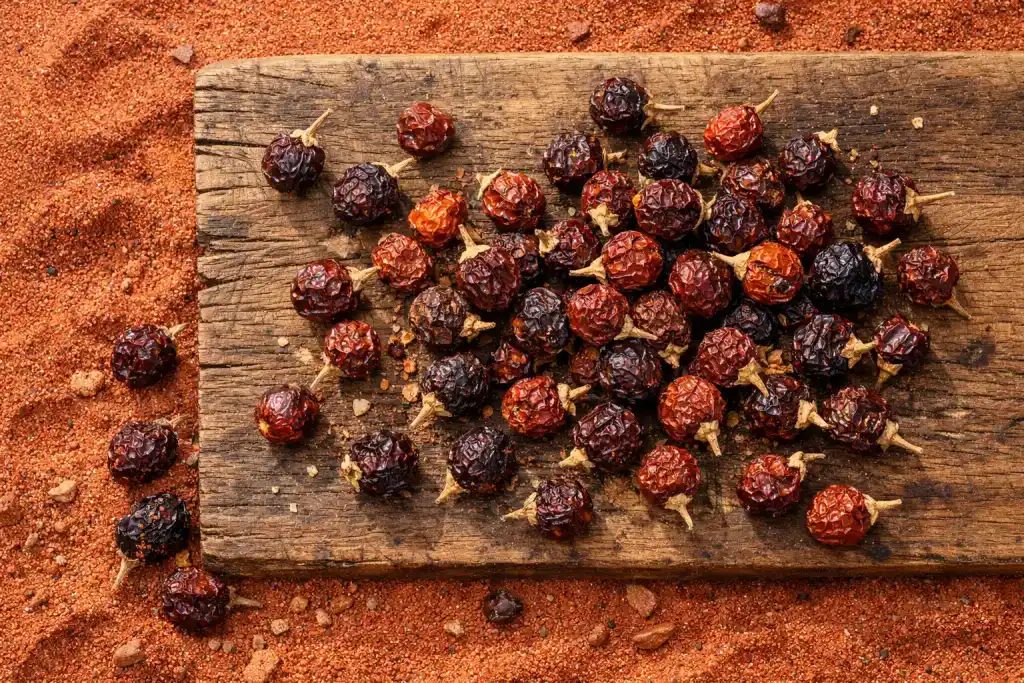
Australian Bush Tomato: Calories, Nutrition and Health Benefits
An ancient Indigenous Australian superfood packed with antioxidants, selenium, and intense flavor in every small serving.
Quick Nutrition Facts
Per 10g Serving (Dried Bush Tomato)
| Nutrient | Amount |
|---|---|
| Calories | 25 kcal |
| Protein | 1g |
| Carbohydrates | 2.9g |
| Fiber | 1.7g |
| Sugars | 2.9g |
| Fat | 0.6g |
| Potassium | 156mg |
| Vitamin C | 6.3mg |
| Iron | 1.2mg |
| Selenium | 3.5mcg |
Macronutrient Breakdown
 ChatGPT
  Claude
  AI Mode
  Perplexity
NUTRITIONIST INSIGHT
Bush tomato packs more antioxidant power per gram than blueberries, and is one of few native foods containing selenium. Just 10g as a spice adds meaningful potassium, iron, and vitamin C without significant calories.
Myth Busters
MYTH #1: Bush Tomato Is Just Another Tomato
TRUTH: Despite the name, bush tomato (Solanum centrale) is a distinct species native to Central Australia. It has a unique caramel-tamarillo flavor profile and antioxidant capacity exceeding blueberries, with a completely different nutritional profile from common tomatoes.
MYTH #2: Bush Tomato Is Unsafe to Eat
TRUTH: The traditional Aboriginal drying process reduces alkaloid levels, making dried bush tomato safe for consumption. Indigenous Australians have safely consumed dried bush tomato for thousands of years. Only fresh, unripe fruits contain higher alkaloid levels.
MYTH #3: Bush Tomato Has No Real Nutritional Value
TRUTH: Bush tomato contains high levels of phenolic compounds, lycopene, and ascorbic acid plus rare selenium. It provides two-thirds of the daily vitamin C requirement for children per 100g and significant amounts of potassium, calcium, iron, and zinc.
MYTH #4: You Need Large Amounts to Get Benefits
TRUTH: As a concentrated dried superfood, just 5-10g of bush tomato delivers meaningful antioxidants, minerals, and flavor. Phenolic compounds in native Australian herbs are highly bioavailable even in small quantities.
MYTH #5: Bush Tomato Is Only for Traditional Dishes
TRUTH: Modern chefs worldwide use bush tomato in sauces, rubs, breads, and gourmet dishes. Its intense caramel-like flavor enhances everything from pasta sauces to chocolate desserts, making it a versatile pantry superfood.
NutriScore by Health Goals
| Health Goal | NutriScore | Why This Score? |
|---|---|---|
| Weight Loss |  | Only 25 calories per 10g serving, 1.7g fiber promotes fullness, rich flavor reduces need for high-calorie seasonings. |
| Muscle Gain |  | Good iron content supports oxygen transport to muscles, potassium prevents cramps. Use as a spice to enhance protein dishes. |
| Diabetes Management | | Low glycemic impact as a spice, lycopene may improve insulin sensitivity, high fiber-to-carb ratio. |
| PCOS Management | | Anti-inflammatory phenolic compounds, selenium supports thyroid function, low calorie density supports weight management. |
| Pregnancy Nutrition |  | Good iron and vitamin C content. However, limited safety data for pregnancy means moderate use as a seasoning is recommended. Consult your doctor. |
| Viral/Flu Recovery | | High vitamin C, potent antioxidants, traditionally used for respiratory ailments, anti-inflammatory properties. |
PERSONALIZED NUTRITION
Track your meals with NutriScan for personalized NutriScores based on your specific health goals!
Blood Sugar Response to Bush Tomato
Bush tomato has a low glycemic impact due to its high fiber content, small serving sizes, and phenolic compounds that may slow glucose absorption.
Typical Glucose Response Curve
This chart shows typical blood glucose response for general healthy individuals. Individual responses may vary. Not medical advice.
How to Flatten the Spike
Pairing high-fiber foods with protein or healthy fat slows glucose absorption and reduces the peak blood sugar level:
- 🥩 Lean kangaroo or lamb - Bush tomato rub adds flavor while protein stabilizes blood sugar
- 🥑 Avocado - Healthy fats slow carbohydrate absorption
- 🥜 Macadamia nuts - Australian native nut with omega-7 and fiber
- 🫘 Lentils or chickpeas - Plant protein and additional fiber
This combination makes bush tomato an ideal spice for blood-sugar-friendly meals.
Cultural Significance
Bush tomato (Solanum centrale), also called akudjura, desert raisin, or kutjera, is one of Australia's most significant native food plants, with over 60,000 years of traditional use.
In Indigenous Australian Culture:
- Central to the mythology of the Warlpiri and Anmatyerr peoples of Central Australia
- Traditionally eaten fresh, dried on sticks, or ground into balls for storage
- Roots were baked in ash and used as traditional medicine for toothache
- A staple food for Aboriginal communities living in Central and Western Australia
Modern Revival:
- Key ingredient in the Australian bush tucker movement since the 1990s
- Used by world-class chefs like Jock Zonfrillo to elevate Australian cuisine
- Growing commercial cultivation supports Indigenous communities
- Exported globally as a premium Australian native spice
Compare & Substitute
Bush Tomato vs Similar Dried Foods (Per 100g)
| Nutrient | 🍅 Bush Tomato (Dried) | 🍅 Sun-Dried Tomato | 🫐 Dried Blueberry | 🌶️ Paprika |
|---|---|---|---|---|
| Calories | 250 kcal | 258 kcal | 325 kcal | 282 kcal |
| Carbs | 29g | 56g | 80g | 54g |
| Fiber | 17g | 12g | 8g | 21g |
| Protein | 10.3g | 14g | 2g | 14g |
| Fat | 6g | 3g | 1g | 13g |
| Potassium | 1560mg | 3427mg | 150mg | 2280mg |
| Vitamin C | 63mg | 39mg | 2mg | 0.9mg |
| Best For | Antioxidants, selenium | Lycopene, umami flavor | Anthocyanins, sweet snacking | Color, vitamin A |
Frequently Asked Questions
What does Australian bush tomato taste like?
Dried bush tomato has a piquant, intense caramel-like flavor with notes of sun-dried tomato and tamarillo. The taste is tangy, slightly sweet, and deeply savory, making it a unique spice in both traditional and modern cuisine.
Is bush tomato safe to eat raw?
Fresh bush tomatoes contain alkaloids that can affect the nervous system. The traditional Aboriginal drying process reduces alkaloid levels to safe amounts. Always consume the dried form, which has been the traditional method for thousands of years.
Safe consumption tips:
- Buy from reputable Australian bush food suppliers
- Use the dried or ground form only
- Start with small amounts (1-2 teaspoons) if new to bush tomato
- Store in an airtight container away from moisture
How many calories are in bush tomato?
Dried bush tomato contains approximately 250 calories per 100g. A typical 10g serving used as a spice provides about 25 calories with 1g protein, 2.9g carbs, and 0.6g fat.
Typical serving sizes:
- 1 teaspoon ground (3g): 8 calories
- 1 tablespoon ground (10g): 25 calories
- Per 100g dried: 250 calories
What are the main health benefits of bush tomato?
Key Benefits:
- Antioxidant Powerhouse: Superior antioxidant capacity to blueberries
- Rare Selenium Source: One of few native foods containing this essential mineral
- High Vitamin C: Provides two-thirds of daily needs per 100g
- Anti-inflammatory: Phenolic compounds reduce inflammation
- Digestive Health: High fiber content supports gut health
- Mineral Rich: Good source of potassium, iron, calcium, and zinc
How do you use bush tomato in cooking?
Popular uses:
- Spice rub: Mix ground bush tomato with salt for meat seasoning
- Sauces and chutneys: Add to tomato-based sauces for depth
- Baking: Mix into bread dough or scone batter
- Stews and soups: Add 1-2 teaspoons for earthy richness
- Chocolate: Pairs surprisingly well with dark chocolate
Tip: Rehydrate whole dried bush tomatoes in warm water for 15 minutes before adding to dishes.
Can diabetics eat bush tomato?
Bush tomato is well-suited for diabetics. Its low glycemic impact, high fiber content, and small serving sizes mean minimal effect on blood sugar. The lycopene and phenolic compounds may help improve insulin sensitivity.
Tips for diabetics:
- Use as a spice to add flavor without carb load
- Pair with protein-rich dishes for balanced meals
- Monitor blood sugar when trying for the first time
- Typical spice portions (3-10g) have negligible glycemic impact
Track your meals with NutriScan app to see how bush tomato fits your nutrition goals.


Similar Nutritious Foods
4505 Chicharrones Classic Chili Salt
7 Eleven Japan Crispy Corn Cheese
Explore More Nutrition Tools & Resources
AI Calorie Counter App - Snap a Photo, Get Macros
AI Nutritionist App That Reads Your Logged Meals
Best Protein Supplements for Women
Bulking Meal Plan App That Sets Your Surplus
ChatGPT Calorie Counter Alternative That Keeps the Total
ChatGPT Diet Plan Alternative That Tracks What You Eat
ChatGPT Weight Loss Coach Alternative With a Food Log
Fast Food Calorie Counter App That Reads the Tray
Free Calorie Tracker App with AI Photo Scans | NutriScan
Indian Diet Plan App With Veg and Non Veg Meals
Indian Food Calorie Calculator - Get Instant Nutrition Facts for Desi Meals — 2026
Intermittent Fasting for Women, Timer and Meal Log App
Intermittent Fasting Tracker App - Free Fasting Timer
Macro Tracker App That Fills the Numbers From a Photo
Mediterranean Diet Meal Plan App That Counts the Oil
Micronutrient Tracker App for Vitamins and Minerals
MyFitnessPal Alternative That Stays Free | NutriScan
NutriScore App: A Free Grade on Every Meal | NutriScan
Nutrition Label Scanner App for the Amount You Ate
Second Trimester Protein Guide
Vegetarian Meal Plan App With a Protein Target
Voice Calorie Counter - Speak to Track Meals Hands-Free
Water and Calorie Tracker App - Free Water Log