Baumkuchen (Japanese Style): Calories, Nutrition and Health Benefits
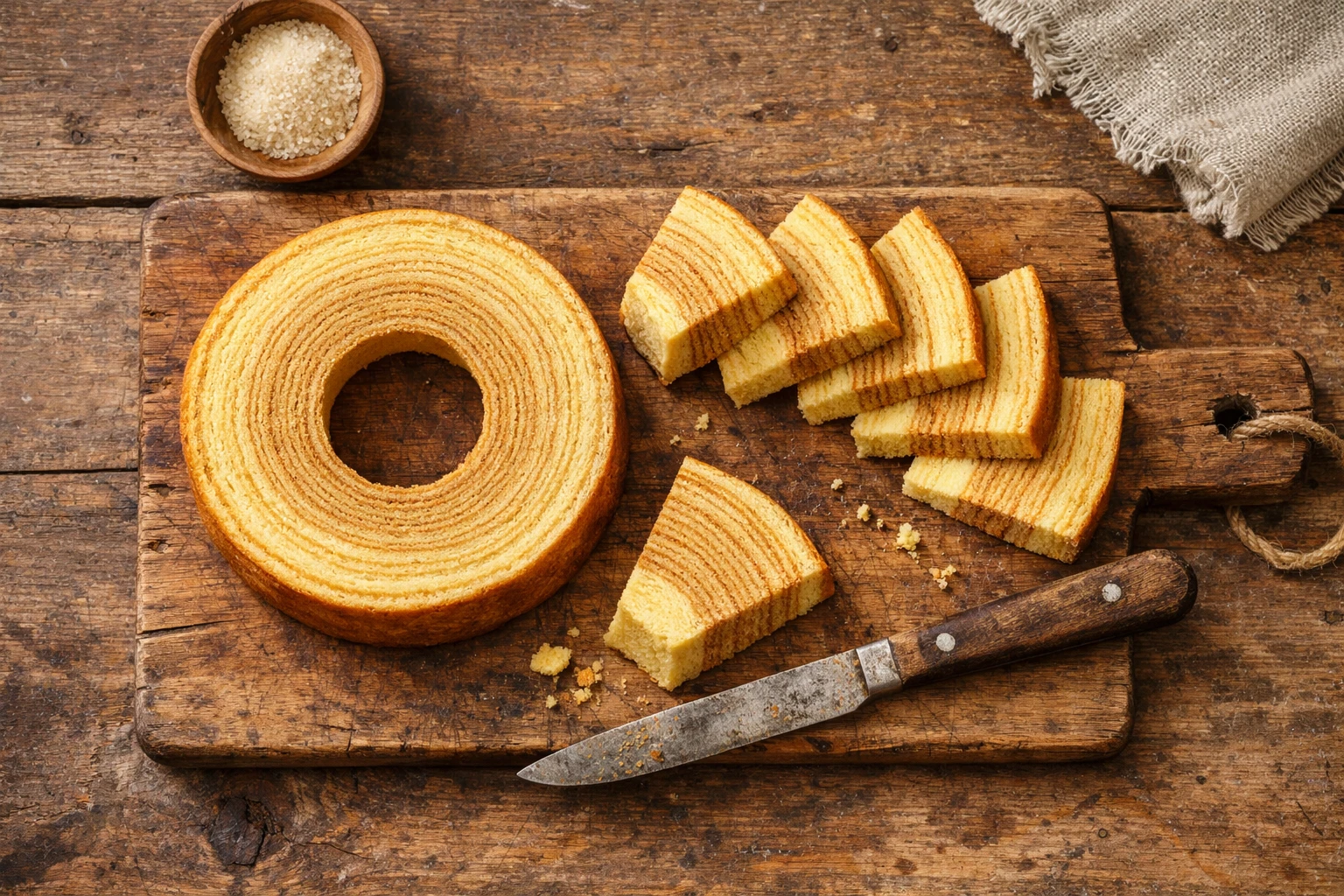
German-origin layered cake beloved in Japan for special occasions, with distinctive tree-ring appearance and rich buttery flavor.
Quick Nutrition Facts
Per 1 Slice (50g)
| Nutrient | Amount |
|---|---|
| Calories | 180 kcal |
| Protein | 3g |
| Carbohydrates | 22g |
| Fiber | 0.5g |
| Sugars | 12g |
| Fat | 9g |
| Saturated Fat | 5g |
| Sodium | 80mg |
| Vitamin A | 180 IU |
| Calcium | 20mg |
Macronutrient Breakdown
 ChatGPT
  Claude
  AI Mode
  Perplexity
NUTRITIONIST INSIGHT
Baumkuchen is a special-occasion treat with moderate calories. The eggs provide quality protein, but refined flour and added sugars make portion control essential for health goals.
Myth Busters
MYTH #1: All Cakes Are Equally Unhealthy
TRUTH: While Baumkuchen contains refined carbohydrates and sugar, it has less frosting than American cakes, resulting in lower calories per serving (180 vs 300-400 calories). The egg content provides some protein. Reformulated pastries can reduce health impacts when portion-controlled.
MYTH #2: Desserts Can Never Fit Into a Healthy Diet
TRUTH: Occasional treats like Baumkuchen (1-2 times weekly, half slice) can fit balanced eating plans. The key is portion awareness and pairing with protein to minimize blood sugar spikes. Strict restriction often leads to overconsumption later.
MYTH #3: Japanese Baumkuchen Is Healthier Than German
TRUTH: Japanese versions are actually sweeter and moister, often with chocolate coating adding 30-60 extra calories. German traditional recipes have less sugar but more alcohol. Neither is significantly healthier; both are treats requiring moderation.
MYTH #4: Low-Fat Versions Are Always Better
TRUTH: Low-fat cakes often compensate with added sugar to maintain taste, potentially raising glycemic impact. Fat content in baked goods affects texture and satiety. Original Baumkuchen in small portions may be more satisfying than larger portions of low-fat alternatives.
MYTH #5: Eating Cake Always Causes Weight Gain
TRUTH: Weight management depends on total daily calorie balance, not single foods. One slice of Baumkuchen (180 calories) can fit a 1,500-2,000 calorie daily plan when other meals are balanced. High-glycemic foods affect hunger hormones, so timing and pairing matter more than complete avoidance.
NutriScore by Health Goals
| Health Goal | NutriScore | Why This Score? |
|---|---|---|
| Weight Loss |  | 180 calories and 12g sugar per slice. Limit to half slice occasionally; refined carbs can trigger hunger hormones and promote calorie storage in adipose tissue. |
| Muscle Gain |  | 3g protein per slice is minimal. Can be post-workout carb source (22g) for glycogen but better options exist. Pair with protein shake if consumed. |
| Diabetes Management | | Refined flour and sugar create moderate-high glycemic impact. Limit to 1/4 slice, pair with almonds or Greek yogurt, monitor blood sugar closely. Save for rare special occasions. |
| PCOS Management | | High glycemic load affects insulin sensitivity. Avoid or limit to 1/4 slice monthly with protein pairing. Choose treats with higher fiber and protein instead. |
| Pregnancy Nutrition | | Provides quick energy from carbs and some vitamin A from eggs. Safe in moderation (1 slice weekly) but choose nutrient-dense foods primarily for fetal development. |
| Viral/Flu Recovery | | Provides quick energy when appetite is low; eggs offer some protein. Better options exist with more nutrients, but acceptable if it's what you can eat during illness. |
PERSONALIZED NUTRITION
Track your meals with NutriScan for personalized NutriScores based on your specific health goals!
Blood Sugar Response to Baumkuchen
Understanding how Baumkuchen affects your blood glucose helps you make informed decisions about portion size and pairing strategies.
Typical Glucose Response Curve
This chart shows typical blood glucose response for general healthy individuals. Individual responses may vary. Not medical advice.
How to Flatten the Spike
Pairing Baumkuchen with protein or healthy fat slows glucose absorption and reduces the peak blood sugar level:
- 🥜 Handful of almonds or walnuts - Healthy fats and protein slow absorption
- 🥛 Greek yogurt (plain) - Adds protein and probiotics
- ☕ Unsweetened latte or cappuccino - Milk protein helps moderate the spike
- 🧀 Small piece of cheese - Protein and fat combination
This combination reduces glucose peaks and extends satiety, making the treat more balanced nutritionally.
Cultural Significance
Baumkuchen originated in Germany centuries ago, with the name translating to "tree cake" due to its distinctive concentric ring pattern.
In Japan:
- Introduced in the early 1900s by German baker Karl Juchheim
- Became a premium luxury gift item, especially for weddings
- The rings symbolize prosperity, longevity, and layers of happiness
- Major brands like Nenrinya and Club Harie elevated it to artisan status
- Available in konbini (convenience stores) and department store basements
Global Impact:
- Popular across East Asia (Taiwan, Korea, China) following Japanese influence
- German traditional recipe requires specialized rotating spit ovens
- Japanese innovation created softer, sweeter, individually-wrapped versions
- Annual Japanese Baumkuchen market exceeds $500 million
Compare & Substitute
Baumkuchen vs Similar Desserts (Per 50g serving)
| Nutrient | 🎂 Baumkuchen | 🍰 Pound Cake | 🧁 Vanilla Cupcake | 🍪 Shortbread Cookie |
|---|---|---|---|---|
| Calories | 180 kcal | 210 kcal | 175 kcal | 245 kcal |
| Carbs | 22g | 26g | 24g | 32g |
| Fiber | 0.5g | 0.4g | 0.3g | 0.8g |
| Protein | 3g | 2.5g | 2g | 2.8g |
| Fat | 9g | 11g | 8g | 13g |
| Sugar | 12g | 15g | 16g | 14g |
| Sodium | 80mg | 160mg | 140mg | 180mg |
| Best For | Special occasion treat | Rich dessert, higher calorie | Lower calorie sweet fix | Higher fat, crunchy texture |
Frequently Asked Questions
Is Baumkuchen good for weight loss?
Baumkuchen is a treat food, not a weight loss food. At 180 calories and 22g carbs per slice, it should be limited to occasional consumption (1-2 times weekly at most). For weight loss, eat half a slice (90 calories), choose plain varieties without chocolate coating, and pair with protein like Greek yogurt to reduce blood sugar spikes and increase satiety.
Can diabetics eat Baumkuchen?
Diabetics should eat Baumkuchen sparingly due to refined flour and added sugar creating moderate-high glycemic impact. Best practices: limit to 1/4 slice (45 calories), always pair with protein (almonds, cheese) or healthy fat, monitor blood sugar 2 hours after consumption, and reserve for special occasions only. Better dessert options include berries with cream or sugar-free alternatives.
How many calories are in Baumkuchen?
A standard slice (50g) of Japanese-style Baumkuchen contains approximately 180 calories, with 9g fat, 22g carbohydrates, and 3g protein. Chocolate-coated varieties can have 210-240 calories per slice. German traditional versions may have slightly fewer calories (160-170 per 50g) due to less moisture and coating.
What is Baumkuchen made of?
Traditional Baumkuchen contains eggs, butter, sugar, all-purpose flour, vanilla extract, and often rum or brandy for flavor. The distinctive layered appearance comes from baking thin layers of batter one at a time on a rotating spit, creating the signature tree-ring pattern. Japanese versions often add marzipan, chocolate coating, or honey for extra sweetness.
Why is Baumkuchen popular in Japan?
Baumkuchen became popular in Japan after German baker Karl Juchheim introduced it in the 1900s. The concentric rings symbolize prosperity, longevity, and layers of happiness in Japanese culture, making it a traditional wedding gift and premium present for special occasions. Japanese bakeries perfected the recipe, creating moister, sweeter versions that became a luxury confection art form.
What is the difference between German and Japanese Baumkuchen?
German Baumkuchen is traditionally drier with more pronounced alcohol flavor (rum/brandy), baked on large spits, and sold in wedges. Japanese versions are moister, sweeter, often chocolate-coated, individually wrapped in elegant packaging, and smaller in size. Japanese producers elevated Baumkuchen to premium gift status with artisan techniques and luxury branding; German versions remain more rustic and traditional.
When is the best time to eat Baumkuchen?
For weight management: afternoon (3-4 PM) with tea or coffee to prevent evening cravings; avoid late night. For diabetes: mid-afternoon paired with protein, never on empty stomach. For special occasions: any time in moderation. Always pair with protein or fat to minimize blood sugar spikes and increase satiety.


Similar Nutritious Fruits
4505 Chicharrones Classic Chili Salt
7 Eleven Japan Crispy Corn Cheese
Explore More Nutrition Tools & Resources
AI Calorie Counter App - Snap a Photo, Get Macros
AI Nutritionist App That Reads Your Logged Meals
Best Protein Supplements for Women
Bulking Meal Plan App That Sets Your Surplus
ChatGPT Calorie Counter Alternative That Keeps the Total
ChatGPT Diet Plan Alternative That Tracks What You Eat
ChatGPT Weight Loss Coach Alternative With a Food Log
Fast Food Calorie Counter App That Reads the Tray
Free Calorie Tracker App with AI Photo Scans | NutriScan
Indian Diet Plan App With Veg and Non Veg Meals
Indian Food Calorie Calculator - Get Instant Nutrition Facts for Desi Meals — 2026
Intermittent Fasting for Women, Timer and Meal Log App
Intermittent Fasting Tracker App - Free Fasting Timer
Macro Tracker App That Fills the Numbers From a Photo
Mediterranean Diet Meal Plan App That Counts the Oil
Micronutrient Tracker App for Vitamins and Minerals
MyFitnessPal Alternative That Stays Free | NutriScan
NutriScore App: A Free Grade on Every Meal | NutriScan
Nutrition Label Scanner App for the Amount You Ate
Second Trimester Protein Guide
Vegetarian Meal Plan App With a Protein Target
Voice Calorie Counter - Speak to Track Meals Hands-Free
Water and Calorie Tracker App - Free Water Log