Beef Tallow: Calories, Nutrition and Health Benefits
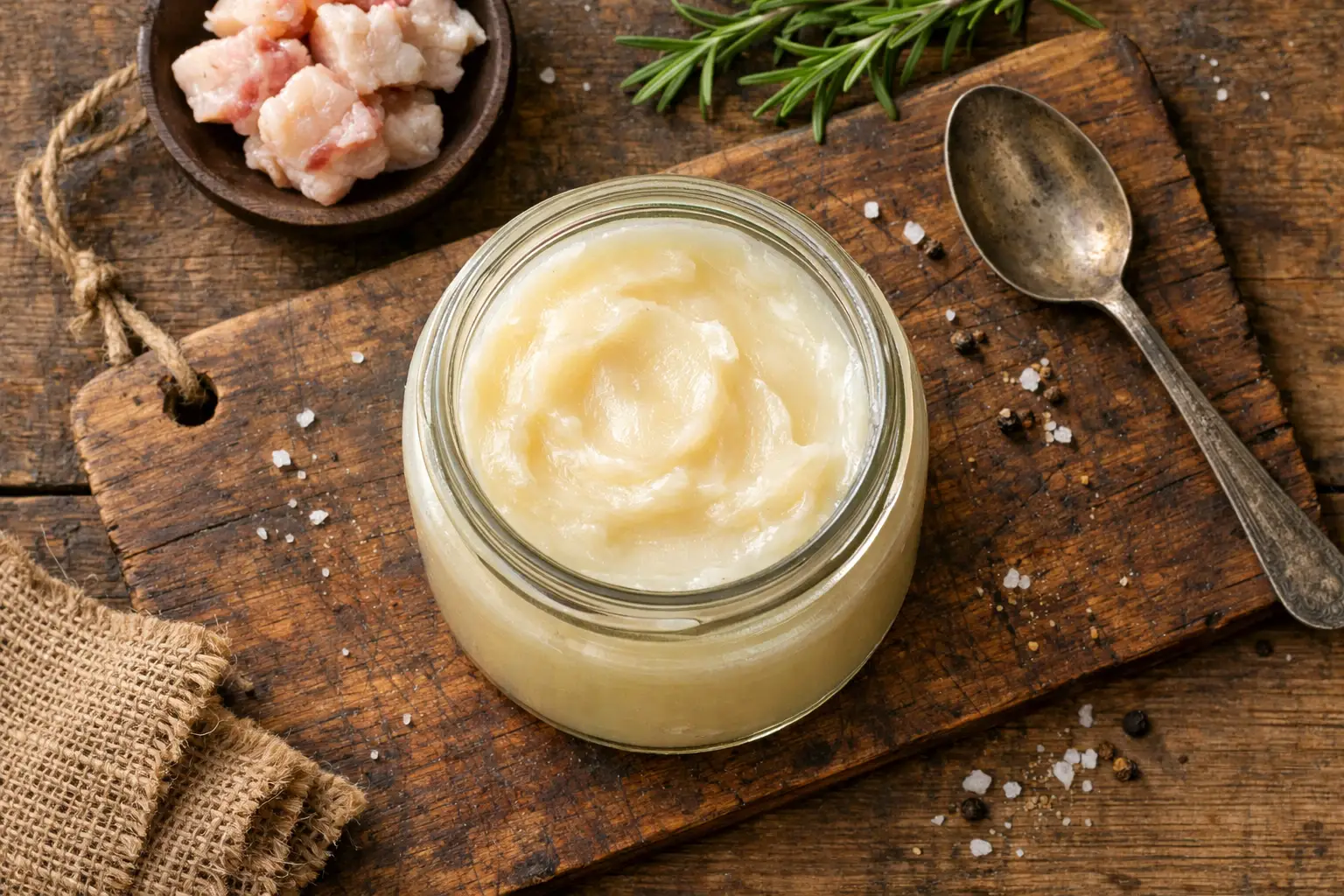
Traditional rendered beef fat making a comeback - heat-stable cooking fat with zero carbs and rich flavor for ancestral and keto diets.
Quick Nutrition Facts
Per 1 Tablespoon (13g)
| Nutrient | Amount |
|---|---|
| Calories | 115 kcal |
| Protein | 0g |
| Carbohydrates | 0g |
| Fiber | 0g |
| Sugars | 0g |
| Total Fat | 12.8g |
| Saturated Fat | 6.4g |
| Monounsaturated | 5.4g |
| Cholesterol | 14mg |
| Vitamin E | 0.6mg |
Fat Composition Breakdown
 ChatGPT
  Claude
  AI Mode
  Perplexity
NUTRITIONIST INSIGHT
Beef tallow's 400°F (205°C) smoke point makes it one of the most heat-stable cooking fats. Unlike many vegetable oils, it doesn't oxidize or form harmful compounds at high temperatures. The conjugated linoleic acid (CLA) may offer metabolic benefits.
Myth Busters
MYTH #1: Beef Tallow Clogs Your Arteries
TRUTH: Beef tallow contains about 42% monounsaturated fat, the same heart-healthy fat in olive oil. While it does contain saturated fat, research shows dietary saturated fat's effect on heart disease is more nuanced than once believed. Moderation is key.
MYTH #2: All Saturated Fats Are Equally Bad
TRUTH: Beef tallow is rich in stearic acid, a saturated fat that research shows has neutral effects on cholesterol compared to other saturated fats. Not all saturated fats affect the body the same way.
MYTH #3: Vegetable Oils Are Always Healthier for Cooking
TRUTH: Many vegetable oils oxidize and form harmful compounds when heated above their smoke point. Beef tallow's high smoke point (400°F) makes it more stable for high-heat cooking than many seed oils.
MYTH #4: Beef Tallow Is Just Empty Calories
TRUTH: Beef tallow contains fat-soluble vitamins A, D, E, and K, plus conjugated linoleic acid (CLA). Grass-fed tallow has higher vitamin content and better omega-3 to omega-6 ratios.
MYTH #5: Tallow Makes Food Greasy
TRUTH: Properly rendered tallow is clean and produces crispy, not greasy, results. Its high smoke point means food cooks quickly and absorbs less fat than when using lower smoke point oils.
NutriScore by Health Goals
| Health Goal | NutriScore | Why This Score? |
|---|---|---|
| Weight Loss |  | 115 calories per tbsp is calorie-dense. Use sparingly for cooking. Zero carbs supports low-carb diets. |
| Muscle Gain |  | Good calorie-dense fat source for bulking. Provides energy without carbs. Use for cooking high-protein meals. |
| Diabetes Management | | Zero carbs means no blood sugar impact. Moderate saturated fat intake per guidelines. |
| PCOS Management | | Zero carbs helpful for insulin control. Monitor saturated fat if managing inflammation. |
| Pregnancy Nutrition | | Fat-soluble vitamins A, D, E, K support fetal development. Use in moderation as part of varied fat sources. |
| Viral/Flu Recovery | | Easily digestible fat provides energy. Vitamin content supports immunity. Use for cooking healing soups. |
PERSONALIZED NUTRITION
Track your meals with NutriScan for personalized NutriScores based on your specific health goals!
Blood Sugar Response to Beef Tallow
Understanding how beef tallow affects your blood glucose can help optimize meal planning.
Typical Glucose Response Curve
This chart shows typical blood glucose response for general healthy individuals. Individual responses may vary. Not medical advice.
How to Use Tallow for Blood Sugar Control
Pure fat has minimal direct impact on blood sugar, making tallow useful for:
- Cooking low-carb vegetables - Adds calories without carbs
- Searing proteins - High smoke point for perfect crust
- Making keto-friendly recipes - Zero-carb fat source
- Slowing glucose absorption - When eaten with carbs, fat slows digestion
Using tallow to cook carb-containing foods can help moderate their glycemic impact.
Cultural Significance
Beef tallow was the primary cooking fat in Western kitchens for centuries before vegetable oils became dominant.
Historical Uses:
- Traditional fat for French fries (McDonald's used it until 1990)
- Primary soap-making ingredient for centuries
- Candle production before petroleum wax
- Leather conditioning and preservation
Modern Revival:
- Ancestral/paleo diet movement embraces traditional fats
- Carnivore diet staple
- Artisan soap and skincare products
- High-heat cooking alternative to seed oils
Regional Traditions:
- British fish and chips (traditionally fried in tallow or dripping)
- Latin American cooking (sebo de res)
- Traditional French cooking for roasts and confit
- Indigenous North American pemmican preservation
Compare & Substitute
Beef Tallow vs Other Cooking Fats (Per 1 Tablespoon)
| Nutrient | Beef Tallow | Butter | Coconut Oil | Olive Oil |
|---|---|---|---|---|
| Calories | 115 kcal | 102 kcal | 121 kcal | 119 kcal |
| Total Fat | 12.8g | 11.5g | 13.5g | 13.5g |
| Saturated | 6.4g | 7.3g | 11.2g | 1.9g |
| Monounsat. | 5.4g | 3g | 0.8g | 10g |
| Smoke Point | 400°F (205°C) | 350°F (177°C) | 350°F (177°C) | 375°F (190°C) |
| Best For | High-heat frying | Baking, sautéing | Medium-heat, baking | Sautéing, dressings |
Frequently Asked Questions
How many calories are in beef tallow?
One tablespoon (13g) of beef tallow contains 115 calories, all from fat. Per 100g, that's approximately 900 calories with 100g total fat.
Calorie comparison:
- 1 tbsp beef tallow: 115 calories
- 1 tbsp butter: 102 calories
- 1 tbsp olive oil: 119 calories
- 1 tbsp coconut oil: 121 calories
Is beef tallow healthy?
Beef tallow has both benefits and considerations. It's heat-stable with a high smoke point (400°F), contains fat-soluble vitamins (A, D, E, K), and provides conjugated linoleic acid (CLA).
Health considerations:
- Contains ~50% saturated fat (moderate intake recommended)
- Zero carbs (beneficial for low-carb diets)
- More stable than many vegetable oils at high heat
- Grass-fed tallow has better nutrient profile
What is the smoke point of beef tallow?
Beef tallow has a smoke point of 400°F (205°C), making it excellent for:
- Deep frying
- Pan searing
- High-heat roasting
- Wok cooking
This is higher than butter (350°F), most vegetable oils, and coconut oil.
Is beef tallow good for keto?
Yes, beef tallow is excellent for keto diets. With zero carbs and pure fat content, it provides clean energy for ketosis. One tablespoon adds 115 calories and 12.8g fat without affecting carb limits.
Keto uses:
- Cooking eggs and meats
- Making fat bombs
- Roasting low-carb vegetables
- Adding calories without carbs
Is beef tallow better than butter?
Each has advantages depending on use:
Beef tallow advantages:
- Higher smoke point (400°F vs 350°F)
- Better for high-heat cooking
- Neutral flavor for some dishes
- Longer shelf life
Butter advantages:
- Better flavor for baking
- Higher vitamin content
- More familiar taste
- Works for low-heat cooking
Can diabetics use beef tallow?
Beef tallow is diabetes-friendly for cooking since it has zero carbs and won't spike blood sugar. However, diabetics should:
- Moderate total fat intake
- Consider overall saturated fat consumption
- Consult healthcare providers about dietary fat
- Use as part of balanced meal planning
How do you store beef tallow?
Properly stored beef tallow lasts 1-2 years:
- Room temperature: 3-4 months in airtight container
- Refrigerator: 1 year
- Freezer: 2+ years
- Keep away from light and heat
- No need to refrigerate if used within weeks
Where can I buy beef tallow?
Beef tallow is available at:
- Butcher shops (often render their own)
- Online retailers (Amazon, specialty stores)
- Some grocery stores (near cooking oils)
- Farmers markets
- Rendered at home from beef suet


Similar Nutritious Foods
4505 Chicharrones Classic Chili Salt
7 Eleven Japan Crispy Corn Cheese
Explore More Nutrition Tools & Resources
AI Calorie Counter App - Snap a Photo, Get Macros
AI Nutritionist App That Reads Your Logged Meals
Best Protein Supplements for Women
Bulking Meal Plan App That Sets Your Surplus
ChatGPT Calorie Counter Alternative That Keeps the Total
ChatGPT Diet Plan Alternative That Tracks What You Eat
ChatGPT Weight Loss Coach Alternative With a Food Log
Fast Food Calorie Counter App That Reads the Tray
Free Calorie Tracker App with AI Photo Scans | NutriScan
Indian Diet Plan App With Veg and Non Veg Meals
Indian Food Calorie Calculator - Get Instant Nutrition Facts for Desi Meals — 2026
Intermittent Fasting for Women, Timer and Meal Log App
Intermittent Fasting Tracker App - Free Fasting Timer
Macro Tracker App That Fills the Numbers From a Photo
Mediterranean Diet Meal Plan App That Counts the Oil
Micronutrient Tracker App for Vitamins and Minerals
MyFitnessPal Alternative That Stays Free | NutriScan
NutriScore App: A Free Grade on Every Meal | NutriScan
Nutrition Label Scanner App for the Amount You Ate
Second Trimester Protein Guide
Vegetarian Meal Plan App With a Protein Target
Voice Calorie Counter - Speak to Track Meals Hands-Free
Water and Calorie Tracker App - Free Water Log