Bell Pepper: Calories, Nutrition and Health Benefits
Colorful nutrition powerhouse delivering more vitamin C than oranges with virtually no calories.
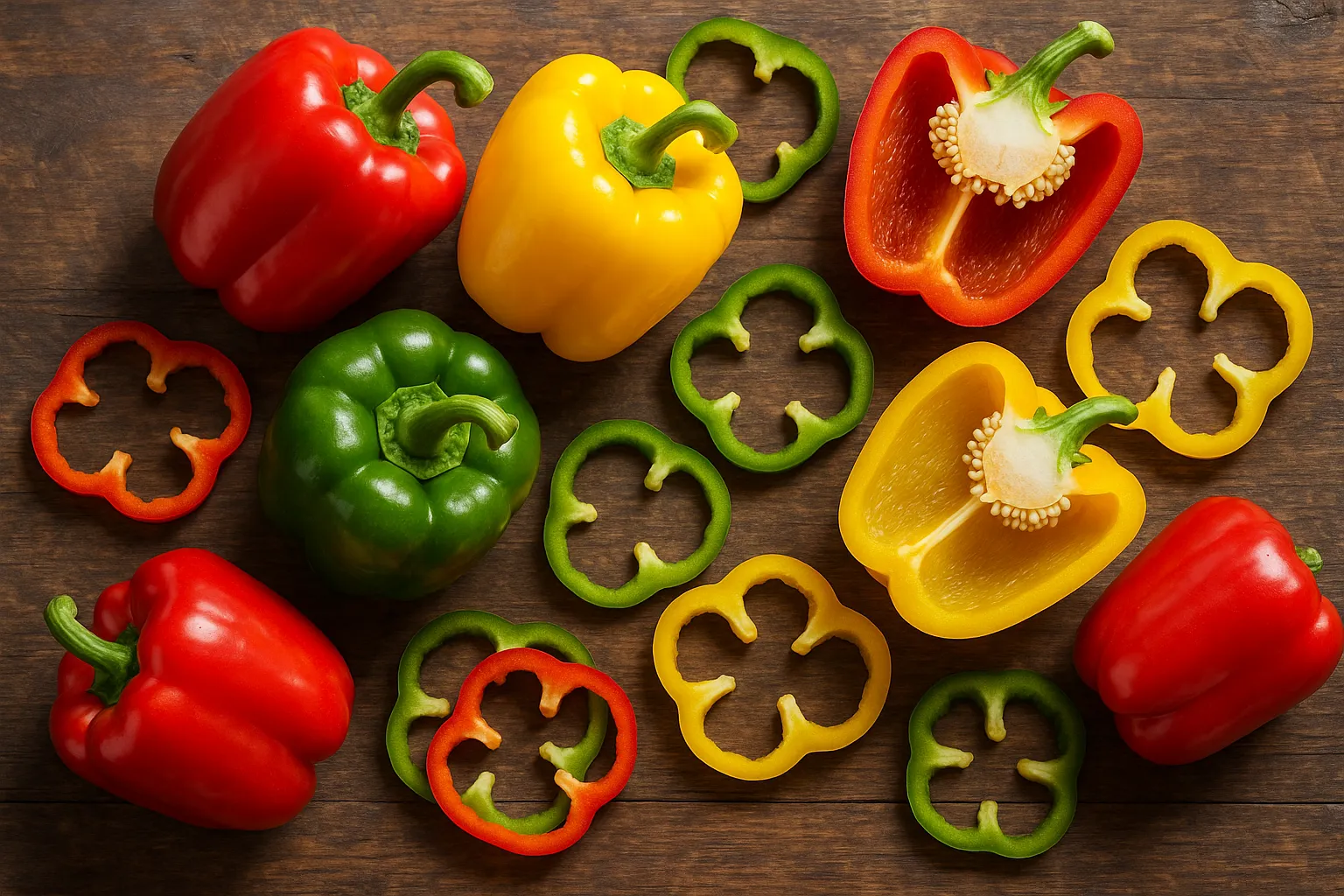
Quick Nutrition Facts
Per 100g (approximately 1 medium bell pepper)
| Nutrient | Amount |
|---|---|
| Calories | 31 kcal |
| Protein | 1g |
| Carbohydrates | 6g |
| Fiber | 2.1g |
| Sugars | 4.2g |
| Fat | 0.3g |
| Vitamin C | 127mg |
| Vitamin A | 3131 IU |
| Vitamin B6 | 0.3mg |
| Folate | 46mcg |
Macronutrient Breakdown
 ChatGPT
  Claude
  AI Mode
  Perplexity
NUTRITIONIST INSIGHT
Red bell peppers provide 152% of daily vitamin C needs in just 100g – more than oranges. The combination of vitamins A, C, and antioxidants supports immunity, skin health, and eye protection.
Myth Busters
MYTH #1: All Bell Peppers Have the Same Nutrition
TRUTH: Color matters significantly. Red peppers contain 3x more vitamin C and 11x more beta-carotene than green peppers. Yellow and orange varieties offer intermediate benefits. Green peppers are simply unripe versions harvested early.
MYTH #2: Bell Peppers Are High in Nightshade Toxins
TRUTH: Bell peppers contain negligible amounts of solanine (nightshade compound) compared to raw potatoes. Most people can eat bell peppers freely without inflammation concerns. Only avoid if diagnosed nightshade sensitivity.
MYTH #3: Cooking Destroys All Bell Pepper Nutrients
TRUTH: While cooking reduces vitamin C by 30-50%, it increases lycopene bioavailability by 3-4x. Both raw and cooked peppers offer unique benefits. Eat variety of preparations for optimal nutrition.
MYTH #4: Bell Peppers Cause Digestive Issues
TRUTH: Bell peppers are generally well-tolerated. The 2.1g fiber supports healthy digestion. Only problematic for people with IBS or nightshade sensitivity. Red and yellow peppers digest easier than green.
MYTH #5: You Should Remove Seeds Because They're Toxic
TRUTH: Bell pepper seeds are completely safe to eat. While slightly bitter, they contain no toxins. However, seeds and white membranes can be harder to digest, so removal improves texture and palatability.
MYTH #6: Bell Peppers Are Too Low in Calories to Be Nutritious
TRUTH: Calorie count doesn't determine nutrition. Bell peppers pack vitamin C (127mg), vitamin A (3131 IU), antioxidants, and fiber in minimal calories. Perfect nutrient density.
NutriScore by Health Goals
| Health Goal | NutriScore | Why This Score? |
|---|---|---|
| Weight Loss |  | Only 31 calories per 100g, 92% water content, 2.1g fiber creates fullness. Eat unlimited quantities for volume without calories. |
| Muscle Gain |  | Low protein but excellent as nutrient-dense side. Vitamin C supports collagen synthesis for muscle recovery. |
| Diabetes Management | | Extremely low glycemic index (15), minimal carbs (6g), antioxidants support blood sugar regulation. Eat freely. |
| PCOS Management | | Anti-inflammatory antioxidants, minimal impact on insulin, supports hormonal balance. No restrictions needed. |
| Pregnancy Nutrition | | Rich in folate (46mcg), vitamin C enhances iron absorption, vitamin A supports fetal development. Highly beneficial. |
| Viral/Flu Recovery | | Exceptional vitamin C (152% DV) boosts immunity, easy to digest, hydrating. Ideal during illness. |
PERSONALIZED NUTRITION
Track your meals with NutriScan for personalized NutriScores based on your specific health goals!
Blood Sugar Response to Bell Peppers
Understanding how bell peppers affect blood glucose demonstrates why they're ideal for blood sugar control.
Typical Glucose Response Curve
*This chart shows minimal blood glucose response for bell peppers. Individual responses may vary. Not medical advice.*
Why Bell Peppers Have Minimal Blood Sugar Impact
Bell peppers cause virtually no blood sugar spike due to extremely low carbohydrate content and high fiber-to-carb ratio:
- 🌶️ Very low glycemic index (15) - One of the lowest among vegetables
- 💧 92% water content - Dilutes carbohydrate concentration
- 🥗 High fiber (2.1g per 100g) - Slows any glucose absorption
- 🎨 Antioxidants - May improve insulin sensitivity
Pair bell peppers with proteins and healthy fats for balanced, blood-sugar-friendly meals.
Cultural Significance
Bell peppers (Capsicum annuum) originated in Central and South America over 6,000 years ago, cultivated by indigenous peoples long before European contact.
Global Journey:
- Columbus introduced peppers to Europe in 1493, calling them "peppers" due to resemblance to black peppercorns
- Spread to Asia and Africa through trade routes in 16th-17th centuries
- Each region developed unique varieties and culinary traditions
In India:
- Known as "Shimla Mirch" (Shimla pepper) after the hill station where British introduced cultivation
- Essential in Indo-Chinese cuisine: Manchurian, fried rice, chili paneer
- Used in North Indian curries and South Indian stir-fries
- Considered cooling in Ayurveda despite "pepper" name
Modern Production:
- China produces 50% of world's bell peppers
- Available year-round due to greenhouse cultivation
- Color indicates ripeness: green → yellow/orange → red (not different varieties)
Compare & Substitute
Bell Pepper vs Similar Vegetables (Per 100g)
| Nutrient | 🫑 Bell Pepper (Red) | 🥒 Cucumber | 🍅 Tomato | 🥦 Broccoli |
|---|---|---|---|---|
| Calories | 31 kcal | 16 kcal | 18 kcal | 34 kcal |
| Carbs | 6g | 3.6g | 3.9g | 7g |
| Fiber | 2.1g | 0.5g | 1.2g | 2.6g |
| Protein | 1g | 0.7g | 0.9g | 2.8g |
| Fat | 0.3g | 0.1g | 0.2g | 0.4g |
| Vitamin C | 127mg (152% DV) | 2.8mg | 14mg | 89mg |
| Vitamin A | 3131 IU (63% DV) | 105 IU | 833 IU | 623 IU |
| Potassium | 211mg | 147mg | 237mg | 316mg |
| Best For | Vitamin C, salads | Hydration | Lycopene | Protein |
Frequently Asked Questions
Are bell peppers good for weight loss?
Yes, bell peppers are exceptional for weight loss. At only 31 calories per 100g with 92% water content and 2.1g fiber, they provide substantial volume and crunch without compromising calorie targets.
Best practices: Eat unlimited raw bell peppers as snacks; add to salads, stir-fries, and soups for volume; use as low-calorie pizza topping or sandwich filler; pair with hummus or Greek yogurt dip.
Can diabetics eat bell peppers?
Yes, bell peppers are ideal for diabetics. With an extremely low glycemic index (15), only 6g carbohydrates per 100g, and high fiber content, they won't raise blood sugar significantly.
Tips for diabetics:
- Eat freely without portion restrictions
- All colors safe; red peppers offer most antioxidants
- Raw or cooked both acceptable
- Pair with protein for balanced meals
Studies suggest bell pepper antioxidants may improve insulin sensitivity over time.
Which color bell pepper is healthiest?
Red bell peppers are healthiest with the highest nutrient density:
Vitamin C: Red (127mg) > Yellow (100mg) > Orange (95mg) > Green (80mg)
Beta-carotene: Red (11x more than green)
Antioxidants: Red peppers have highest lycopene and flavonoid content
Sweetness: Red peppers taste sweeter due to full ripeness
Green peppers offer slightly more fiber and cost less but have fewer overall nutrients. For maximum health benefits, choose red; for budget-friendly option with good fiber, choose green.
What are the main health benefits of bell peppers?
Key Benefits:
- Immune Support: 152% daily vitamin C needs (red pepper) boosts white blood cell production
- Eye Health: Vitamin A, lutein, zeaxanthin protect against macular degeneration
- Heart Health: Lycopene and capsanthin reduce cholesterol oxidation
- Anti-inflammatory: Quercetin and other flavonoids reduce chronic inflammation
- Skin Health: Vitamin C supports collagen production
- Cancer Protection: Antioxidants neutralize free radicals
Can you eat bell peppers raw?
Yes, raw bell peppers are excellent and preserve maximum nutrients:
Benefits of eating raw:
- Retains 100% vitamin C (cooking reduces by 30-50%)
- Preserves enzymes that aid digestion
- Maximum crunch and hydration
- Requires no preparation time
Benefits of cooking:
- Increases lycopene absorption by 3-4x
- Softens texture for easier digestion
- Concentrates flavor
Recommendation: Eat raw in salads and as snacks; cook in stir-fries and roasted dishes. Both preparations offer unique advantages.
Do bell peppers cause gas or bloating?
Bell peppers rarely cause gas in most people. The 2.1g fiber per 100g is moderate and generally well-tolerated.
If you experience digestive issues:
- Cook peppers - Breaks down cellulose fibers for easier digestion
- Remove seeds and membranes - These parts are harder to digest
- Choose ripe peppers - Red and yellow peppers digest more easily than green
- Start with small portions - Gradually increase to assess tolerance
People with IBS or FODMAPs sensitivity may need to limit intake. Most individuals can eat bell peppers freely without bloating.
How much bell pepper should I eat per day?
No upper limit for most people:
- 1-2 bell peppers daily (150-300g) - Provides 200-400% vitamin C needs
- Unlimited for weight loss - Only 31 calories per 100g makes overeating impossible
- 1 bell pepper minimum - Ensures adequate vitamin C intake
Special considerations: If taking blood thinners, consult doctor due to vitamin K content. No other restrictions for healthy individuals.
Track with NutriScan app to see how bell peppers fit your personal nutrition goals.
Are bell peppers better raw or cooked?
Both offer unique benefits - choose based on meal and goals:
Raw Bell Peppers:
- Maximum vitamin C retention (127mg per 100g)
- Best for salads, snacks, crudités
- Superior crunch and hydration
- Preserves heat-sensitive nutrients
Cooked Bell Peppers:
- 3-4x higher lycopene absorption (heart health)
- Easier to digest for sensitive stomachs
- Better for warm dishes: stir-fries, soups, fajitas
- Concentrates and sweetens flavor
Recommendation: Eat 50/50 split for complete nutrient profile. Raw peppers for vitamin C; cooked peppers for lycopene.




Similar Nutritious Vegetables
4505 Chicharrones Classic Chili Salt
7 Eleven Japan Crispy Corn Cheese
Explore More Nutrition Tools & Resources
AI Calorie Counter App - Snap a Photo, Get Macros
AI Nutritionist App That Reads Your Logged Meals
Best Protein Supplements for Women
Bulking Meal Plan App That Sets Your Surplus
ChatGPT Calorie Counter Alternative That Keeps the Total
ChatGPT Diet Plan Alternative That Tracks What You Eat
ChatGPT Weight Loss Coach Alternative With a Food Log
Fast Food Calorie Counter App That Reads the Tray
Free Calorie Tracker App with AI Photo Scans | NutriScan
Indian Diet Plan App With Veg and Non Veg Meals
Indian Food Calorie Calculator - Get Instant Nutrition Facts for Desi Meals — 2026
Intermittent Fasting for Women, Timer and Meal Log App
Intermittent Fasting Tracker App - Free Fasting Timer
Macro Tracker App That Fills the Numbers From a Photo
Mediterranean Diet Meal Plan App That Counts the Oil
Micronutrient Tracker App for Vitamins and Minerals
MyFitnessPal Alternative That Stays Free | NutriScan
NutriScore App: A Free Grade on Every Meal | NutriScan
Nutrition Label Scanner App for the Amount You Ate
Second Trimester Protein Guide
Vegetarian Meal Plan App With a Protein Target
Voice Calorie Counter - Speak to Track Meals Hands-Free
Water and Calorie Tracker App - Free Water Log