Berliner (German Donut): Calories, Nutrition and Health Benefits
Germany's beloved jam-filled donut, dusted with powdered sugar and traditionally enjoyed during Fasching carnival season.
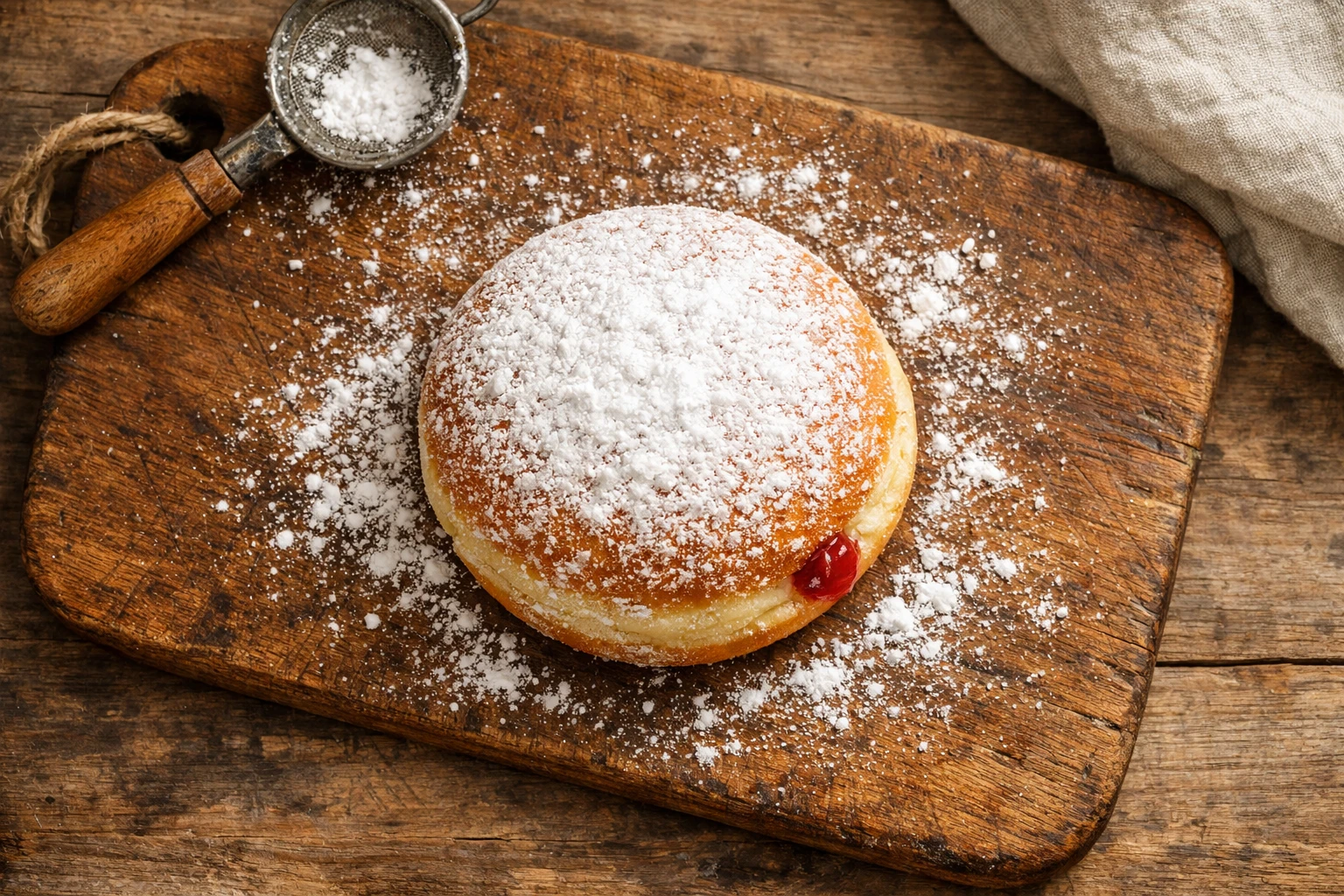
Quick Nutrition Facts
Per 1 Berliner (70g)
| Nutrient | Amount |
|---|---|
| Calories | 250 kcal |
| Protein | 4g |
| Carbohydrates | 35g |
| Fiber | 1g |
| Sugars | 16g |
| Fat | 10g |
| Saturated Fat | 4.5g |
| Sodium | 180mg |
| Calcium | 25mg |
| Iron | 1.5mg |
Macronutrient Breakdown
 ChatGPT
  Claude
  AI Mode
  Perplexity
NUTRITIONIST INSIGHT
Berliner (also called Krapfen in southern Germany) is a deep-fried yeast donut filled with fruit jam and dusted with powdered sugar. While a cultural treat during Fasching, it's high in refined carbs and sugar with minimal nutritional value. Best enjoyed sparingly as special occasion food.
Myth Busters
MYTH #1: Berliner Is a Healthier Donut Option
TRUTH: With 250 calories, 10g fat, and 35g carbs from refined flour and sugar, Berliner is still a high-calorie indulgence. The jam filling adds sugar without significant nutrition. Lighter than some American donuts but not a health food.
MYTH #2: The Fruit Jam Makes It Nutritious
TRUTH: The jam filling provides minimal fruit nutrients due to high sugar content and processing that degrades vitamins. Most commercial jams contain 60-70% sugar. Better to eat whole fruit separately.
MYTH #3: It's Better Because It's Not Glazed
TRUTH: Powdered sugar coating has similar calorie impact to glaze (40-50 calories). The main difference is Berliner is fried once versus twice for some donuts, making it slightly less oily but still high in fat and refined carbs.
MYTH #4: Eating During Fasching Doesn't Count
TRUTH: Cultural traditions are meaningful, but calories remain the same regardless of occasion. Enjoy Berliner mindfully during festivals, but balance with healthier choices the rest of the day to maintain nutrition goals.
MYTH #5: It Has Less Sugar Than Other Desserts
TRUTH: At 16g sugar per donut (4 teaspoons), Berliner has significant added sugar from both jam and powdered coating. This equals or exceeds many other desserts; WHO recommends limiting added sugar to 25g daily.
NutriScore by Health Goals
| Health Goal | NutriScore | Why This Score? |
|---|---|---|
| Weight Loss |  | 250 calories, 10g fat, 35g carbs with minimal satiety. Limit to once monthly; choose whole foods instead. |
| Muscle Gain |  | 35g carbs for post-workout glycogen, but only 4g protein is inadequate. Pair with 25g protein shake. |
| Diabetes Management | | 35g refined carbs spike blood sugar rapidly. Avoid or consume half portion very rarely with protein. |
| PCOS Management | | Refined flour and sugar worsen insulin resistance. Choose low-glycemic alternatives with fiber and healthy fats. |
| Pregnancy Nutrition | | Occasional treat acceptable, but provides empty calories. Limit to monthly indulgence. |
| Viral/Flu Recovery | | Quick energy when appetite is low, but refined carbs provide brief spike without sustained nutrition. Better options include whole grain toast with nut butter. |
PERSONALIZED NUTRITION
Track your meals with NutriScan for personalized NutriScores based on your specific health goals!
Blood Sugar Response to Berliner
Understanding glucose impact helps make informed decisions about consumption timing and pairing.
Typical Glucose Response Curve
This chart shows typical blood glucose response for general healthy individuals. Individual responses may vary. Not medical advice.
How to Flatten the Spike
Combining refined carbs with protein or fat significantly moderates glucose absorption:
- 🥛 Greek yogurt (plain, full-fat) - 15-20g protein, probiotics for gut health
- 🥜 Handful of almonds or walnuts - Healthy fats slow digestion
- 🥚 Hard-boiled eggs - Complete protein source
- 🧀 Cheese cubes - Protein and fat for sustained energy
This pairing reduces blood sugar peak by 20-30% and extends energy release over 2-3 hours instead of rapid spike and crash.
Cultural Significance
Berliner has been a German tradition since at least the 16th century, with origins possibly in Berlin (though disputed).
In Germany:
- Traditionally eaten during Fasching (carnival season) before Lent
- Called "Krapfen" in Bavaria and Austria, "Pfannkuchen" in Berlin
- New Year's Eve tradition: one Berliner filled with mustard as prank
- Sold year-round in German bakeries (Bäckerei)
- Associated with celebration and community gatherings
Global Recognition:
- Famous from JFK's 1963 speech: "Ich bin ein Berliner" (though he correctly identified himself as from Berlin, not a donut)
- Popular in Polish (pączki), Austrian, and Czech cuisines with regional variations
- Gaining international popularity as artisan bakeries showcase German pastries
Compare & Substitute
Berliner vs Similar Donuts (Per 100g)
| Nutrient | 🍩 Berliner | 🍩 Glazed Donut | 🥐 Croissant | 🥯 Plain Bagel |
|---|---|---|---|---|
| Calories | 357 kcal | 400 kcal | 406 kcal | 275 kcal |
| Carbs | 50g | 54g | 46g | 54g |
| Fiber | 1.4g | 1.2g | 2.4g | 2.3g |
| Protein | 6g | 4g | 8g | 11g |
| Fat | 14g | 18g | 21g | 1.5g |
| Saturated Fat | 6.4g | 8g | 12g | 0.3g |
| Sugar | 23g | 22g | 7g | 5g |
| Best For | Special occasion, less oily | Sweet tooth, quick energy | Flakier texture, more protein | Lower fat, higher protein |
Frequently Asked Questions
Are Berliner donuts good for weight loss?
No, Berliner donuts are not suitable for weight loss. At 250 calories with 10g fat, 35g carbs, and 16g sugar per donut, they provide empty calories with minimal satiety due to low protein (4g) and fiber (1g).
If consuming while managing weight: Limit to once monthly maximum as planned indulgence; eat after intense workout when carbs replenish glycogen; account for calories by reducing other meals; pair with 20g protein (Greek yogurt) to improve satiety. Track in NutriScan app to monitor impact on daily goals and choose nutrient-dense alternatives 99% of the time.
Can diabetics eat Berliner?
Diabetics should avoid Berliner or consume very rarely due to 35g refined carbohydrates from white flour and jam causing rapid blood sugar spikes.
If consumed:
- Maximum half donut (17.5g carbs)
- Always pair with 15-20g protein or healthy fat
- Best timing: mid-morning, never on empty stomach
- Monitor blood glucose 1-2 hours after consumption
- Choose whole grain alternatives or low-glycemic options for regular treats
How much protein is in a Berliner?
One Berliner (70g) contains 4g protein, which is very low for a 250-calorie food. This represents only 8% of daily protein needs for most adults and provides minimal satiety.
For balanced nutrition, pair with high-protein foods: Greek yogurt (15-20g per cup), hard-boiled eggs (6g each), or protein shake (20-25g). This improves fullness and stabilizes blood sugar response.
What are the health benefits of Berliner?
Minimal Benefits:
- Quick Energy: 35g carbs provide rapid fuel for immediate physical activity or post-workout glycogen replenishment
- Psychological Comfort: Satisfies sweet cravings, supports mental well-being during celebrations
- Trace Vitamins: Fruit jam contains minimal vitamin C (mostly lost during processing)
- Cultural Connection: Sharing traditional foods strengthens community and cultural identity
Reality Check: Berliner is comfort food, not health food. The nutritional value is negligible compared to whole foods. Enjoy sparingly during special occasions, not as regular nutrition source.
When is the best time to eat a Berliner?
Depends on your goal:
- Weight Maintenance: Mid-morning as rare weekend treat (once monthly); avoid daily consumption.
- Muscle Gain: Immediately post-workout (within 30 minutes) for quick carbs; pair with 25g protein shake.
- Diabetes: Avoid entirely or half portion mid-morning with protein and fat, never alone.
- Energy Needs: 1 hour before intense physical activity for quick fuel (though better options exist).
IMPORTANT NOTE
Never consume on empty stomach if managing blood sugar, insulin resistance, or PCOS. Always pair with protein or healthy fat to moderate glucose spike.
Is Berliner healthier than American donuts?
Berliner is slightly healthier than typical American glazed donuts but still an indulgence food.
Berliner advantages:
- Fewer calories (250 vs 300-400 for American donuts)
- Less fat (10g vs 15-20g) due to single frying versus double-frying or heavy glazing
- Simpler ingredients (yeast dough, jam, powdered sugar)
- No artificial colors or heavy frosting
Similarities:
- Both very high in refined carbohydrates and added sugar
- Both cause rapid blood sugar spikes
- Both lack significant fiber, protein, and micronutrients
Recommendation: Neither is a health food; Berliner is marginally better due to fewer calories and less fat. Limit both to monthly treats maximum and prioritize whole grain, protein-rich alternatives for regular consumption.
How many Berliner should I eat per week?
General Guidelines:
- Weight loss/diabetes: Maximum 1 per month as rare special treat
- Weight maintenance: 1-2 per month during celebrations or Fasching
- Athletes/muscle gain: 1 per week post-workout only
- Pregnancy: 1-2 per month in moderation
Avoid: Weekly or daily consumption leads to excess calories (1,000/week = 1-pound weight gain every 3-4 weeks), high sugar intake (112g/week exceeds weekly limits), and poor blood sugar control. Reserve for special cultural occasions like Fasching, New Year's, or birthdays.


Similar Nutritious Fruits
4505 Chicharrones Classic Chili Salt
7 Eleven Japan Crispy Corn Cheese
Explore More Nutrition Tools & Resources
AI Calorie Counter App - Snap a Photo, Get Macros
AI Nutritionist App That Reads Your Logged Meals
Best Protein Supplements for Women
Bulking Meal Plan App That Sets Your Surplus
ChatGPT Calorie Counter Alternative That Keeps the Total
ChatGPT Diet Plan Alternative That Tracks What You Eat
ChatGPT Weight Loss Coach Alternative With a Food Log
Fast Food Calorie Counter App That Reads the Tray
Free Calorie Tracker App with AI Photo Scans | NutriScan
Indian Diet Plan App With Veg and Non Veg Meals
Indian Food Calorie Calculator - Get Instant Nutrition Facts for Desi Meals — 2026
Intermittent Fasting for Women, Timer and Meal Log App
Intermittent Fasting Tracker App - Free Fasting Timer
Macro Tracker App That Fills the Numbers From a Photo
Mediterranean Diet Meal Plan App That Counts the Oil
Micronutrient Tracker App for Vitamins and Minerals
MyFitnessPal Alternative That Stays Free | NutriScan
NutriScore App: A Free Grade on Every Meal | NutriScan
Nutrition Label Scanner App for the Amount You Ate
Second Trimester Protein Guide
Vegetarian Meal Plan App With a Protein Target
Voice Calorie Counter - Speak to Track Meals Hands-Free
Water and Calorie Tracker App - Free Water Log