Bikaji Bikaneri Bhujia: Calories, Nutrition and Health Benefits
Iconic Rajasthani crispy besan noodle snack with moth dal and traditional spices, best enjoyed in moderation.
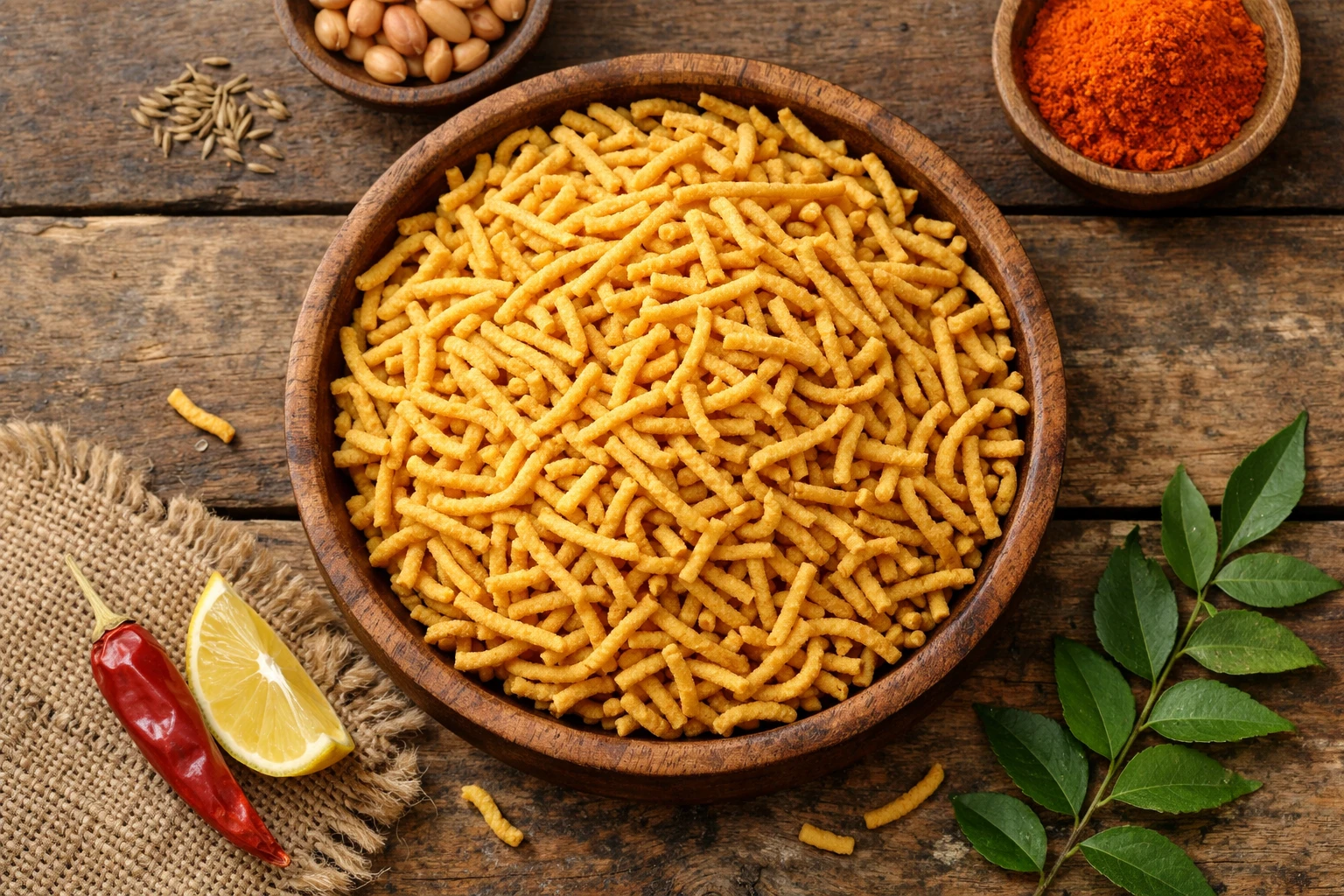
Quick Nutrition Facts
Per 100g Serving
| Nutrient | Amount |
|---|---|
| Calories | 540 kcal |
| Protein | 15g |
| Carbohydrates | 50g |
| Fiber | 8g |
| Sugars | 2g |
| Fat | 30g |
| Saturated Fat | 7g |
| Sodium | 850mg |
| Iron | 4.5mg |
| Magnesium | 60mg |
Macronutrient Breakdown
 ChatGPT
  Claude
  AI Mode
  Perplexity
NUTRITIONIST INSIGHT
Bikaneri Bhujia provides 15g protein per 100g from besan and moth dal, but high fat content (30g) and deep-frying make it calorie-dense. Best as occasional indulgence; limit portions to 15-20g for snacking.
Myth Busters
MYTH #1: Besan Snacks Are Healthy Protein Sources
TRUTH: While besan provides 15g protein per 100g, Bhujia contains 30g fat (55% calories from fat) due to deep-frying. High-fat frying reduces protein bioavailability and adds oxidized fats. Better protein sources: roasted chana (20g protein, 6g fat per 100g), dal, paneer.
MYTH #2: Traditional Indian Snacks Are Healthier Than Western Chips
TRUTH: Bhujia (540 cal, 30g fat) and potato chips (536 cal, 34g fat) have nearly identical calorie and fat content per 100g. Both are deep-fried and calorie-dense. Choose based on portion size and frequency, not perceived tradition.
MYTH #3: Eating Bhujia Daily Is Fine If You Exercise
TRUTH: Daily Bhujia consumption adds 850mg sodium per 100g (37% daily limit). Excess sodium increases cardiovascular risk regardless of activity level. Limit packaged snacks to 2-3 times weekly; prioritize whole foods.
MYTH #4: Bhujia Provides Sustained Energy
TRUTH: High fat content slows digestion but provides 540 calories per 100g. Refined besan and frying create high glycemic load. Complex carbs like whole grains, oats provide sustained energy with better nutrient profiles.
MYTH #5: Homemade Bhujia Is Always Healthier
TRUTH: Homemade Bhujia using same frying method has similar calorie and fat content. Only baked or air-fried versions reduce fat by 50-70%; oil absorption during deep-frying occurs regardless of home or factory preparation.
NutriScore by Health Goals
| Health Goal | NutriScore | Why This Score? |
|---|---|---|
| Weight Loss |  | 540 cal per 100g, 30g fat makes portion control extremely difficult. Avoid during weight loss; choose roasted chana or makhana instead. |
| Muscle Gain |  | Provides 15g protein but excessive fat (30g) increases calorie surplus beyond muscle-building needs. Better options: protein powder, Greek yogurt. |
| Diabetes Management | | Moderate-high GI (~65-70) from refined besan; high fat slows digestion. Limit to 15g max; pair with vegetables; monitor blood sugar closely. |
| PCOS Management | | High carbs, fat, and sodium worsen insulin resistance and inflammation. Avoid; choose anti-inflammatory snacks like walnuts, seeds. |
| Pregnancy Nutrition | | High sodium raises blood pressure risk during pregnancy. Safe in small portions (20g) occasionally; prioritize nutrient-dense snacks. |
| Viral/Flu Recovery | | Provides calories but lacks immune-boosting vitamins C, D, zinc. Better recovery foods: citrus fruits, dal, ginger turmeric tea. |
PERSONALIZED NUTRITION
Track your snacks with NutriScan for personalized NutriScores based on your specific health goals!
Blood Sugar Response to Bhujia
Bhujia has moderate-high glycemic impact from refined besan flour and high fat content.
Typical Glucose Response Curve
This chart shows typical blood glucose response for general healthy individuals. Individual responses may vary. Not medical advice.
How to Flatten the Spike
Pairing high-carb snacks with fiber or protein reduces glucose peaks and extends satiety:
- 🥒 Cucumber or carrot sticks - Water and fiber dilute glycemic load
- 🥛 Plain curd (dahi) or buttermilk - Protein and probiotics slow sugar absorption
- 🥗 Mixed vegetable salad - Fiber-rich, low-calorie volume
- 🌿 Herbal green tea - Antioxidants without added sugars
This approach reduces peak blood sugar and prevents overconsumption.
Cultural Significance
Bikaneri Bhujia originates from Bikaner, Rajasthan, dating back over 125 years when Tanuskhdas Agarwal created the iconic recipe.
In India:
- Registered Geographical Indication (GI) tag in 2010 for Bikaner region
- Essential during Diwali, Holi, weddings, and religious celebrations
- Traditional accompaniment to dal-bati-churma and Rajasthani thalis
- Bikaji brand founded in 1950s, now $200M+ annual revenue with global reach
Global Impact:
- Exported to 25+ countries including USA, UK, Canada, Australia, Middle East
- Adapted variations: Aloo Bhujia (potato), Palak Bhujia (spinach), diet versions
- Cultural symbol of Rajasthani hospitality and culinary heritage
Compare & Substitute
Bhujia vs Similar Indian Snacks (Per 100g)
| Nutrient | 🥨 Bikaneri Bhujia | 🥜 Roasted Chana | 🌾 Khakhra | 🥔 Potato Chips |
|---|---|---|---|---|
| Calories | 540 kcal | 360 kcal | 380 kcal | 536 kcal |
| Carbs | 50g | 60g | 70g | 53g |
| Fiber | 8g | 12g | 8g | 4.5g |
| Protein | 15g | 20g | 12g | 6g |
| Fat | 30g | 6g | 6g | 34g |
| Sodium | 850mg | 8mg | 650mg | 480mg |
| Iron | 4.5mg | 5mg | 4mg | 1.2mg |
| Best For | Occasional treat | High protein | Low-fat crispy | Portion-control |
Frequently Asked Questions
Is Bhujia good for weight loss?
No, Bhujia is unsuitable for weight loss at 540 calories per 100g with 30g fat. If consumed, limit to 15-20g portion (81-108 cal); pair with high-fiber vegetables; avoid daily consumption. Better weight-loss snacks: roasted chana (360 cal, 12g fiber), popcorn (387 cal air-popped), makhana (347 cal per 100g).
Can diabetics eat Bhujia?
Diabetics should minimize Bhujia intake due to moderate-high GI (~65-70) from refined besan and high fat content. If consumed, limit to 15g maximum; pair with cucumber raita or salad to add fiber; monitor blood sugar 2 hours post-consumption. Better alternatives: roasted moong dal (low GI), unsalted nuts (almonds, walnuts).
How much protein is in Bhujia?
100g Bhujia contains 15g protein from besan and moth dal flours. While higher than potato chips (6g), the high fat content (30g) and calorie density limit its effectiveness as primary protein source. For muscle building, prioritize dal (7g protein per 100g cooked), paneer (18g), Greek yogurt (10g).
What are the main ingredients in Bhujia?
Bikaneri Bhujia contains besan (gram/chickpea flour 60-70%), moth dal flour (10-15%), rice flour, spices (black pepper, cloves, asafoetida, red chili), salt, and vegetable oil for deep-frying. Traditional Bikaner recipe uses hand-pressed sev machine to create fine noodle texture.
Is Bhujia healthy?
Bhujia is a calorie-dense, high-fat snack (540 cal, 30g fat per 100g) best enjoyed occasionally. Provides plant protein from besan (15g) and minerals (iron, magnesium) from spices, but deep-frying adds oxidized fats and reduces nutritional value. Limit to 1-2 servings monthly as rare treat, not regular snack.
What is the difference between Bhujia and Sev?
Bhujia is finer (thinner noodles), lighter, spiced with moth dal flour; traditionally from Bikaner. Sev is thicker, made purely from besan, used as topping on chaat and samosas. Both are deep-fried besan snacks with similar calorie profiles (~530-550 kcal per 100g). Regional variations include Aloo Bhujia (potato), Palak Sev (spinach).
How many calories are in a handful of Bhujia?
A small handful (~25g) contains approximately 135 calories, 7.5g fat, 12.5g carbs, and 3.8g protein. For portion control, weigh servings or use measuring spoons (2 tablespoons ≈ 20g, 108 cal). Track portions with NutriScan app to avoid overconsumption; easy to eat 100-150g unintentionally.


Similar Nutritious Snacks
4505 Chicharrones Classic Chili Salt
7 Eleven Japan Crispy Corn Cheese
Explore More Nutrition Tools & Resources
AI Calorie Counter App - Snap a Photo, Get Macros
AI Nutritionist App That Reads Your Logged Meals
Best Protein Supplements for Women
Bulking Meal Plan App That Sets Your Surplus
ChatGPT Calorie Counter Alternative That Keeps the Total
ChatGPT Diet Plan Alternative That Tracks What You Eat
ChatGPT Weight Loss Coach Alternative With a Food Log
Fast Food Calorie Counter App That Reads the Tray
Free Calorie Tracker App with AI Photo Scans | NutriScan
Indian Diet Plan App With Veg and Non Veg Meals
Indian Food Calorie Calculator - Get Instant Nutrition Facts for Desi Meals — 2026
Intermittent Fasting for Women, Timer and Meal Log App
Intermittent Fasting Tracker App - Free Fasting Timer
Macro Tracker App That Fills the Numbers From a Photo
Mediterranean Diet Meal Plan App That Counts the Oil
Micronutrient Tracker App for Vitamins and Minerals
MyFitnessPal Alternative That Stays Free | NutriScan
NutriScore App: A Free Grade on Every Meal | NutriScan
Nutrition Label Scanner App for the Amount You Ate
Second Trimester Protein Guide
Vegetarian Meal Plan App With a Protein Target
Voice Calorie Counter - Speak to Track Meals Hands-Free
Water and Calorie Tracker App - Free Water Log