Bikaji Peri Peri Bhujia: Calories, Nutrition and Health Facts
Bikaji's bold fusion snack combining traditional Bikaneri bhujia with fiery peri peri seasoning, delivering 540 calories per 100g with 16g protein from moth dal and gram flour.
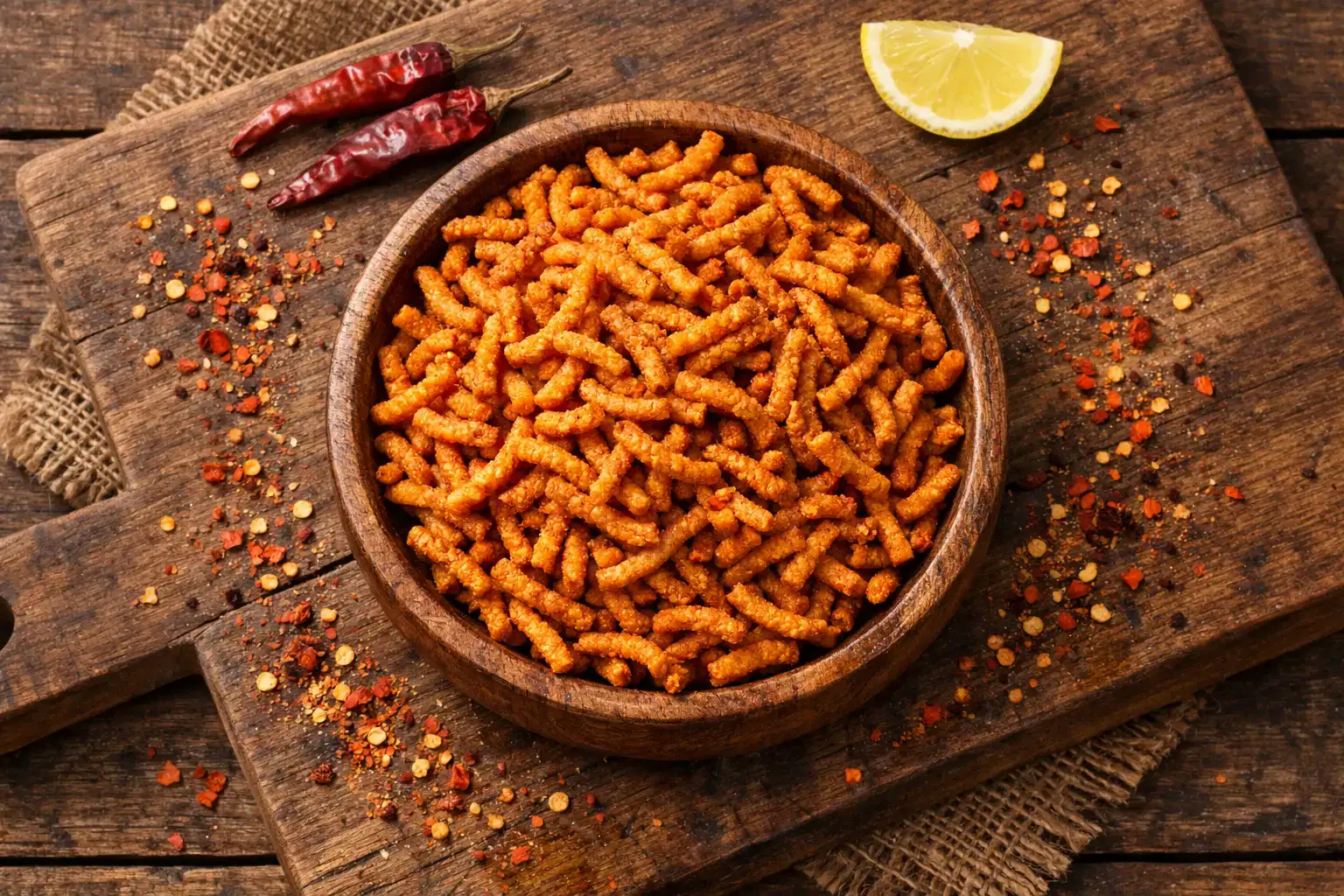
Quick Nutrition Facts
Per 100g Serving
| Nutrient | Amount |
|---|---|
| Calories | 540 kcal |
| Protein | 16g |
| Carbohydrates | 48g |
| Fiber | 4g |
| Sugars | 3g |
| Fat | 32g |
| Sodium | 850mg |
| Iron | 3.5mg |
| Calcium | 80mg |
| Potassium | 280mg |
Macronutrient Breakdown
 ChatGPT
  Claude
  AI Mode
  Perplexity
NUTRITIONIST INSIGHT
Bikaji Peri Peri Bhujia packs 16g protein per 100g from moth dal and gram flour, but the deep-frying adds 32g fat, pushing calories to 540. Capsaicin from peri peri chilies may boost metabolism by 5-8%, but this doesn't offset the calorie density. Best enjoyed as a 20-30g occasional treat.
Myth Busters
MYTH #1: Peri Peri Bhujia Burns Fat Because of Spice
TRUTH: While capsaicin can increase energy expenditure by 50-100 calories per day, one handful of peri peri bhujia (30g) adds 162 calories. The fat-burning effect of spice is minimal compared to the calorie load from deep-frying.
MYTH #2: Bhujia is a Healthy Protein Snack
TRUTH: Although 16g protein per 100g sounds impressive, you also consume 32g fat and 540 calories. Legume flours lose nutritional value during deep-frying as heat degrades B-vitamins and increases acrylamide formation. Roasted chana (390 cal, 22g protein, 5g fat) is far more efficient.
MYTH #3: A Small Portion Won't Affect Your Diet
TRUTH: The combination of salt (850mg sodium), fat, and spicy flavor triggers hyper-palatable food responses that make portion control difficult. Most people consume 50-80g per sitting (270-430 calories), not the recommended 20-30g.
MYTH #4: Peri Peri Bhujia is Better Than Regular Bhujia
TRUTH: Nutritionally, peri peri bhujia is nearly identical to regular Bikaji bhujia. The peri peri seasoning adds capsaicin and slightly more sodium, but calories, fat, and protein remain comparable. The health difference is negligible.
MYTH #5: Bhujia Made from Dal is Healthier Than Chips
TRUTH: While moth dal flour provides more protein and iron than potato, deep-frying in oil negates much of the legume benefit. Both bhujia (540 cal, 32g fat) and potato chips (536 cal, 35g fat) are calorie-dense fried snacks.
NutriScore by Health Goals
| Health Goal | NutriScore | Why This Score? |
|---|---|---|
| Weight Loss |  | 540 calories per 100g with 32g fat. Even 30g portions add 162 calories. Hyper-palatable flavor makes overeating likely. Avoid during active weight loss. |
| Muscle Gain |  | 16g protein per 100g from legume flour, but calorie-to-protein ratio is poor (34 cal per gram of protein). Better options: roasted chana, paneer, eggs. |
| Diabetes Management | | High glycemic index (70+) from fried gram flour. Fried snacks cause rapid blood sugar spikes in diabetics. Limit to 15-20g if consumed. |
| PCOS Management | | High calories, sodium, and glycemic impact worsen insulin resistance. Avoid as regular snack; choose roasted alternatives instead. |
| Pregnancy Nutrition | | High sodium intake during pregnancy raises preeclampsia risk. Deep-fried snacks provide empty calories over needed nutrients like folate and iron. |
| Viral/Flu Recovery | | Capsaicin may help clear congestion, but high sodium causes dehydration. Spicy food can irritate sore throats. Better recovery foods: khichdi, soup, fruits. |
PERSONALIZED NUTRITION
Track your meals with NutriScan for personalized NutriScores based on your specific health goals!
Blood Sugar Response to Peri Peri Bhujia
Understanding how fried snacks affect your blood glucose can help you make informed snacking decisions.
Typical Glucose Response Curve
This chart shows typical blood glucose response for general healthy individuals. Individual responses may vary. Not medical advice.
How to Flatten the Spike
Pairing fried snacks with protein or fiber slows glucose absorption and reduces the peak blood sugar level:
- 🥛 Buttermilk (chaas) - Protein and probiotics slow carb absorption
- 🥒 Cucumber raita - Fiber and water content buffer glucose spike
- 🥜 Handful of almonds - Healthy fats and protein for sustained energy
- 🫖 Green tea (unsweetened) - Catechins may help moderate glucose response
Keeping portions to 20-30g and pairing with protein-rich accompaniments significantly reduces the glycemic impact.
Cultural Significance
Bhujia originated in Bikaner, Rajasthan, and is one of India's most iconic namkeen snacks, with Bikaji Foods being a major producer since 1993.
In India:
- Bikaneri bhujia has a Geographical Indication (GI) tag, recognizing its unique origin
- Traditional recipe uses moth dal (Vigna aconitifolia) and gram flour, deep-fried with regional spices
- Peri Peri variant represents the fusion food trend blending African-Portuguese flavors with Indian snack tradition
- Bikaji is Bikaner's second-largest namkeen brand, exported to 45+ countries
Global Fusion:
- Peri peri (piri piri) originates from African bird's eye chili, popularized by Portuguese traders
- The fusion of Indian namkeen with peri peri seasoning reflects growing global flavor experimentation
- Part of a broader trend in Indian snack innovation targeting younger, spice-loving consumers
Compare & Substitute
Bikaji Peri Peri Bhujia vs Similar Snacks (Per 100g)
| Nutrient | 🌶️ Peri Peri Bhujia | 🟡 Haldiram's Bhujia Sev | 🥜 Roasted Chana | 🍟 Potato Chips |
|---|---|---|---|---|
| Calories | 540 kcal | 536 kcal | 390 kcal | 536 kcal |
| Carbs | 48g | 45g | 58g | 50g |
| Fiber | 4g | 4g | 12g | 3g |
| Protein | 16g | 15g | 22g | 6g |
| Fat | 32g | 31g | 5g | 35g |
| Sodium | 850mg | 820mg | 12mg | 500mg |
| Iron | 3.5mg | 3.2mg | 4.5mg | 1.2mg |
| Best For | Spicy snack craving | Traditional namkeen flavor | High protein, low fat snacking | Crispy snack, low protein |
Frequently Asked Questions
Is Bikaji Peri Peri Bhujia good for weight loss?
No, peri peri bhujia is not suitable for weight loss. At 540 calories and 32g fat per 100g, even a small 30g handful adds 162 calories. While capsaicin may marginally boost metabolism, the calorie density far outweighs any thermogenic benefit.
Better alternatives: Roasted chana (390 cal, 22g protein, 5g fat per 100g), makhana (330 cal, 9g protein, 1g fat per 100g), or air-popped popcorn (387 cal, 13g protein, 4g fat per 100g).
Can diabetics eat Bikaji Peri Peri Bhujia?
Diabetics should strictly limit consumption. The fried gram flour base has a glycemic index above 70, and 48g carbs per 100g will significantly impact blood sugar levels.
Tips for diabetics:
- Limit to 15-20g per serving (under 10g carbs)
- Always pair with protein like paneer or yogurt
- Choose roasted snacks over fried alternatives
- Monitor blood sugar 2 hours after eating
How much protein is in Bikaji Peri Peri Bhujia?
Peri peri bhujia contains 16g of protein per 100g, sourced from moth dal flour and gram flour (besan). While this is higher than potato chips (6g), the protein comes packaged with 32g fat and 540 calories, making it an inefficient protein source.
For better protein-per-calorie options, choose roasted chana (22g protein, 390 cal) or paneer tikka (20g protein, 260 cal).
What makes Peri Peri Bhujia spicier than regular bhujia?
The peri peri seasoning uses African bird's eye chili (piri piri), which contains higher concentrations of capsaicin than the red chili powder in regular bhujia. This gives it a sharper, more lingering heat compared to the earthy spice of traditional Bikaneri bhujia.
How many calories in one handful of Peri Peri Bhujia?
One handful (approximately 30g) contains about 162 calories, 9.6g fat, 14.4g carbs, and 4.8g protein. Most people consume 2-3 handfuls per sitting (324-486 calories), which is equivalent to a full meal's worth of calories.
Track your portions with NutriScan app to see how bhujia fits your daily nutrition goals.
Is Peri Peri Bhujia safe during pregnancy?
Peri peri bhujia should be limited during pregnancy due to high sodium (850mg per 100g) which can contribute to fluid retention and elevated blood pressure. The deep-fried nature provides empty calories over needed nutrients like folate, iron, and calcium.
Occasional small portions (20g) are unlikely to cause harm, but prioritize nutrient-dense snacks like dry fruits, roasted makhana, or fresh fruits instead.


Similar Nutritious Foods
4505 Chicharrones Classic Chili Salt
7 Eleven Japan Crispy Corn Cheese
Explore More Nutrition Tools & Resources
AI Calorie Counter App - Snap a Photo, Get Macros
AI Nutritionist App That Reads Your Logged Meals
Best Protein Supplements for Women
Bulking Meal Plan App That Sets Your Surplus
ChatGPT Calorie Counter Alternative That Keeps the Total
ChatGPT Diet Plan Alternative That Tracks What You Eat
ChatGPT Weight Loss Coach Alternative With a Food Log
Fast Food Calorie Counter App That Reads the Tray
Free Calorie Tracker App with AI Photo Scans | NutriScan
Indian Diet Plan App With Veg and Non Veg Meals
Indian Food Calorie Calculator - Get Instant Nutrition Facts for Desi Meals — 2026
Intermittent Fasting for Women, Timer and Meal Log App
Intermittent Fasting Tracker App - Free Fasting Timer
Macro Tracker App That Fills the Numbers From a Photo
Mediterranean Diet Meal Plan App That Counts the Oil
Micronutrient Tracker App for Vitamins and Minerals
MyFitnessPal Alternative That Stays Free | NutriScan
NutriScore App: A Free Grade on Every Meal | NutriScan
Nutrition Label Scanner App for the Amount You Ate
Second Trimester Protein Guide
Vegetarian Meal Plan App With a Protein Target
Voice Calorie Counter - Speak to Track Meals Hands-Free
Water and Calorie Tracker App - Free Water Log