Bikaji Soya Sticks Masala Munch: Calories, Nutrition and Health Benefits
A popular Indian spicy soy-based snack with bold masala flavors - high in calories and sodium, best enjoyed in controlled portions.
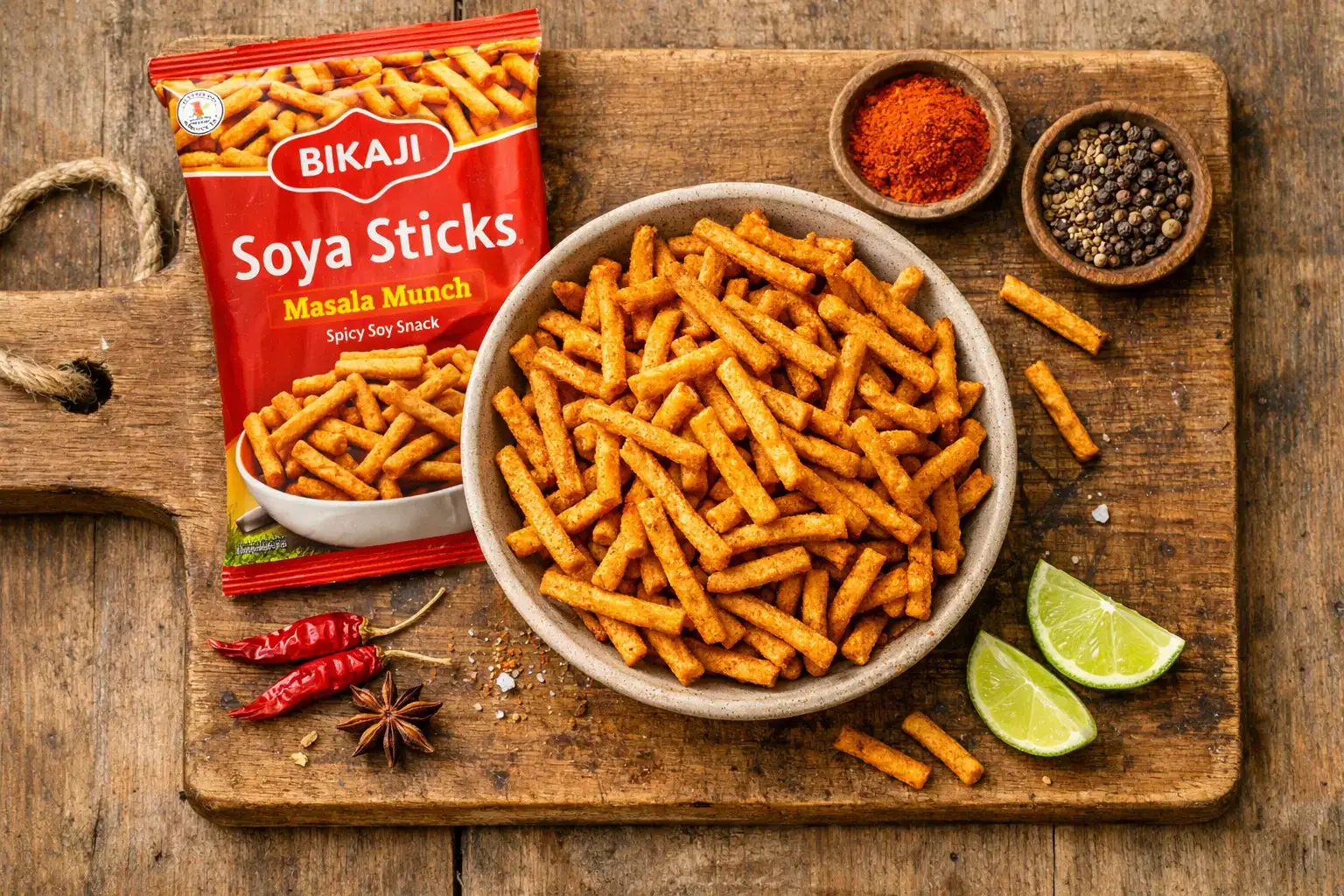
Quick Nutrition Facts
Per 100g Serving
| Nutrient | Amount |
|---|---|
| Calories | 551 kcal |
| Protein | 8g |
| Carbohydrates | 53g |
| Fiber | 3g |
| Sugars | 5g |
| Fat | 34g |
| Saturated Fat | 11g |
| Sodium | 1146mg |
| Potassium | 350mg |
Macronutrient Breakdown
 ChatGPT
  Claude
  AI Mode
  Perplexity
NUTRITIONIST INSIGHT
Bikaji Soya Sticks contain 1146mg sodium per 100g - nearly half the WHO daily limit in one sitting. Despite the "soya" branding, the product is only 7% soy powder. Stick to 15-20g portions and pair with fresh vegetables to balance sodium intake.
Myth Busters
MYTH #1: Soya Sticks Are a High-Protein Health Snack
TRUTH: Despite the name, Bikaji Soya Sticks contain only 8g protein per 100g with just 7% soy powder. Compare this to whole soybeans (36g protein/100g). Soy foods in whole form provide significantly more protein and lower glycemic impact than processed soy snacks.
MYTH #2: Soya Sticks Are Better Than Regular Chips
TRUTH: At 551 calories and 34g fat per 100g, soya sticks are comparable to potato chips (536 cal, 35g fat). The small soy content doesn't offset the deep-fried preparation. Ultra-processed snacks increase hypertension risk regardless of the base ingredient.
MYTH #3: The Soy in These Sticks Lowers Cholesterol
TRUTH: While whole soy foods may modestly reduce LDL cholesterol, the benefit requires about 25g of soy protein daily. At 8g protein per 100g (mostly from other flours), soya sticks don't deliver meaningful cholesterol-lowering effects.
MYTH #4: A Small Packet Won't Affect Your Diet
TRUTH: A 200g pack delivers 1102 calories - over half a typical daily intake. High sodium from snacks significantly raises blood pressure even in young adults. Portion to 20g (110 cal) for mindful snacking.
MYTH #5: Soya Sticks Are Safe for Unlimited Consumption
TRUTH: With 1146mg sodium per 100g (48% of WHO daily limit), overconsumption poses cardiovascular risk. The WHO recommends less than 2000mg sodium per day to reduce blood pressure and heart disease risk.
NutriScore by Health Goals
| Health Goal | NutriScore | Why This Score? |
|---|---|---|
| Weight Loss |  | 551 cal/100g is very calorie-dense. High fat (34g) and low fiber (3g). Limit to 15-20g portion max. |
| Muscle Gain | | Only 8g protein per 100g despite soy branding. Better options: roasted soy nuts (40g protein) or soya chunks. |
| Diabetes Management | | High carbs (53g/100g) and deep-fried. Soy in whole form has low GI, but processing raises glycemic impact. Keep to 15g portions. |
| PCOS Management | | High sodium and refined carbs worsen insulin resistance. Choose whole soy foods instead. |
| Pregnancy Nutrition | | Excessive sodium (1146mg/100g) risks elevated blood pressure. ACOG recommends whole soy as a protein source during pregnancy, not fried soy snacks. |
| Viral/Flu Recovery |  | Provides quick energy and some electrolytes (potassium 350mg). High sodium may help with dehydration but excess is counterproductive. |
PERSONALIZED NUTRITION
Track your meals with NutriScan for personalized NutriScores based on your specific health goals!
Blood Sugar Response to Bikaji Soya Sticks
Understanding how deep-fried soy snacks affect your blood glucose can help you make better snacking decisions.
Typical Glucose Response Curve
This chart shows typical blood glucose response for general healthy individuals. Individual responses may vary. Not medical advice.
How to Flatten the Spike
Pairing high-carb snacks with protein or fiber slows glucose absorption and reduces the peak blood sugar level:
- 🥒 Fresh cucumber or carrot sticks - Adds fiber and water content to slow digestion
- 🥛 A glass of buttermilk (chaas) - Provides protein and probiotics
- 🥜 A small handful of almonds - Healthy fats and protein to blunt the spike
- 🫘 Pair with a dal or hummus dip - Extra protein and fiber
This combination not only reduces the glucose spike but also extends energy release, keeping you fuller for longer.
Cultural Significance
Soya sticks are part of India's rich namkeen (savory snack) tradition, which spans centuries of culinary innovation.
In India:
- Bikaji, founded in 1987 in Bikaner (Rajasthan), is one of India's top namkeen manufacturers
- Soya-based snacks gained popularity in the 2000s as health-conscious marketing met traditional namkeen culture
- Namkeen snacks are staples during Diwali, Holi, and family gatherings across India
- Rajasthan's arid climate historically favored shelf-stable fried snacks for long journeys
Modern Context:
- India's savory snack market exceeds $5 billion annually, with soy variants growing rapidly
- Soya sticks bridge the gap between traditional bhujia and modern "protein snack" marketing
- Export-grade products like Bikaji have made Indian namkeen popular across 40+ countries
Compare & Substitute
Bikaji Soya Sticks vs Similar Snacks (Per 100g)
| Nutrient | 🥢 Soya Sticks | 🥜 Roasted Soy Nuts | 🌾 Baked Khakhra | 🍿 Air-Popped Popcorn |
|---|---|---|---|---|
| Calories | 551 kcal | 471 kcal | 378 kcal | 387 kcal |
| Carbs | 53g | 33g | 60g | 78g |
| Fiber | 3g | 6g | 5g | 15g |
| Protein | 8g | 40g | 12g | 13g |
| Fat | 34g | 22g | 10g | 4g |
| Sodium | 1146mg | 180mg | 620mg | 8mg |
| Best For | Occasional indulgence | Protein-rich snacking | Lighter Indian snack | Low-calorie high-fiber snack |
Frequently Asked Questions
How many calories are in Bikaji Soya Sticks?
551 calories per 100g. A typical 20g serving contains about 110 calories. The calorie breakdown is 56% fat, 39% carbs, and 6% protein, making this a fat-dominant snack.
Portion guide: 15-20g (1 small handful) is a reasonable serving at 82-110 calories.
Are Bikaji Soya Sticks healthy?
They provide some soy protein (8g/100g) and potassium (350mg) but are high in calories, sodium (1146mg), and saturated fat (11g). The deep-fried preparation and low soy content (7%) limit their health value.
Better alternatives: Roasted soy nuts, baked khakhra, or makhana (fox nuts) offer more nutrition with less sodium and fat.
Can diabetics eat Bikaji Soya Sticks?
Diabetics should limit consumption due to high carbohydrates (53g/100g) and the glycemic impact of deep-fried starchy snacks.
Tips for diabetics:
- Keep portions to 15g maximum (about 8g carbs)
- Always pair with protein-rich foods like paneer or nuts
- Avoid eating on an empty stomach
- Monitor blood sugar 2 hours after eating
Choose roasted soy nuts instead - they have lower GI and 5x more protein.
How much protein do Bikaji Soya Sticks have?
8g protein per 100g. Despite the "soya" name, the product is primarily tapioca starch, black gram flour, and oil with only 7% soy powder.
For meaningful soy protein intake, choose whole soy foods: tofu (17g/100g), tempeh (20g/100g), soya chunks (52g/100g), or edamame (11g/100g).
What is the sodium content?
1146mg per 100g - approximately 48% of the WHO recommended daily limit (2000mg). Even a 30g serving delivers 344mg sodium.
High sodium risks: Elevated blood pressure, water retention, and cardiovascular strain over time. Balance with potassium-rich foods like bananas, coconut water, or leafy greens.
Are Bikaji Soya Sticks suitable during pregnancy?
Not recommended as a regular snack during pregnancy due to high sodium (1146mg/100g) which can contribute to pregnancy-related hypertension. The deep-fried preparation also adds unnecessary saturated fat.
Better pregnancy snacks: Roasted makhana, trail mix with dried fruits and nuts, fresh fruit with yogurt, or whole-grain crackers with cheese.
How do Bikaji Soya Sticks compare to regular bhujia?
Very similar nutritionally. Bikaji Aloo Bhujia has about 545 cal/100g vs 551 cal for soya sticks. The main difference is marketing - "soya" implies healthier but the actual soy content is minimal (7%). Both are deep-fried namkeen snacks best consumed in moderation.


Similar Nutritious Foods
4505 Chicharrones Classic Chili Salt
7 Eleven Japan Crispy Corn Cheese
Explore More Nutrition Tools & Resources
AI Calorie Counter App - Snap a Photo, Get Macros
AI Nutritionist App That Reads Your Logged Meals
Best Protein Supplements for Women
Bulking Meal Plan App That Sets Your Surplus
ChatGPT Calorie Counter Alternative That Keeps the Total
ChatGPT Diet Plan Alternative That Tracks What You Eat
ChatGPT Weight Loss Coach Alternative With a Food Log
Fast Food Calorie Counter App That Reads the Tray
Free Calorie Tracker App with AI Photo Scans | NutriScan
Indian Diet Plan App With Veg and Non Veg Meals
Indian Food Calorie Calculator - Get Instant Nutrition Facts for Desi Meals — 2026
Intermittent Fasting for Women, Timer and Meal Log App
Intermittent Fasting Tracker App - Free Fasting Timer
Macro Tracker App That Fills the Numbers From a Photo
Mediterranean Diet Meal Plan App That Counts the Oil
Micronutrient Tracker App for Vitamins and Minerals
MyFitnessPal Alternative That Stays Free | NutriScan
NutriScore App: A Free Grade on Every Meal | NutriScan
Nutrition Label Scanner App for the Amount You Ate
Second Trimester Protein Guide
Vegetarian Meal Plan App With a Protein Target
Voice Calorie Counter - Speak to Track Meals Hands-Free
Water and Calorie Tracker App - Free Water Log