Black Currant Syrup: Calories, Nutrition and Health Benefits
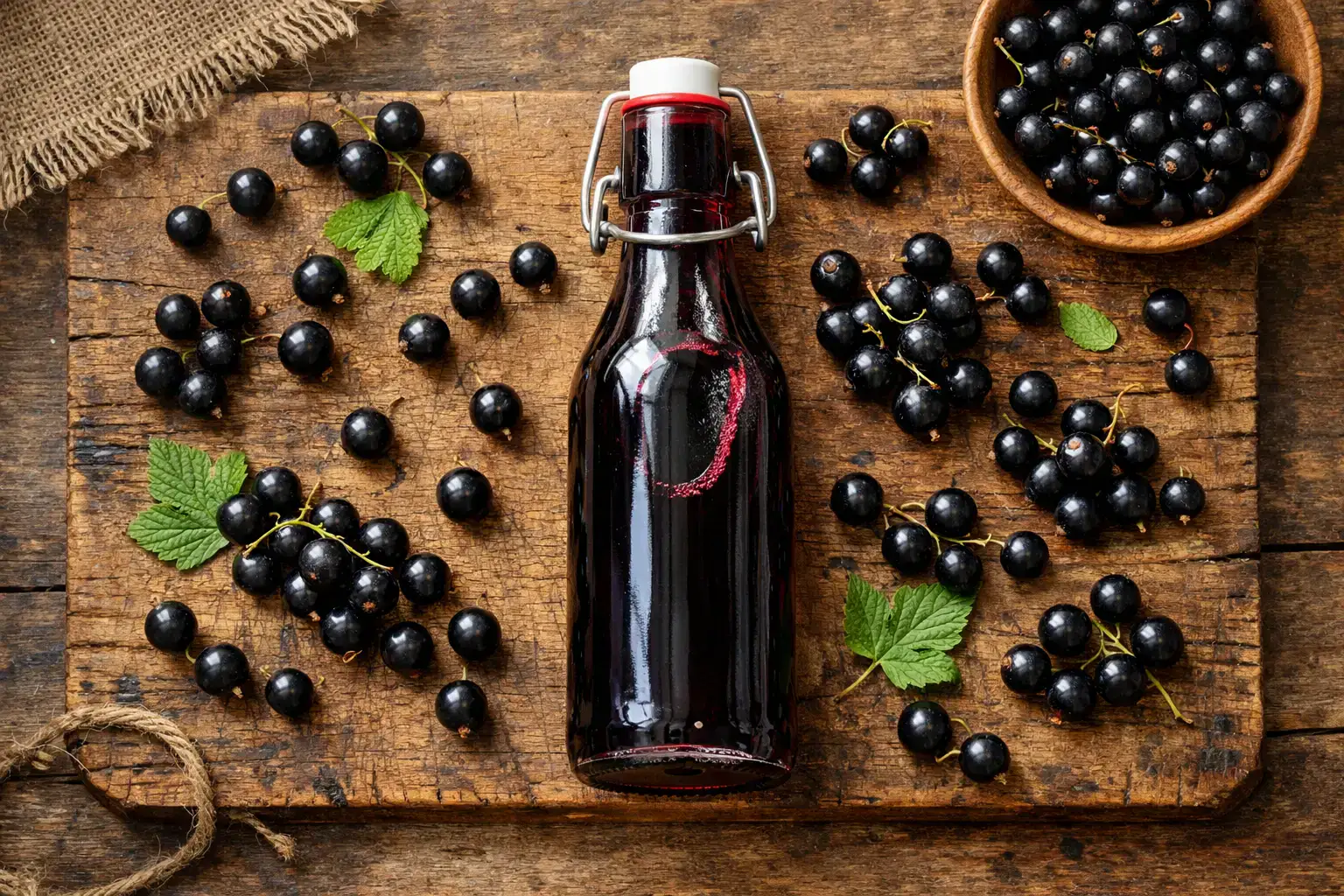
The 2026 flavor of the year for cocktails, black currant syrup delivers bold berry sweetness with 50 calories per tablespoon and a rich anthocyanin heritage from one of nature's most antioxidant-dense fruits.
Quick Nutrition Facts
Per 1 Tablespoon (20g)
| Nutrient | Amount |
|---|---|
| Calories | 50 kcal |
| Protein | 0g |
| Carbohydrates | 13g |
| Fiber | 0g |
| Sugars | 12g |
| Fat | 0g |
| Vitamin C | 5mg |
| Potassium | 15mg |
| Iron | 0.2mg |
| Anthocyanins | ~8mg |
Macronutrient Breakdown
 ChatGPT
  Claude
  AI Mode
  Perplexity
NUTRITIONIST INSIGHT
Black currant syrup is calorie-dense at 250 kcal per 100g, so measure portions carefully. The anthocyanins from the berries survive processing to some degree, but fresh or frozen black currants deliver 30x more antioxidants per calorie than the syrup form.
Myth Busters
MYTH #1: Black Currant Syrup Is a Health Food
TRUTH: While black currants themselves are nutrient powerhouses, syrup form concentrates the sugars and loses most fiber. One tablespoon has 12g sugar, nearly as much as maple syrup. Use sparingly for flavor, not health benefits. Fresh black currants contain 250mg anthocyanins per 100g vs minimal amounts in syrup.
MYTH #2: Black Currant Syrup Is Better Than Other Fruit Syrups
TRUTH: Calorie-wise, most fruit syrups are similar (50-60 cal/tbsp). Black currant syrup may retain slightly more polyphenols than plain sugar syrup, but the processing reduces antioxidant content significantly. Choose brands listing black currant as the first ingredient.
MYTH #3: Black Currant Syrup Boosts Immunity
TRUTH: Fresh black currants contain 181mg vitamin C per 100g (3x oranges), but syrup retains only a fraction due to heat processing. For immune benefits, eat whole black currants or minimally processed forms.
MYTH #4: Sugar-Free Black Currant Syrup Has Zero Calories
TRUTH: Sugar-free versions use artificial sweeteners and typically have 5-15 calories per tablespoon from fruit concentrate and thickeners. Always check nutrition labels. The flavor intensity still comes from the natural fruit compounds.
NutriScore by Health Goals
| Health Goal | NutriScore | Why This Score? |
|---|---|---|
| Weight Loss |  | 50 calories per tablespoon adds up quickly. Use max 1 tbsp or choose sugar-free alternatives. |
| Muscle Gain |  | Quick carbs (13g/tbsp) for post-workout energy, but zero protein. Pair with protein shake. |
| Diabetes Management | | High sugar content (12g/tbsp) spikes blood glucose. Black currant extract (not syrup) may help glucose metabolism, but syrup form negates this benefit. |
| PCOS Management | | Added sugars worsen insulin resistance. Limit to 1 tsp or use fresh berries instead. |
| Pregnancy Nutrition | | Small amounts are safe. Dark leafy greens and fruits support folate needs, but syrup is not a significant nutrient source. |
| Viral/Flu Recovery | | Some residual vitamin C and anthocyanins. Add to warm water with honey for a soothing drink. |
PERSONALIZED NUTRITION
Track your meals with NutriScan for personalized NutriScores based on your specific health goals!
Blood Sugar Response to Black Currant Syrup
Black currant syrup is essentially concentrated sugar with berry flavoring, so it produces a rapid blood glucose spike. Understanding this response helps you time and pair it wisely.
Typical Glucose Response Curve
This chart shows typical blood glucose response for general healthy individuals. Individual responses may vary. Not medical advice.
How to Flatten the Spike
Pairing sugary syrups with protein or fat slows glucose absorption and reduces the peak blood sugar level:
- 🥛 Mix into Greek yogurt - Protein and probiotics buffer the sugar rush
- 🥜 Add to nut butter smoothie - Healthy fats slow absorption
- 🍋 Dilute in sparkling water with lemon - Reduces total sugar per serving
- 🧊 Use in small portions over ice - Sipping slowly reduces glycemic impact
Cultural Significance
Black currants (Ribes nigrum) have deep roots in European culinary and medicinal traditions spanning centuries.
In Europe:
- France uses black currant syrup (sirop de cassis) in the classic Kir cocktail since the 1800s
- Britain's Ribena drink made black currant a wartime vitamin C source during WWII
- Nordic countries use black currant in traditional cordials, jams, and liqueurs
- Black currants were banned in the US from 1911-2003 due to white pine blister rust concerns
2026 Trend:
- Named flavor of the year for cocktails and mocktails
- Craft bartenders using it in espresso martini variations and spritz cocktails
- Non-alcoholic beverage industry adopting it as a sophisticated mixer
- Tart-sweet profile pairs with both savory and sweet applications
Compare & Substitute
Black Currant Syrup vs Similar Syrups (Per 1 tbsp / ~20g)
| Nutrient | 🍇 Black Currant Syrup | 🍁 Maple Syrup | 🍯 Honey | 🫐 Blueberry Syrup |
|---|---|---|---|---|
| Calories | 50 kcal | 52 kcal | 64 kcal | 50 kcal |
| Carbs | 13g | 13g | 17g | 13g |
| Fiber | 0g | 0g | 0g | 0g |
| Protein | 0g | 0g | 0.1g | 0g |
| Fat | 0g | 0g | 0g | 0g |
| Sugar | 12g | 12g | 17g | 12g |
| Vitamin C | 5mg | 0mg | 0.5mg | 1mg |
| Best For | Cocktails, berry flavor | Pancakes, baking | Natural sweetener | Pancakes, desserts |
Frequently Asked Questions
How many calories are in black currant syrup?
1 tablespoon (20g) of black currant syrup contains approximately 50 calories. Per 100g, it provides about 250 calories, almost entirely from sugars (63g/100g).
Per serving breakdown: 0g protein, 13g carbohydrates, 12g sugars, 0g fat. Calorie density is similar to maple syrup and other fruit syrups.
Is black currant syrup good for you?
Black currant syrup retains some beneficial compounds from the berries, including trace anthocyanins and vitamin C. However, it is primarily a sugar product.
For health benefits: Choose whole black currants or minimally processed black currant juice instead. Use syrup as a flavoring agent in 1-2 tablespoon portions rather than a health supplement.
Can diabetics use black currant syrup?
Diabetics should limit black currant syrup due to its high sugar content (12g per tablespoon). Interestingly, black currant extract has been shown to improve glucose tolerance, but the syrup form negates these benefits with concentrated sugars.
Tips for diabetics: Use sugar-free versions, limit to 1 teaspoon, dilute in large drinks, or substitute with fresh black currants (GI 22).
What are the health benefits of black currants?
Key benefits of the whole fruit:
- Antioxidant Power: 250mg anthocyanins per 100g fresh fruit
- Vitamin C: 181mg per 100g (3x more than oranges)
- Cardiovascular Health: Improves blood lipids and reduces inflammation
- Eye Health: Anthocyanins support retinal blood flow
- Anti-inflammatory: Reduces oxidative stress markers
- Skin Health: Supports collagen and elastin production
Note: Syrup form retains only a fraction of these benefits due to processing and sugar addition.
How should I use black currant syrup in cocktails?
Popular cocktail uses:
- Kir Royale: 1 tbsp syrup + champagne
- Black Currant Spritz: 1 tbsp syrup + prosecco + soda water
- Berry Mocktail: 1 tbsp syrup + sparkling water + lime
- Espresso Martini Twist: 0.5 tbsp syrup + espresso + vodka
Calorie tip: Use half portions (0.5 tbsp = 25 cal) for lighter drinks. Track cocktail calories with the NutriScan app to stay within your daily goals.
Is black currant syrup the same as cassis?
Cassis (creme de cassis) is an alcoholic black currant liqueur, while black currant syrup is non-alcoholic. Both use black currants as a base, but cassis adds brandy and has about 80 calories per tablespoon.
For lower calories: Choose non-alcoholic black currant syrup over cassis. For cocktails, syrup lets you control the alcohol content separately.


Similar Nutritious Foods
4505 Chicharrones Classic Chili Salt
7 Eleven Japan Crispy Corn Cheese
Explore More Nutrition Tools & Resources
AI Calorie Counter App - Snap a Photo, Get Macros
AI Nutritionist App That Reads Your Logged Meals
Best Protein Supplements for Women
Bulking Meal Plan App That Sets Your Surplus
ChatGPT Calorie Counter Alternative That Keeps the Total
ChatGPT Diet Plan Alternative That Tracks What You Eat
ChatGPT Weight Loss Coach Alternative With a Food Log
Fast Food Calorie Counter App That Reads the Tray
Free Calorie Tracker App with AI Photo Scans | NutriScan
Indian Diet Plan App With Veg and Non Veg Meals
Indian Food Calorie Calculator - Get Instant Nutrition Facts for Desi Meals — 2026
Intermittent Fasting for Women, Timer and Meal Log App
Intermittent Fasting Tracker App - Free Fasting Timer
Macro Tracker App That Fills the Numbers From a Photo
Mediterranean Diet Meal Plan App That Counts the Oil
Micronutrient Tracker App for Vitamins and Minerals
MyFitnessPal Alternative That Stays Free | NutriScan
NutriScore App: A Free Grade on Every Meal | NutriScan
Nutrition Label Scanner App for the Amount You Ate
Second Trimester Protein Guide
Vegetarian Meal Plan App With a Protein Target
Voice Calorie Counter - Speak to Track Meals Hands-Free
Water and Calorie Tracker App - Free Water Log