Blueberries: Calories, Nutrition and Health Benefits
 ChatGPT
  Claude
  AI Mode
  Perplexity
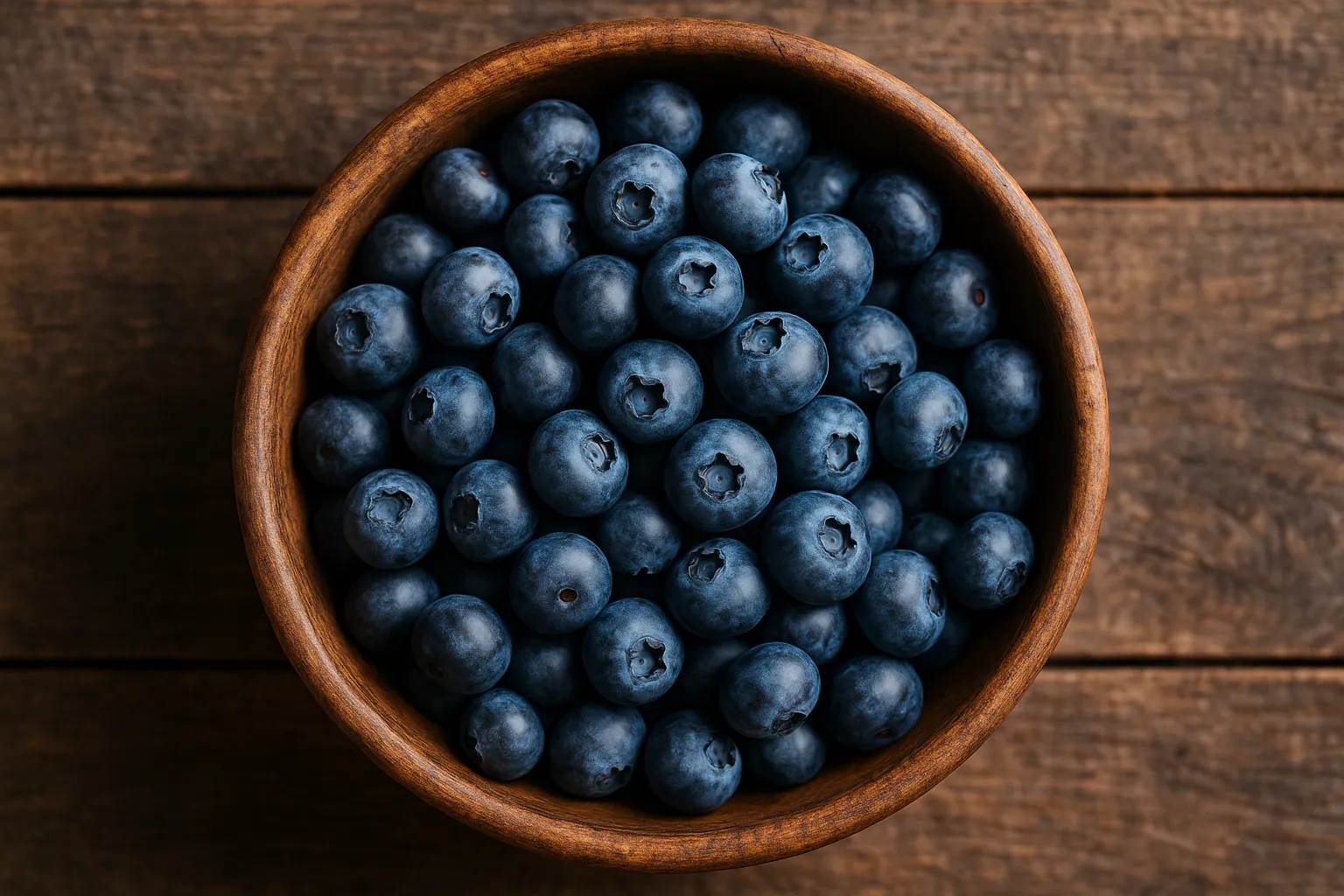
 The ultimate brain-boosting superfruit packed with antioxidants, fiber, and essential nutrients for cognitive health and longevity.
Quick Nutrition Facts
Per 100g (about 2/3 cup)
| Nutrient | Amount |
|---|---|
| Calories | 57 kcal |
| Protein | 0.7g |
| Carbohydrates | 14.5g |
| Fiber | 2.4g |
| Sugars | 10g |
| Fat | 0.3g |
| Vitamin C | 9.7mg |
| Vitamin K | 19.3µg |
| Manganese | 0.3mg |
| Folate | 6µg |
Macronutrient Breakdown

NUTRITIONIST INSIGHT
Blueberries are one of the most extensively researched fruits for brain health. Studies show daily consumption improves memory and cognitive function in older adults. Wild blueberries contain up to 2x more antioxidants than cultivated varieties.
Myth Busters
MYTH #1: Blueberries Are Too High in Sugar
TRUTH: With 10g natural sugar per 100g, blueberries are moderate in sugar compared to many fruits. The 2.4g fiber and anthocyanins slow glucose absorption, preventing blood sugar spikes. The health benefits far outweigh sugar concerns for most people.
MYTH #2: You Need to Eat Pounds of Blueberries for Benefits
TRUTH: Research shows just 1/2 to 1 cup (75-150g) daily provides measurable cognitive benefits. The USDA Human Nutrition Research Center found improvements in memory with 1 cup daily in older adults. More isn't necessarily better.
MYTH #3: Frozen Blueberries Are Nutritionally Inferior
TRUTH: Frozen blueberries retain 90-95% of their antioxidant content and are picked at peak ripeness. Some studies suggest freezing can increase anthocyanin bioavailability by breaking down cell walls. Frozen is often more affordable and available year-round.
MYTH #4: Blueberries Can Cure Alzheimer's Disease
TRUTH: While blueberries show promise in reducing cognitive decline and improving brain function, they cannot cure Alzheimer's. They're protective and supportive for brain health but not a medical treatment. Always follow your doctor's recommendations.
MYTH #5: All Blueberries Are the Same
TRUTH: Wild blueberries (lowbush) contain 2x more anthocyanins than cultivated (highbush) varieties due to higher skin-to-flesh ratio and stress from growing conditions. Both are healthy; wild offer more concentrated nutrition. Choose based on availability and budget.
MYTH #6: You Shouldn't Eat Blueberries with Dairy
TRUTH: No scientific evidence suggests dairy reduces blueberry benefits. In fact, combining with Greek yogurt adds protein that enhances satiety and nutrient absorption. Blueberries with yogurt make an excellent breakfast or snack.
NutriScore by Health Goals
| Health Goal | NutriScore | Why This Score? |
|---|---|---|
| Weight Loss |  | Only 57 calories per 100g with 2.4g fiber, satisfies sweet cravings naturally, low calorie density allows generous portions. |
| Muscle Gain |  | Limited protein (0.7g), but antioxidants reduce exercise-induced oxidative stress and support recovery. |
| Diabetes Management | | Moderate GI (53), anthocyanins improve insulin sensitivity. Best paired with protein. Monitor portions (1/2-1 cup). |
| PCOS Management | | Anti-inflammatory anthocyanins help reduce PCOS inflammation, but moderate sugar content requires portion control (1/2 cup). |
| Pregnancy Nutrition | | Safe during pregnancy, provides vitamin C, folate, antioxidants support fetal development, fiber prevents constipation. |
| Viral/Flu Recovery | | Vitamin C boosts immunity, anthocyanins have antiviral properties, easy to digest, natural hydration. |
PERSONALIZED NUTRITION
Track your meals with NutriScan for personalized NutriScores based on your specific health goals!
Blood Sugar Response to Blueberries
Understanding how blueberries affect your blood glucose helps optimize consumption timing and pairing.
Typical Glucose Response Curve
This chart shows typical blood glucose response. Individual responses may vary. Not medical advice.
How to Optimize Blood Sugar Response
Pairing blueberries with protein or healthy fat significantly reduces blood sugar impact:
- 🥄 Greek yogurt or cottage cheese - Adds 15-20g protein, slows absorption
- 🥜 Nuts or nut butter - Healthy fats stabilize glucose
- 🥣 Oatmeal with blueberries - Fiber combination flattens curve
- 🥚 Eggs with blueberries - Protein balances carbohydrates
The anthocyanins in blueberries also improve insulin sensitivity over time with regular consumption, making them increasingly beneficial for blood sugar management.
Cultural Significance
Blueberries are one of the few fruits native to North America, with a rich history spanning thousands of years.
Indigenous Heritage:
- Native Americans harvested wild blueberries for centuries
- Used medicinally for blood purification and labor induction
- Preserved through smoking and drying for winter
- Shared with early European settlers, preventing scurvy
Commercial Development:
- First cultivated in 1908 in New Jersey
- Major US crop since 1916
- Now grown on six continents
- Maine produces 99% of wild (lowbush) blueberries in US
Modern Research:
- Designated as "superfood" in 1990s due to antioxidant content
- USDA Human Nutrition Research Center conducted groundbreaking brain health studies
- Over 2,000 published studies on health benefits
- Annual consumption increased 4x in past 20 years
Compare & Substitute
Blueberries vs Similar Berries (Per 100g)
| Nutrient | 🫐 Blueberries | 🫐 Blackberries | 🍓 Strawberries | 🍇 Raspberries |
|---|---|---|---|---|
| Calories | 57 kcal | 43 kcal | 32 kcal | 52 kcal |
| Carbs | 14.5g | 9.6g | 7.7g | 11.9g |
| Fiber | 2.4g | 5.3g | 2g | 6.5g |
| Protein | 0.7g | 1.4g | 0.7g | 1.2g |
| Fat | 0.3g | 0.5g | 0.3g | 0.7g |
| Sugar | 10g | 4.9g | 4.9g | 4.4g |
| Vitamin C | 9.7mg | 21mg | 58.8mg | 26.2mg |
| Anthocyanins | 140-175 mg | 214-589 mg | 20-35 mg | 20-65 mg |
| Best For | Brain health | Inflammation | Vitamin C | Digestion |
Frequently Asked Questions
Are blueberries good for weight loss?
Yes, blueberries are excellent for weight loss. At 57 calories per 100g with 2.4g fiber, they provide satisfying sweetness without excess calories. The natural sugars reduce cravings for processed sweets, and anthocyanins may support fat metabolism.
Weight loss benefits: Low calorie density; natural sweet satisfaction; high antioxidants; portion-friendly; versatile in meals.
Best practices: Eat 1/2-1 cup as snack; add to Greek yogurt for protein; use in smoothies; avoid added sugars or syrups.
Research insight: Studies show people who eat blueberries regularly have lower BMI and waist circumference compared to non-consumers.
Can diabetics eat blueberries?
Yes, diabetics can eat blueberries in moderation. With a glycemic index of 53 (low to medium) and beneficial anthocyanins that improve insulin sensitivity, blueberries can be part of a diabetes-friendly diet.
Diabetes management:
- Limit to 1/2-1 cup per serving (7-14g net carbs)
- Always pair with protein (Greek yogurt, nuts)
- Best timing: with meals, not alone
- Monitor blood sugar response individually
Research shows regular blueberry consumption can improve insulin sensitivity over time, making them increasingly beneficial with consistent intake.
How many blueberries should I eat per day?
Recommended serving: 1 cup (148g) provides optimal benefits—84 calories, 3.6g fiber, 14mg vitamin C, high antioxidants. This amount is supported by cognitive function research.
By health goal:
- Weight loss: 1/2-1 cup daily (low calories, satisfying)
- Brain health: 1 cup daily (cognitive benefits observed in studies)
- Diabetes: 1/2-1 cup per serving with protein (monitor response)
- General health: 1 cup daily (ideal antioxidant dose)
- Pregnancy: 1 cup daily (safe, beneficial)
No strict upper limit; listen to your body. Excess may cause mild digestive upset or increased blood sugar.
What are the main health benefits of blueberries?
Key Benefits:
- Brain Health: Improves memory, cognitive function, and protects against age-related decline
- Heart Health: Anthocyanins reduce blood pressure, improve cholesterol, support arterial function
- Blood Sugar Control: Moderate GI, anthocyanins improve insulin sensitivity
- Cancer Prevention: High antioxidants fight free radicals and oxidative stress
- Eye Health: Anthocyanins protect against macular degeneration and cataracts
- Immune Support: Vitamin C and antioxidants boost immune function
- Anti-Inflammatory: Reduces chronic inflammation throughout the body
- Digestive Health: Fiber supports gut microbiome and regularity
Are wild blueberries better than cultivated?
Yes, wild (lowbush) blueberries contain up to 2x more anthocyanins than cultivated (highbush) varieties. This is due to higher skin-to-flesh ratio and environmental stress during growth.
Wild vs Cultivated:
Wild Blueberries:
- 2x antioxidants per gram
- Smaller, more intense flavor
- Found in Maine, Eastern Canada
- More expensive, less available
- Often sold frozen
Cultivated Blueberries:
- Still high in antioxidants
- Larger, milder flavor
- Widely available fresh
- More affordable
- Easier to find year-round
Recommendation: Both are excellent choices. Choose wild for maximum antioxidants when available and budget allows; cultivated for everyday consumption.
Can I eat blueberries during pregnancy?
Yes, blueberries are safe and beneficial throughout pregnancy:
Pregnancy benefits:
- Vitamin C (9.7mg): Supports immune system and iron absorption
- Folate (6µg): Supports fetal development (supplement with prenatal vitamin)
- Fiber (2.4g): Relieves pregnancy constipation
- Antioxidants: Protect maternal and fetal cells from oxidative stress
- Low mercury: Unlike some fish, berries are completely safe
Safety: Wash thoroughly to remove pesticide residue. Organic is ideal but not required. 1 cup daily is safe and provides beneficial nutrients throughout all trimesters.
Should I buy fresh or frozen blueberries?
Both are nutritionally equivalent. Choose based on use, budget, and availability:
Fresh:
- Best for: Eating whole, snacking, salads
- Pros: Ideal texture, convenient
- Cons: Expensive ($4-7/pint), short shelf life (5-7 days), seasonal
Frozen:
- Best for: Smoothies, baking, year-round use
- Pros: More affordable, longer storage (6-12 months), picked at peak ripeness
- Cons: Softer texture when thawed, need freezer space
Nutrition: Frozen blueberries retain 90-95% of antioxidants and may have increased bioavailability due to cell wall breakdown during freezing.
Budget tip: Buy frozen in bulk (2-3 lb bags) for best value; buy fresh when in season and on sale.




Similar Nutritious Fruits
4505 Chicharrones Classic Chili Salt
7 Eleven Japan Crispy Corn Cheese
Explore More Nutrition Tools & Resources
AI Calorie Counter App - Snap a Photo, Get Macros
AI Nutritionist App That Reads Your Logged Meals
Best Protein Supplements for Women
Bulking Meal Plan App That Sets Your Surplus
ChatGPT Calorie Counter Alternative That Keeps the Total
ChatGPT Diet Plan Alternative That Tracks What You Eat
ChatGPT Weight Loss Coach Alternative With a Food Log
Fast Food Calorie Counter App That Reads the Tray
Free Calorie Tracker App with AI Photo Scans | NutriScan
Indian Diet Plan App With Veg and Non Veg Meals
Indian Food Calorie Calculator - Get Instant Nutrition Facts for Desi Meals — 2026
Intermittent Fasting for Women, Timer and Meal Log App
Intermittent Fasting Tracker App - Free Fasting Timer
Macro Tracker App That Fills the Numbers From a Photo
Mediterranean Diet Meal Plan App That Counts the Oil
Micronutrient Tracker App for Vitamins and Minerals
MyFitnessPal Alternative That Stays Free | NutriScan
NutriScore App: A Free Grade on Every Meal | NutriScan
Nutrition Label Scanner App for the Amount You Ate
Second Trimester Protein Guide
Vegetarian Meal Plan App With a Protein Target
Voice Calorie Counter - Speak to Track Meals Hands-Free
Water and Calorie Tracker App - Free Water Log