Burnt Butter (Beurre Noisette): Calories, Nutrition and Health Benefits
French culinary gold with a deep nutty, caramelized aroma that transforms simple dishes into gourmet experiences.
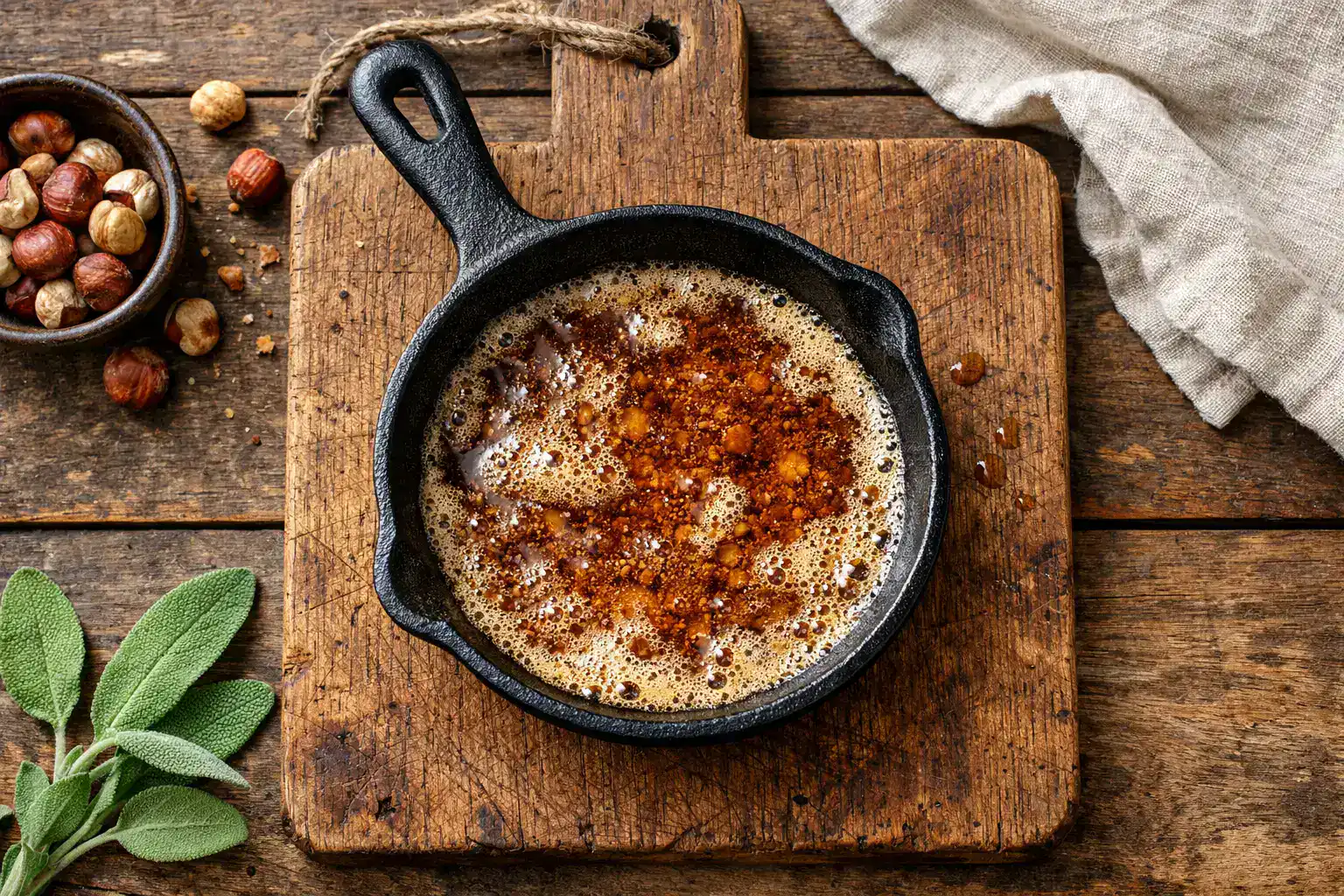
Quick Nutrition Facts
Per 1 Tablespoon (14g)
| Nutrient | Amount |
|---|---|
| Calories | 100 kcal |
| Protein | 0.1g |
| Carbohydrates | 0g |
| Fiber | 0g |
| Sugars | 0g |
| Fat | 11.4g |
| Saturated Fat | 7.2g |
| Vitamin A | 97 IU |
| Vitamin E | 0.3mg |
| Cholesterol | 31mg |
Macronutrient Breakdown
 ChatGPT
  Claude
  AI Mode
  Perplexity
NUTRITIONIST INSIGHT
Burnt butter's nutty flavor means you need less to achieve rich taste. The Maillard reaction during browning creates aromatic compounds that make dishes satisfying with smaller portions.
Myth Busters
MYTH #1: Burnt Butter Is Unhealthy Compared to Regular Butter
TRUTH: Burnt butter and regular butter have nearly identical nutritional profiles. The browning process changes flavor, not fat content. A meta-analysis found butter consumption has relatively neutral overall health associations when consumed in moderation.
MYTH #2: The Brown Color Means It's Carcinogenic
TRUTH: Properly made beurre noisette is golden-brown, not black. The browning is the Maillard reaction between milk proteins and sugars. Black, smoking butter is burnt beyond safe consumption and should be discarded.
MYTH #3: Burnt Butter Has More Calories Than Regular Butter
TRUTH: Burnt butter has the same calories as regular butter (717 kcal/100g). Some water evaporates during browning, but the fat content per tablespoon remains virtually identical at ~100 calories.
MYTH #4: You Should Never Use Butter for High-Heat Cooking
TRUTH: While regular butter has a lower smoke point (175C), clarified butter/ghee reaches 250C safely. For browning butter, medium heat prevents burning while achieving the desired nutty flavor.
MYTH #5: All Saturated Fat Is Equally Harmful
TRUTH: Recent research shows butter's association with cardiovascular disease is relatively small and neutral. The key is moderation and overall dietary pattern, not eliminating butter entirely.
NutriScore by Health Goals
| Health Goal | NutriScore | Why This Score? |
|---|---|---|
| Weight Loss |  | High calorie density (717 kcal/100g). Limit to 1/2 tablespoon per serving. Use as flavor enhancer, not main fat source. |
| Muscle Gain |  | Provides dense calories for bulking. Minimal protein (0.9g/100g). Better paired with protein-rich foods for balanced macros. |
| Diabetes Management |  | Zero carbs won't spike blood sugar directly. Use sparingly as part of Mediterranean-style eating. Pair with vegetables and lean protein. |
| PCOS Management | | Saturated fat may affect hormone balance. Use olive oil as primary fat; burnt butter occasionally for flavor. |
| Pregnancy Nutrition | | Provides vitamin A (684 IU/100g) important for fetal development. Limit to 1-2 tbsp daily for balanced saturated fat intake. |
| Viral/Flu Recovery | | Provides quick energy. Vitamin A supports immune function. Use in warm comfort foods during recovery. |
PERSONALIZED NUTRITION
Track your meals with NutriScan for personalized NutriScores based on your specific health goals!
Blood Sugar Response to Burnt Butter
Understanding how burnt butter affects your blood glucose can help you make informed decisions about when and how to use it.
Typical Glucose Response Curve
This chart shows typical blood glucose response for general healthy individuals. Individual responses may vary. Not medical advice.
How to Maintain Stable Blood Sugar
Pure fat has minimal direct impact on blood glucose, but smart pairing optimizes overall metabolic response:
- Fiber-rich vegetables - Broccoli, asparagus, or green beans drizzled with burnt butter
- Whole grains - Brown rice or whole wheat pasta with burnt butter sauce
- Lean protein - Fish or chicken finished with burnt butter for flavor
- Nuts and seeds - Burnt butter over roasted almonds adds depth without sugar
This combination provides sustained energy without blood sugar spikes.
Cultural Significance
Burnt butter, known as beurre noisette ("hazelnut butter") in French, has been a cornerstone of European cuisine for centuries.
In France:
- Essential technique taught in culinary schools worldwide
- Classic preparation for sole meuniere and other fish dishes
- Used in financiers, madeleines, and brown butter cookies
- The nutty aroma is described as "the smell of French cooking"
In India:
- Similar technique used in traditional ghee preparation
- Browned ghee (tadka) flavors dals, rice, and curries
- Ayurveda considers heated ghee beneficial for digestion
- Regional variations include adding spices during browning
Global Adoption:
- Italian pasta dishes use burro nocciola for pasta water emulsion
- Middle Eastern desserts incorporate browned butter for richness
- Modern pastry chefs use it in ice cream, caramels, and ganache
Compare & Substitute
Burnt Butter vs Other Cooking Fats (Per 100g)
| Nutrient | Burnt Butter | Regular Butter | Ghee | Olive Oil | Coconut Oil |
|---|---|---|---|---|---|
| Calories | 717 kcal | 717 kcal | 900 kcal | 884 kcal | 862 kcal |
| Total Fat | 81g | 81g | 100g | 100g | 100g |
| Saturated | 51g | 51g | 62g | 14g | 82g |
| Cholesterol | 215mg | 215mg | 256mg | 0mg | 0mg |
| Smoke Point | ~175C | ~175C | ~250C | ~210C | ~175C |
| Best For | Finishing, baking | All-purpose | High-heat cooking | Sauteing, dressings | Baking, medium heat |
Frequently Asked Questions
How many calories are in burnt butter?
Burnt butter contains 717 calories per 100g or approximately 100 calories per tablespoon (14g). The browning process evaporates some water but doesn't change the calorie content significantly.
Is burnt butter healthier than regular butter?
Burnt butter has virtually identical nutritional content to regular butter. The Maillard browning creates flavor compounds and slightly reduces water content, but fat, calories, and vitamins remain the same.
Can diabetics use burnt butter?
Yes, burnt butter contains zero carbohydrates and won't directly spike blood sugar. However, its high saturated fat content means diabetics should use it sparingly as part of a balanced diet focused on whole foods.
What is the difference between burnt butter and ghee?
Burnt butter (beurre noisette):
- Browned briefly (2-4 minutes)
- Milk solids remain and toast
- Nutty, caramelized flavor
- Smoke point: ~175C
- Use immediately or refrigerate
Ghee:
- Milk solids strained out
- Clear golden liquid
- Higher smoke point (~250C)
- Longer shelf life (months at room temp)
- Better for high-heat cooking
How do I make burnt butter without burning it?
- Use medium heat in a light-colored pan (to see color change)
- Cut butter into small pieces for even melting
- Swirl pan continuously once melted
- Watch for golden-brown color and nutty aroma (2-4 minutes)
- Remove from heat immediately when browned
- Transfer to a bowl to stop cooking
How long does burnt butter last?
Freshly made burnt butter is best used immediately for maximum flavor. Refrigerated in an airtight container, it lasts 1-2 weeks. The milk solids may darken further over time, affecting flavor quality.
Is burnt butter safe during pregnancy?
Yes, burnt butter is safe during pregnancy in moderation. It provides vitamin A beneficial for fetal development. Limit to 1-2 tablespoons daily to manage saturated fat intake within recommended guidelines.


Similar Nutritious Foods
4505 Chicharrones Classic Chili Salt
7 Eleven Japan Crispy Corn Cheese
Explore More Nutrition Tools & Resources
AI Calorie Counter App - Snap a Photo, Get Macros
AI Nutritionist App That Reads Your Logged Meals
Best Protein Supplements for Women
Bulking Meal Plan App That Sets Your Surplus
ChatGPT Calorie Counter Alternative That Keeps the Total
ChatGPT Diet Plan Alternative That Tracks What You Eat
ChatGPT Weight Loss Coach Alternative With a Food Log
Fast Food Calorie Counter App That Reads the Tray
Free Calorie Tracker App with AI Photo Scans | NutriScan
Indian Diet Plan App With Veg and Non Veg Meals
Indian Food Calorie Calculator - Get Instant Nutrition Facts for Desi Meals — 2026
Intermittent Fasting for Women, Timer and Meal Log App
Intermittent Fasting Tracker App - Free Fasting Timer
Macro Tracker App That Fills the Numbers From a Photo
Mediterranean Diet Meal Plan App That Counts the Oil
Micronutrient Tracker App for Vitamins and Minerals
MyFitnessPal Alternative That Stays Free | NutriScan
NutriScore App: A Free Grade on Every Meal | NutriScan
Nutrition Label Scanner App for the Amount You Ate
Second Trimester Protein Guide
Vegetarian Meal Plan App With a Protein Target
Voice Calorie Counter - Speak to Track Meals Hands-Free
Water and Calorie Tracker App - Free Water Log