Calbee Asian Style Chips (Umami Salt): Calories, Nutrition and Health Facts
Japanese-inspired potato chips with natural umami seasoning from shiitake, kombu, and scallop extracts - 150 calories per 12-chip serving.
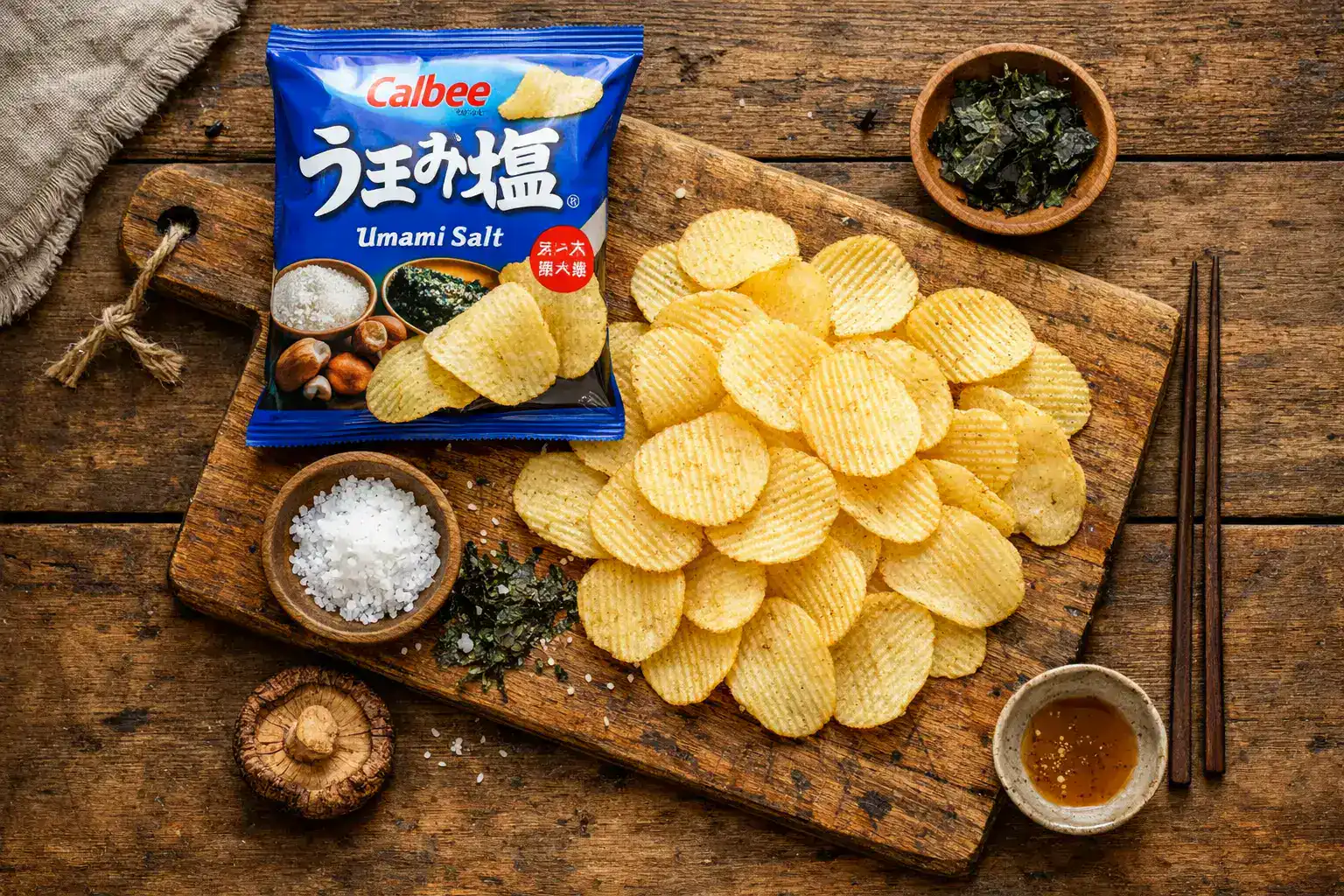
Quick Nutrition Facts
Per 12 Chips (28g Serving)
| Nutrient | Amount |
|---|---|
| Calories | 150 kcal |
| Protein | 2g |
| Carbohydrates | 14g |
| Fiber | 1g |
| Sugars | 0g |
| Fat | 10g |
| Saturated Fat | 1g |
| Sodium | 500mg |
| Potassium | 320mg |
| Iron | 0.5mg |
| Calcium | 10mg |
Macronutrient Breakdown
 ChatGPT
  Claude
  AI Mode
  Perplexity
NUTRITIONIST INSIGHT
At 150 calories and 10g fat per 28g serving, Calbee Umami Salt chips deliver 60% of calories from fat. The natural umami from shiitake and kombu extracts means less sodium is needed for flavor compared to conventional chips. Stick to a single-serving portion and pair with protein to manage satiety.
Myth Busters
MYTH #1: All Potato Chips Are Equally Unhealthy
TRUTH: Nutritional profiles vary significantly between brands and cooking methods. Calbee Umami Salt chips use canola/safflower/sunflower oil (higher in unsaturated fats) rather than palm oil, and contain 0g trans fat - a key factor for cardiovascular health.
MYTH #2: Umami Seasoning (MSG) Is Dangerous
TRUTH: The Joint FAO/WHO Expert Committee on Food Additives placed MSG in the safest category for food additives. Clinical evidence does not consistently support claims of widespread adverse effects at normal dietary levels. Calbee's umami comes from natural extracts (shiitake, kombu, scallop).
MYTH #3: Potato Chips Always Spike Blood Sugar
TRUTH: Research shows potato chips produce a moderate glycemic response due to their fat content, which slows starch digestion. Chips actually show a similar or lower glycemic response than plain boiled potatoes.
MYTH #4: You Can't Eat Chips on a Diet
TRUTH: Portion control is key. A single 28g serving (12 chips) at 150 calories fits within most daily calorie budgets. Mindful snacking with pre-portioned amounts helps prevent overconsumption while still enjoying your snack.
MYTH #5: Japanese Chips Are Low in Sodium
TRUTH: Calbee Umami Salt chips contain approximately 500mg sodium per 28g serving (22% DV). While umami flavoring reduces the need for added salt, the sodium content is still significant. Harvard recommends staying under 2,300mg sodium daily for heart health.
NutriScore by Health Goals
| Health Goal | NutriScore | Why This Score? |
|---|---|---|
| Weight Loss |  | 150 calories and 10g fat per small 28g serving adds up fast. High energy density (536 kcal/100g) makes portion control critical. Limit to 1 serving max. |
| Muscle Gain |  | Only 2g protein per serving - poor protein source. Carbs (14g) provide some energy, but better post-workout options exist. Use as occasional treat only. |
| Diabetes Management | | Fat content moderates acute blood sugar spikes compared to low-fat snacks, but 14g carbs and high sodium still impact glucose management. Limit to half-serving with protein. |
| PCOS Management | | High sodium and processed carbs can worsen insulin resistance and bloating. Occasional small portions only, paired with fiber-rich foods. |
| Pregnancy Nutrition | | High sodium (500mg/serving) is concerning during pregnancy when ACOG recommends nutrient-dense foods. Minimal vitamins/minerals. Choose nutrient-rich snacks instead. |
| Viral/Flu Recovery | | Easily digestible carbs for quick energy, and potassium (320mg) supports electrolyte balance. However, low in immune-supporting vitamins C and D. |
PERSONALIZED NUTRITION
Track your meals with NutriScan for personalized NutriScores based on your specific health goals!
Blood Sugar Response to Calbee Umami Salt Chips
Understanding how these chips affect your blood glucose helps you make informed snacking decisions - especially important for diabetes management.
Typical Glucose Response Curve
This chart shows typical blood glucose response for general healthy individuals. Individual responses may vary. Not medical advice.
How to Flatten the Spike
Pairing chips with protein or fiber slows glucose absorption and reduces the peak blood sugar level:
- Edamame or hummus - Adds plant protein and fiber alongside chips
- Greek yogurt dip - Provides protein and probiotics
- Sliced vegetables (carrots, cucumber) - Adds fiber and volume with minimal calories
- A handful of almonds - Healthy fats and protein extend satiety
This combination not only reduces the glucose spike but also helps you feel fuller, naturally limiting chip consumption.
Cultural Significance
Calbee, founded in Hiroshima in 1949, is Japan's largest snack food company and a pioneer in Asian-flavored chip innovation.
In Japan:
- Calbee controls over 70% of Japan's savory snack market
- Umami is considered the "fifth taste" - discovered by Japanese chemist Kikunae Ikeda in 1908
- Traditional umami sources (dashi from kombu and bonito) inspired modern chip seasonings
- Japanese snack culture emphasizes variety and seasonal limited editions
Global Impact:
- Calbee operates in 10+ countries, adapting flavors to regional preferences
- The "Asian Style" line bridges Japanese umami traditions with Western snacking habits
- Umami seasoning trend has expanded beyond Japanese cuisine into global food innovation
Compare & Substitute
Calbee Umami Salt vs Similar Snacks (Per 28g Serving)
| Nutrient | Calbee Umami Salt | Lay's Classic | Calbee Shrimp Chips | Popcorn (Air-Popped) |
|---|---|---|---|---|
| Calories | 150 kcal | 160 kcal | 130 kcal | 110 kcal |
| Carbs | 14g | 15g | 20g | 22g |
| Fiber | 1g | 1g | 0g | 4g |
| Protein | 2g | 2g | 2g | 3g |
| Fat | 10g | 10g | 5g | 1g |
| Sodium | 500mg | 170mg | 340mg | 1mg |
| Sugar | 0g | 1g | 2g | 0g |
| Best For | Umami flavor craving | Classic salty snack | Lower-fat option | High-fiber, low-fat |
Frequently Asked Questions
How many calories are in Calbee Umami Salt chips?
150 calories per 12-chip serving (28g). Per 100g, they contain 536 calories - comparable to most standard potato chips. A full 6oz (170g) bag contains approximately 911 calories total, or about 6 servings.
Portion tip: Pre-portion into 28g amounts to avoid eating the full bag, which can happen easily with savory umami-flavored snacks.
Are Calbee Umami Salt chips healthier than regular chips?
Calbee Umami Salt chips have a few advantages over some conventional chips: they use canola/safflower/sunflower oil (higher in unsaturated fats), contain 0g trans fat, and derive flavor from natural umami extracts (shiitake, kombu, scallop) rather than artificial flavoring.
Drawbacks: Higher sodium (500mg vs 170mg for Lay's Classic), comparable calories and fat content. Not a "health food" - just a potentially better-formulated chip option.
Can diabetics eat Calbee Umami Salt chips?
Diabetics should limit these chips to occasional small portions. The 10g fat per serving actually moderates blood sugar spikes compared to lower-fat snacks.
Tips for diabetics:
- Limit to half a serving (7 chips / 14g = ~75 calories)
- Always pair with protein (Greek yogurt dip, cheese, edamame)
- Monitor blood sugar 2 hours after eating
- Watch total sodium intake, as diabetes increases cardiovascular risk
What is umami and is it safe?
Umami is the fifth basic taste, identified by Japanese chemist Kikunae Ikeda in 1908. It comes from glutamate, a naturally occurring amino acid found in tomatoes, aged cheese, mushrooms, and seaweed. Calbee's umami seasoning uses natural extracts from shiitake mushroom, kombu seaweed, and scallop.
The WHO/FAO has classified MSG (the concentrated form) in the safest category for food additives. Most people tolerate it without any issues.
How much sodium is in one serving?
500mg per 28g serving (approximately 22% of the recommended 2,300mg daily limit). Eating two servings would provide nearly half your daily sodium allocation. For those with hypertension, this is a significant concern.
To reduce sodium impact: Drink plenty of water, increase potassium-rich foods (bananas, sweet potatoes), and limit other high-sodium foods on days you enjoy these chips.
Are these chips suitable during pregnancy?
These chips are not recommended as a regular pregnancy snack due to high sodium (500mg/serving) and minimal nutritional value (low in folate, iron, calcium). Occasional consumption in small amounts is generally safe, but nutrient-dense alternatives (fruit, nuts, yogurt) are far better choices during pregnancy.


Similar Nutritious Foods
4505 Chicharrones Classic Chili Salt
7 Eleven Japan Crispy Corn Cheese
Explore More Nutrition Tools & Resources
AI Calorie Counter App - Snap a Photo, Get Macros
AI Nutritionist App That Reads Your Logged Meals
Best Protein Supplements for Women
Bulking Meal Plan App That Sets Your Surplus
ChatGPT Calorie Counter Alternative That Keeps the Total
ChatGPT Diet Plan Alternative That Tracks What You Eat
ChatGPT Weight Loss Coach Alternative With a Food Log
Fast Food Calorie Counter App That Reads the Tray
Free Calorie Tracker App with AI Photo Scans | NutriScan
Indian Diet Plan App With Veg and Non Veg Meals
Indian Food Calorie Calculator - Get Instant Nutrition Facts for Desi Meals — 2026
Intermittent Fasting for Women, Timer and Meal Log App
Intermittent Fasting Tracker App - Free Fasting Timer
Macro Tracker App That Fills the Numbers From a Photo
Mediterranean Diet Meal Plan App That Counts the Oil
Micronutrient Tracker App for Vitamins and Minerals
MyFitnessPal Alternative That Stays Free | NutriScan
NutriScore App: A Free Grade on Every Meal | NutriScan
Nutrition Label Scanner App for the Amount You Ate
Second Trimester Protein Guide
Vegetarian Meal Plan App With a Protein Target
Voice Calorie Counter - Speak to Track Meals Hands-Free
Water and Calorie Tracker App - Free Water Log