Cheese Ramen Upgrade (TikTok): Calories, Nutrition and Health Benefits
TikTok's viral Korean-style instant ramen hack transforms budget noodles into a creamy, indulgent comfort food with cheese, egg, and butter.
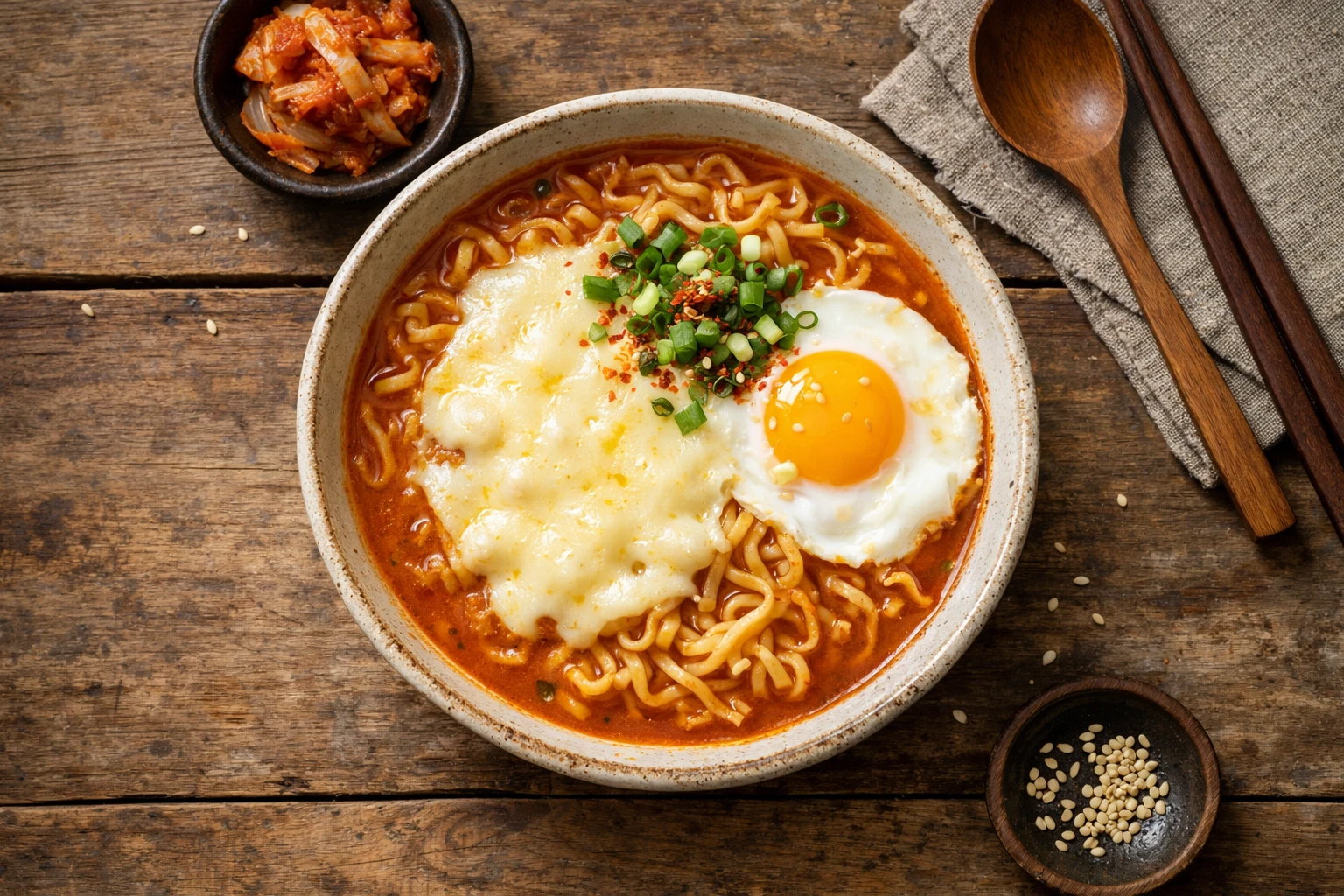
Quick Nutrition Facts
Per 1 Serving (approximately 350g prepared)
| Nutrient | Amount |
|---|---|
| Calories | 550 kcal |
| Protein | 18g |
| Carbohydrates | 65g |
| Fiber | 3g |
| Sugars | 2g |
| Fat | 22g |
| Saturated Fat | 10g |
| Sodium | 1,800mg |
| Cholesterol | 210mg |
| Calcium | 180mg |
| Iron | 3.5mg |
Macronutrient Breakdown
 ChatGPT
  Claude
  AI Mode
  Perplexity
NUTRITIONIST INSIGHT
Instant ramen gets a protein boost from egg and cheese in this viral hack. To make it healthier, use half the seasoning packet (reduces sodium by 900mg), add spinach or bok choy, skip the butter, and pair with kimchi for probiotics and fiber.
Myth Busters
MYTH #1: All Instant Ramen Is Equally Unhealthy
TRUTH: Nutritional quality varies widely. Korean brands often use higher-quality noodles and less sodium than budget varieties. Air-dried noodles are healthier than deep-fried. Adding egg, cheese, and vegetables transforms instant ramen from empty calories to a more balanced meal with protein, calcium, and micronutrients.
MYTH #2: The Cheese Makes It Unhealthy
TRUTH: Cheese adds protein (5-7g), calcium (200mg), and vitamin B12. The real health concerns are excessive sodium (1,800mg = 78% daily limit) and refined carbohydrates (65g), not the cheese. One cheese slice contributes only 80 calories and improves satiety compared to plain ramen.
MYTH #3: Instant Ramen Has No Nutritional Value
TRUTH: Modern instant ramen is often enriched with B vitamins and iron. Combined with egg (13g protein, choline), cheese (calcium, protein), and added vegetables, the upgraded version provides complete protein, essential fats, and micronutrients. It's the sodium and portion control that require attention, not zero nutrition.
MYTH #4: You Should Never Eat Instant Ramen
TRUTH: Frequent consumption (2+ times weekly) is linked to cardiometabolic issues, but occasional enjoyment (once weekly or less) fits balanced diets. The key is upgrading with protein and vegetables, using less seasoning, and treating it as a treat meal rather than a staple.
MYTH #5: The Egg Needs to Be Fully Cooked
TRUTH: Korean-style ramen often features a soft, jammy egg that creates creamy texture. As long as you use pasteurized eggs and bring the mixture to a simmer (165°F/74°C for 1-2 minutes), it's safe. The residual heat continues cooking the egg even after removing from heat.
NutriScore by Health Goals
| Health Goal | NutriScore | Why This Score? |
|---|---|---|
| Weight Loss |  | 550 calories and high sodium make daily consumption problematic. Limit to once weekly, use half portion, skip butter, and add vegetables to reduce calorie density. |
| Muscle Gain |  | Provides 18g protein and 65g carbs for post-workout recovery. Add extra eggs or chicken breast to boost protein to 30g; the sodium aids muscle contraction and hydration. |
| Diabetes Management | | 65g refined carbs spike blood sugar rapidly. Diabetics should use half portion, pair with protein and fiber, and monitor glucose. |
| PCOS Management | | High refined carbs worsen insulin resistance. Choose low-carb noodle alternatives (shirataki, zucchini), increase protein, reduce portion size, and limit to rare occasions. |
| Pregnancy Nutrition | | Provides iron (3.5mg) and protein, but excessive sodium can increase blood pressure risk. Use 1/3 seasoning packet, add greens. |
| Viral/Flu Recovery | | Easy to digest, provides quick energy and hydration. The sodium helps replace electrolytes. Add ginger, garlic, and vegetables for immune-boosting nutrients. |
PERSONALIZED NUTRITION
Track your meals with NutriScan for personalized NutriScores based on your specific health goals!
Blood Sugar Response to Cheese Ramen Upgrade
Understanding how cheese ramen affects blood glucose helps you time consumption and add balancing ingredients for stable energy.
Typical Glucose Response Curve
This chart shows typical blood glucose response for general healthy individuals. Individual responses may vary. Not medical advice.
How to Flatten the Spike
Adding protein and fiber significantly reduces the glucose peak from refined noodles:
- 🥚 Extra eggs (2-3 total) - Increases protein to 25g, slows carb absorption
- 🥬 Leafy greens (bok choy, spinach) - Adds fiber and volume without calories
- 🍄 Mushrooms and bean sprouts - Fiber-rich, low-calorie additions
- 🌶️ Kimchi or sauerkraut - Fermented vegetables provide probiotics and fiber
- 🥜 Sesame oil instead of butter - Healthy fats with better omega ratio
This combination moderates the blood sugar spike, extends satiety, and adds essential micronutrients missing from plain instant ramen.
Cultural Significance
Instant ramen represents one of the most influential food inventions of the 20th century, with the Korean cheese upgrade going viral globally through social media.
Instant Ramen History:
- Invented in 1958 by Momofuku Ando in Japan during post-war food scarcity
- Global consumption exceeds 100 billion servings annually
- Affordable, shelf-stable, and requires only boiling water
- Became college dorm staple and poverty meal across cultures
Korean Ramyeon Culture:
- South Korea is world's largest per-capita instant noodle consumer (74 servings/person/year)
- "Ramyeon" distinct from Japanese ramen—spicier, chewier noodles
- Late-night ramyeon runs are social ritual among Korean youth
- Cheese became popular topping in 2010s, combining Western comfort with Korean spice
- K-dramas and variety shows popularized creative ramyeon recipes
TikTok Viral Evolution:
- Cheese ramen exploded 2020-2021 with millions of #cheeseram views
- Users added butter, egg, mozzarella, and gochugaru variations
- Spawned international adaptations: carbonara ramen, cacio e pepe ramen, mac-and-cheese ramen
- Represents Gen-Z fusion cooking: accessible, visual, culturally hybrid
Compare & Substitute
Cheese Ramen Upgrade vs Similar Quick Meals (Per Serving)
| Nutrient | 🍜 Cheese Ramen Upgrade | 🍝 Instant Mac & Cheese | 🍲 Canned Soup | 🥡 Takeout Pad Thai |
|---|---|---|---|---|
| Calories | 550 kcal | 400 kcal | 220 kcal | 680 kcal |
| Carbs | 65g | 48g | 28g | 84g |
| Fiber | 3g | 2g | 2g | 4g |
| Protein | 18g | 12g | 8g | 22g |
| Fat | 22g | 16g | 6g | 28g |
| Sodium | 1,800mg | 760mg | 1,200mg | 1,400mg |
| Prep Time | 5 min | 8 min | 3 min | 0 min (delivery) |
| Best For | Comfort, protein boost | Lower sodium | Low-calorie, simple | Higher protein |
Frequently Asked Questions
Is cheese ramen upgrade good for weight loss?
Not ideal for daily weight loss diets at 550 calories, but occasional consumption is manageable. Reduce to half portion (275 calories); use only 1/3 of seasoning packet; skip butter (saves 100 calories); add 2 cups vegetables (bok choy, mushrooms, carrots) for volume; limit to once weekly maximum. The protein from egg and cheese provides satiety, but sodium causes temporary water retention.
Can diabetics eat cheese ramen?
Diabetics should approach with caution. The 65g refined carbs cause rapid blood sugar spikes. If consuming, use half portion (32g carbs); cook vegetables first then add noodles; include 2 eggs for 20g protein; pair with fiber-rich kimchi to slow glucose absorption; test blood sugar 2 hours after eating. Better alternatives: shirataki noodles, zucchini noodles, or kelp noodles with the same toppings.
How much protein is in cheese ramen upgrade?
Approximately 18 grams from egg (6g), cheese (5g), and noodles (7g). Boost to 25-30g by adding second egg, grilled chicken breast, tofu cubes, or edamame. For muscle gain, add 100g chicken breast (31g protein total) and reduce noodle portion to balance macros.
Why is Korean cheese ramen so popular on TikTok?
The visual appeal drives virality: melted cheese pull, creamy yellow-orange color, steam rising from the bowl, and egg yolk mixing create satisfying ASMR content. It's incredibly easy (5 minutes), requires minimal ingredients, combines nostalgic comfort food (cheese, carbs, butter) with exotic Korean flavors, and delivers rich umami taste. The low barrier to entry means anyone can recreate and customize it.
How do you make the viral cheese ramen upgrade?
Boil 2 cups water and cook instant ramen noodles 3-4 minutes until tender. Drain most water leaving 2-3 tablespoons liquid. Return to low heat; add seasoning packet (or half for less sodium), 1 tablespoon butter, and 1 cheese slice. Crack egg directly into pot. Stir vigorously 1-2 minutes until cheese melts and egg cooks through, creating creamy sauce. Serve immediately; garnish with green onions or sesame seeds optional.
Is instant ramen bad for you?
Frequent consumption (2+ times weekly) is associated with increased obesity, cardiovascular disease risk, and metabolic syndrome due to high sodium, refined carbs, and saturated fats from frying. Occasional enjoyment (once weekly or less) within balanced diets is acceptable. Upgrade by using half seasoning packet; adding vegetables, eggs, and lean protein; choosing air-dried over fried noodles; and treating as comfort food, not staple.
What cheese works best for ramen?
American cheese slices melt smoothly and create signature creamy texture seen in viral videos. Alternatives: mozzarella (better cheese pull, milder flavor), cheddar (sharper taste, more protein), cream cheese (ultra-creamy, rich), or Korean cheese slices designed specifically for ramyeon. Avoid pre-shredded cheese (contains anti-caking agents that prevent smooth melting). Use 1 slice for balance; 2+ slices add 160+ calories.
Can I make cheese ramen healthier without losing flavor?
Yes, with strategic swaps: use half the noodles and replace with spiralized zucchini or cabbage (saves 200 calories, adds fiber); use 1/3 seasoning packet plus low-sodium chicken broth; skip butter and use 1 teaspoon sesame oil; add garlic, ginger, and gochugaru for flavor without sodium; pile in bok choy, mushrooms, and bean sprouts; top with soft-boiled egg instead of scrambled. Final result: 320 calories, 800mg sodium, high fiber.


Similar Nutritious Fruits
4505 Chicharrones Classic Chili Salt
7 Eleven Japan Crispy Corn Cheese
Explore More Nutrition Tools & Resources
AI Calorie Counter App - Snap a Photo, Get Macros
AI Nutritionist App That Reads Your Logged Meals
Best Protein Supplements for Women
Bulking Meal Plan App That Sets Your Surplus
ChatGPT Calorie Counter Alternative That Keeps the Total
ChatGPT Diet Plan Alternative That Tracks What You Eat
ChatGPT Weight Loss Coach Alternative With a Food Log
Fast Food Calorie Counter App That Reads the Tray
Free Calorie Tracker App with AI Photo Scans | NutriScan
Indian Diet Plan App With Veg and Non Veg Meals
Indian Food Calorie Calculator - Get Instant Nutrition Facts for Desi Meals — 2026
Intermittent Fasting for Women, Timer and Meal Log App
Intermittent Fasting Tracker App - Free Fasting Timer
Macro Tracker App That Fills the Numbers From a Photo
Mediterranean Diet Meal Plan App That Counts the Oil
Micronutrient Tracker App for Vitamins and Minerals
MyFitnessPal Alternative That Stays Free | NutriScan
NutriScore App: A Free Grade on Every Meal | NutriScan
Nutrition Label Scanner App for the Amount You Ate
Second Trimester Protein Guide
Vegetarian Meal Plan App With a Protein Target
Voice Calorie Counter - Speak to Track Meals Hands-Free
Water and Calorie Tracker App - Free Water Log