Chicken Breast Calories: Nutrition and Health Benefits
 ChatGPT
  Claude
  AI Mode
  Perplexity
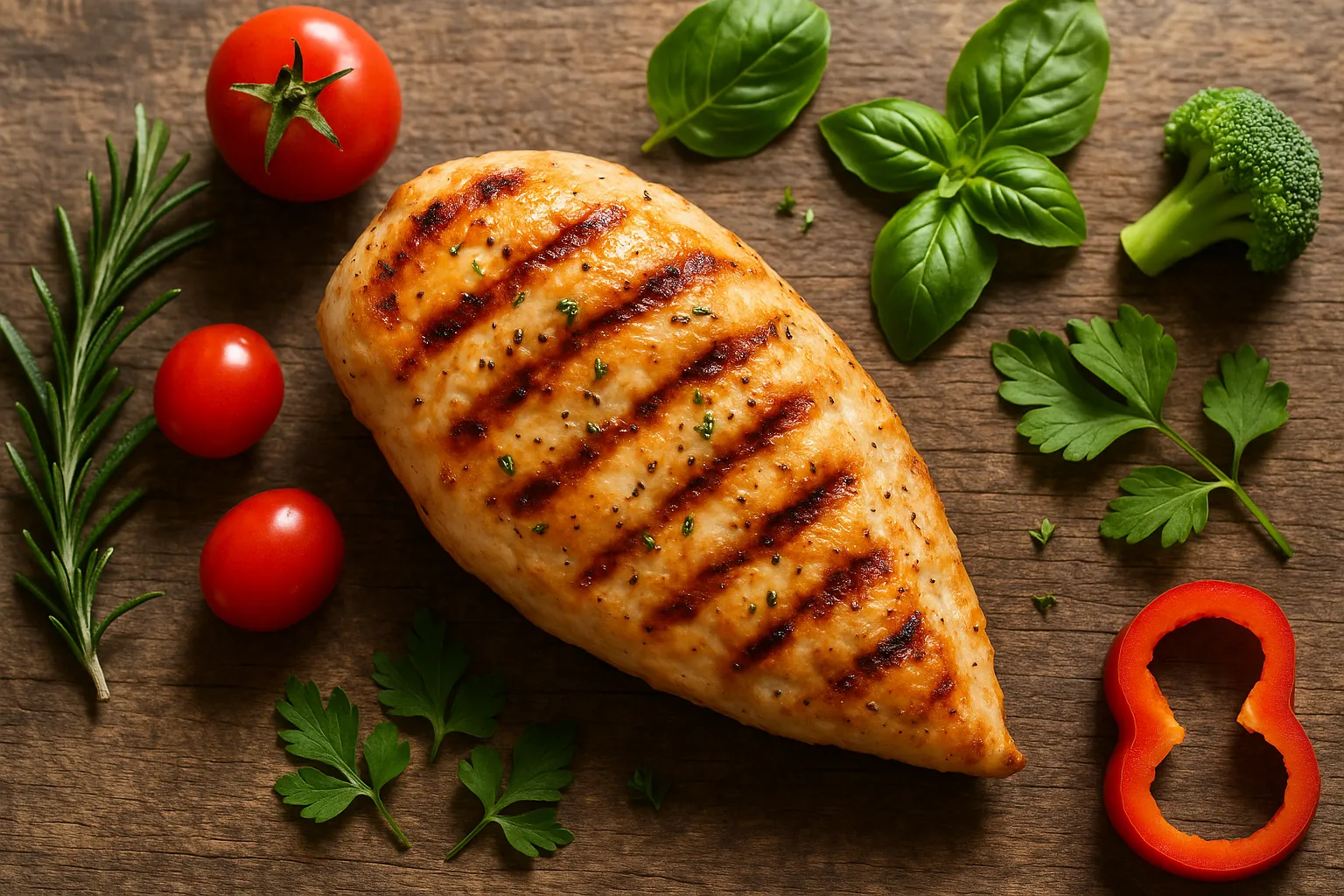
 Chicken Breast: 165 calories, 0 g carbs, 31 g protein and 3.6 g fat per 100g (3.5oz) Cooked, Skinless.
Quick Nutrition Facts
Per 100g (3.5oz) Cooked, Skinless
| Nutrient | Amount |
|---|---|
| Calories | 165 kcal |
| Protein | 31g |
| Carbohydrates | 0g |
| Fat | 3.6g |
| Saturated Fat | 1g |
| Cholesterol | 85mg |
| Niacin (B3) | 14.8mg |
| Vitamin B6 | 0.9mg |
| Selenium | 27.6mcg |
| Phosphorus | 228mg |
Macronutrient Breakdown
NUTRITIONIST INSIGHT
Chicken breast is a complete protein source with all nine essential amino acids and PDCAAS score close to 1.0, making it one of the highest quality proteins available. A 6oz chicken breast (common restaurant size) provides 54g protein—enough to support muscle recovery and fullness for hours.
See all 26 compared in the Chicken Calories by Cut and Dish chart.
Chicken Breast Calories by Portion
Cooked skinless chicken breast is 165 kcal per 100 g, so what lands on your plate depends almost entirely on what the piece weighs.
| Portion | Weight | Calories | Protein |
|---|---|---|---|
| 3 oz cooked (deck of cards) | 85 g | 140 kcal | 26 g |
| 100 g cooked, skinless | 100 g | 165 kcal | 31 g |
| 4 oz cooked (small breast) | 113 g | 187 kcal | 35 g |
| 1 cup diced, cooked | 140 g | 231 kcal | 43 g |
| 6 oz cooked (medium breast) | 170 g | 280 kcal | 54 g |
| 8 oz cooked (restaurant size) | 227 g | 375 kcal | 71 g |
| 100 g raw, skinless | 100 g | 120 kcal | 22.5 g |
Two things move the number. Raw breast is 120 kcal per 100 g because about a quarter of its weight is water that cooks off, so the same piece reads 165 kcal per 100 g once it comes out of the pan. Weigh raw or weigh cooked, just pick one and stay consistent, because logging a raw weight against cooked numbers overstates a 6 oz breast by roughly 70 calories.
Cooking method is the second lever. Grilling, baking, and poaching keep you on the table above. Leaving the skin on adds 50 to 100 calories per breast, and deep frying adds another 100 to 200 calories from absorbed oil, which is where most surprise calories in a chicken meal come from.
For other lean protein at a similar calorie cost, compare salmon and boiled eggs.
Myth Busters
MYTH #1: All Chicken Breasts Are the Same Size
TRUTH: Restaurant chicken breasts are often 8-10oz (250-300g), providing 300-375 calories and 54-78g protein—2-3 times the standard 3-4oz serving size. A standard serving is 3oz cooked, about the size of a deck of cards or your palm. Use a food scale to track accurately.
MYTH #2: Chicken Breast Is Too High in Cholesterol
TRUTH: Chicken breast contains only 85mg cholesterol per 100g serving, which is moderate. Unlike saturated fat (only 1g per 100g), dietary cholesterol has minimal impact on blood cholesterol for most people. Skinless, grilled chicken breast is heart-healthy.
MYTH #3: White Meat and Dark Meat Have Same Protein
TRUTH: Chicken breast (white meat) has more protein (31g vs 26g per 100g) and significantly less fat (3.6g vs 11g) than thigh (dark meat). While both are nutritious, breast is superior for lean protein and weight loss goals.
MYTH #4: Grilled Chicken Is Always Healthy
TRUTH: Grilling method matters. Dry, overcooked chicken loses moisture and nutrients. Charred portions contain HCAs (heterocyclic amines) linked to cancer risk. Best practice: Marinate with herbs/lemon, cook to 165°F internal temp, avoid charring, let rest 5 minutes before cutting.
MYTH #5: Chicken Breast Has No Fat
TRUTH: Skinless chicken breast contains 3.6g fat per 100g, including small amounts of omega-6 fatty acids. While very lean compared to other meats, it's not fat-free. Skin adds 50-100 extra calories and 7-10g fat per breast—remove it for weight loss.
MYTH #6: Organic/Free-Range Chicken Is More Protein
TRUTH: Protein content is virtually identical (30-32g per 100g) regardless of farming method. Organic and free-range chickens may have slightly better omega-3 fatty acid profiles but same protein. Choose based on animal welfare and taste preference, not protein content.
NutriScore by Health Goals
| Health Goal | NutriScore | Why This Score? |
|---|---|---|
| Weight Loss |  | 165 calories with 31g protein promotes satiety, preserves lean muscle, high thermic effect (burns 20-30% of calories during digestion). Perfect for calorie deficit. |
| Muscle Gain | | Complete protein with all essential amino acids, especially leucine for muscle protein synthesis. 6oz provides 54g protein for post-workout recovery. |
| Diabetes Management | | Zero carbs, no blood sugar impact. High protein stabilizes glucose levels and improves insulin sensitivity. |
| PCOS Management | | Lean protein supports insulin resistance management, hormone balance, and maintains lean body mass crucial for PCOS. |
| Pregnancy Nutrition | | High-quality protein for fetal development, B vitamins for neural tube health, selenium for immune function. Cook to 165°F for safety. |
| Viral/Flu Recovery | | Easy to digest protein supports immune function and tissue repair. Selenium and B vitamins enhance immune response. |
PERSONALIZED NUTRITION
Track your meals with NutriScan for personalized NutriScores based on your specific health goals!
Blood Sugar Response to Chicken Breast
Chicken breast has virtually no impact on blood glucose levels due to zero carbohydrate content, making it ideal for blood sugar management.
Typical Glucose Response Curve
This chart shows minimal blood glucose response for lean protein. Individual responses may vary. Not medical advice.
How Chicken Breast Helps Stabilize Blood Sugar
Pure protein sources like chicken breast help stabilize blood sugar when paired with carbohydrates:
- 🍚 Pair with rice or pasta - Protein slows carb digestion, reducing glucose spikes
- 🥔 Add to potato dishes - Balances the high GI of potatoes
- 🥗 Include in salads with dressing - Healthy fats + protein = sustained energy
- 🍞 Sandwich with whole grain bread - Complete meal with balanced macros
This combination stabilizes glucose levels, extends satiety, and prevents energy crashes common with high-carb-only meals.
Cultural Significance
Chicken is the most widely consumed poultry globally, with chicken breast being the preferred cut in many Western and health-conscious cultures.
In India:
- Tandoori chicken breast marinated in yogurt and spices is a protein-rich delicacy
- Chicken tikka, murgh malai, and grilled chicken breast common in urban diet plans
- Increasing preference for lean cuts in fitness and weight loss communities
- Used in traditional medicine (Ayurveda) for strength and recovery
Global Impact:
- Most consumed meat globally (over 130 million tons annually)
- Affordable lean protein accessible across socioeconomic levels
- Versatile across cuisines: grilled, baked, stir-fried, curried, roasted
- Sustainable protein with lower environmental impact than red meat
Compare & Substitute
Chicken Breast vs Similar Proteins (Per 100g Cooked)
| Nutrient | 🍗 Chicken Breast | 🦃 Turkey Breast | 🐟 Cod Fish | 🥩 Lean Beef (Sirloin) |
|---|---|---|---|---|
| Calories | 165 kcal | 135 kcal | 82 kcal | 183 kcal |
| Protein | 31g | 30g | 18g | 26g |
| Fat | 3.6g | 1g | 0.7g | 9g |
| Carbs | 0g | 0g | 0g | 0g |
| Iron | 1mg | 1.4mg | 0.4mg | 2.9mg |
| Selenium | 27.6mcg | 30.8mcg | 33.1mcg | 26.1mcg |
| Niacin (B3) | 14.8mg | 11.8mg | 2.1mg | 6.2mg |
| Best For | Muscle gain, versatile cooking | Leaner option, Thanksgiving | Lowest calorie, omega-3 | Higher iron, red meat lovers |
Frequently Asked Questions
How many calories are in a large chicken breast?
A large 8oz (227g) cooked chicken breast has about 375 calories and 71g protein, from the base figure of 165 calories per 100g.
Calories by breast size (cooked, skinless):
- Small breast (4oz/113g): 187 calories, 35g protein
- Medium breast (6oz/170g): 280 calories, 54g protein
- Large breast (8oz/227g): 375 calories, 71g protein
- Restaurant portion (10oz/283g): about 467 calories, 88g protein
Grilled, baked or poached adds nothing, so a grilled large breast still sits near 375 calories. Deep frying adds 100 to 200 calories from absorbed oil, and leaving the skin on adds 50 to 100 calories per breast.
How much protein is in chicken breast?
A typical 6oz (170g) cooked chicken breast has about 54g of protein, and 100g (3.5oz) of cooked skinless breast has 31g. It is complete protein with all nine essential amino acids, and grilling, baking or poaching does not change the amount.
Protein by portion:
- Small breast (4oz/113g) = 35g protein, 187 calories
- Medium breast (6oz/170g) = 54g protein, 280 calories
- Large breast (8oz/227g) = 71g protein, 375 calories
The protein in chicken breast has a PDCAAS (Protein Digestibility-Corrected Amino Acid Score) close to 1.0, indicating excellent digestibility and amino acid profile.
Is chicken breast good for weight loss?
Yes, chicken breast is excellent for weight loss. With only 165 calories and 31g protein per 100g, it's one of the most satiating foods you can eat.
Weight loss benefits:
- High protein promotes fullness and reduces overall calorie intake
- Thermic effect: Burns 20-30% of calories during digestion (vs 5-10% for carbs/fats)
- Preserves lean muscle mass during calorie restriction
- Zero carbs help control insulin and fat storage
- Versatile preparation methods keep meals interesting
Best practices: Consume 4-6oz per meal, grilled or baked without added oils. Pair with non-starchy vegetables and small portions of complex carbs.
How many calories in chicken breast per serving?
A serving of chicken breast is 3 to 4 oz (85 to 113 g) cooked, which is 140 to 187 calories and 26 to 35 g protein. That is about the size of a deck of playing cards or the palm of your hand.
The portion confusion problem: Restaurant and store-bought chicken breasts are often 8-10oz (227-283g), which is 2-3 servings. This can lead to unintentional overconsumption of protein and calories.
How to measure accurately:
- Use a food scale (most accurate)
- Visual: Palm of your hand or deck of cards
- 1 medium chicken breast ≈ 6oz raw, 4.5oz cooked (weight loss from cooking)
For muscle gain, 6-8oz per meal is appropriate. For weight loss, stick to 4-5oz.
Does chicken breast raise cholesterol?
Chicken breast contains 85mg of cholesterol per 100g serving, which is moderate (daily limit: 300mg for healthy individuals, 200mg for those with heart disease).
The truth about dietary cholesterol: For most people (75-85% of population), dietary cholesterol has minimal impact on blood cholesterol levels. Saturated fat (only 1g per 100g in chicken breast) has a much larger effect.
Heart-healthy guidelines:
- Remove skin (adds 50-100 calories and 7-10g fat per breast)
- Avoid frying in saturated fats
- Grill, bake, or air fry instead
- Pair with fiber-rich vegetables to help reduce cholesterol absorption
Skinless, grilled chicken breast is considered heart-healthy and suitable for cholesterol management.
How should I cook chicken breast to keep it healthy?
Healthiest cooking methods (in order):
- Grilling - No added fat, smoky flavor, 165-180 calories per 100g
- Baking - Even cooking, minimal fat, easy meal prep
- Air frying - Crispy texture with 70-80% less oil than deep frying
- Poaching - Moist, tender, zero added calories
- Steaming - Retains nutrients, very low calorie
Avoid: Deep frying adds 100-200 calories from oil absorption and creates harmful compounds.
Pro tips for juicy chicken:
- Marinate with yogurt, lemon, herbs (tenderizes and adds flavor)
- Don't overcook: Internal temp 165°F (74°C) is safe
- Let rest 5 minutes before cutting to retain juices
- Avoid charring (reduces HCA formation linked to cancer)
Is chicken breast better than thigh for protein?
Yes, chicken breast has more protein (31g vs 26g per 100g) and significantly less fat (3.6g vs 11g) than chicken thigh.
Comparison:
| Factor | Chicken Breast | Chicken Thigh |
|---|---|---|
| Protein | 31g/100g | 26g/100g |
| Fat | 3.6g/100g | 11g/100g |
| Calories | 165 kcal | 209 kcal |
| Iron | 1mg | 1.3mg |
| Flavor | Mild | Rich, juicy |
| Best for | Weight loss, muscle gain, lean diets | Flavor lovers, higher iron needs |
Bottom line: For maximum protein with minimum calories and fat, breast wins. For taste, moisture, and slightly higher iron content, thighs are better. Both are nutritious—choose based on your goals.
Can I eat chicken breast every day?
Yes, you can eat chicken breast daily as part of a balanced diet, but variety is important for complete nutrition.
Daily consumption guidelines:
- 4-6oz per day is safe and beneficial for most people
- Provides essential amino acids, B vitamins, selenium
- Rotate with other proteins 2-3 times per week: fish (omega-3s), legumes (fiber), eggs (choline), lean beef (iron, B12)
Watch for:
- Preparation variety to avoid taste fatigue
- Sodium in pre-marinated or deli chicken products
- Complete nutrition: Add vegetables, whole grains, healthy fats
Track your intake with NutriScan app to ensure balanced macros and micronutrients.
How do I prevent dry chicken breast?
Dry chicken breast happens from overcooking. Here's how to keep it juicy:
Before cooking:
- Brine in saltwater (15-30 minutes) or marinate in yogurt/lemon
- Pound to even thickness for uniform cooking
- Don't skip fat entirely: Light brush of olive oil helps
During cooking:
- Cook to exactly 165°F (74°C) internal temp—use meat thermometer
- Don't overcook: 5-7 minutes per side on medium-high heat
- Keep covered while resting to trap steam
After cooking:
- Let rest 5 minutes before cutting (juices redistribute)
- Slice against the grain for tender bites
- Add sauce or dressing if slightly overcooked
How many calories are in a chicken breast?
Cooked skinless chicken breast has 165 calories per 100 g. It also has 31 g of protein and 3.6 g of fat per 100 g.




Similar Nutritious Proteins
4505 Chicharrones Classic Chili Salt
7 Eleven Japan Crispy Corn Cheese
Explore More Nutrition Tools & Resources
AI Calorie Counter App - Snap a Photo, Get Macros
AI Nutritionist App That Reads Your Logged Meals
Best Protein Supplements for Women
Bulking Meal Plan App That Sets Your Surplus
ChatGPT Calorie Counter Alternative That Keeps the Total
ChatGPT Diet Plan Alternative That Tracks What You Eat
ChatGPT Weight Loss Coach Alternative With a Food Log
Fast Food Calorie Counter App That Reads the Tray
Free Calorie Tracker App with AI Photo Scans | NutriScan
Indian Diet Plan App With Veg and Non Veg Meals
Indian Food Calorie Calculator - Get Instant Nutrition Facts for Desi Meals — 2026
Intermittent Fasting for Women, Timer and Meal Log App
Intermittent Fasting Tracker App - Free Fasting Timer
Macro Tracker App That Fills the Numbers From a Photo
Mediterranean Diet Meal Plan App That Counts the Oil
Micronutrient Tracker App for Vitamins and Minerals
MyFitnessPal Alternative That Stays Free | NutriScan
NutriScore App: A Free Grade on Every Meal | NutriScan
Nutrition Label Scanner App for the Amount You Ate
Second Trimester Protein Guide
Vegetarian Meal Plan App With a Protein Target
Voice Calorie Counter - Speak to Track Meals Hands-Free
Water and Calorie Tracker App - Free Water Log