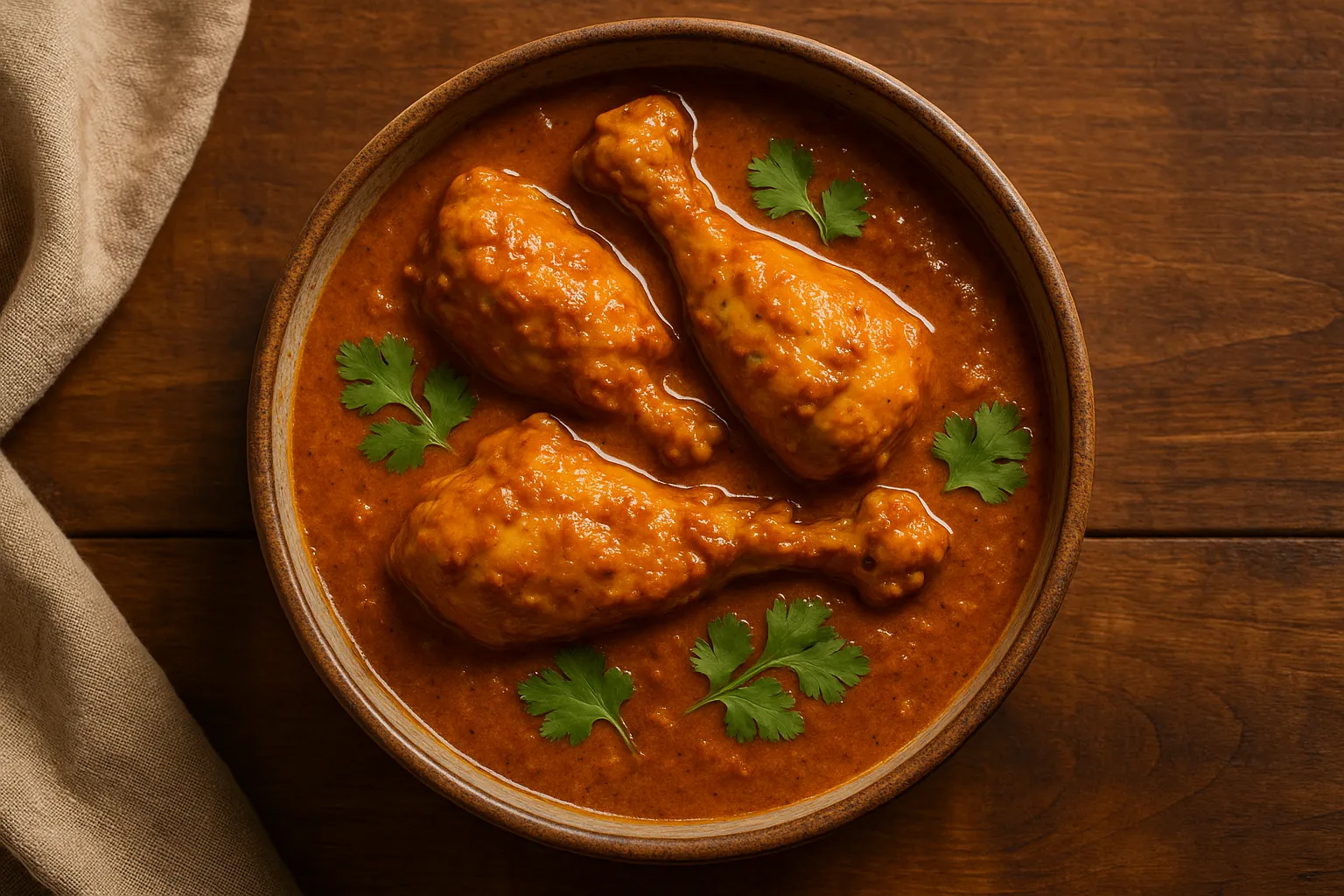
Chicken Curry: Calories, Nutrition and Health Benefits
A protein-rich Indian staple packed with anti-inflammatory spices, complete amino acids, and versatile nutrition for every health goal.
Quick Nutrition Facts
Per 1 Serving (200g)
| Nutrient | Amount |
|---|---|
| Calories | 250 kcal |
| Protein | 28g |
| Carbohydrates | 8g |
| Fiber | 2g |
| Sugars | 3g |
| Fat | 12g |
| Iron | 1.8mg |
| Zinc | 2.5mg |
| Vitamin B6 | 0.6mg |
| Niacin | 8mg |
Macronutrient Breakdown
 ChatGPT
  Claude
  AI Mode
  Perplexity
NUTRITIONIST INSIGHT
Chicken curry combines complete protein with anti-inflammatory spices like turmeric and ginger. The high protein-to-calorie ratio makes it ideal for muscle gain while controlling fat gain.
Myth Busters
MYTH #1: Chicken Curry Is Too High in Calories for Weight Loss
TRUTH: Prepared with minimal oil and chicken breast, curry has only 125 calories per 100g with 14g protein. High protein increases thermogenesis and satiety, making it excellent for weight loss when portions are controlled.
MYTH #2: All Curry Is High in Fat
TRUTH: Fat content depends entirely on preparation. Restaurant curries with cream and excess oil can have 15-20g fat per serving. Home-cooked versions with 1-2 tsp oil have only 6-8g fat per serving, mostly from healthy chicken fat.
MYTH #3: Diabetics Should Avoid Curry Due to Hidden Sugars
TRUTH: Traditional chicken curry has minimal carbohydrates (8g per serving). The high protein actually helps stabilize blood sugar. Avoid commercial curry pastes with added sugar; use fresh spices instead.
MYTH #4: Spices in Curry Cause Inflammation
TRUTH: The opposite is true. Turmeric contains curcumin with powerful anti-inflammatory properties. Ginger, coriander, and cumin in curry support digestion and reduce inflammation markers.
MYTH #5: Chicken Curry Is Unhealthy Fast Food
TRUTH: Homemade chicken curry is a nutrient-dense meal with complete protein, B vitamins, iron, zinc, and antioxidant spices. Restaurant versions may have excess oil; home preparation offers full nutritional control.
NutriScore by Health Goals
| Health Goal | NutriScore | Why This Score? |
|---|---|---|
| Weight Loss |  | High protein (28g/serving) increases satiety and thermogenesis. Prepare with minimal oil (1-2 tsp) for best results. |
| Muscle Gain | | Complete amino acid profile, 28g protein per serving, ideal post-workout meal for recovery and growth. |
| Diabetes Management | | High protein slows carb absorption, minimal carbs (8g), stabilizes blood sugar. Avoid potato additions. |
| PCOS Management | | High protein improves insulin sensitivity, anti-inflammatory spices support hormonal balance, moderate fat from healthy sources. |
| Pregnancy Nutrition | | Complete protein for fetal growth, iron prevents anemia, B vitamins support development, easily digestible. |
| Viral/Flu Recovery | | Easy to digest protein, warming spices support immunity, zinc boosts immune function, nutrient-dense for recovery. |
PERSONALIZED NUTRITION
Track your meals with NutriScan for personalized NutriScores based on your specific health goals!
Blood Sugar Response to Chicken Curry
Understanding how chicken curry affects blood glucose demonstrates its benefits for metabolic health.
Typical Glucose Response Curve
*This chart shows typical blood glucose response for general healthy individuals. Individual responses may vary. Not medical advice.*
How to Optimize Blood Sugar with Curry
Protein-rich meals like chicken curry naturally slow carbohydrate absorption:
- 🫓 Whole wheat roti (1-2 pieces) - Fiber slows glucose release
- 🍚 Brown rice (1/2 cup) - Lower GI than white rice
- 🥗 Side salad with raita - Additional fiber and probiotics
- 🥒 Cucumber or onion salad - Minimal carbs, high volume
The high protein content (28g per serving) creates a gentle glucose curve compared to carb-heavy meals.
Cultural Significance
Chicken curry represents the rich culinary fusion of Mughal, British colonial, and regional Indian traditions.
In India:
- Each region has distinct curry styles: Punjabi (rich, creamy), Hyderabadi (coconut-based), Bengali (mustard-flavored), Goan (vinegar and kokum)
- Central to celebrations, family gatherings, and Sunday meals
- Ayurvedic perspective: warming spices aid digestion and circulation
- Modern Indian households adapt recipes for health-conscious versions
Global Evolution:
- British colonizers created "curry powder" to replicate Indian flavors
- Spread globally: Thai curry, Japanese curry, Caribbean curry with local adaptations
- One of the most popular dishes worldwide with regional interpretations
Compare & Substitute
Chicken Curry vs Similar Protein Dishes (Per 100g)
| Nutrient | 🍛 Chicken Curry | 🍗 Tandoori Chicken | 🥘 Paneer Tikka Masala | 🍖 Mutton Curry |
|---|---|---|---|---|
| Calories | 125 kcal | 105 kcal | 160 kcal | 185 kcal |
| Protein | 14g | 18g | 8g | 12g |
| Carbs | 4g | 2g | 6g | 5g |
| Fiber | 1g | 0.5g | 1.2g | 0.8g |
| Fat | 6g | 3g | 12g | 14g |
| Iron | 0.9mg | 1.2mg | 0.8mg | 2.5mg |
| Zinc | 1.2mg | 1.5mg | 1.8mg | 3.2mg |
| Best For | Balanced nutrition | Maximum protein | Vegetarian option | High iron needs |
Frequently Asked Questions
Is chicken curry good for weight loss?
Yes, chicken curry supports weight loss when prepared healthily. High protein (28g per serving) increases satiety and boosts metabolism through thermogenesis.
Best practices: Use chicken breast (not thigh); limit oil to 1-2 tsp; use tomato-based gravy (avoid cream); pair with 1 roti or 1/2 cup rice; eat for lunch for sustained satiety; include vegetable salad to increase meal volume without calories.
Can diabetics eat chicken curry?
Chicken curry is excellent for diabetics. With only 8g carbs and 28g protein per serving, it stabilizes blood sugar effectively.
Tips for diabetics: Avoid potato in curry; limit gravy consumption (consume more chicken pieces); pair with whole wheat roti (1-2 pieces) or brown rice (1/2 cup); eat protein first, then carbs; monitor blood sugar 2 hours after to optimize portions; choose homemade over restaurant versions to control ingredients.
How much protein is in chicken curry?
One serving (200g) of chicken curry contains 28 grams of protein with all essential amino acids. Protein content varies by chicken-to-gravy ratio.
Maximize protein: Choose pieces with more chicken, less gravy; use chicken breast (higher protein-to-fat ratio); add extra chicken to gravy; pair with protein-rich sides like dahi or paneer salad.
What are the main health benefits of chicken curry?
Key Benefits:
- Complete Protein: All essential amino acids for muscle maintenance and growth
- Anti-Inflammatory: Turmeric, ginger, coriander reduce inflammation markers
- Micronutrients: Iron for oxygen transport; zinc for immune function; B vitamins for energy
- Satiety: High protein keeps you full for 4-6 hours
- Metabolic Support: Protein increases calorie burn through thermogenesis
- Digestive Health: Spices like cumin, coriander aid digestion
When is the best time to eat chicken curry?
Depends on your goal:
- Weight Loss: Lunch (sustained satiety prevents afternoon snacking and controls dinner portions).
- Muscle Gain: Post-workout (within 2 hours) or dinner for overnight muscle recovery.
- Diabetes: Lunch or early dinner (6-7 PM) with controlled carb portions.
- General Health: Any main meal; avoid late night (after 9 PM) for better digestion and sleep.
IMPORTANT NOTE
Heavy curry meals late at night may cause acid reflux. Eat dinner 2-3 hours before sleep.
Is chicken curry high in calories?
Calories vary by preparation:
- Homemade (minimal oil, tomato base): 125 calories per 100g
- Restaurant (excess oil, cream): 200-300 calories per 100g
- Butter chicken (cream, butter): 250-350 calories per 100g
Lower calorie tips: Use chicken breast; measure oil (1-2 tsp for entire curry); use tomatoes and yogurt for gravy base; avoid cream and butter; increase spices for flavor without calories; add vegetables (bell peppers, tomatoes) to increase volume.




Similar Nutritious Foods
4505 Chicharrones Classic Chili Salt
7 Eleven Japan Crispy Corn Cheese
Explore More Nutrition Tools & Resources
AI Calorie Counter App - Snap a Photo, Get Macros
AI Nutritionist App That Reads Your Logged Meals
Best Protein Supplements for Women
Bulking Meal Plan App That Sets Your Surplus
ChatGPT Calorie Counter Alternative That Keeps the Total
ChatGPT Diet Plan Alternative That Tracks What You Eat
ChatGPT Weight Loss Coach Alternative With a Food Log
Fast Food Calorie Counter App That Reads the Tray
Free Calorie Tracker App with AI Photo Scans | NutriScan
Indian Diet Plan App With Veg and Non Veg Meals
Indian Food Calorie Calculator - Get Instant Nutrition Facts for Desi Meals — 2026
Intermittent Fasting for Women, Timer and Meal Log App
Intermittent Fasting Tracker App - Free Fasting Timer
Macro Tracker App That Fills the Numbers From a Photo
Mediterranean Diet Meal Plan App That Counts the Oil
Micronutrient Tracker App for Vitamins and Minerals
MyFitnessPal Alternative That Stays Free | NutriScan
NutriScore App: A Free Grade on Every Meal | NutriScan
Nutrition Label Scanner App for the Amount You Ate
Second Trimester Protein Guide
Vegetarian Meal Plan App With a Protein Target
Voice Calorie Counter - Speak to Track Meals Hands-Free
Water and Calorie Tracker App - Free Water Log