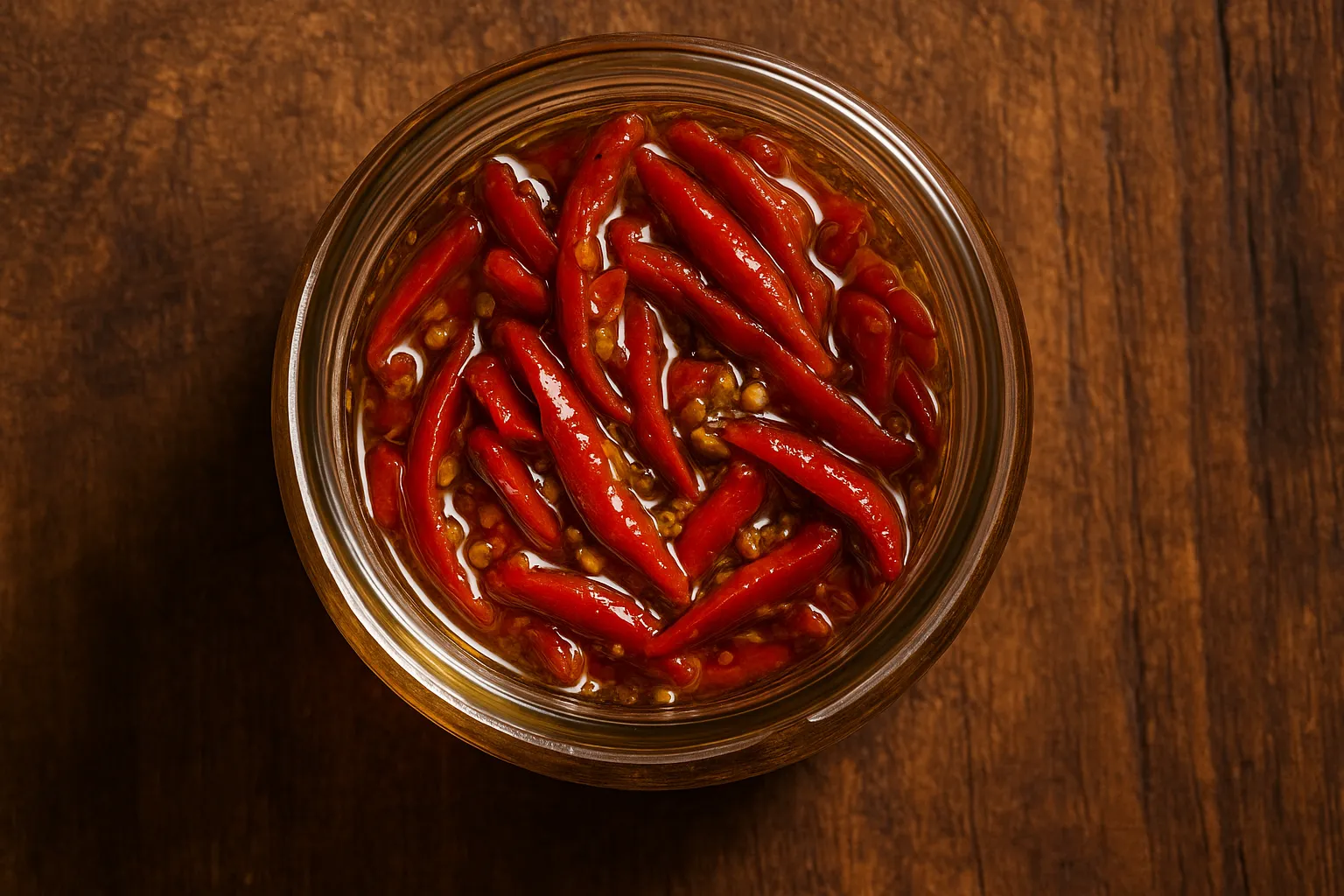
Chilli Pickle: Calories, Nutrition and Health Benefits
A spicy, tangy condiment packed with vitamin C, capsaicin, and probiotics that boost metabolism and aid digestion.
Quick Nutrition Facts
Per 1 Serving (30g)
| Nutrient | Amount |
|---|---|
| Calories | 28 kcal |
| Protein | 0.6g |
| Carbohydrates | 2.1g |
| Fiber | 0.9g |
| Sugars | 0.3g |
| Fat | 0.4g |
| Sodium | 210mg |
| Vitamin C | 45mg |
| Potassium | 95mg |
| Iron | 0.4mg |
Macronutrient Breakdown
 ChatGPT
  Claude
  AI Mode
  Perplexity
NUTRITIONIST INSIGHT
Chilli pickle's capsaicin content can boost your metabolism by 4-5%, while the fermentation provides beneficial probiotics for gut health. One of the lowest-calorie condiments to flavor meals without adding calories.
Myth Busters
MYTH #1: Spicy Food Damages the Stomach
TRUTH: Capsaicin doesn't damage stomach lining; it actually promotes digestive enzymes and improves blood flow. The burning sensation is neurological, not actual damage.
MYTH #2: Pickles Are Only Salt and Sodium
TRUTH: While preservative salt is present, fermented chilli pickles provide vitamin C (150% of serving), probiotics, and capsaicin. The fermentation process enhances nutrient bioavailability and creates beneficial microbes.
MYTH #3: Spicy Food Always Causes Acid Reflux
TRUTH: Capsaicin doesn't directly cause acid reflux in most people. If you're sensitive, small amounts with meals are generally safe. The spice actually aids digestion for many.
MYTH #4: Pickle Brine Cancels All Health Benefits
TRUTH: The brine in fermented pickles contains beneficial lactic acid bacteria (probiotics), increases vitamin K2, and improves mineral absorption. The salt serves as a natural preservative without canceling nutritional value.
MYTH #5: Chilli Pickle Is Only for Flavor, Not Nutrition
TRUTH: Chilli pickle provides significant vitamin C (45mg per 30g), capsaicin for metabolism boost, antimicrobial compounds, and fermentation probiotics. It's a functional food that adds both taste and health benefits.
MYTH #6: All Pickles Have Equal Sodium Content
TRUTH: Fermented chilli pickles typically have 200-250mg sodium per serving, which is moderate. Oil-based or vinegar pickles vary widely. Homemade versions can control sodium content to your preference.
NutriScore by Health Goals
| Health Goal | NutriScore | Why This Score? |
|---|---|---|
| Weight Loss |  | Only 28 calories, zero sugar, capsaicin boosts metabolism. Perfect zero-calorie flavor addition to any meal. |
| Muscle Gain |  | Low protein (0.6g), moderate carbs. Use for flavor enhancement, not primary nutrition. Combine with protein-rich mains. |
| Diabetes Management |  | Only 2.1g carbs, zero added sugar, capsaicin may improve insulin sensitivity. High sodium noted; monitor if hypertensive. |
| PCOS Management | | Minimal carbs, anti-inflammatory capsaicin, fermentation aids hormonal balance. Limit to 1-2 tablespoons to manage sodium. |
| Pregnancy Nutrition | | Rich in vitamin C (45mg) for immunity, safe in moderation if tolerated. Monitor sodium intake with healthcare provider. |
| Viral/Flu Recovery | | Excellent vitamin C source (45mg per serving), antimicrobial capsaicin, fermentation probiotics support immune recovery. |
PERSONALIZED NUTRITION
Track your meals with NutriScan for personalized NutriScores based on your specific health goals!
Blood Sugar Response to Chilli Pickle
Chilli pickle has minimal impact on blood glucose due to low carbohydrate content and fermentation benefits.
Typical Glucose Response Curve
This chart shows typical blood glucose response for general healthy individuals. Individual responses may vary. Not medical advice.
Impact on Digestion & Meals
Chilli pickle enhances digestion and pairs well with heavy meals:
- 🍚 With Rice & Curries - Capsaicin aids digestion of oils and spices
- 🥩 With Meat - Fermentation and acid aid protein breakdown
- 🥗 With Salads - Adds flavor without extra calories
- 🥄 With Dals - Enhances nutrient absorption from legumes
The fermentation process creates enzymes that improve overall digestive capacity, making it beneficial to consume with main meals.
Cultural Significance
Chilli pickle, or "hari mirch ka achar," is a staple across Indian cuisine with deep regional variations.
In India:
- Essential condiment in every Indian household for centuries
- Regional varieties: Andhra Pradesh, Tamil Nadu, Gujarat, Maharashtra have distinct styles
- Used in North Indian cuisine with meals, South Indian cuisine as side dish
- Ayurveda recommends it for digestive stimulation and appetite enhancement
- Religious significance: offered during festivals and celebrations
Global Impact:
- Adopted worldwide as a condiment with Indian cuisine
- Popular in Southeast Asian, African, and Caribbean cuisines
- Homemade versions are signature recipes passed through generations
- Now available commercially worldwide
Compare & Substitute
Chilli Pickle vs Similar Condiments (Per 30g Serving)
| Nutrient | 🌶️ Chilli Pickle | 🍅 Tomato Sauce | 🥒 Regular Pickle | 🧅 Onion Pickle |
|---|---|---|---|---|
| Calories | 28 kcal | 35 kcal | 8 kcal | 12 kcal |
| Carbs | 2.1g | 4.2g | 1.2g | 2.8g |
| Fiber | 0.9g | 0.6g | 0.3g | 0.4g |
| Protein | 0.6g | 0.8g | 0.2g | 0.3g |
| Fat | 0.4g | 0.2g | 0.1g | 0.2g |
| Sodium | 210mg | 180mg | 240mg | 195mg |
| Vitamin C | 45mg | 8mg | 2mg | 3mg |
| Best For | Metabolism, GI health | Flavor, lycopene | Ultra low-cal | Mild spice alternative |
Frequently Asked Questions
Is chilli pickle good for weight loss?
Yes, chilli pickle is excellent for weight loss. At just 28 calories per serving, it's virtually calorie-free. Capsaicin increases thermogenesis (heat production), boosting metabolism by 4-5%. Use it to flavor meals instead of high-calorie sauces and dressings.
Best practices: Add to every meal, 1-2 tablespoons daily, pairs well with rice and vegetables.
What is capsaicin and how does it help?
Capsaicin is the compound responsible for chilli pepper's spiciness. Benefits include: increases metabolic rate; reduces inflammation; improves blood circulation; enhances digestion; may reduce pain perception. It's thermogenic, meaning your body burns extra calories to process it.
Can I eat chilli pickle if I have acid reflux?
For most people, capsaicin is safe. However, if you have GERD or severe acid reflux, start with small amounts (1 teaspoon) and monitor tolerance. Consume with food rather than on empty stomach. If it triggers symptoms, reduce or avoid.
How much sodium does chilli pickle contain?
A typical 30g serving contains about 210mg sodium (9% of daily recommended intake). This is moderate but notable. If you're sodium-sensitive, hypertensive, or pregnant, monitor total intake and choose low-sodium homemade versions when possible.
Is homemade chilli pickle better than store-bought?
Both have benefits. Store-bought offers convenience and consistent fermentation probiotics. Homemade allows control over sodium, ingredients, and fermentation time. For health goals, homemade with minimal salt and natural fermentation is ideal. For convenience, quality store-bought brands work well.
Can I eat chilli pickle during pregnancy?
Generally safe in moderation (1-2 tablespoons) if you tolerate spicy foods. Benefits include vitamin C (45mg per serving) for immunity and fermentation probiotics. Concerns: high sodium may conflict with salt restrictions. Discuss with your healthcare provider about your individual salt limits.
What are the probiotic benefits of fermented chilli pickle?
Fermentation creates beneficial bacteria (Lactobacillus) that improve gut health, enhance digestion, boost immunity, and increase bioavailability of nutrients. It also increases vitamin K2 production and organic acids that aid mineral absorption.
How should I store chilli pickle?
Store in airtight glass containers in a cool, dark place (pantry shelf) or refrigerator. Fermented pickles stay fresh for months to years. Once opened, keep refrigerated and use clean utensils to prevent contamination. The cold slows fermentation, extending shelf life.


Similar Nutritious Fruits
4505 Chicharrones Classic Chili Salt
7 Eleven Japan Crispy Corn Cheese
Explore More Nutrition Tools & Resources
AI Calorie Counter App - Snap a Photo, Get Macros
AI Nutritionist App That Reads Your Logged Meals
Best Protein Supplements for Women
Bulking Meal Plan App That Sets Your Surplus
ChatGPT Calorie Counter Alternative That Keeps the Total
ChatGPT Diet Plan Alternative That Tracks What You Eat
ChatGPT Weight Loss Coach Alternative With a Food Log
Fast Food Calorie Counter App That Reads the Tray
Free Calorie Tracker App with AI Photo Scans | NutriScan
Indian Diet Plan App With Veg and Non Veg Meals
Indian Food Calorie Calculator - Get Instant Nutrition Facts for Desi Meals — 2026
Intermittent Fasting for Women, Timer and Meal Log App
Intermittent Fasting Tracker App - Free Fasting Timer
Macro Tracker App That Fills the Numbers From a Photo
Mediterranean Diet Meal Plan App That Counts the Oil
Micronutrient Tracker App for Vitamins and Minerals
MyFitnessPal Alternative That Stays Free | NutriScan
NutriScore App: A Free Grade on Every Meal | NutriScan
Nutrition Label Scanner App for the Amount You Ate
Second Trimester Protein Guide
Vegetarian Meal Plan App With a Protein Target
Voice Calorie Counter - Speak to Track Meals Hands-Free
Water and Calorie Tracker App - Free Water Log