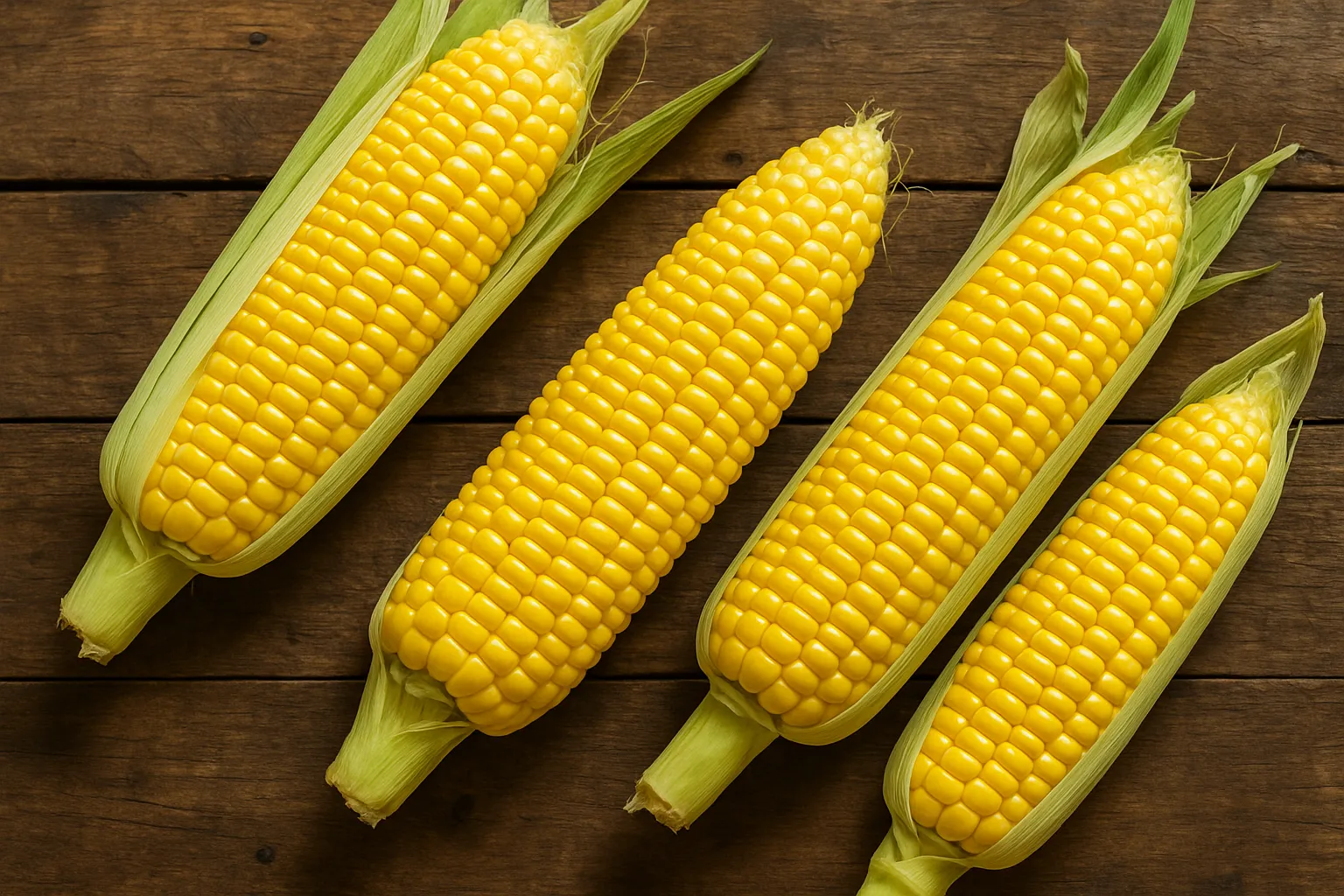
Corn: Calories, Nutrition and Health Benefits
Golden whole grain packed with fiber, antioxidants, and energy-sustaining carbs for digestion and eye health.
Quick Nutrition Facts
Per 100g Cooked Sweet Corn
| Nutrient | Amount |
|---|---|
| Calories | 86 kcal |
| Protein | 3.3g |
| Carbohydrates | 19g |
| Fiber | 2g |
| Sugars | 3.2g |
| Fat | 1.4g |
| Folate | 42mcg |
| Thiamine (B1) | 0.2mg |
| Vitamin C | 6.8mg |
| Magnesium | 37mg |
Macronutrient Breakdown
 ChatGPT
  Claude
  AI Mode
  Perplexity
NUTRITIONIST INSIGHT
Corn is a whole grain rich in lutein and zeaxanthin - powerful antioxidants that protect eye health. The resistant starch in corn feeds beneficial gut bacteria and supports digestive health.
Myth Busters
MYTH #1: Corn Has No Nutritional Value
TRUTH: Corn is nutritionally rich. It provides 2g fiber, folate, thiamine, lutein for eye health, and antioxidants. As a whole grain, corn offers more nutrition than refined grains. Don't confuse fresh corn with processed corn syrup.
MYTH #2: Corn Makes You Gain Weight
TRUTH: Corn itself doesn't cause weight gain. At 86 calories per 100g, it's moderate-calorie. Weight gain comes from excess portions, butter/oil toppings, and processed corn products. Plain boiled or grilled corn is weight-loss friendly in appropriate portions.
MYTH #3: Diabetics Should Never Eat Corn
TRUTH: Diabetics can eat corn in moderation. Sweet corn has moderate GI (52-55), not high. Portion control (1/2 cup), pairing with protein, and choosing fresh corn over processed varieties makes it diabetes-friendly. Monitor individual response.
MYTH #4: Corn Isn't Digested So It Has No Calories
TRUTH: While corn kernels may pass through visibly due to cellulose hulls, the nutrients inside are absorbed and provide calories. The 86 calories per 100g are real. Chewing thoroughly improves digestion and nutrient absorption.
MYTH #5: Yellow Corn Is More Nutritious Than White Corn
TRUTH: Yellow corn contains more lutein and zeaxanthin (carotenoids for eye health) than white corn. However, both provide similar calories, fiber, and B vitamins. Choose yellow for eye health benefits; white is equally nutritious otherwise.
MYTH #6: Corn Is Just Empty Carbs
TRUTH: Corn is a whole grain providing quality carbohydrates plus protein (3.3g), healthy fats (1.4g), fiber (2g), B vitamins, and antioxidants. Far superior to refined grains like white bread or rice. Whole corn is nutrient-dense, not empty.
NutriScore by Health Goals
| Health Goal | NutriScore | Why This Score? |
|---|---|---|
| Weight Loss |  | 86 calories per 100g, 2g fiber provides moderate satiety. Limit to 1/2-1 cup portions. Skip butter and oil toppings. Better than refined grains but portion control matters. |
| Muscle Gain |  | 19g carbs for energy, 3.3g protein, 37mg magnesium supports muscle function. Excellent post-workout carb source for glycogen replenishment. Pair with complete protein. |
| Diabetes Management | | Moderate GI (52-55), 19g carbs require portion control. Limit to 1/2 cup, pair with protein/fat. Whole corn better than processed. |
| PCOS Management | | Moderate carb content requires portion control. 2g fiber helps stabilize blood sugar. Pair with protein, limit to 1/2 cup servings. |
| Pregnancy Nutrition | | Rich in folate (42mcg supports fetal development), fiber prevents constipation. Safe and nutritious during pregnancy. |
| Viral/Flu Recovery | | Easy to digest, provides quick energy, vitamin C supports immunity, thiamine aids energy metabolism. Gentle on upset stomach. |
PERSONALIZED NUTRITION
Track your meals with NutriScan for personalized NutriScores based on your specific health goals!
Blood Sugar Response to Corn
Understanding how corn affects blood glucose helps with portion control and meal planning, especially for diabetes management.
Typical Glucose Response Curve
This chart shows typical blood glucose response for healthy individuals. Individual responses may vary. Not medical advice.
How to Flatten the Spike
Pairing corn with protein or healthy fat reduces blood sugar impact significantly:
- 🍗 Grilled chicken or fish - Complete protein slows carb absorption
- 🥑 Avocado or guacamole - Healthy fats buffer glucose response
- 🧀 Paneer or cheese - Protein and fat combination
- 🌿 Leafy greens and vegetables - Fiber slows digestion, adds volume
These combinations provide steady energy without sharp blood sugar spikes, ideal for diabetes and weight management.
Cultural Significance
Corn (maize) originated in Mexico over 9,000 years ago and became a staple crop across the Americas, eventually spreading worldwide.
In India:
- Sweet corn introduced in 1960s, now grown across states
- Popular street food: roasted/grilled corn (bhutta) with lime, salt, chili powder
- Increasingly used in salads, soups, sandwiches, and Indo-Chinese cuisine
- Baby corn varieties popular in South Indian and fusion dishes
- Growing consumption in urban areas as healthy snack
Global Impact:
- Most produced grain globally (over 1 billion tons annually)
- Staple food for billions across Africa, Latin America, Asia
- Indigenous cultures considered corn sacred (Three Sisters: corn, beans, squash)
- Mexico celebrates Day of the Dead with corn-based offerings
- US and China are top producers and consumers
Traditional Uses:
- Native American cultures depended on corn for 60% of diet
- Mayan and Aztec civilizations built empires on corn agriculture
- Traditional nixtamalization process enhances nutrient availability
Compare & Substitute
Corn vs Similar Starchy Vegetables (Per 100g cooked)
| Nutrient | 🌽 Corn | 🥔 Potato | 🍠 Sweet Potato | 🌾 Brown Rice |
|---|---|---|---|---|
| Calories | 86 kcal | 87 kcal | 90 kcal | 111 kcal |
| Carbs | 19g | 20g | 21g | 23g |
| Fiber | 2g | 1.8g | 3g | 1.8g |
| Protein | 3.3g | 2g | 2g | 2.6g |
| Fat | 1.4g | 0.1g | 0.2g | 0.9g |
| Folate | 42mcg | 10mcg | 6mcg | 4mcg |
| Vitamin A | 187 IU | 7 IU | 14187 IU | 0 IU |
| Vitamin C | 6.8mg | 9.6mg | 12.8mg | 0mg |
| Best For | Eye health | Budget-friendly | Vitamin A | Low-fat option |
Frequently Asked Questions
Is corn good for weight loss?
Corn can support weight loss when consumed in appropriate portions. At 86 calories per 100g with 2g fiber, it provides moderate satiety and sustained energy without excessive calories.
Best practices: Limit to 1/2-1 cup (100-150g) servings; choose boiled, grilled, or steamed (avoid butter, oil, cream); eat as whole kernels, not creamed or processed; pair with protein and vegetables; track portions within daily calorie goals.
Plain corn on the cob or kernels are better choices than corn chips, cornbread, or creamed corn which are higher in calories.
Can diabetics eat corn?
Yes, diabetics can eat corn in moderation with proper portion control. Sweet corn has a moderate glycemic index (52-55), making it manageable for most diabetics when consumed thoughtfully.
Tips for diabetics:
- Limit to 1/2 cup (100g) per meal
- Always pair with protein (chicken, fish, paneer) or healthy fat (avocado)
- Choose fresh or frozen corn, avoid canned with added sugars
- Best timing: lunch or early dinner, not late night
- Monitor blood sugar 2 hours after consumption
- Whole corn kernels better than cornmeal or corn flour
Research shows portion-controlled corn can fit diabetic diets when balanced with other low-GI foods.
How much protein is in corn?
Corn contains 3.3 grams of protein per 100g, which is moderate for a vegetable/grain. While not a high-protein food, corn provides decent plant-based protein compared to other starchy vegetables.
For comparison: corn (3.3g) has more protein than potatoes (2g), rice (2.6g), and sweet potatoes (2g). However, corn lacks some essential amino acids, so it's not a complete protein source.
Complete protein meals with corn: Corn + beans (complete amino acids); corn tortillas + lentils; corn salad + chicken or fish; sweet corn + paneer.
What are the main health benefits of corn?
Key Benefits:
- Eye Health: Lutein and zeaxanthin protect against macular degeneration and cataracts
- Digestive Health: 2g fiber per 100g supports regular bowel movements; resistant starch feeds gut bacteria
- Energy Metabolism: Thiamine (vitamin B1) converts carbs to energy efficiently
- Cell Growth: Folate (42mcg) essential for DNA synthesis and cell division
- Antioxidant Protection: Flavonoids and carotenoids reduce oxidative stress and inflammation
- Heart Health: Fiber, potassium, and antioxidants support cardiovascular function
- Blood Sugar Management: Resistant starch may improve insulin sensitivity
When is the best time to eat corn?
Depends on your goal:
- Weight Loss: Lunch for sustained energy throughout day. Avoid dinner to minimize carb storage. Pair with protein and veggies.
- Muscle Gain: Post-workout (within 1 hour) for carb replenishment. Provides 19g carbs for glycogen restoration. Combine with protein shake.
- Diabetes: Lunch or early dinner, never on empty stomach. Always pair with protein or fat to slow glucose absorption.
- General Health: Lunch or dinner as part of balanced meals. Works well in salads, soups, stir-fries, or as side dish.
IMPORTANT NOTE
Avoid eating corn late at night if watching carb timing or trying to lose weight. The 19g carbs are better utilized earlier in the day for energy.
Is corn a vegetable or grain?
Corn is both - it depends on how it's used:
As a Vegetable: Fresh sweet corn on the cob or kernels are culinarily and nutritionally treated as starchy vegetables. Eaten fresh, boiled, or grilled.
As a Grain: Dried corn kernels used for flour, cornmeal, polenta, or popcorn are classified as whole grains. Used as grain products in cooking.
Botanical Classification: Corn is technically a cereal grain (grass family), making it botanically a grain, but USDA nutrition guidelines categorize fresh sweet corn as a starchy vegetable.
Practical Answer: Fresh sweet corn = starchy vegetable. Dried corn/cornmeal/popcorn = whole grain. Both are nutritious in appropriate portions.
How much corn should I eat per day?
General Guidelines:
- 1/2-1 cup daily (100-150g) - Most adults for balanced nutrition
- 1/2 cup maximum daily - Weight loss, diabetes, or low-carb diets
- 1-2 cups daily - Athletes, muscle gain, high-energy needs
Important Considerations:
- Count as starchy vegetable in meal planning (similar to potatoes)
- Balance with non-starchy vegetables (leafy greens, broccoli, peppers)
- Avoid daily consumption if strict low-carb (keto, PCOS management)
- Choose preparation method: boiled, grilled, steamed > fried, creamed, buttered
- Avoid processed corn products (chips, syrup, high-fructose varieties)
Track your meals with NutriScan app to see how corn fits your personal nutrition goals and carb targets.
Does corn lose nutrients when cooked?
Corn actually becomes more nutritious when cooked. Cooking breaks down cellulose walls, making nutrients more bioavailable and easier to digest.
Cooking Benefits:
- Increases antioxidant activity by 44-50%
- Enhances carotenoid (lutein, zeaxanthin) absorption
- Improves digestibility of protein and starches
- Makes bound niacin (vitamin B3) available
Best Cooking Methods:
- Boiling: Retains most nutrients, easy digestion
- Grilling: Enhances flavor, minimal nutrient loss
- Steaming: Maximum nutrient retention (best method)
- Avoid: Deep frying (adds excessive calories), over-boiling (leaches water-soluble vitamins)
Research shows cooked corn has higher antioxidant capacity than raw. Always cook corn for 3-5 minutes for optimal nutrition and safety.


Similar Nutritious Foods
4505 Chicharrones Classic Chili Salt
7 Eleven Japan Crispy Corn Cheese
Explore More Nutrition Tools & Resources
AI Calorie Counter App - Snap a Photo, Get Macros
AI Nutritionist App That Reads Your Logged Meals
Best Protein Supplements for Women
Bulking Meal Plan App That Sets Your Surplus
ChatGPT Calorie Counter Alternative That Keeps the Total
ChatGPT Diet Plan Alternative That Tracks What You Eat
ChatGPT Weight Loss Coach Alternative With a Food Log
Fast Food Calorie Counter App That Reads the Tray
Free Calorie Tracker App with AI Photo Scans | NutriScan
Indian Diet Plan App With Veg and Non Veg Meals
Indian Food Calorie Calculator - Get Instant Nutrition Facts for Desi Meals — 2026
Intermittent Fasting for Women, Timer and Meal Log App
Intermittent Fasting Tracker App - Free Fasting Timer
Macro Tracker App That Fills the Numbers From a Photo
Mediterranean Diet Meal Plan App That Counts the Oil
Micronutrient Tracker App for Vitamins and Minerals
MyFitnessPal Alternative That Stays Free | NutriScan
NutriScore App: A Free Grade on Every Meal | NutriScan
Nutrition Label Scanner App for the Amount You Ate
Second Trimester Protein Guide
Vegetarian Meal Plan App With a Protein Target
Voice Calorie Counter - Speak to Track Meals Hands-Free
Water and Calorie Tracker App - Free Water Log