Homemade Frozen Yogurt: Calories, Nutrition and Health Benefits
A healthier alternative to ice cream with live probiotics, high protein, and full control over sugar and ingredients.
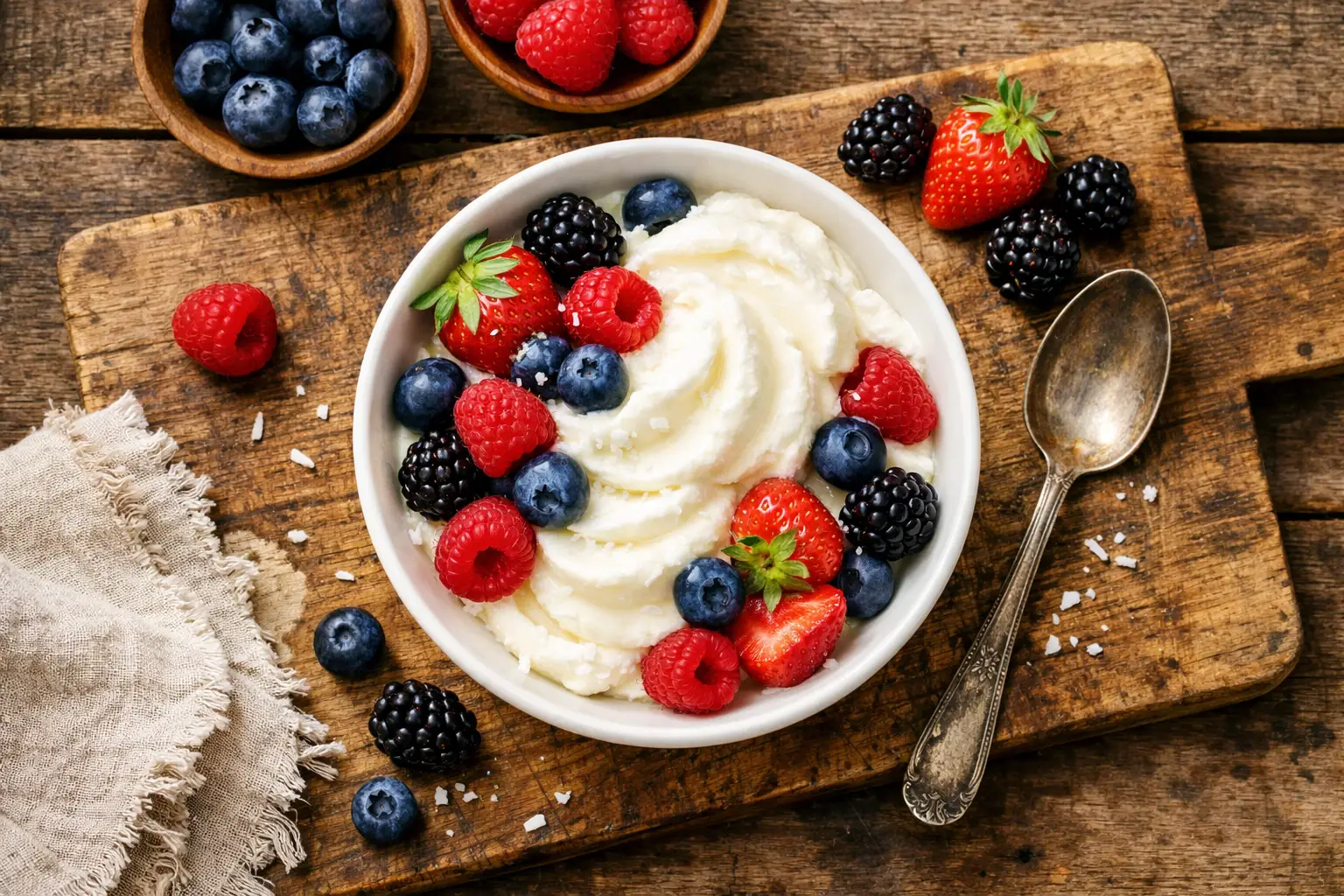
Quick Nutrition Facts
Per 1/2 Cup Homemade Frozen Yogurt (100g)
| Nutrient | Amount |
|---|---|
| Calories | 120 kcal |
| Protein | 5g |
| Carbohydrates | 20g |
| Fiber | 0g |
| Sugars | 17g |
| Fat | 2g |
| Calcium | 100mg |
| Potassium | 180mg |
| Vitamin B12 | 0.5mcg |
| Phosphorus | 100mg |
Macronutrient Breakdown
 ChatGPT
  Claude
  AI Mode
  Perplexity
NUTRITIONIST INSIGHT
Homemade frozen yogurt gives you a dessert with 30% fewer calories than ice cream while keeping beneficial probiotics alive. Using Greek yogurt as a base boosts protein to 7-8g per serving and improves texture without added thickeners.
Myth Busters
MYTH #1: Frozen Yogurt Is Just As Unhealthy As Ice Cream
TRUTH: Homemade frozen yogurt has about 120 calories and 2g fat per 100g, compared to ice cream's 207 calories and 11g fat. The key advantage is controlling sugar content and preserving probiotics that support gut health.
MYTH #2: Freezing Kills All Probiotics
TRUTH: Research shows that 10-60% of live cultures survive the freezing process. Using yogurt with active cultures (Lactobacillus, Bifidobacterium) and avoiding excessive heating during preparation helps preserve more beneficial bacteria.
MYTH #3: Frozen Yogurt Is Too High in Sugar for Diabetics
TRUTH: Regular yogurt has a low glycemic index of 35, and homemade versions let you control sweetness. Using stevia or monk fruit as sweeteners can reduce sugar to under 10g per serving while maintaining taste.
MYTH #4: All Frozen Yogurt Has the Same Nutrition
TRUTH: Nutrition varies dramatically by recipe. Store-bought frozen yogurt often contains 25-30g sugar per serving with artificial stabilizers. Homemade versions using Greek yogurt provide double the protein with less sugar and no artificial additives.
MYTH #5: Frozen Yogurt Has No Real Health Benefits
TRUTH: Yogurt consumption is linked to an 18% lower risk of type 2 diabetes. The calcium (100mg per serving) supports bone health, and probiotics improve gut microbiome diversity.
NutriScore by Health Goals
| Health Goal | NutriScore | Why This Score? |
|---|---|---|
| Weight Loss |  | 120 calories per serving, 5g protein promotes fullness. Use non-fat yogurt and natural sweeteners to reduce to ~100 cal. |
| Muscle Gain | | Good post-workout treat with 5-8g protein (Greek yogurt base). Add protein powder for 15-20g protein per serving. |
| Diabetes Management |  | Yogurt has low GI (35), but added sugar raises glycemic load. Use sugar-free sweeteners and limit to 1/2 cup. |
| PCOS Management | | Probiotics may help with inflammation. Choose low-sugar versions and pair with fiber-rich toppings like berries. |
| Pregnancy Nutrition |  | Excellent calcium source (100mg per serving). ACOG recommends dairy for pregnancy calcium needs. Ensure pasteurized yogurt base. |
| Viral/Flu Recovery | | Easy to eat when sick, provides hydration and protein. Probiotics support immune function and gut health recovery. |
PERSONALIZED NUTRITION
Track your meals with NutriScan for personalized NutriScores based on your specific health goals!
Blood Sugar Response to Homemade Frozen Yogurt
Understanding how frozen yogurt affects your blood glucose helps you enjoy this treat smartly, especially if managing blood sugar.
Typical Glucose Response Curve
This chart shows typical blood glucose response for general healthy individuals. Individual responses may vary. Not medical advice.
How to Flatten the Spike
Pairing frozen yogurt with protein or fiber slows glucose absorption and reduces the peak blood sugar level:
- 🫐 Fresh berries - Adds fiber and antioxidants with minimal sugar
- 🥜 Chopped almonds or walnuts - Healthy fats and protein slow absorption
- 🌱 Chia seeds or flaxseeds - Extra fiber and omega-3 fatty acids
- 🍫 Dark chocolate chips (85%+) - Low sugar, rich in polyphenols
This combination not only reduces the glucose spike but also extends energy release, keeping you fuller for longer.
Cultural Significance
Frozen yogurt has evolved from a niche health food in the 1970s to a global dessert phenomenon worth billions.
Origins and Evolution:
- First commercial frozen yogurt created by H.P. Hood in New England, USA (1970s)
- TCBY ("The Country's Best Yogurt") popularized froyo in the 1980s
- Self-serve frozen yogurt shops became a cultural phenomenon in the 2000s-2010s
- DIY home frozen yogurt makers (like Cuisinart) brought the trend home
In India:
- Lassi (yogurt-based drink) has been enjoyed for centuries across the subcontinent
- Mishti doi (sweetened yogurt) from Bengal is a traditional frozen treat precursor
- Modern Indian froyo shops blend traditional flavors like mango, cardamom, and rose
- Homemade dahi-based frozen treats are common summer snacks
Global Impact:
- Frozen yogurt market valued at over $75 billion globally
- Health-conscious consumers driving demand for probiotic-rich desserts
- Korean and Japanese cultures have embraced froyo with unique flavor innovations
Compare & Substitute
Homemade Frozen Yogurt vs Similar Desserts (Per 100g)
| Nutrient | 🍦 Frozen Yogurt (DIY) | 🍨 Vanilla Ice Cream | 🧊 Sorbet | 🥛 Greek Yogurt (plain) |
|---|---|---|---|---|
| Calories | 120 kcal | 207 kcal | 130 kcal | 59 kcal |
| Carbs | 20g | 24g | 34g | 3.6g |
| Fiber | 0g | 0g | 0g | 0g |
| Protein | 5g | 3.5g | 0.3g | 10g |
| Fat | 2g | 11g | 0.2g | 0.7g |
| Calcium | 100mg | 84mg | 5mg | 110mg |
| Sugar | 17g | 21g | 26g | 3.2g |
| Best For | Balanced treat, probiotics | Indulgent dessert, creaminess | Dairy-free, fruit flavor | Maximum protein, low calorie |
Frequently Asked Questions
How many calories are in homemade frozen yogurt?
Homemade frozen yogurt has approximately 120 calories per 1/2 cup (100g). This is about 30% fewer calories than regular ice cream. Using non-fat Greek yogurt reduces calories to about 100 per serving, while full-fat versions may reach 140-150 calories.
Calorie by base type:
- Non-fat yogurt base: 100 cal/serving
- Low-fat yogurt base: 120 cal/serving
- Full-fat yogurt base: 140-150 cal/serving
- Greek yogurt base: 110-130 cal/serving (higher protein)
Is homemade frozen yogurt healthier than store-bought?
Yes, homemade versions give you complete control over ingredients. Store-bought frozen yogurt often contains 25-30g sugar, artificial colors, gums, and stabilizers.
Homemade advantages:
- Control sugar type and amount (use honey, maple, or stevia)
- Preserve more live probiotics (less processing)
- No artificial thickeners or emulsifiers
- Customize protein content with Greek yogurt base
Does freezing yogurt kill the probiotics?
Freezing slows bacterial activity but does not kill all probiotics. Research shows 10-60% of beneficial cultures survive the freezing process, depending on the strain and freezing method.
Tips to preserve probiotics:
- Start with yogurt containing live active cultures
- Do not heat the yogurt mixture above 40C (104F)
- Consume within 2-3 weeks of freezing for maximum benefit
- Look for Lactobacillus and Bifidobacterium strains
Can diabetics eat homemade frozen yogurt?
Diabetics can enjoy homemade frozen yogurt in moderation. Plain yogurt has a low glycemic index of 35, making it a better dessert choice than most alternatives.
Tips for diabetics:
- Use stevia or monk fruit instead of sugar
- Choose Greek yogurt base for higher protein (slows glucose absorption)
- Limit to 1/2 cup serving
- Add nuts or seeds for healthy fats
- Monitor blood sugar 2 hours after eating
What is the best yogurt for making frozen yogurt?
Greek yogurt is the top choice: higher protein (10g vs 5g per cup), thicker texture that holds up to freezing, lower sugar, and more concentrated probiotics.
Base options ranked:
- Full-fat Greek yogurt: creamiest texture, best flavor
- Non-fat Greek yogurt: lowest calories, highest protein-to-calorie ratio
- Regular whole-milk yogurt: smooth but thinner texture
- Skyr (Icelandic yogurt): very high protein, tangy flavor
How long does homemade frozen yogurt last?
Homemade frozen yogurt keeps well for 2-3 weeks in an airtight container. After that, ice crystals form and texture deteriorates.
Storage tips:
- Press plastic wrap directly on surface before sealing container
- Store at -18C (0F) or colder
- Let sit at room temperature 5-10 minutes before scooping
- Do not refreeze after thawing
Track your frozen yogurt and desserts with NutriScan app to see how they fit your daily nutrition goals.


Similar Nutritious Foods
4505 Chicharrones Classic Chili Salt
7 Eleven Japan Crispy Corn Cheese
Explore More Nutrition Tools & Resources
AI Calorie Counter App - Snap a Photo, Get Macros
AI Nutritionist App That Reads Your Logged Meals
Best Protein Supplements for Women
Bulking Meal Plan App That Sets Your Surplus
ChatGPT Calorie Counter Alternative That Keeps the Total
ChatGPT Diet Plan Alternative That Tracks What You Eat
ChatGPT Weight Loss Coach Alternative With a Food Log
Fast Food Calorie Counter App That Reads the Tray
Free Calorie Tracker App with AI Photo Scans | NutriScan
Indian Diet Plan App With Veg and Non Veg Meals
Indian Food Calorie Calculator - Get Instant Nutrition Facts for Desi Meals — 2026
Intermittent Fasting for Women, Timer and Meal Log App
Intermittent Fasting Tracker App - Free Fasting Timer
Macro Tracker App That Fills the Numbers From a Photo
Mediterranean Diet Meal Plan App That Counts the Oil
Micronutrient Tracker App for Vitamins and Minerals
MyFitnessPal Alternative That Stays Free | NutriScan
NutriScore App: A Free Grade on Every Meal | NutriScan
Nutrition Label Scanner App for the Amount You Ate
Second Trimester Protein Guide
Vegetarian Meal Plan App With a Protein Target
Voice Calorie Counter - Speak to Track Meals Hands-Free
Water and Calorie Tracker App - Free Water Log