Digestive Enzyme Supplement: Calories, Nutrition and Health Benefits
A science-backed gut health ally with virtually zero calories, delivering protease, amylase, and lipase to optimize digestion and nutrient absorption.
Quick Nutrition Facts
Per 1 Capsule (approx. 500-700mg)
| Nutrient | Amount |
|---|---|
| Calories | 5 kcal |
| Protein | 0g |
| Carbohydrates | 1g |
| Fiber | 0g |
| Sugars | 0g |
| Fat | 0g |
| Sodium | 0mg |
| Protease | 30,000 HUT |
| Amylase | 12,500 DU |
| Lipase | 1,250 FIP |
Macronutrient Breakdown
 ChatGPT
  Claude
  AI Mode
  Perplexity
NUTRITIONIST INSIGHT
Digestive enzyme supplements are virtually calorie-free at just 5 kcal per capsule. The real value lies in their ability to improve nutrient absorption from the foods you eat, not in the nutrients they provide directly.
Myth Busters
MYTH #1: Digestive Enzymes Are Only for People with Digestive Disorders
TRUTH: While prescription enzymes treat conditions like exocrine pancreatic insufficiency, OTC digestive enzyme supplements can help healthy adults reduce post-meal bloating and discomfort. A 2023 randomized controlled trial confirmed benefits for functional dyspepsia.
MYTH #2: Taking Enzymes Makes Your Body Stop Producing Its Own
TRUTH: Supplemental digestive enzymes work alongside your natural enzymes, not as replacements. Your pancreas, stomach, and small intestine continue producing enzymes normally. Supplements simply provide additional support during digestion.
MYTH #3: All Digestive Enzyme Supplements Are the Same
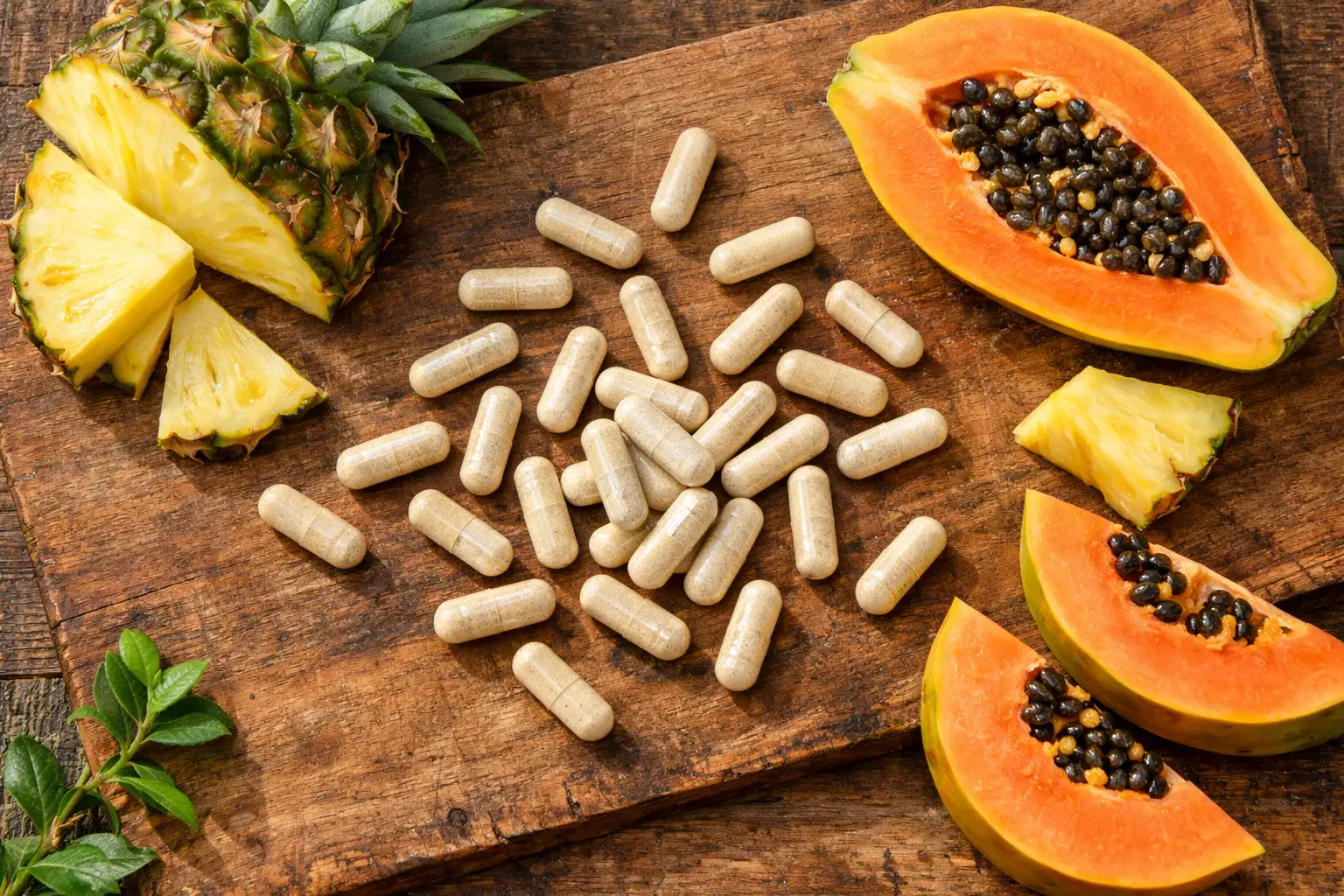
TRUTH: Enzyme potency varies widely by source. Plant-based enzymes (bromelain, papain) work across a broader pH range than animal-derived ones, while microbial enzymes show promise at lower doses. Check enzyme activity units (HUT, DU, FIP), not just milligrams.
MYTH #4: Digestive Enzymes Have Significant Calories
TRUTH: A typical capsule contains about 5 calories from inactive ingredients and the capsule shell. The enzymes themselves are calorie-free proteins that break down food rather than provide energy.
MYTH #5: You Can Take Digestive Enzymes Anytime
TRUTH: Timing matters. Enzymes should be taken just before or with meals for maximum effectiveness. Taking them on an empty stomach means they have nothing to act on and may cause mild stomach discomfort.
NutriScore by Health Goals
| Health Goal | NutriScore | Why This Score? |
|---|---|---|
| Weight Loss |  | Virtually zero calories. Improved digestion and nutrient absorption can support metabolic health during calorie restriction. |
| Muscle Gain |  | Protease enzymes improve protein digestion and amino acid absorption, supporting muscle recovery and growth. |
| Diabetes Management | | Pancreatic enzyme supplementation can help diabetics with exocrine insufficiency improve nutrient absorption. Consult your doctor first. |
| PCOS Management | | Improved digestion reduces bloating and supports gut-hormone balance. Zero sugar impact on insulin sensitivity. |
| Pregnancy Nutrition |  | Limited safety data during pregnancy. Consult healthcare provider before use. Natural enzyme-rich foods (pineapple, papaya) are safer alternatives. |
| Viral/Flu Recovery | | Supports nutrient absorption when appetite is low. Bromelain has anti-inflammatory properties that may aid recovery. |
PERSONALIZED NUTRITION
Track your meals with NutriScan for personalized NutriScores based on your specific health goals!
Blood Sugar Response to Digestive Enzyme Supplement
Understanding how digestive enzymes affect blood glucose helps you decide when and how to take them.
Typical Glucose Response Curve
This chart shows typical blood glucose response for general healthy individuals. Digestive enzymes have minimal direct impact on blood sugar. Individual responses may vary. Not medical advice.
How Enzymes Interact with Blood Sugar
Digestive enzymes can alter the rate of carbohydrate breakdown, potentially affecting glucose absorption speed from meals:
- Amylase supplements may speed starch breakdown, causing slightly faster glucose rise from carb-heavy meals
- Pair enzyme supplements with fiber-rich meals to slow glucose absorption
- Take with balanced meals containing protein, fat, and fiber for steady energy
- Monitor blood sugar if diabetic, as enzyme supplementation may change your usual response pattern
Cultural Significance
Digestive enzyme use spans thousands of years across cultures, long before modern supplements existed.
Traditional Origins:
- Ayurveda has used ginger, cumin, and fennel as digestive aids for over 3,000 years
- Traditional Chinese Medicine employs fermented foods (miso, tempeh) rich in natural enzymes
- Indigenous cultures worldwide used papaya leaves and pineapple for meat tenderizing and digestion
Modern Evolution:
- 1930s: First commercial pancreatic enzyme supplements developed
- 1990s: Plant-based and microbial enzyme supplements gain popularity
- 2020s: Targeted enzyme blends (FODMAP-specific, gluten-specific) emerge
- Global digestive enzyme supplement market exceeds $1 billion annually
In India:
- Ayurvedic digestive formulas (Triphala, Hingvastak) remain widely used
- Buttermilk (chaas) and fermented foods provide natural enzymes
- Digestive enzyme supplements are among the fastest-growing supplement categories
Compare & Substitute
Digestive Enzyme Sources Compared (Per Standard Serving)
| Feature | Enzyme Capsule | Pineapple (100g) | Papaya (100g) | Kefir (100ml) |
|---|---|---|---|---|
| Calories | 5 kcal | 50 kcal | 43 kcal | 67 kcal |
| Key Enzyme | Protease + Amylase + Lipase | Bromelain (protein) | Papain (protein) | Probiotics + enzymes |
| Carbs | 1g | 13g | 11g | 4.7g |
| Protein | 0g | 0.5g | 0.5g | 3.3g |
| Fiber | 0g | 1.4g | 1.7g | 0g |
| Vitamin C | 0mg | 47.8mg | 60.9mg | 0.2mg |
| Best For | Targeted enzyme support, convenience | Natural bromelain, vitamin C | Papain, antioxidants | Probiotics + enzymes |
Frequently Asked Questions
Do digestive enzyme supplements have calories?
Most digestive enzyme supplements contain about 5 calories or less per capsule. The calories come from the capsule shell (gelatin or cellulose) and inactive ingredients like rice flour or maltodextrin, not from the enzymes themselves.
Are digestive enzymes safe to take daily?
For most healthy adults, daily use is generally considered safe. However, long-term supplementation without medical guidance is not recommended. People with pancreatic conditions, liver disease, or those on blood thinners should consult a doctor first.
Do digestive enzymes help with bloating?
A 2023 randomized, double-blind, placebo-controlled clinical trial found that multi-enzyme supplementation significantly reduced bloating, gas, and post-meal fullness in adults with functional dyspepsia. Results vary by individual and enzyme formulation.
What are the main types of digestive enzymes?
3 main types: Protease breaks down proteins into amino acids, amylase breaks down starches into simple sugars, and lipase breaks down fats into fatty acids. Many supplements also include lactase (for dairy), cellulase (for plant fiber), and alpha-galactosidase (for beans/legumes).
Can diabetics take digestive enzyme supplements?
Diabetics can take digestive enzymes but should consult their doctor first. Amylase may alter the speed of carbohydrate digestion, potentially affecting blood sugar timing. Pancreatic enzyme replacement therapy is sometimes prescribed for diabetics with exocrine pancreatic insufficiency.
What natural foods contain digestive enzymes?
Pineapple contains bromelain (protein digestion), papaya has papain (protein digestion), ginger stimulates overall digestive secretions, kefir and yogurt provide probiotics and enzymes, and mango contains amylase for starch digestion. Eating these foods supports natural enzyme production.


Similar Nutritious Foods
4505 Chicharrones Classic Chili Salt
7 Eleven Japan Crispy Corn Cheese
Explore More Nutrition Tools & Resources
AI Calorie Counter App - Snap a Photo, Get Macros
AI Nutritionist App That Reads Your Logged Meals
Best Protein Supplements for Women
Bulking Meal Plan App That Sets Your Surplus
ChatGPT Calorie Counter Alternative That Keeps the Total
ChatGPT Diet Plan Alternative That Tracks What You Eat
ChatGPT Weight Loss Coach Alternative With a Food Log
Fast Food Calorie Counter App That Reads the Tray
Free Calorie Tracker App with AI Photo Scans | NutriScan
Indian Diet Plan App With Veg and Non Veg Meals
Indian Food Calorie Calculator - Get Instant Nutrition Facts for Desi Meals — 2026
Intermittent Fasting for Women, Timer and Meal Log App
Intermittent Fasting Tracker App - Free Fasting Timer
Macro Tracker App That Fills the Numbers From a Photo
Mediterranean Diet Meal Plan App That Counts the Oil
Micronutrient Tracker App for Vitamins and Minerals
MyFitnessPal Alternative That Stays Free | NutriScan
NutriScore App: A Free Grade on Every Meal | NutriScan
Nutrition Label Scanner App for the Amount You Ate
Second Trimester Protein Guide
Vegetarian Meal Plan App With a Protein Target
Voice Calorie Counter - Speak to Track Meals Hands-Free
Water and Calorie Tracker App - Free Water Log