Ditalini Pasta: Calories, Nutrition and Health Benefits
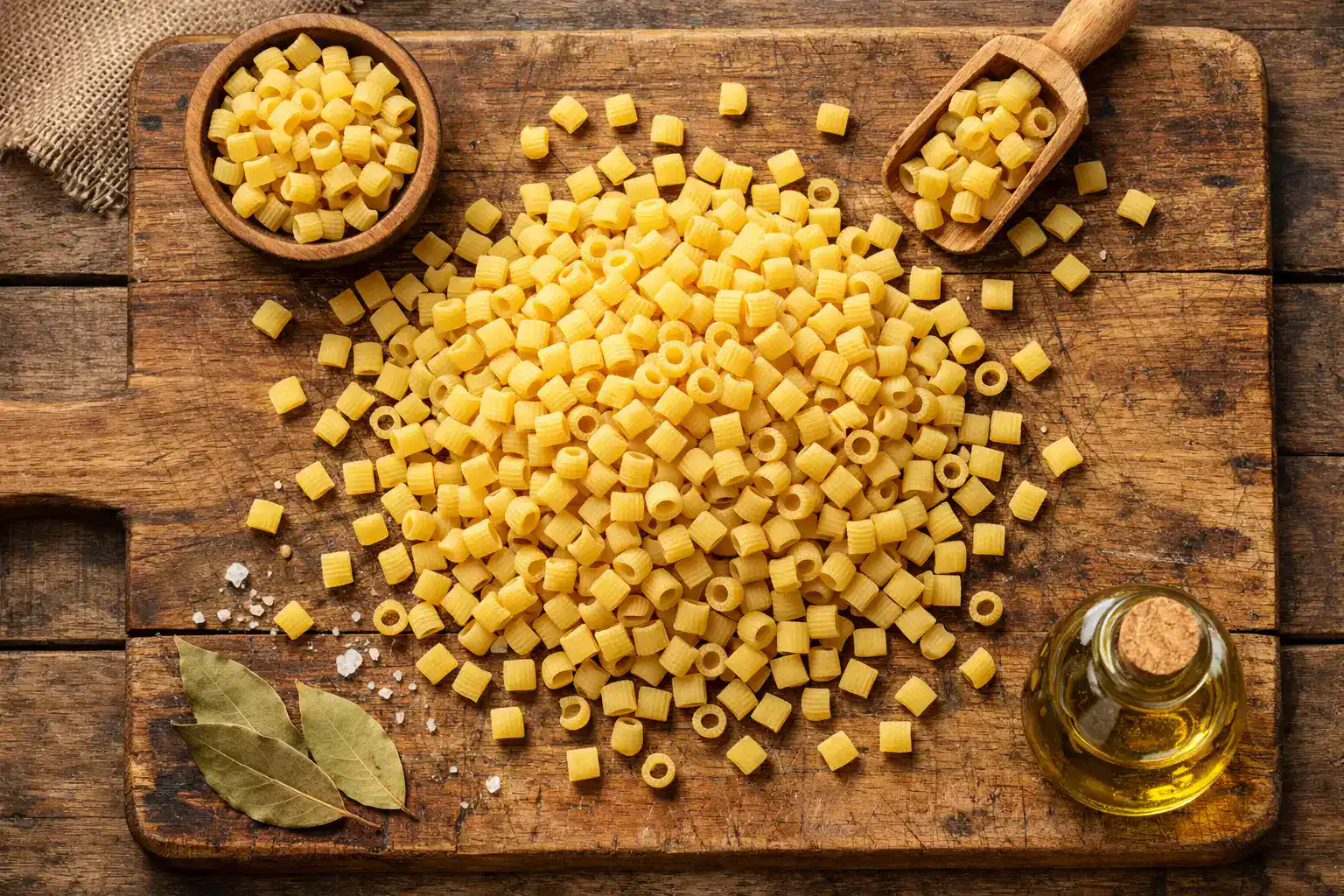
Small tube-shaped pasta perfect for hearty soups and chopped salads, delivering 12.5g protein and essential B vitamins per 100g serving.
Quick Nutrition Facts
Per 100g Dry Ditalini Pasta
| Nutrient | Amount |
|---|---|
| Calories | 357 kcal |
| Protein | 12.5g |
| Carbohydrates | 75g |
| Fiber | 5.4g |
| Sugars | 1.8g |
| Fat | 1.8g |
| Iron | 3.6mg |
| Thiamin (B1) | 1mg |
| Niacin (B3) | 8.9mg |
| Folate | 355mcg |
Macronutrient Breakdown
 ChatGPT
  Claude
  AI Mode
  Perplexity
NUTRITIONIST INSIGHT
Ditalini pasta provides nearly 50% of your daily folate needs per 100g serving, essential for cell division and DNA synthesis. The enriched B vitamins (thiamin, niacin, riboflavin) support energy metabolism and nervous system function.
Myth Busters
MYTH #1: Pasta Makes You Gain Weight
TRUTH: Pasta itself doesn't cause weight gain - excess calories do. A controlled portion of ditalini (56g dry = 200 calories) with vegetables and lean protein creates a balanced, satisfying meal. Studies show pasta as part of a low-GI diet doesn't contribute to weight gain.
MYTH #2: Diabetics Must Avoid All Pasta
TRUTH: Pasta has a lower glycemic index (40-55) than white rice (73) or bread (75). Research confirms pasta produces lower blood glucose responses compared to other carbohydrate sources. Cook al dente and pair with protein for best results.
MYTH #3: Pasta Has No Nutritional Value
TRUTH: Enriched ditalini provides 50% daily folate, 31% niacin, 47% thiamin, and 11% iron per 100g serving. It's a significant source of B vitamins and plant-based protein (12.5g per 100g).
MYTH #4: White Pasta Is Empty Carbs
TRUTH: Semolina pasta from durum wheat contains resistant starch when cooked al dente and cooled. Resistant starch acts like fiber, supporting gut health and blood sugar control.
MYTH #5: All Pasta Shapes Are the Same
TRUTH: While nutrition is similar, shape affects portion perception and cooking time. Ditalini's small size makes it ideal for soups where it absorbs flavors, and easier for portion control in salads.
NutriScore by Health Goals
| Health Goal | NutriScore | Why This Score? |
|---|---|---|
| Weight Loss |  | Moderate calorie density. Control portions to 56g dry (200 cal), pair with vegetables. Small shape helps with portion awareness. |
| Muscle Gain |  | 12.5g protein per 100g, excellent carbs for glycogen replenishment. Pair with chicken or legumes for complete amino acid profile. |
| Diabetes Management | | Medium GI (40-55). Cook al dente for lower glycemic response, pair with protein/fat, limit to 1/2-1 cup cooked. |
| PCOS Management | | Moderate insulin impact. Choose whole wheat version when possible, always pair with protein and fiber-rich vegetables. |
| Pregnancy Nutrition |  | Excellent folate source (355mcg/100g) essential for neural tube development. Iron and B vitamins support blood health. |
| Viral/Flu Recovery | | Easy to digest, gentle on stomach. Perfect in warm soups for hydration and sustained energy during illness recovery. |
PERSONALIZED NUTRITION
Track your meals with NutriScan for personalized NutriScores based on your specific health goals!
Blood Sugar Response to Ditalini Pasta
Understanding how ditalini affects your blood glucose helps you make informed meal decisions.
Typical Glucose Response Curve
This chart shows typical blood glucose response for general healthy individuals. Individual responses may vary. Not medical advice.
How to Flatten the Spike
Pairing pasta with protein, fiber, or healthy fat slows glucose absorption and reduces peak blood sugar:
- 🥗 Add vegetables - Fiber slows carb absorption
- 🍗 Include lean protein - Chicken, fish, or legumes
- 🫒 Drizzle olive oil - Healthy fats slow digestion
- 🧀 Add cheese - Protein and fat combination
Cook pasta al dente (firm to bite) - overcooking increases glycemic response.
Cultural Significance
Ditalini ("small thimbles" in Italian) originated in Southern Italy, where small pasta shapes were developed for hearty soups and stews.
In Italian Cuisine:
- Essential in pasta e fagioli (pasta and beans soup)
- Traditional in minestrone soup
- Used in brodo (clear broth soups)
- Popular in cold pasta salads during summer months
Regional Variations:
- Sicily: combined with sardines and wild fennel
- Campania: featured in wedding soups
- Calabria: paired with spicy 'nduja sauce
Modern Usage:
- Popular for meal prep due to small, uniform shape
- Ideal for children's meals - easy to eat
- Growing use in grain bowls and modern salads
- Soup kitchens and hospitals favor for easy digestion
Compare & Substitute
Ditalini vs Similar Pasta Shapes (Per 100g Dry)
| Nutrient | 🍝 Ditalini | 🍝 Orzo | 🍝 Small Shells | 🍚 White Rice |
|---|---|---|---|---|
| Calories | 357 kcal | 357 kcal | 357 kcal | 360 kcal |
| Carbs | 75g | 75g | 75g | 80g |
| Fiber | 5.4g | 5.4g | 5.4g | 1.3g |
| Protein | 12.5g | 12.5g | 12.5g | 7g |
| Fat | 1.8g | 1.8g | 1.8g | 0.6g |
| Folate | 355mcg | 355mcg | 355mcg | 8mcg |
| GI | 40-55 | 40-55 | 40-55 | 73 |
| Best For | Soups, salads, small bites | Soups, risotto-style dishes | Pasta salads, baked dishes | Quick cooking, Asian dishes |
Frequently Asked Questions
How many calories are in ditalini pasta?
Dry ditalini contains 357 calories per 100g. A standard serving of 56g (2oz) dry provides 200 calories. Cooked pasta has lower calorie density due to water absorption - approximately 130-140 calories per 100g cooked.
Is ditalini pasta good for weight loss?
Ditalini can support weight loss when portion-controlled. The key is measuring servings (56g dry = 200 cal) and pairing with protein and vegetables. Its small shape makes overeating less likely compared to long pasta forms.
Weight loss tips:
- Measure dry portions before cooking
- Fill half your plate with vegetables
- Add lean protein (chicken, shrimp, beans)
- Choose tomato-based sauces over cream
Can diabetics eat ditalini pasta?
Yes, in moderation. Pasta has a medium glycemic index (40-55), lower than white rice or bread.
Diabetes-friendly practices:
- Cook al dente (firmer = lower GI)
- Limit to 1/2-1 cup cooked per meal
- Always pair with protein and vegetables
- Cool and reheat pasta to increase resistant starch
- Monitor blood sugar 2 hours after eating
What dishes is ditalini pasta best for?
Ditalini excels in soups (pasta e fagioli, minestrone), cold pasta salads with chopped vegetables, and dishes requiring small uniform pieces. Its tube shape holds sauces and broth well.
Popular uses:
- Italian wedding soup
- Chopped antipasto salad
- Children's pasta dishes
- Meal prep containers (reheats well)
How much protein is in ditalini pasta?
Ditalini provides 12.5g protein per 100g dry, or about 7g per 56g serving. While not a complete protein alone, combining with legumes, cheese, or meat creates a complete amino acid profile.
Is whole wheat ditalini healthier?
Whole wheat ditalini offers more fiber (8g vs 5.4g per 100g) and slightly more minerals. Choose whole wheat for diabetes management or increased fiber goals. Regular enriched ditalini provides more B vitamins due to fortification.
How do I cook ditalini al dente?
Boil in salted water for 8-9 minutes (or 1-2 minutes less than package directions). Pasta should be firm to bite but not hard in center. Al dente pasta has lower glycemic impact than fully soft pasta.


Similar Nutritious Foods
4505 Chicharrones Classic Chili Salt
7 Eleven Japan Crispy Corn Cheese
Explore More Nutrition Tools & Resources
AI Calorie Counter App - Snap a Photo, Get Macros
AI Nutritionist App That Reads Your Logged Meals
Best Protein Supplements for Women
Bulking Meal Plan App That Sets Your Surplus
ChatGPT Calorie Counter Alternative That Keeps the Total
ChatGPT Diet Plan Alternative That Tracks What You Eat
ChatGPT Weight Loss Coach Alternative With a Food Log
Fast Food Calorie Counter App That Reads the Tray
Free Calorie Tracker App with AI Photo Scans | NutriScan
Indian Diet Plan App With Veg and Non Veg Meals
Indian Food Calorie Calculator - Get Instant Nutrition Facts for Desi Meals — 2026
Intermittent Fasting for Women, Timer and Meal Log App
Intermittent Fasting Tracker App - Free Fasting Timer
Macro Tracker App That Fills the Numbers From a Photo
Mediterranean Diet Meal Plan App That Counts the Oil
Micronutrient Tracker App for Vitamins and Minerals
MyFitnessPal Alternative That Stays Free | NutriScan
NutriScore App: A Free Grade on Every Meal | NutriScan
Nutrition Label Scanner App for the Amount You Ate
Second Trimester Protein Guide
Vegetarian Meal Plan App With a Protein Target
Voice Calorie Counter - Speak to Track Meals Hands-Free
Water and Calorie Tracker App - Free Water Log