DIY Nut Milk: Calories, Nutrition and Health Benefits
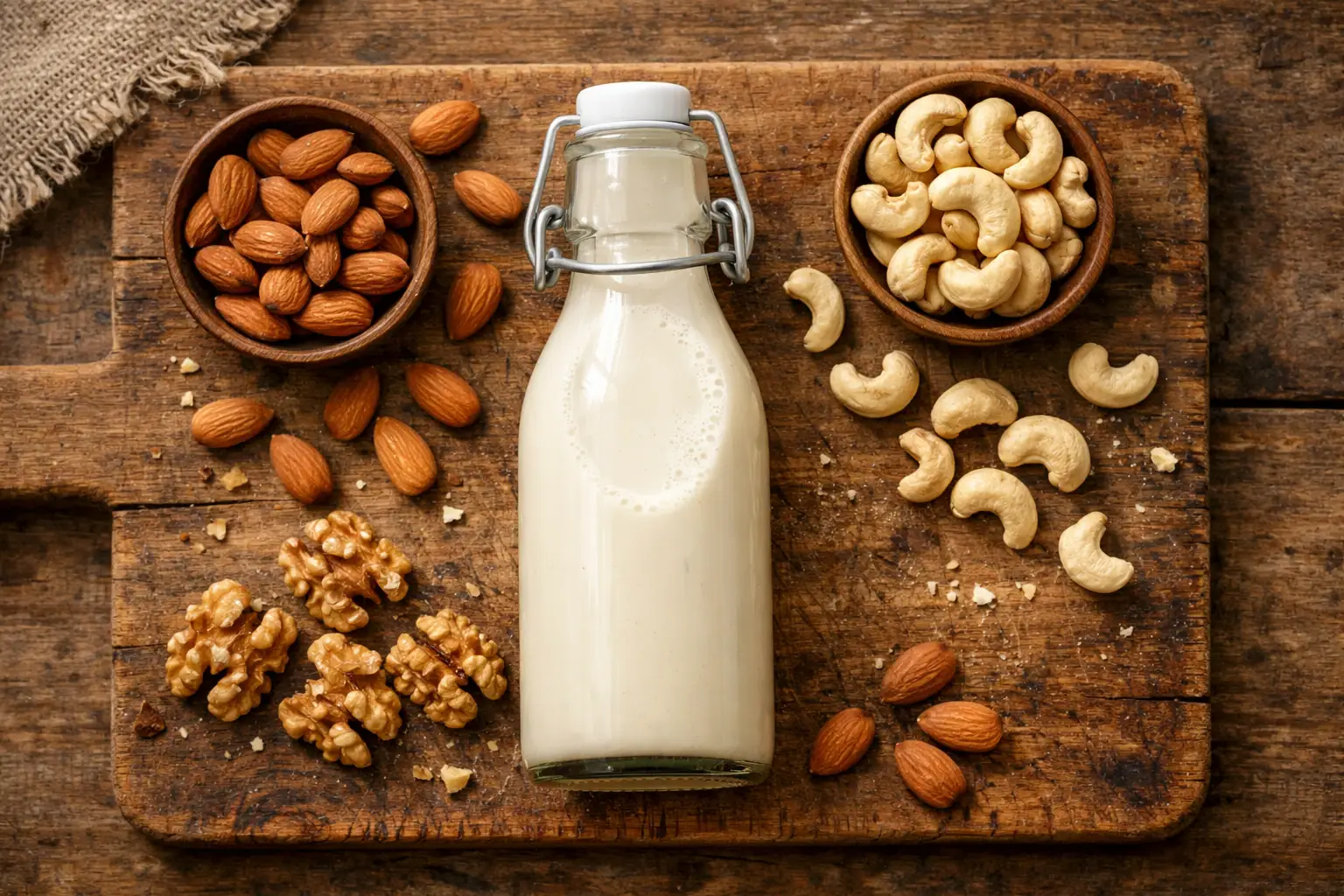
Homemade nut milk delivers clean, plant-based nutrition with only 40 calories per cup, zero added sugars, and full control over ingredients.
Quick Nutrition Facts
Per 1 Cup Homemade Almond Milk (240ml)
| Nutrient | Amount |
|---|---|
| Calories | 40 kcal |
| Protein | 1g |
| Carbohydrates | 2g |
| Fiber | 0.5g |
| Sugars | 0.5g |
| Fat | 3g |
| Vitamin E | 3.7mg |
| Calcium | 17mg |
| Magnesium | 17mg |
| Phosphorus | 24mg |
Macronutrient Breakdown
 ChatGPT
  Claude
  AI Mode
  Perplexity
NUTRITIONIST INSIGHT
Homemade nut milk retains more vitamin E and healthy fats than commercial versions because you control the nut-to-water ratio. A typical homemade batch uses 1 cup nuts to 3-4 cups water, delivering 2-3x more nutrients per serving than store-bought alternatives that contain only 2% almonds.
Myth Busters
MYTH #1: Nut Milk Has Enough Calcium to Replace Dairy
TRUTH: Unfortified homemade nut milk provides only 17mg calcium per cup vs 300mg in dairy milk. Calcium absorption from plant milks varies significantly depending on fortification and anti-nutrients. Supplement with calcium-rich foods like leafy greens, sesame seeds, or fortified options.
MYTH #2: All Nut Milks Are Low in Calories
TRUTH: Calories vary dramatically by nut type and ratio. Homemade cashew milk at a 1:3 ratio can reach 80 calories per cup, while macadamia milk tops 100 calories. The nut-to-water ratio directly determines caloric density and nutrient content.
MYTH #3: Homemade Nut Milk Lacks Protein
TRUTH: While lower than dairy (1-2g vs 8g per cup), homemade versions have more protein than most store-bought alternatives that use only 2% nuts. Boost protein by adding hemp seeds (5g per tbsp) or using a thicker nut ratio.
MYTH #4: Nut Milk Is Just Flavored Water
TRUTH: Homemade nut milk contains meaningful amounts of vitamin E, magnesium, and monounsaturated fats from whole nuts. These nutrients support heart health, skin health, and antioxidant defense. Store-bought versions with 2% nut content are closer to this myth.
MYTH #5: You Must Strain Nut Milk to Drink It
TRUTH: Unstrained nut milk retains more fiber and nutrients. Cashew milk blends completely smooth without straining. For almond or walnut milk, straining improves texture but discards the fiber-rich pulp, which can be repurposed in baking.
NutriScore by Health Goals
| Health Goal | NutriScore | Why This Score? |
|---|---|---|
| Weight Loss |  | Only 40 calories per cup with healthy fats that promote satiety. Excellent dairy swap for calorie reduction. |
| Muscle Gain |  | Low protein (1-2g per cup). Add hemp seeds or protein powder to boost. Best as a base for protein shakes. |
| Diabetes Management | | Very low GI (25), only 2g carbs per cup. A 2025 RCT showed almond-based beverages improved glycemic control in type 2 diabetes. |
| PCOS Management | | Minimal carbs and sugars reduce insulin spikes. Healthy monounsaturated fats support hormonal balance. |
| Pregnancy Nutrition |  | Good vitamin E source, but lacks calcium and vitamin D critical for fetal development. Must supplement or fortify. |
| Viral/Flu Recovery | | Gentle on upset stomach, easy to digest. Vitamin E supports immune function. Low calorie density means less energy per serving during recovery. |
PERSONALIZED NUTRITION
Track your meals with NutriScan for personalized NutriScores based on your specific health goals!
Blood Sugar Response to Homemade Nut Milk
Understanding how nut milk affects your blood glucose can help you make informed decisions about when and how to consume it.
Typical Glucose Response Curve
This chart shows typical blood glucose response for general healthy individuals. Individual responses may vary. Not medical advice.
How to Flatten the Spike
Pairing nut milk with protein or fiber slows glucose absorption and keeps blood sugar stable:
- 🌰 Add hemp seeds or chia seeds - Boosts protein and fiber for sustained energy
- 🫐 Blend with berries - Low-GI fruits add antioxidants without spiking sugar
- 🥣 Use in overnight oats - The oat fiber combined with nut milk fats slows digestion
- 🥜 Add a spoon of nut butter - Extra healthy fats further flatten the glucose curve
Nut milk already has a minimal glucose impact (GI 25), making it one of the most diabetes-friendly milk alternatives.
Cultural Significance
Nut milks have deep roots across many cultures, long predating the modern plant-based movement.
Historical Origins:
- Almond milk appears in 13th-century medieval European cookbooks as a Lenten dairy substitute
- Horchata de chufa (tiger nut milk) has been consumed in Spain since the 8th century
- Coconut milk has been a staple across Southeast Asia, South India, and the Caribbean for centuries
- West African groundnut (peanut) milk is a traditional weaning food
In India:
- Badam doodh (almond milk) is a cherished Ayurvedic tonic believed to boost brain function and immunity
- Often prepared with saffron and cardamom as a warming bedtime drink
- Cashew milk is used in traditional sweets and curries across South India
- Almond paste drinks are common during Ramadan and festivals
Modern Revival:
- The global plant milk market reached $21 billion in 2025, with DIY trending on social media
- Home nut milk machines (Almond Cow, Nutr) making homemade production easier
- Zero-waste appeal: leftover pulp used for baking, face masks, and garden compost
Compare & Substitute
DIY Nut Milks vs Other Milks (Per 240ml Cup)
| Nutrient | 🥛 DIY Almond | 🥛 DIY Cashew | 🥛 Oat Milk | 🥛 Dairy (Whole) |
|---|---|---|---|---|
| Calories | 40 kcal | 50 kcal | 120 kcal | 149 kcal |
| Carbs | 2g | 3g | 16g | 12g |
| Fiber | 0.5g | 0g | 2g | 0g |
| Protein | 1g | 2g | 3g | 8g |
| Fat | 3g | 4g | 5g | 8g |
| Calcium | 17mg | 15mg | 350mg (fortified) | 276mg |
| Sugar | 0.5g | 1g | 7g | 12g |
| Vitamin E | 3.7mg | 0.3mg | 0.2mg | 0.1mg |
| Best For | Low-cal, vitamin E | Creamiest, no strain | Coffee, baking | Protein, calcium |
Frequently Asked Questions
How many calories are in homemade nut milk?
Homemade almond milk has approximately 40 calories per cup (240ml) using a standard 1:4 nut-to-water ratio. Cashew milk runs 50 calories, walnut milk 50-60 calories, and macadamia milk 80-100 calories per cup.
Calorie control tips: Use a 1:4 ratio for lighter milk (40 cal) or 1:3 for creamier, higher-calorie milk (60 cal). Adding dates or sweeteners can add 15-30 calories per cup.
Is homemade nut milk healthier than store-bought?
Homemade nut milk is typically higher in actual nut content (15-25% nuts vs 2% in most commercial brands) and free from added sugars, gums (gellan, carrageenan), and preservatives.
Trade-off: Store-bought versions are fortified with calcium (300mg) and vitamin D (2.5mcg) that homemade lacks. If going fully homemade, supplement these nutrients from other dietary sources.
Can diabetics drink nut milk?
Unsweetened homemade nut milk is excellent for diabetes management. With only 2g carbs per cup and a glycemic index of 25, it causes minimal blood sugar impact.
Tips for diabetics:
- Always use unsweetened, no added dates or honey
- Almond milk is the best choice (lowest carbs among nut milks)
- Use as a base for low-glycemic smoothies with berries and protein
- Monitor blood sugar if adding to coffee with other sweetened ingredients
How long does homemade nut milk last?
Homemade nut milk lasts 3-5 days refrigerated in a sealed glass jar or bottle. Natural separation is normal; shake before each use.
Storage tips:
- Use clean, airtight glass containers (not plastic)
- Never leave at room temperature for more than 2 hours
- Freeze in ice cube trays for up to 3 months
- Discard if it develops sour smell, off taste, or visible mold
What can I do with leftover nut pulp?
Leftover pulp from straining is nutrient-rich and versatile. It contains most of the fiber and some protein from the original nuts.
Uses for nut pulp:
- Baking - Add to muffins, cookies, or pancake batter (replace 1/4 flour)
- Smoothie booster - Blend back into smoothies for extra fiber
- Homemade crackers - Dehydrate with seeds and spices
- Face mask - Mix with honey for a gentle exfoliating treatment
- Compost - Excellent addition to garden compost
Which nut makes the best homemade milk?
Depends on your goal:
- Mildest flavor: Almonds (most versatile, works in everything)
- Creamiest texture: Cashews (no straining needed, great in sauces)
- Richest omega-3s: Walnuts (brain health, slightly bitter)
- Most vitamin E: Almonds (3.7mg per cup, 25% daily value)
- Best for coffee: Hazelnuts (natural sweetness, froths well)
Track your daily nut milk intake with NutriScan app to see how it fits your nutrition goals.


Similar Nutritious Foods
4505 Chicharrones Classic Chili Salt
7 Eleven Japan Crispy Corn Cheese
Explore More Nutrition Tools & Resources
AI Calorie Counter App - Snap a Photo, Get Macros
AI Nutritionist App That Reads Your Logged Meals
Best Protein Supplements for Women
Bulking Meal Plan App That Sets Your Surplus
ChatGPT Calorie Counter Alternative That Keeps the Total
ChatGPT Diet Plan Alternative That Tracks What You Eat
ChatGPT Weight Loss Coach Alternative With a Food Log
Fast Food Calorie Counter App That Reads the Tray
Free Calorie Tracker App with AI Photo Scans | NutriScan
Indian Diet Plan App With Veg and Non Veg Meals
Indian Food Calorie Calculator - Get Instant Nutrition Facts for Desi Meals — 2026
Intermittent Fasting for Women, Timer and Meal Log App
Intermittent Fasting Tracker App - Free Fasting Timer
Macro Tracker App That Fills the Numbers From a Photo
Mediterranean Diet Meal Plan App That Counts the Oil
Micronutrient Tracker App for Vitamins and Minerals
MyFitnessPal Alternative That Stays Free | NutriScan
NutriScore App: A Free Grade on Every Meal | NutriScan
Nutrition Label Scanner App for the Amount You Ate
Second Trimester Protein Guide
Vegetarian Meal Plan App With a Protein Target
Voice Calorie Counter - Speak to Track Meals Hands-Free
Water and Calorie Tracker App - Free Water Log