Feijoada: Calories, Nutrition and Health Benefits
Brazil's national dish: a hearty black bean stew with pork and sausage, rich in protein, fiber, and iron for sustained energy.
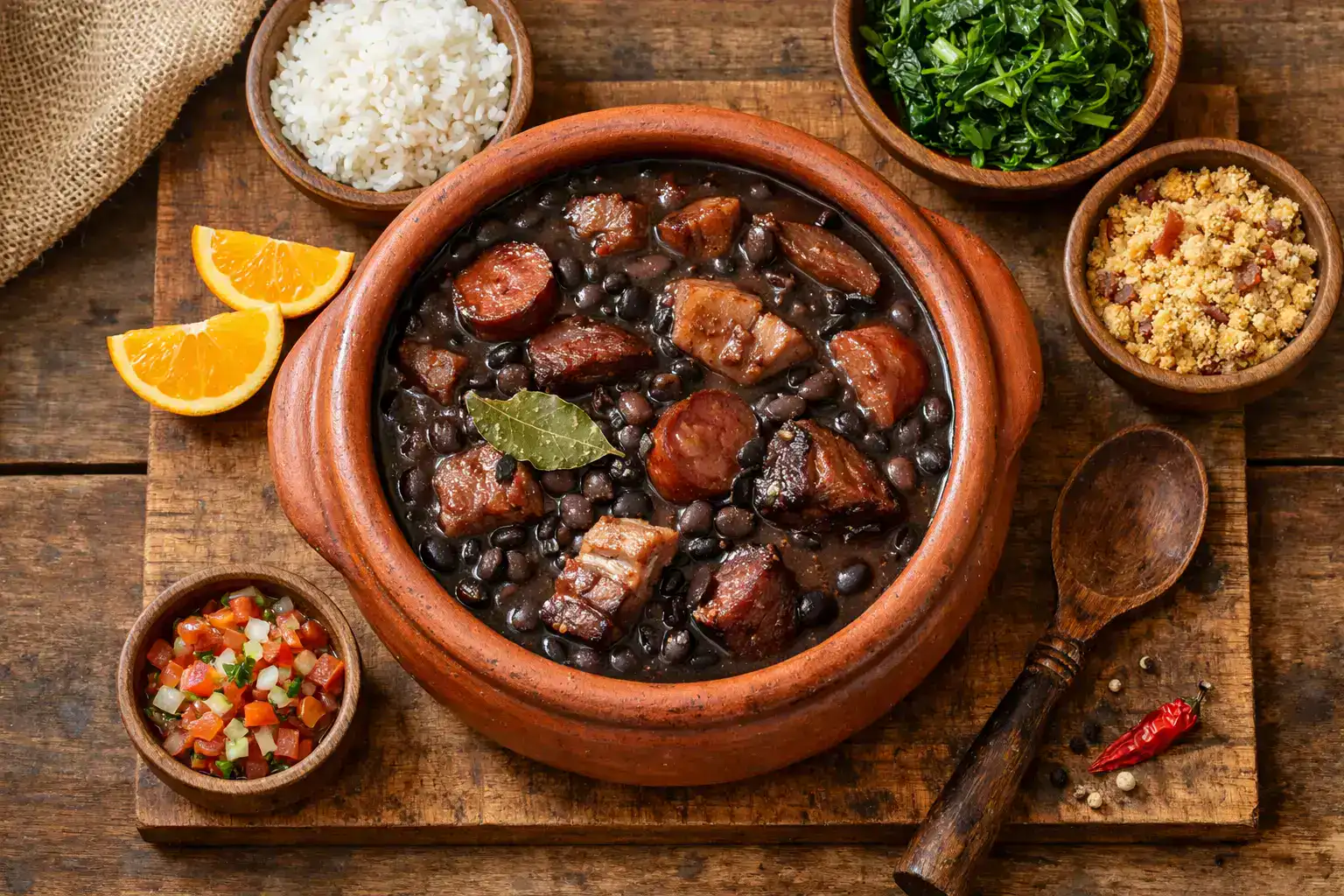
Quick Nutrition Facts
Per 1 Bowl (400g)
| Nutrient | Amount |
|---|---|
| Calories | 600 kcal |
| Protein | 40g |
| Carbohydrates | 40g |
| Fiber | 12g |
| Sugars | 4g |
| Fat | 30g |
| Saturated Fat | 10g |
| Iron | 6mg |
| Sodium | 1000mg |
| Potassium | 800mg |
Macronutrient Breakdown
 ChatGPT
  Claude
  AI Mode
  Perplexity
NUTRITIONIST INSIGHT
Feijoada's black beans provide resistant starch that feeds beneficial gut bacteria. Combining beans with rice creates a complete protein with all essential amino acids, making this traditional pairing nutritionally smart.
Myth Busters
MYTH #1: Feijoada Is Too Heavy for Weight Loss
TRUTH: Portion control is key. A 200g serving provides 300 calories with 20g protein and 6g fiber that promotes satiety. The protein-fiber combo helps control hunger for hours.
MYTH #2: Diabetics Must Avoid Feijoada Completely
TRUTH: Black beans have a low glycemic index (30-35). Studies show beans combined with rice improve glycemic response compared to rice alone. Eat smaller portions and skip the white rice for better blood sugar control.
MYTH #3: Feijoada Has No Nutritional Value
TRUTH: Feijoada is nutrient-dense with 40g protein, 6mg iron (33% DV), B vitamins, and antioxidants from black beans. The legumes provide 20-25% protein by weight, comparable to meat.
MYTH #4: All Feijoada Is Equally Unhealthy
TRUTH: Healthiness depends on preparation. Traditional versions with cured meats are higher in sodium and saturated fat. Modern recipes using lean pork, less salt, and more beans are much healthier choices.
MYTH #5: You Should Only Eat Feijoada on Saturdays
TRUTH: While Brazilians traditionally eat feijoada on Saturdays, you can enjoy it any day. What matters is frequency - limiting processed meat to once or twice weekly aligns with health recommendations.
MYTH #6: Feijoada Is Only Brazilian
TRUTH: Feijoada has Portuguese origins and variations exist throughout the Lusophone world. Portuguese feijoada uses white beans, while African and Asian versions reflect local ingredients and traditions.
NutriScore by Health Goals
| Health Goal | NutriScore | Why This Score? |
|---|---|---|
| Weight Loss |  | High protein (40g) and fiber (12g) promote fullness. Limit to 200g portions and choose leaner preparations. |
| Muscle Gain |  | Excellent 40g complete protein per serving. Carbs (40g) support glycogen replenishment post-workout. |
| Diabetes Management | | Black beans have low GI (30-35). Skip white rice, use brown rice or vegetables. Limit to 150-200g. |
| PCOS Management | | Moderate portions due to fat content. Black beans support hormone balance. Choose lean meat versions. |
| Pregnancy Nutrition |  | Good iron (6mg) and folate from beans support fetal development. Ensure meat is well-cooked. |
| Viral/Flu Recovery | | High protein supports immune function. Iron and B vitamins aid recovery. Sodium helps with hydration. |
PERSONALIZED NUTRITION
Track your meals with NutriScan for personalized NutriScores based on your specific health goals!
Blood Sugar Response to Feijoada
Understanding how feijoada affects your blood glucose can help you make informed decisions about portions and pairings.
Typical Glucose Response Curve
This chart shows typical blood glucose response for general healthy individuals. Individual responses may vary. Not medical advice.
How to Flatten the Spike
Pairing feijoada with fiber-rich vegetables and skipping white rice helps maintain stable blood sugar:
- 🥬 Collard greens (couve) - Traditional side, adds fiber and vitamins
- 🍊 Orange slices - Traditional accompaniment, vitamin C aids iron absorption
- 🥗 Side salad - Extra fiber slows digestion
- 🍚 Brown rice instead of white - Lower glycemic impact
This combination maintains the traditional meal experience while improving the metabolic response.
Cultural Significance
Feijoada is Brazil's national dish, with roots tracing back to colonial times and African influence.
In Brazil:
- Traditionally served on Saturdays, often as a social gathering meal
- Complete meal includes rice, collard greens, orange slices, farofa (toasted cassava flour), and pork cracklings
- Each region has variations: Rio de Janeiro style uses more cured meats, while Bahia uses fresh pork
- Symbol of Brazilian cultural identity and Afro-Brazilian heritage
Historical Origins:
- Adapted from Portuguese bean stews by enslaved Africans
- Originally made with cheaper pork cuts (ears, feet, tail)
- Evolved into a celebration dish embraced by all social classes
- UNESCO recognized Brazilian food culture including feijoada as cultural heritage
Global Spread:
- Portuguese feijoada uses white beans and different meats
- Cape Verdean, Angolan, and Macanese versions reflect local traditions
- Brazilian restaurants worldwide serve feijoada as signature dish
Compare & Substitute
Feijoada vs Similar Dishes (Per 100g)
| Nutrient | 🇧🇷 Feijoada | 🇺🇸 Chili con Carne | 🇬🇧 Cassoulet | 🇮🇳 Rajma (Kidney Bean Curry) |
|---|---|---|---|---|
| Calories | 150 kcal | 120 kcal | 180 kcal | 110 kcal |
| Carbs | 10g | 10g | 12g | 15g |
| Fiber | 3g | 3g | 2.5g | 4g |
| Protein | 10g | 9g | 12g | 6g |
| Fat | 7.5g | 5g | 10g | 4g |
| Iron | 1.5mg | 1.8mg | 1.2mg | 1.6mg |
| Sodium | 250mg | 350mg | 400mg | 300mg |
| Best For | Complete protein, tradition | Lower fat, quick meals | Rich flavor, slow cooking | Vegetarian protein, low fat |
Frequently Asked Questions
Is feijoada good for weight loss?
Feijoada can support weight loss with portion control. A 200g serving provides 300 calories with 20g protein and 6g fiber that keeps you full for hours.
Best practices: Limit to once weekly, choose 200g portions, use lean pork cuts, add extra vegetables, skip seconds on rice.
Can diabetics eat feijoada?
Diabetics can enjoy feijoada in moderation. Black beans have a low glycemic index (30-35) and the protein-fat content slows glucose absorption.
Tips for diabetics:
- Limit portion to 150-200g
- Skip white rice or use brown rice
- Add extra collard greens for fiber
- Monitor blood sugar 2 hours after eating
The fiber and protein help prevent blood sugar spikes. Always consult your healthcare provider.
How much protein is in feijoada?
A traditional 400g serving contains 40g of protein from black beans and mixed pork cuts. Per 100g, feijoada provides about 10g of complete protein.
For muscle building, feijoada offers complete protein when beans combine with rice. Post-workout, a moderate portion supports recovery.
What are the main health benefits of feijoada?
Key Benefits:
- Muscle Maintenance: 40g protein per serving supports muscle health
- Digestive Health: 12g fiber promotes gut health and regularity
- Blood Health: 6mg iron (33% DV) prevents anemia
- Energy Production: B vitamins support metabolism
- Heart Health: Black bean antioxidants and fiber support cardiovascular function
- Gut Microbiome: Resistant starch in beans feeds beneficial bacteria
Is feijoada high in sodium?
Traditional feijoada contains 800-1200mg sodium per serving from cured meats and sausages.
To reduce sodium:
- Use fresh pork instead of cured meats
- Rinse canned beans thoroughly
- Reduce added salt in cooking
- Choose low-sodium sausage options
Those with hypertension should limit portions or choose homemade versions with controlled sodium.
How often can I eat feijoada?
General Guidelines:
- 1-2 times weekly - Most people enjoying traditional recipes
- Once weekly - Weight loss or heart health concerns
- 2-3 times weekly - Athletes or muscle gain goals (lean versions)
The WHO recommends limiting processed meat intake. Choose versions with more beans and less cured meats when possible.
What are the traditional side dishes?
Complete feijoada meal includes:
- White rice - Absorbs the rich broth
- Couve (collard greens) - Sauteed with garlic
- Farofa - Toasted cassava flour, adds crunch
- Orange slices - Aids iron absorption, cleanses palate
- Torresmo - Pork cracklings (optional, high fat)
- Pimenta - Hot pepper sauce
Can I make feijoada healthier?
Healthier modifications:
- Use lean pork loin instead of fatty cuts
- Increase bean-to-meat ratio
- Add more vegetables to the stew
- Use brown rice or cauliflower rice
- Reduce or eliminate cured meats
- Cook with less oil and salt
These changes can reduce calories by 30% and sodium by 50% while maintaining flavor.


Similar Nutritious Foods
4505 Chicharrones Classic Chili Salt
7 Eleven Japan Crispy Corn Cheese
Explore More Nutrition Tools & Resources
AI Calorie Counter App - Snap a Photo, Get Macros
AI Nutritionist App That Reads Your Logged Meals
Best Protein Supplements for Women
Bulking Meal Plan App That Sets Your Surplus
ChatGPT Calorie Counter Alternative That Keeps the Total
ChatGPT Diet Plan Alternative That Tracks What You Eat
ChatGPT Weight Loss Coach Alternative With a Food Log
Fast Food Calorie Counter App That Reads the Tray
Free Calorie Tracker App with AI Photo Scans | NutriScan
Indian Diet Plan App With Veg and Non Veg Meals
Indian Food Calorie Calculator - Get Instant Nutrition Facts for Desi Meals — 2026
Intermittent Fasting for Women, Timer and Meal Log App
Intermittent Fasting Tracker App - Free Fasting Timer
Macro Tracker App That Fills the Numbers From a Photo
Mediterranean Diet Meal Plan App That Counts the Oil
Micronutrient Tracker App for Vitamins and Minerals
MyFitnessPal Alternative That Stays Free | NutriScan
NutriScore App: A Free Grade on Every Meal | NutriScan
Nutrition Label Scanner App for the Amount You Ate
Second Trimester Protein Guide
Vegetarian Meal Plan App With a Protein Target
Voice Calorie Counter - Speak to Track Meals Hands-Free
Water and Calorie Tracker App - Free Water Log