French Fries: Calories, Nutrition and Health Risks
Popular fast-food staple with high calories, fat, and sodium - understand the health risks and discover healthier potato alternatives.
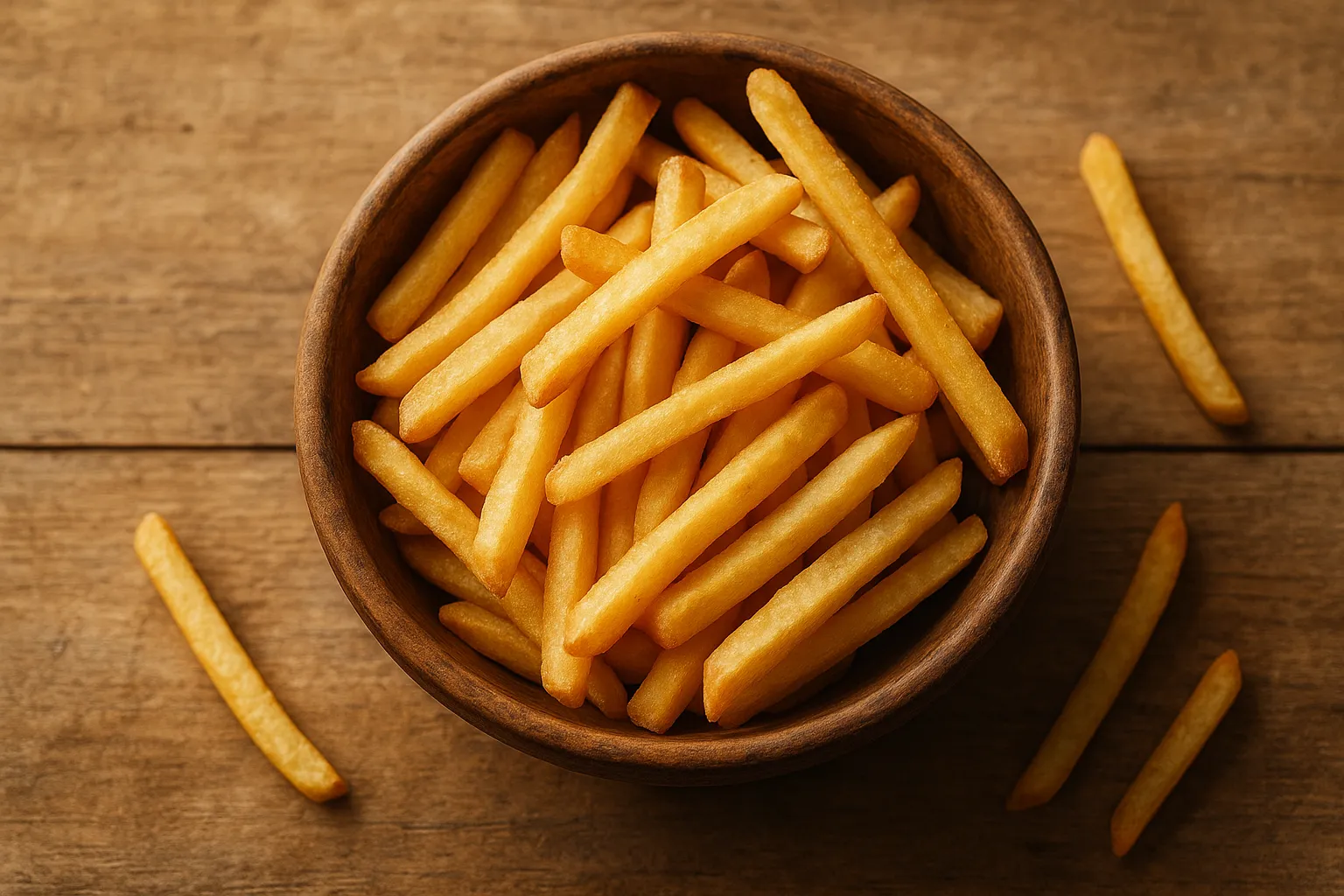
Quick Nutrition Facts
Per 100g French Fries (Deep-fried)
| Nutrient | Amount |
|---|---|
| Calories | 312 kcal |
| Protein | 3.4g |
| Carbohydrates | 41g |
| Fiber | 3.8g |
| Sugars | 0.3g |
| Fat | 15g |
| Sodium | 210mg |
| Potassium | 451mg |
| Vitamin C | 9.7mg |
| Acrylamide | 150-4000 µg |
Macronutrient Breakdown
 ChatGPT
  Claude
  AI Mode
  Perplexity
NUTRITIONIST INSIGHT
French fries increase type 2 diabetes risk by 20% compared to baked potatoes, primarily due to deep-frying in oil and acrylamide formation at high temperatures. Preparation method dramatically changes nutritional impact.
Myth Busters
MYTH #1: French Fries Are Just Potatoes, So They're Healthy
TRUTH: While potatoes themselves are nutritious, deep-frying transforms them into a high-calorie, high-fat food. French fries contain 312 calories and 15g fat per 100g vs baked potato's 93 calories and 0.1g fat. The preparation method determines health impact, not the base ingredient.
MYTH #2: All Potato Preparations Have the Same Diabetes Risk
TRUTH: A major BMJ study found french fries increase type 2 diabetes risk by 20%, while baked, boiled, or mashed potatoes show no significant risk increase. The high-temperature frying process and oil absorption create metabolic problems beyond just carbohydrates.
MYTH #3: Acrylamide in Fries Isn't a Real Concern
TRUTH: Acrylamide forms when starchy foods are fried above 120°C, creating a probable carcinogen. French fries contain 150-4000 µg acrylamide per kg, with darker, crispier fries having higher levels. WHO and FDA recommend limiting high-temperature fried foods.
MYTH #4: Air-Fried Fries Are Just as Unhealthy
TRUTH: Air-fried fries contain 50-60% fewer calories (130-150 kcal vs 312 kcal per 100g) and 75% less fat (3-4g vs 15g). While they still have carbohydrates, eliminating deep-frying reduces acrylamide, fat, and calorie concerns significantly.
MYTH #5: Sweet Potato Fries Are a Healthy Alternative
TRUTH: Sweet potato fries are often just as caloric as regular fries when deep-fried (340 kcal per 100g). The "health halo" misleads people to eat larger portions. Baked sweet potato wedges are genuinely healthier, but fried sweet potato fries offer minimal nutritional advantage.
MYTH #6: Restaurant Fries Are the Same as Homemade
TRUTH: Restaurant fries often have 30-50% more calories due to larger portions, double-frying technique, extra salt, and reused oil. Fast-food large fries can exceed 500-600 calories. Homemade baked or air-fried versions offer better portion and quality control.
NutriScore by Health Goals
| Health Goal | NutriScore | Why This Score? |
|---|---|---|
| Weight Loss |  | 312 calories per 100g (medium serving = 365 cal), high fat triggers overconsumption, high GI causes hunger rebounds. Avoid or limit to once monthly. |
| Muscle Gain |  | Provides carbs (41g) for energy but minimal protein (3.4g), excessive fat, poor nutrient density. Better carb sources exist (rice, sweet potatoes). |
| Diabetes Management | | +20% diabetes risk with regular consumption, high GI (75), fat impairs insulin sensitivity. Strongly avoid. |
| PCOS Management | | High GI worsens insulin resistance (key PCOS driver), trans fats from frying increase inflammation. Eliminate from diet. |
| Pregnancy Nutrition | | Acrylamide exposure during pregnancy may affect fetal development. High sodium increases fluid retention risk. Occasional only, avoid in 1st trimester. |
| Viral/Flu Recovery | | High fat slows digestion, low nutrient density, sodium may dehydrate. Not ideal for recovery - choose easily digestible whole foods. |
PERSONALIZED NUTRITION
Track your meals with NutriScan for personalized NutriScores based on your specific health goals!
Blood Sugar Response to French Fries
Understanding the dramatic glucose spike from french fries helps explain their diabetes risk and weight gain potential.
Typical Glucose Response Curve
*This chart shows typical blood glucose response for general healthy individuals. Individual responses may vary. Not medical advice.*
Why French Fries Cause Such High Blood Sugar Spikes
The combination of high glycemic index (75), refined starch, and fat creates a perfect storm for blood sugar dysregulation:
- High GI (75): Rapidly converts to glucose, causing sharp insulin spike
- Fat absorption: 15g fat slows initial digestion but prolongs elevation
- Lack of fiber: Minimal resistant starch after high-temperature frying
- Large portions: Restaurant servings often 150-200g, amplifying effect
Healthier Alternatives That Won't Spike Blood Sugar
- 🥔 Baked potato wedges with skin - GI 60, more fiber, 70% fewer calories
- 🥔 Boiled potatoes (cooled) - Resistant starch forms, lower GI, no added fat
- 🍠 Baked sweet potato - Lower GI (44-61), higher fiber, more micronutrients
- 🥕 Roasted vegetable medley - Carrots, parsnips, beets with minimal oil
Traditional Indian alternatives like baked aloo tikki or air-fried potato chaat provide similar satisfaction with better nutrition.
Cultural Significance
French fries, despite their name, have Belgian origins dating to the late 1600s, though the exact history is disputed between Belgium and France.
Global Adoption:
- Became American fast-food icon in 1940s with McDonald's standardization
- Americans consume average 30 pounds of french fries per person annually
- Global market exceeds $90 billion USD (2024), driven by fast-food chains
- Belgium celebrates "National Fries Day" and considers fries cultural heritage
In India:
- Introduced via Western fast-food chains (McDonald's 1996, KFC 1995)
- Often served with Indian flavors: masala fries, peri-peri, cheese chili fries
- Popular street food fusion: french fries chaat with chutneys
- Growing health consciousness prompting shift to air-fried and baked alternatives
Health Movement Impact:
- European countries implementing "fat taxes" on fried foods
- WHO and national health organizations recommend limiting consumption
- Rise of air fryer technology (2010s) creating healthier homemade options
- Many schools globally removing or limiting fries in cafeterias
Compare & Substitute
French Fries vs Healthier Potato Preparations (Per 100g)
| Nutrient | 🍟 French Fries (Fried) | 🥔 Baked Potato | 🥔 Boiled Potato | 🍠 Sweet Potato (Baked) | 🥕 Roasted Carrots |
|---|---|---|---|---|---|
| Calories | 312 kcal | 93 kcal | 87 kcal | 90 kcal | 35 kcal |
| Carbs | 41g | 21g | 20g | 21g | 8g |
| Fiber | 3.8g | 2.1g | 1.8g | 3g | 3g |
| Protein | 3.4g | 2.5g | 1.9g | 2g | 0.8g |
| Fat | 15g | 0.1g | 0.1g | 0.2g | 0.2g |
| Sodium | 210mg | 6mg | 6mg | 36mg | 69mg |
| GI | 75 | 60 | 50 | 44-61 | 35 |
| Acrylamide | High (150-4000µg) | Low-Moderate | None | Low | None |
| Best For | Occasional treat only | Balanced meal, post-workout | Weight loss, diabetes | Nutrient density, pre-workout | Weight loss, diabetes |
Frequently Asked Questions
Are french fries bad for weight loss?
Yes, french fries are highly detrimental to weight loss for multiple reasons:
Calorie density: A medium serving (365 calories) can represent 18-25% of daily calorie needs while providing minimal satiety. The high fat content (15g per 100g) contributes 45% of calories from fat.
Glycemic impact: The high GI (75) causes rapid blood sugar spike followed by crash, triggering increased hunger and cravings within 2-3 hours.
Portion distortion: Restaurant servings often 150-200g contain 470-625 calories before sauces. People rarely eat the "official" serving size.
Recommendation: Avoid during weight loss phase; if consumed, limit to small serving (71g = 222 cal) once weekly maximum. Choose baked or air-fried alternatives (130-150 cal per 100g) for better results.
Can diabetics eat french fries?
Diabetics should strongly minimize or eliminate french fries from their diet. Research provides clear evidence:
Diabetes risk: A major BMJ study tracking 200,000+ participants found that higher intake of french fries was associated with 20% increased risk of type 2 diabetes, while baked/boiled potatoes showed no such association.
Blood sugar impact:
- High glycemic index (75) causes rapid glucose spike
- Fat content (15g) prolongs blood sugar elevation
- Combination impairs insulin sensitivity over time
Safer alternatives: Baked potato with skin (GI 60), boiled potatoes cooled for resistant starch formation, or air-fried preparations with minimal oil (3-4g fat vs 15g).
If consumed: Small portion (50g max), paired with high-protein and fiber foods, test blood sugar 2 hours later to understand personal response. Always consult healthcare provider or dietitian.
How many calories are in french fries?
French fries calorie content varies by serving size and preparation method:
Standard deep-fried:
- Small serving (71g): 222 calories
- Medium serving (117g): 365 calories
- Large serving (154g): 480 calories
- Per 100g: 312 calories
Restaurant variations:
- Fast-food large: 500-600 calories (larger portions, double-frying)
- Restaurant side: 350-450 calories
- Loaded/cheese fries: 600-900 calories (added toppings)
Healthier preparations (per 100g):
- Air-fried: 130-150 calories (50-60% reduction)
- Oven-baked: 150-180 calories
- Boiled then baked: 100-120 calories
Track portions carefully - the difference between small and large servings can be 250+ calories, equivalent to a full meal for some weight loss plans.
What makes french fries unhealthy?
French fries are problematic for health due to multiple factors working synergistically:
1. Deep-frying process:
- Absorbs 8-15g fat per 100g, mostly from vegetable oils
- Creates trans fats when oil is reused (common in restaurants)
- Destroys heat-sensitive vitamins (C, B vitamins)
2. Acrylamide formation:
- Carcinogenic compound formed at frying temperatures above 120°C
- French fries contain 150-4000 µg acrylamide per kg
- Darker, crispier fries have higher acrylamide levels
- Long-term exposure linked to increased cancer risk in animal studies
3. High glycemic index (75):
- Rapid blood sugar spike triggers insulin surge
- Promotes fat storage and hunger rebound
- Repeated consumption impairs insulin sensitivity
4. High sodium:
- 210-300mg per 100g (restaurant versions higher)
- Contributes to hypertension and fluid retention
- Often contains 15-20% of daily sodium limit in one serving
5. Nutrient-poor:
- Most beneficial potato nutrients (vitamin C, potassium, B vitamins) lost in processing
- Empty calories with minimal protein, vitamins, or minerals
- Displaces more nutritious foods in diet
Are baked fries healthier than fried?
Yes, baked fries are significantly healthier across all nutritional metrics:
Calorie reduction: Baked fries contain 130-180 calories per 100g vs 312 for deep-fried - a 42-60% reduction. This difference makes baked fries more compatible with weight management.
Fat reduction: Baked fries have 3-4g fat vs 15g in deep-fried - a 73-80% reduction. This dramatically lowers calorie density and reduces cardiovascular risk.
Acrylamide reduction: Baking at lower temperatures (200-220°C) creates less acrylamide than deep-frying at 175-190°C. Air-frying further reduces acrylamide formation.
Nutrient retention: Baking better preserves vitamin C, potassium, and B vitamins compared to deep-frying's high heat and oil exposure.
Best preparation methods:
- Air fryer: Crispy texture with 1-2 tsp oil, 130-150 cal per 100g
- Oven-baked: Cut potatoes, toss with 1 tbsp oil per 500g, bake at 220°C
- Parboil then bake: Boil 5 min, drain, toss with minimal oil, bake - creates crispy exterior with fluffy interior
Tips: Use russet or Yukon gold potatoes; cut uniform thickness; don't overcrowd pan; flip halfway through for even browning.
What is acrylamide and why is it dangerous?
Acrylamide is a chemical compound that forms when starchy foods are cooked at high temperatures (above 120°C/248°F), particularly through frying, baking, or roasting.
How it forms:
- Created through Maillard reaction between amino acid asparagine and reducing sugars
- Higher temperatures and longer cooking times increase formation
- Brown, crispy foods generally have higher acrylamide content
Health concerns:
- Classified as "probably carcinogenic to humans" by International Agency for Research on Cancer (IARC)
- Animal studies show increased cancer risk (particularly reproductive and kidney cancers)
- Human evidence still developing but suggests possible cancer association
- May also affect nervous system and reproductive health
Foods highest in acrylamide:
- French fries: 150-4000 µg/kg (varies by cooking method and temperature)
- Potato chips: 300-5500 µg/kg
- Toast (very dark): 100-150 µg/kg
- Coffee: 200-400 µg/kg (lower risk due to different compounds)
Reducing exposure:
- Choose baked over fried potatoes
- Don't overcook or burn foods
- Aim for golden yellow, not dark brown
- Soak potato slices in water 15-30 minutes before cooking (reduces asparagine)
- Store potatoes properly (not in fridge - cold increases sugar content)
- Air-frying at 180-200°C produces less acrylamide than deep-frying
Perspective: While concerning, acrylamide risk depends on overall diet pattern. Occasional consumption unlikely to cause harm; regular consumption of high-acrylamide foods (several times weekly) warrants concern.
How often can I eat french fries?
The frequency of french fries consumption should depend on your health status and goals:
For general health (no specific conditions):
- Maximum: Once weekly in small-medium portions (70-115g)
- Ideal: Once monthly or less
- Choose: Baked or air-fried versions when possible
For weight loss:
- Active weight loss phase: Avoid completely or once monthly maximum (small serving)
- Maintenance phase: Once every 2 weeks, account for calories in daily budget
- Alternative: Baked fries weekly as a sustainable substitute
For diabetes/prediabetes:
- Strongly avoid deep-fried versions due to 20% increased diabetes risk
- If consumed: Once monthly maximum, small portion (50g), paired with protein and vegetables
- Better choice: Baked potato wedges or air-fried alternatives
For PCOS:
- Avoid due to high GI and insulin resistance concerns
- Rare occasions: Once every 4-6 weeks, smallest portion available
For heart disease/high cholesterol:
- Minimize due to high fat and trans fat concerns
- Alternative: Oven-baked with olive oil once weekly
For children:
- Limit to special occasions (birthday parties, monthly outings)
- Home preparation: Air-fried or baked versions as healthier routine option
- Portion: Child-appropriate servings (40-70g depending on age)
General principle: French fries should be treated as an occasional indulgence, not a dietary staple. When consumed, make it mindful and enjoyable rather than habitual and unconscious.
Are sweet potato fries healthier?
The answer depends entirely on preparation method - the sweet potato itself offers nutritional advantages, but deep-frying negates most benefits:
Deep-fried sweet potato fries:
- Calories: 340 kcal per 100g (similar to regular fries' 312 kcal)
- Fat: 14-16g (similar to regular fries' 15g)
- Sodium: 190-250mg
- Acrylamide: Present, though potentially lower than regular fries
- Verdict: Minimal health advantage; "health halo" misleads to larger portions
Baked sweet potato fries (or wedges):
- Calories: 120-150 kcal per 100g (65% less than fried)
- Fat: 3-4g with minimal oil
- Fiber: 3-4g (more than regular potato)
- Vitamin A: 14,187 IU (283% DV) - major advantage
- Lower GI: 44-61 vs 75 for regular fries
- Verdict: Genuinely healthier alternative
Nutritional advantages of sweet potatoes (when baked/roasted):
- Rich in beta-carotene (vitamin A precursor) for eye health
- Higher fiber content for better blood sugar control
- Lower glycemic index reduces insulin spikes
- More antioxidants (anthocyanins in purple varieties)
Bottom line: Baked or air-fried sweet potato wedges are a healthier choice. Deep-fried sweet potato fries are nutritionally similar to regular fries and should be treated as the same category of indulgence food.




Similar Foods & Alternatives
4505 Chicharrones Classic Chili Salt
7 Eleven Japan Crispy Corn Cheese
Explore More Nutrition Tools & Resources
AI Calorie Counter App - Snap a Photo, Get Macros
AI Nutritionist App That Reads Your Logged Meals
Best Protein Supplements for Women
Bulking Meal Plan App That Sets Your Surplus
ChatGPT Calorie Counter Alternative That Keeps the Total
ChatGPT Diet Plan Alternative That Tracks What You Eat
ChatGPT Weight Loss Coach Alternative With a Food Log
Fast Food Calorie Counter App That Reads the Tray
Free Calorie Tracker App with AI Photo Scans | NutriScan
Indian Diet Plan App With Veg and Non Veg Meals
Indian Food Calorie Calculator - Get Instant Nutrition Facts for Desi Meals — 2026
Intermittent Fasting for Women, Timer and Meal Log App
Intermittent Fasting Tracker App - Free Fasting Timer
Macro Tracker App That Fills the Numbers From a Photo
Mediterranean Diet Meal Plan App That Counts the Oil
Micronutrient Tracker App for Vitamins and Minerals
MyFitnessPal Alternative That Stays Free | NutriScan
NutriScore App: A Free Grade on Every Meal | NutriScan
Nutrition Label Scanner App for the Amount You Ate
Second Trimester Protein Guide
Vegetarian Meal Plan App With a Protein Target
Voice Calorie Counter - Speak to Track Meals Hands-Free
Water and Calorie Tracker App - Free Water Log