Fresh Salad: Calories, Nutrition and Health Benefits
Nature's ultimate wellness meal—crisp, hydrating, and packed with vitamins, minerals, and fiber for every health goal.
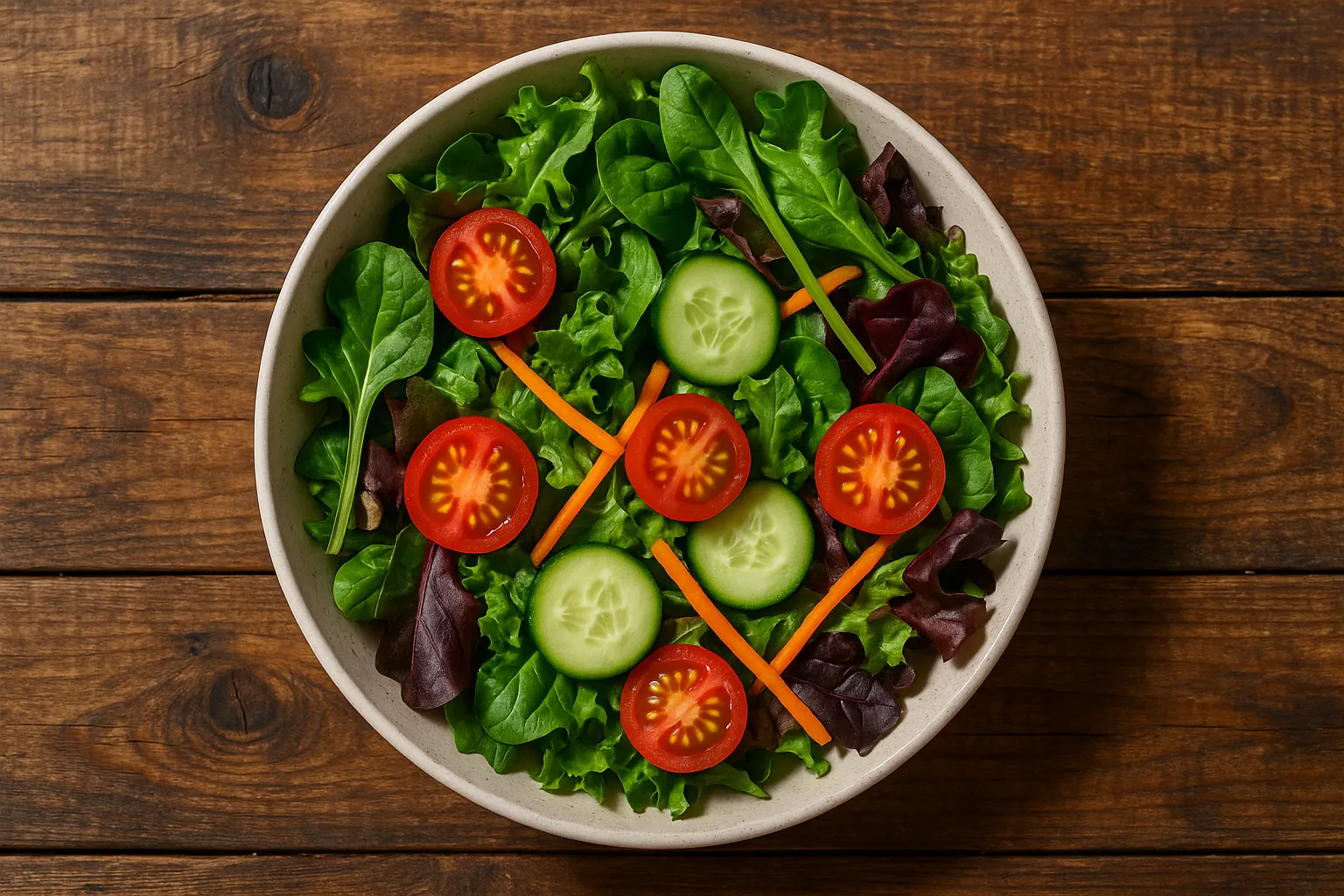
Quick Nutrition Facts
Per 1 Cup Fresh Salad (100g, Mixed Greens)
| Nutrient | Amount |
|---|---|
| Calories | 25 kcal |
| Protein | 1.8g |
| Carbohydrates | 4.3g |
| Fiber | 1.2g |
| Sugars | 0.8g |
| Fat | 0.3g |
| Vitamin A | 8,840 IU |
| Vitamin C | 6.3mg |
| Potassium | 290mg |
| Folate | 63mcg |
Macronutrient Breakdown
 ChatGPT
  Claude
  AI Mode
  Perplexity
NUTRITIONIST INSIGHT
Fresh salad is the ultimate negative-calorie food with exceptional nutrient density. The fiber in leafy greens feeds healthy gut bacteria while vitamins A & K are 10x more bioavailable when paired with healthy fats from olive oil or nuts.
Myth Busters
MYTH #1: Salad Alone Isn't a Complete Meal
TRUTH: While salad provides vitamins, minerals, and fiber, adding lean protein (chicken, fish, tofu) and healthy fats (olive oil, nuts) creates a nutritionally complete meal that sustains energy and satisfies hunger for hours.
MYTH #2: All Salad Dressing Is Unhealthy
TRUTH: Healthy fats in olive oil dressing enhance absorption of fat-soluble vitamins (A, K, D, E) from vegetables. Use olive oil-based dressings; limit creamy varieties high in saturated fats.
MYTH #3: Salad Is Only for Weight Loss
TRUTH: Salad supports every health goal. Athletes use salads for recovery nutrients; diabetics benefit from low glycemic load; pregnant women need folate and vitamins in greens; muscle-gain athletes pair salad with protein-rich toppings for micronutrient coverage.
MYTH #4: Raw Vegetables Are Always Better Than Cooked
TRUTH: Raw maximizes vitamin C and enzymes; cooking increases lycopene (tomatoes) and beta-carotene (carrots) absorption. Mix raw and lightly cooked vegetables in salads for optimal nutrient uptake.
MYTH #5: Iceberg Lettuce Has No Nutrition
TRUTH: While iceberg is lower in nutrients than leafy greens, it's hydrating and contains folate, vitamin K, and chromium. Rotate with dark leafy greens (spinach, kale) for maximum nutrient density.
MYTH #6: Salad Makes You Hungrier Later
TRUTH: High-fiber salads with protein stabilize blood sugar and appetite hormones, keeping you fuller longer compared to processed foods.
NutriScore by Health Goals
| Health Goal | NutriScore | Why This Score? |
|---|---|---|
| Weight Loss |  | Ultra-low calorie (25 cal/cup), high fiber (1.2g) promotes fullness, nutrient-dense, zero guilt. Add lean protein; avoid heavy dressings. |
| Muscle Gain |  | Micronutrient powerhouse supports recovery; add grilled chicken, fish, or tofu to reach 25g protein per serving. |
| Diabetes Management | | Low glycemic index, high fiber slows glucose absorption, minimal impact on blood sugar. Pair with protein and healthy fats. |
| PCOS Management | | Low-carb, anti-inflammatory, supports insulin sensitivity. Add omega-3 rich fish or flax seeds. |
| Pregnancy Nutrition | | Rich in folate (63mcg), vitamin K, iron. Leafy greens reduce birth defects and support fetal development. Wash thoroughly. |
| Viral/Flu Recovery | | High vitamin C (6.3mg) supports immunity, hydrating, easy to digest, antioxidants reduce inflammation during recovery. |
PERSONALIZED NUTRITION
Track your meals with NutriScan for personalized NutriScores based on your specific health goals!
Blood Sugar Response to Fresh Salad
Fresh salad has minimal impact on blood glucose, making it ideal for all, especially those managing diabetes or prediabetes.
Typical Glucose Response Curve
This chart shows typical blood glucose response for general healthy individuals. Individual responses may vary. Not medical advice.
How to Enhance Nutrient Absorption
Pairing fresh salad with healthy fats and protein optimizes nutrient bioavailability:
- 🥗 Olive oil dressing - Enhances vitamin K, A, D, E absorption
- 🐔 Grilled chicken - Complete protein, iron, amino acids
- 🥜 Nuts and seeds - Healthy fats, vitamin E, magnesium
- 🥚 Hard-boiled eggs - Choline, selenium, complete protein
This combination maximizes micronutrient uptake and extends satiety hormone response.
Cultural Significance
Salads have evolved across cultures, from ancient Roman simple greens to global farm-to-table cuisine.
In India:
- Fresh vegetable salads (kachumber, cucumber raita) part of every meal
- Seasonal vegetables celebrated: leafy greens in winter, tomatoes in summer
- Ayurveda recommends raw vegetables for digestive fire (agni) balance
- Salad leaves used in regional cuisine (spinach, mustard greens, fenugreek leaves)
Global Impact:
- Mediterranean diet—heart health foundation built on abundant raw vegetables
- Modern wellness culture—salad bars and smoothie bowls trending globally
- Sustainability focus—local, seasonal vegetables reduce carbon footprint
- Growing recognition of plant-based nutrition for health and environment
Compare & Substitute
Fresh Salad vs Similar Vegetables (Per 100g)
| Nutrient | 🥗 Fresh Salad | 🥦 Broccoli | 🥬 Spinach | 🥒 Cucumber |
|---|---|---|---|---|
| Calories | 25 kcal | 34 kcal | 23 kcal | 16 kcal |
| Carbs | 4.3g | 6.4g | 3.6g | 3.6g |
| Fiber | 1.2g | 2.4g | 2.2g | 0.5g |
| Protein | 1.8g | 2.8g | 2.9g | 0.7g |
| Fat | 0.3g | 0.4g | 0.4g | 0.2g |
| Vitamin A | 8,840 IU | 5,600 IU | 10,188 IU | 1,050 IU |
| Vitamin C | 6.3mg | 89mg | 13.3mg | 3.2mg |
| Folate | 63mcg | 71mcg | 194mcg | 19mcg |
| Best For | Light meal, weight loss | High vitamin C, muscle repair | Iron, folate, pregnancy nutrition | Hydration, low-calorie snack |
Frequently Asked Questions
Is fresh salad good for weight loss?
Yes, fresh salad is ideal for weight loss at just 25 calories per cup. The 1.2g fiber per cup promotes fullness; focus on dark leafy greens and colorful vegetables. Add lean protein (grilled chicken, tofu) and healthy fats (olive oil, nuts) to create satisfying meals that support sustained weight loss without hunger.
Can diabetics eat fresh salad?
Absolutely. Fresh salad has minimal impact on blood glucose due to low carbohydrates (4.3g/cup) and high fiber (1.2g). Choose non-starchy vegetables; limit high-carb toppings (croutons, sugary dressings); add protein source for blood sugar stability and increased satiety.
How much protein is in fresh salad?
Fresh salad provides 1.8g protein per 100g (0.5 cup). To create protein-rich salads, add grilled chicken (26g), fish (25g), Greek yogurt (20g), legumes (15g), or nuts (6g per ounce). Target 20-30g protein per meal.
What are the health benefits of fresh salad?
Fresh salad delivers antioxidants from colorful vegetables, vitamin C for immunity, folate for cell health, vitamin K for bone strength, potassium for blood pressure regulation, and fiber for digestive health. Phytonutrients in vegetables reduce inflammation and support cardiovascular wellness.
When is the best time to eat fresh salad?
Salad works anytime: lunch or dinner as main meal, mid-afternoon as fiber-rich snack, or pre-workout for hydration. Pair with protein source for balanced nutrition; combine with whole grains for complete carbohydrate utilization by athletes.
Should I use salad dressing?
Yes. Healthy fats in olive oil, avocado, or nut-based dressings enhance absorption of fat-soluble vitamins (A, K, D, E) from vegetables. Use homemade olive oil and lemon juice dressing; limit commercial dressings high in added sugars and sodium (≤2 tablespoons per serving).


Similar Nutritious Vegetables
4505 Chicharrones Classic Chili Salt
7 Eleven Japan Crispy Corn Cheese
Explore More Nutrition Tools & Resources
AI Calorie Counter App - Snap a Photo, Get Macros
AI Nutritionist App That Reads Your Logged Meals
Best Protein Supplements for Women
Bulking Meal Plan App That Sets Your Surplus
ChatGPT Calorie Counter Alternative That Keeps the Total
ChatGPT Diet Plan Alternative That Tracks What You Eat
ChatGPT Weight Loss Coach Alternative With a Food Log
Fast Food Calorie Counter App That Reads the Tray
Free Calorie Tracker App with AI Photo Scans | NutriScan
Indian Diet Plan App With Veg and Non Veg Meals
Indian Food Calorie Calculator - Get Instant Nutrition Facts for Desi Meals — 2026
Intermittent Fasting for Women, Timer and Meal Log App
Intermittent Fasting Tracker App - Free Fasting Timer
Macro Tracker App That Fills the Numbers From a Photo
Mediterranean Diet Meal Plan App That Counts the Oil
Micronutrient Tracker App for Vitamins and Minerals
MyFitnessPal Alternative That Stays Free | NutriScan
NutriScore App: A Free Grade on Every Meal | NutriScan
Nutrition Label Scanner App for the Amount You Ate
Second Trimester Protein Guide
Vegetarian Meal Plan App With a Protein Target
Voice Calorie Counter - Speak to Track Meals Hands-Free
Water and Calorie Tracker App - Free Water Log