Furikake: Calories, Nutrition and Health Benefits
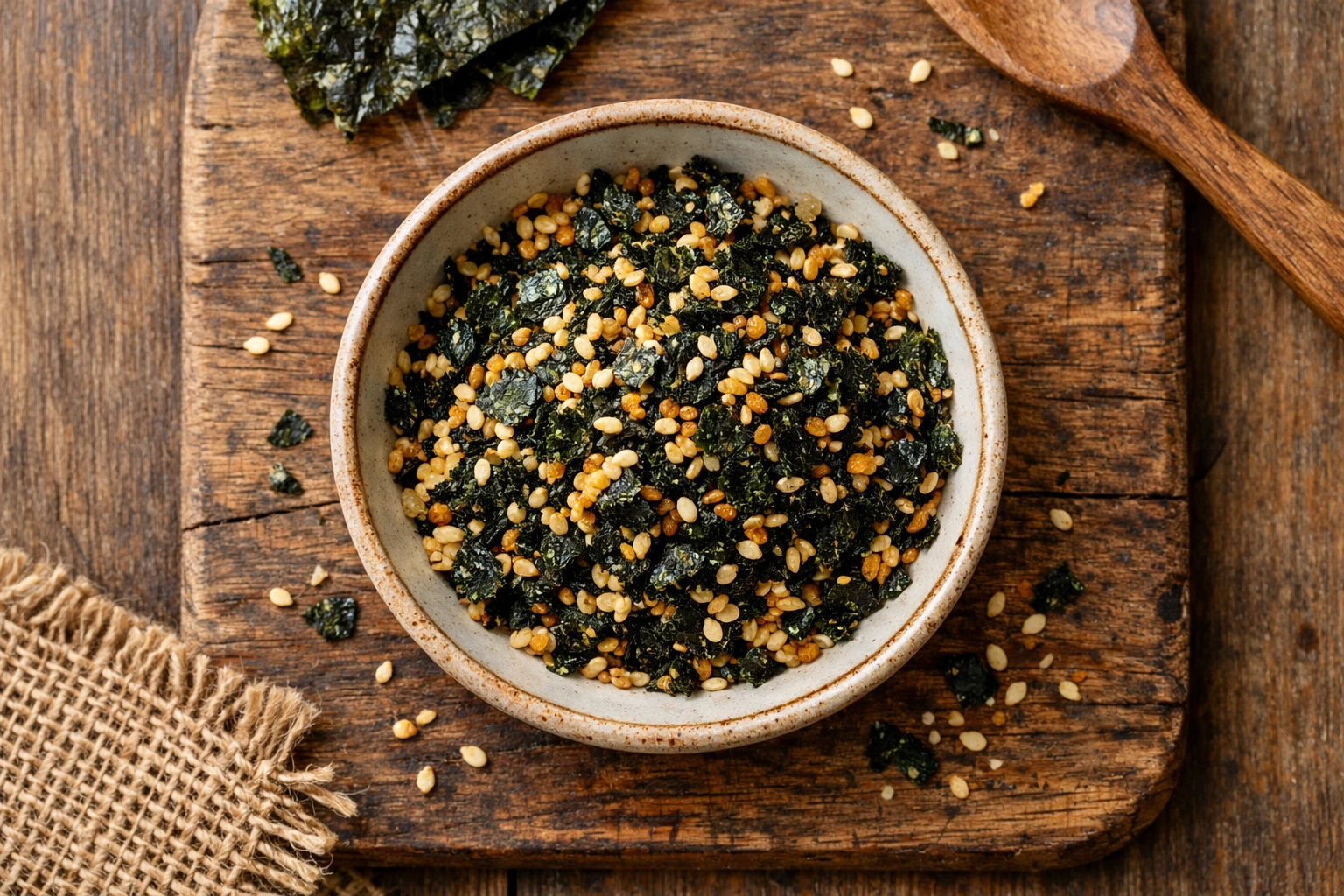
Japanese rice seasoning with seaweed, sesame, and umami - transforms plain rice into a flavorful, mineral-rich meal.
Quick Nutrition Facts
Per 100g Furikake (varies by brand)
| Nutrient | Amount |
|---|---|
| Calories | 490 kcal |
| Protein | 20g |
| Carbohydrates | 33g |
| Fiber | 8g |
| Sugars | 5g |
| Fat | 30g |
| Sodium | 3500mg |
| Calcium | 200mg |
| Iodine | High (from nori) |
Macronutrient Breakdown
 ChatGPT
  Claude
  AI Mode
  Perplexity
NUTRITIONIST INSIGHT
One serving of furikake (1-2 tsp) adds only 15-30 calories but delivers iodine from seaweed for thyroid health and minerals from sesame seeds. Use sparingly due to high sodium content.
Myth Busters
MYTH #1: Furikake is Just Salt on Rice
TRUTH: Quality furikake contains nori seaweed (rich in iodine and antioxidants), sesame seeds (calcium, magnesium, zinc), and often dried fish (protein, omega-3s). It's a nutrient-dense seasoning, not just salt.
MYTH #2: All Furikake Contains Fish
TRUTH: Many vegetarian and vegan furikake options exist. Nori-goma (seaweed-sesame) varieties contain only plant ingredients. Check labels for bonito or fish powder if avoiding seafood.
MYTH #3: Furikake is Too High in Sodium
TRUTH: While furikake is sodium-dense (3500mg/100g), typical servings (1-2 tsp = 3-6g) contain only 100-200mg sodium. This is less than many sauces and acceptable within a balanced diet.
MYTH #4: Furikake Has No Nutritional Value
TRUTH: Furikake provides iodine (thyroid function), calcium and magnesium (bone health), zinc (immune function), and fiber. The seaweed component offers unique polysaccharides with prebiotic potential.
MYTH #5: You Can Only Use Furikake on Rice
TRUTH: Furikake works on eggs, popcorn, avocado toast, noodles, salads, roasted vegetables, fish, and even as a crust for tofu or chicken. It's a versatile umami booster.
NutriScore by Health Goals
| Health Goal | NutriScore | Why This Score? |
|---|---|---|
| Weight Loss |  | Low-cal flavor boost (15-30 cal/serving) makes healthy foods satisfying. Watch serving size. |
| Muscle Gain | | 20g protein/100g helps post-workout meals. Calcium and zinc support muscle function. |
| Diabetes Management | | Low carb per serving (1-2g); seaweed may support blood sugar control. Avoid varieties with added sugar. |
| PCOS Management | | Iodine supports thyroid function often impaired in PCOS. Low-carb condiment option. |
| Pregnancy Nutrition |  | Iodine essential for fetal brain development, but high sodium requires moderation. 1 tsp daily max. |
| Viral/Flu Recovery | | Zinc and antioxidants from seaweed support immune function. Makes bland recovery foods palatable. |
PERSONALIZED NUTRITION
Track your meals with NutriScan for personalized NutriScores based on your specific health goals!
Blood Sugar Response to Furikake
Understanding how furikake affects your blood glucose helps optimize its use in meals.
Typical Glucose Response Curve
This chart shows typical blood glucose response for general healthy individuals. Individual responses may vary. Not medical advice.
How to Optimize Blood Sugar
Furikake itself has minimal glucose impact, but it's usually eaten with rice. Adding protein and fat slows glucose absorption:
- 🥚 Add to eggs or egg rice - Protein slows carb absorption
- 🥑 Sprinkle on avocado toast - Healthy fats flatten the spike
- 🐟 Use with grilled fish - Protein-rich pairing
- 🥗 Add to salads - Fiber slows glucose response
Cultural Significance
Furikake (ふりかけ) means "to sprinkle over" in Japanese, developed in the early 1900s as a calcium supplement.
In Japan:
- Essential bento box component for school and office lunches
- Over 100 varieties exist: salmon, egg, wasabi, ume (plum), vegetable
- Created by pharmacist Suekichi Yoshimaru in 1912 to address calcium deficiency
- Part of daily cuisine across all ages and regions
Global Adoption:
- Hawaiian cuisine embraced furikake for poke bowls and spam musubi
- Trending in fusion cooking: furikake fries, popcorn, avocado toast
- Growing popularity among health-conscious eaters seeking umami without heavy sauces
- Featured in Michelin restaurants as finishing seasoning
Compare & Substitute
Furikake vs Similar Seasonings (Per 100g)
| Nutrient | 🍙 Furikake | 🧂 Table Salt | 🌿 Za'atar | 🌶️ Tajin |
|---|---|---|---|---|
| Calories | 490 kcal | 0 kcal | 250 kcal | 100 kcal |
| Carbs | 33g | 0g | 30g | 20g |
| Fiber | 8g | 0g | 10g | 5g |
| Protein | 20g | 0g | 8g | 3g |
| Fat | 30g | 0g | 12g | 2g |
| Sodium | 3500mg | 38,758mg | 1500mg | 4000mg |
| Best For | Rice, bowls, umami | Cooking, preserving | Middle Eastern, bread | Mexican, fruits |
Frequently Asked Questions
Is furikake healthy?
Furikake offers iodine from seaweed (thyroid support), calcium and zinc from sesame (bone and immune health), and protein from fish variants. However, sodium is high (3500mg/100g); limit to 1-2 tsp (100-200mg sodium) per serving for benefits without excess salt.
How much furikake should I use per serving?
1-2 teaspoons (3-6g) per bowl of rice or dish is ideal. This provides 15-30 calories, 100-200mg sodium, and enough minerals and umami without overdoing sodium. Adjust based on the dish size and your sodium tolerance.
What's the best furikake for beginners?
Nori-goma (seaweed-sesame) is a classic mild option suitable for most palates. Salmon furikake adds savory depth; wasabi furikake provides gentle heat. Start simple and explore varieties as you develop preferences.
Can I make furikake at home?
Yes. Toast sesame seeds, crumble nori sheets, add a pinch of salt and optional dried bonito flakes. Homemade versions control sodium and freshness. Store in airtight container for 2-4 weeks.
Is furikake gluten-free?
Most traditional furikake is gluten-free (seaweed, sesame, fish, salt). However, some brands add soy sauce or wheat-based ingredients. Always check labels for wheat, barley, or soy sauce if you're gluten-sensitive.
How long does furikake last?
Unopened furikake lasts 6-12 months. Once opened, use within 2-3 months and store in a cool, dry place or refrigerate in humid climates. Sesame oils can go rancid; discard if it smells off.
IMPORTANT NOTE
If you have thyroid conditions or are on thyroid medication, consult your doctor about iodine intake from seaweed-containing foods like furikake.


Similar Nutritious Foods
4505 Chicharrones Classic Chili Salt
7 Eleven Japan Crispy Corn Cheese
Explore More Nutrition Tools & Resources
AI Calorie Counter App - Snap a Photo, Get Macros
AI Nutritionist App That Reads Your Logged Meals
Best Protein Supplements for Women
Bulking Meal Plan App That Sets Your Surplus
ChatGPT Calorie Counter Alternative That Keeps the Total
ChatGPT Diet Plan Alternative That Tracks What You Eat
ChatGPT Weight Loss Coach Alternative With a Food Log
Fast Food Calorie Counter App That Reads the Tray
Free Calorie Tracker App with AI Photo Scans | NutriScan
Indian Diet Plan App With Veg and Non Veg Meals
Indian Food Calorie Calculator - Get Instant Nutrition Facts for Desi Meals — 2026
Intermittent Fasting for Women, Timer and Meal Log App
Intermittent Fasting Tracker App - Free Fasting Timer
Macro Tracker App That Fills the Numbers From a Photo
Mediterranean Diet Meal Plan App That Counts the Oil
Micronutrient Tracker App for Vitamins and Minerals
MyFitnessPal Alternative That Stays Free | NutriScan
NutriScore App: A Free Grade on Every Meal | NutriScan
Nutrition Label Scanner App for the Amount You Ate
Second Trimester Protein Guide
Vegetarian Meal Plan App With a Protein Target
Voice Calorie Counter - Speak to Track Meals Hands-Free
Water and Calorie Tracker App - Free Water Log