Grapefruit: Calories, Nutrition and Health Benefits
Winter's tangy superfruit packed with vitamin C, powerful antioxidants, and unique compounds that support weight loss and metabolic health.
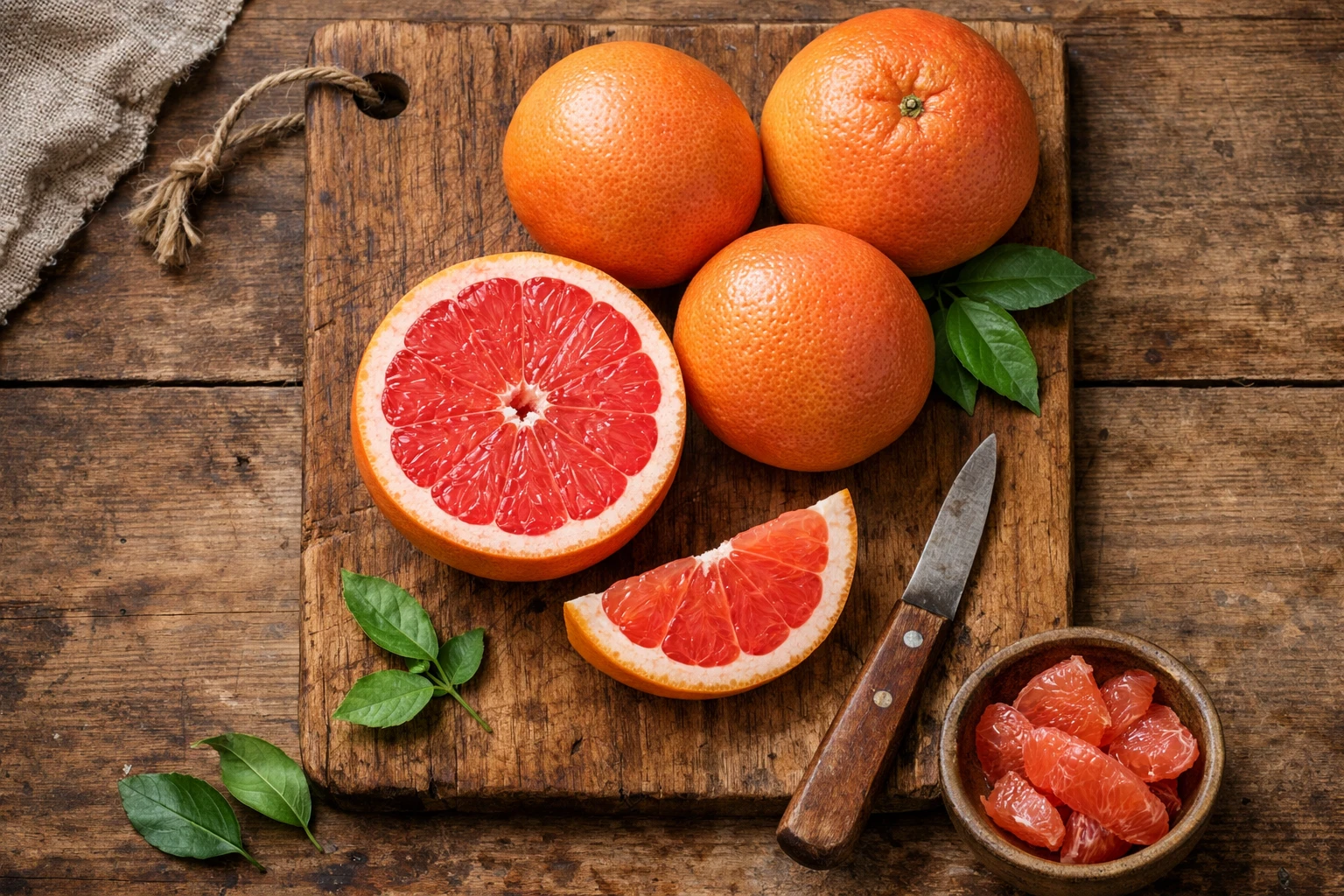
Quick Nutrition Facts
Per 100g Raw Pink Grapefruit
| Nutrient | Amount |
|---|---|
| Calories | 42 kcal |
| Protein | 0.8g |
| Carbohydrates | 10.7g |
| Fiber | 1.6g |
| Sugars | 6.9g |
| Fat | 0.1g |
| Vitamin C | 38mg |
| Vitamin A | 58mcg |
| Potassium | 135mg |
| Folate | 10mcg |
Macronutrient Breakdown
 ChatGPT
  Claude
  AI Mode
  Perplexity
NUTRITIONIST INSIGHT
Grapefruit's naringenin flavonoid gives it the characteristic bitter taste and may improve insulin sensitivity. Pink varieties contain lycopene, the same antioxidant found in tomatoes. Always check drug interactions before adding to your diet.
Myth Busters
MYTH #1: Grapefruit Burns Fat Directly
TRUTH: Grapefruit doesn't directly burn fat. However, studies show it may improve insulin sensitivity and eating it before meals can reduce calorie intake. Its low calories (42/100g) and high water content (91%) promote fullness, indirectly supporting weight loss.
MYTH #2: Grapefruit Interacts with All Medications
TRUTH: Grapefruit interacts with specific medications metabolized by CYP3A4 enzymes, including certain statins, blood pressure drugs, and immunosuppressants. Many common medications are unaffected. Always check with your pharmacist about your specific prescriptions.
MYTH #3: You Must Avoid Grapefruit Completely on Medications
TRUTH: For affected medications, timing matters more than total avoidance. Some medications allow grapefruit if consumed 4+ hours apart. Others require complete avoidance. Consult your healthcare provider for personalized guidance rather than eliminating this nutritious fruit unnecessarily.
MYTH #4: White Grapefruit Has No Benefits
TRUTH: White grapefruit is equally nutritious, with slightly higher vitamin C than pink varieties. Pink/red grapefruits have lycopene (an antioxidant), but white varieties excel in flavonoid content. Choose based on taste preference; both offer substantial health benefits.
MYTH #5: Grapefruit Juice Is as Healthy as Whole Fruit
TRUTH: Whole grapefruit contains fiber that slows sugar absorption and promotes satiety. Juice has concentrated sugars without fiber, causing faster blood sugar spikes. The pulp also contains beneficial compounds. Always prefer whole fruit over juice.
NutriScore by Health Goals
| Health Goal | NutriScore | Why This Score? |
|---|---|---|
| Weight Loss |  | Only 42 calories per 100g with 91% water content. High satiety from fiber and volume. Studies show pre-meal grapefruit reduces calorie intake. |
| Muscle Gain |  | Low protein (0.8g) limits muscle-building benefit. Good vitamin C for collagen synthesis. Best as hydrating snack, not protein source. |
| Diabetes Management | | Very low glycemic index of 25. Fiber slows glucose absorption. Check medication interactions first. |
| PCOS Management | | Low GI supports insulin sensitivity. Naringenin may help metabolic function. Anti-inflammatory antioxidants benefit hormonal balance. |
| Pregnancy Nutrition |  | Good folate (10mcg) and vitamin C (38mg) for fetal development. Limit to 1/2 fruit daily due to acidity. Check prenatal medication interactions. |
| Viral/Flu Recovery | | 38mg vitamin C (42% DV) supports immune function. High water content for hydration. Antioxidants reduce inflammation during illness. |
PERSONALIZED NUTRITION
Track your meals with NutriScan for personalized NutriScores based on your specific health goals!
Blood Sugar Response to Grapefruit
Understanding how grapefruit affects your blood glucose helps optimize its benefits for metabolic health.
Typical Glucose Response Curve
*This chart shows typical blood glucose response for general healthy individuals. Individual responses may vary. Not medical advice.*
How to Optimize Blood Sugar Response
Pairing grapefruit with protein or healthy fat further stabilizes glucose response:
- 🥚 Cottage cheese or Greek yogurt - Classic breakfast pairing adds protein
- 🥜 Handful of almonds - Healthy fats slow sugar absorption
- 🥑 Avocado - Heart-healthy fats complement citrus flavor
- 🍳 Eggs - Complete protein for sustained energy
Grapefruit's already low GI (25) means minimal glucose spike, but these pairings maximize satiety and nutrient absorption.
Cultural Significance
Grapefruit originated as a natural hybrid of pomelo and sweet orange in Barbados in the 18th century, later becoming a Florida and Texas agricultural staple.
In the Americas:
- Florida and Texas produce 70% of US grapefruit
- Ruby Red variety developed in Texas in 1929, sweeter than white
- Breakfast staple since the early 1900s health movements
- "Grapefruit diet" popularized in 1930s Hollywood
Global Adoption:
- Israel and South Africa are major exporters
- Popular in Japanese cuisine as palate cleanser
- Mediterranean regions use in salads and seafood dishes
- Peak season: November through June (winter citrus)
Compare & Substitute
Grapefruit vs Similar Citrus Fruits (Per 100g)
| Nutrient | 🍊 Grapefruit | 🍊 Orange | 🍋 Lemon | 🍊 Pomelo |
|---|---|---|---|---|
| Calories | 42 kcal | 47 kcal | 29 kcal | 38 kcal |
| Carbs | 10.7g | 12g | 9g | 10g |
| Fiber | 1.6g | 2.4g | 2.8g | 1g |
| Vitamin C | 38mg | 53mg | 53mg | 61mg |
| Sugar | 6.9g | 9g | 2.5g | 6.3g |
| GI | 25 | 40 | 20 | 25 |
| Best For | Weight loss, low GI | Balanced nutrition, fiber | Detox water, low sugar | Large portions, mild flavor |
Frequently Asked Questions
Is grapefruit good for weight loss?
Grapefruit is excellent for weight loss with only 42 calories per 100g, 91% water content, and 1.6g fiber promoting satiety. Studies show eating half a grapefruit before meals can reduce calorie intake; its low glycemic index (25) prevents hunger-triggering blood sugar spikes.
Can diabetics eat grapefruit?
Grapefruit is ideal for diabetics with a very low glycemic index of 25 and glycemic load of only 3. The fiber content slows sugar absorption for minimal blood sugar impact.
Important considerations:
- Check medication interactions (statins, some diabetes drugs)
- Whole fruit is better than juice (fiber slows absorption)
- Half a grapefruit has only 10-11g carbs
- Pink/red varieties offer additional lycopene antioxidants
What medications interact with grapefruit?
Grapefruit inhibits CYP3A4 enzymes in the gut and liver, affecting how certain drugs are metabolized.
Common interactions include:
- Statins: atorvastatin, simvastatin, lovastatin (not pravastatin or rosuvastatin)
- Blood pressure drugs: some calcium channel blockers
- Immunosuppressants: cyclosporine, tacrolimus
- Some antihistamines: certain allergy medications
Always consult your pharmacist or doctor. Some medications require complete avoidance; others allow consumption 4+ hours apart.
Is pink or white grapefruit healthier?
Both are nutritious with different strengths:
Pink/Red Grapefruit:
- Contains lycopene (powerful antioxidant)
- Higher vitamin A from beta-carotene
- Sweeter taste, less bitter
White Grapefruit:
- Slightly higher vitamin C
- More concentrated naringenin flavonoids
- Stronger, more tart flavor
Choose pink for antioxidants and sweetness; white for tartness and higher flavonoid content.
When is the best time to eat grapefruit?
Optimal timing depends on your goals:
- Weight loss: 30 minutes before meals to reduce appetite
- Vitamin absorption: Morning on empty stomach
- With medications: 4+ hours after taking affected drugs, or avoid entirely
- Athletic performance: Pre-workout for hydration and quick energy
Avoid: Right before bed (acidity may cause reflux in some people).
Does grapefruit burn belly fat?
Grapefruit doesn't directly burn fat. However, its compounds may indirectly support weight loss through improved insulin sensitivity, reduced calorie intake from pre-meal consumption, and high water/fiber content promoting fullness without added calories.
How much grapefruit should I eat per day?
General guidelines:
- 1/2 to 1 whole grapefruit daily - Most people without medication interactions
- 1/2 grapefruit daily - Those watching sugar intake or with acid reflux
- Avoid or limit - If taking interacting medications
Considerations: High consumption may erode tooth enamel over time; rinse mouth with water after eating. Those with kidney disease should consult a doctor due to potassium content.
Can I eat grapefruit during pregnancy?
Grapefruit is generally safe during pregnancy, providing folate for fetal development and vitamin C for immunity.
Recommendations:
- Limit to 1/2 fruit daily due to acidity
- Check interactions with prenatal vitamins and medications
- Wash thoroughly to remove surface bacteria
- Choose pasteurized juice if consuming juice (rare, whole fruit preferred)
Consult your OB-GYN if you're on any pregnancy-related medications.




Similar Nutritious Foods
4505 Chicharrones Classic Chili Salt
7 Eleven Japan Crispy Corn Cheese
Explore More Nutrition Tools & Resources
AI Calorie Counter App - Snap a Photo, Get Macros
AI Nutritionist App That Reads Your Logged Meals
Best Protein Supplements for Women
Bulking Meal Plan App That Sets Your Surplus
ChatGPT Calorie Counter Alternative That Keeps the Total
ChatGPT Diet Plan Alternative That Tracks What You Eat
ChatGPT Weight Loss Coach Alternative With a Food Log
Fast Food Calorie Counter App That Reads the Tray
Free Calorie Tracker App with AI Photo Scans | NutriScan
Indian Diet Plan App With Veg and Non Veg Meals
Indian Food Calorie Calculator - Get Instant Nutrition Facts for Desi Meals — 2026
Intermittent Fasting for Women, Timer and Meal Log App
Intermittent Fasting Tracker App - Free Fasting Timer
Macro Tracker App That Fills the Numbers From a Photo
Mediterranean Diet Meal Plan App That Counts the Oil
Micronutrient Tracker App for Vitamins and Minerals
MyFitnessPal Alternative That Stays Free | NutriScan
NutriScore App: A Free Grade on Every Meal | NutriScan
Nutrition Label Scanner App for the Amount You Ate
Second Trimester Protein Guide
Vegetarian Meal Plan App With a Protein Target
Voice Calorie Counter - Speak to Track Meals Hands-Free
Water and Calorie Tracker App - Free Water Log