Haldiram's Healthy Baked Khakhra: Calories, Nutrition and Health Benefits
A traditional Gujarati baked cracker made from whole wheat, low in oil and packed with fiber -- one of India's healthiest packaged snacks.
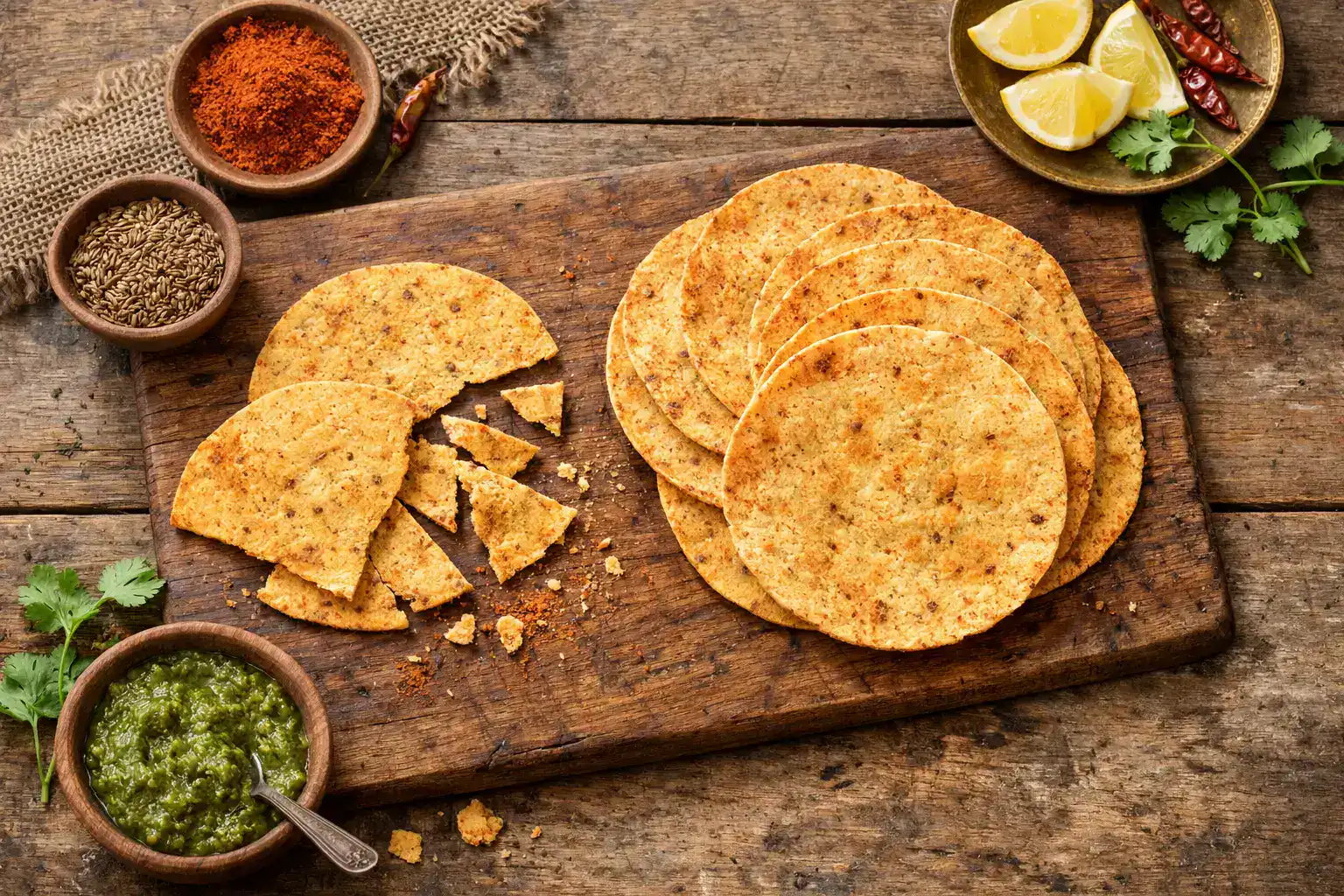
Quick Nutrition Facts
Per 1 Piece (20g) | Per 100g in brackets
| Nutrient | Amount |
|---|---|
| Calories | 90 kcal (450/100g) |
| Protein | 2g (10g) |
| Carbohydrates | 10g (50g) |
| Fiber | 2g (10g) |
| Sugars | 0.7g (3.3g) |
| Fat | 4.5g (22.5g) |
| Saturated Fat | 2g (10g) |
| Sodium | 180mg (900mg) |
| Iron | 1.1mg (5.5mg) |
| Calcium | 10mg (52mg) |
Macronutrient Breakdown
 ChatGPT
  Claude
  AI Mode
  Perplexity
NUTRITIONIST INSIGHT
Khakhra delivers 10g fiber per 100g from whole wheat -- nearly 40% of your daily needs in a 50g serving. Being baked with minimal oil, it has roughly 40% less fat than fried Indian snacks like sev or bhujia while providing sustained energy from complex carbohydrates.
Myth Busters
MYTH #1: All Packaged Indian Snacks Are Unhealthy
TRUTH: Baked khakhra has only 4.5g fat per piece compared to 8-10g in fried alternatives. Baking produces significantly less acrylamide than frying, making it a safer cooking method. The whole wheat base provides fiber, iron, and B vitamins absent in most fried snacks.
MYTH #2: Khakhra Is Too High in Carbs for Weight Loss
TRUTH: At 10g carbs per piece with 2g fiber, khakhra has a moderate glycemic response. Whole wheat products provide complex carbohydrates that digest slowly, keeping you fuller longer. Two pieces (180 kcal) make a reasonable snack within most calorie budgets.
MYTH #3: Baked Snacks Have Zero Fat
TRUTH: Khakhra contains 4.5g fat per piece -- it's low-fat, not fat-free. The fat comes from palmolein oil used during preparation. While lower than fried snacks, portion control still matters. Studies show baked foods retain more nutrients than fried versions.
MYTH #4: Khakhra Is Just a Diet Food
TRUTH: Khakhra is a traditional Gujarati staple eaten daily, not a modern "diet food." It provides balanced macros -- protein, complex carbs, and fiber -- suitable for all dietary goals. Athletes and active individuals benefit from its sustained-energy carbohydrate profile.
MYTH #5: Commercial Khakhra Is as Healthy as Homemade
TRUTH: Commercial khakhra like Haldiram's has ~180mg sodium per piece (900mg/100g) versus negligible sodium in homemade versions. While convenient, high sodium intake is linked to hypertension. Monitor your daily sodium if eating multiple pieces.
NutriScore by Health Goals
| Health Goal | NutriScore | Why This Score? |
|---|---|---|
| Weight Loss |  | 90 calories per piece, 2g fiber promotes fullness, baked not fried. Limit to 2-3 pieces per day. |
| Muscle Gain |  | Only 2g protein per piece -- not a primary protein source. Pair with paneer, dal, or hummus for muscle-building snacks. |
| Diabetes Management | | Medium GI (~55), complex carbs from whole wheat. Fenugreek (methi) khakhra variants may reduce fasting blood glucose. Limit to 1-2 pieces with protein. |
| PCOS Management | | Whole wheat fiber supports insulin sensitivity. Choose methi variant. Limit to 2 pieces with protein-rich dip. |
| Pregnancy Nutrition | | Provides iron (1.1mg) and folic acid from whole wheat. Whole grains are recommended during pregnancy for folate and fiber. Watch sodium if hypertensive. |
| Viral/Flu Recovery | | Light, easy to digest. Provides sustained energy but limited vitamins C and A. Pair with citrus or warm soup. |
PERSONALIZED NUTRITION
Track your meals with NutriScan for personalized NutriScores based on your specific health goals!
Blood Sugar Response to Khakhra
Understanding how khakhra affects your blood glucose can help you make informed decisions about portion sizes and pairings.
Typical Glucose Response Curve
This chart shows typical blood glucose response for general healthy individuals. Individual responses may vary. Not medical advice.
How to Flatten the Spike
Pairing carbs with protein or healthy fat slows glucose absorption and reduces the peak blood sugar level:
- Paneer or cottage cheese - Adds protein and healthy fats
- Yogurt dip (raita) or hummus - Provides protein and probiotics
- Green chutney (coriander-mint) - Low calorie, adds micronutrients
- A handful of roasted nuts (almonds, peanuts) - Healthy fats and protein
This combination not only reduces the glucose spike but also extends energy release, keeping you fuller for longer.
Cultural Significance
Khakhra is a centuries-old Gujarati staple, originating from the western Indian state of Gujarat as a travel-friendly, shelf-stable bread.
In India:
- Central to Gujarati and Jain cuisine -- eaten daily for breakfast, snacks, or light meals
- Traditional preparation involves hand-rolling whole wheat dough paper-thin and roasting on a tawa with minimal ghee
- Jain communities favor khakhra as it aligns with their vegetarian dietary principles and long shelf life during travel
- Regional variants include methi (fenugreek), jeera (cumin), masala, garlic, and bajra (millet) khakhra
Global Adoption:
- Popular among Indian diaspora communities worldwide as a healthy, portable snack
- Growing as a health-food export -- now available in specialty stores across the US, UK, and Middle East
- Modern variants include multigrain, ragi, and quinoa khakhra targeting health-conscious consumers
Compare & Substitute
Khakhra vs Similar Snacks (Per 100g)
| Nutrient | Baked Khakhra | Potato Chips | Rice Cakes | Whole Wheat Crackers |
|---|---|---|---|---|
| Calories | 450 kcal | 536 kcal | 387 kcal | 443 kcal |
| Carbs | 50g | 53g | 83g | 65g |
| Fiber | 10g | 4.4g | 1.7g | 5.5g |
| Protein | 10g | 6.6g | 8g | 10g |
| Fat | 22.5g | 35g | 2.8g | 16g |
| Sodium | 900mg | 525mg | 220mg | 680mg |
| Sugar | 3.3g | 0.3g | 0.3g | 5g |
| Iron | 5.5mg | 1.6mg | 0.7mg | 3.6mg |
| Best For | Fiber-rich baked snack | Occasional treat | Low-calorie, low-fat | Balanced whole grain snack |
Frequently Asked Questions
Is khakhra good for weight loss?
Khakhra can support weight loss when eaten in moderation. One piece has only 90 calories with 2g fiber that aids satiety. Being baked rather than fried, it contains roughly 40% less fat than most Indian packaged snacks.
Best practices: Limit to 2-3 pieces per sitting (180-270 kcal), pair with protein-rich dips like hummus or yogurt, choose plain or jeera variants over masala-heavy ones, and track portions with NutriScan.
Can diabetics eat khakhra?
Diabetics can eat khakhra in moderation. Whole wheat khakhra has a medium GI (~55), and multigrain variants score lower (~52).
Tips for diabetics:
- Limit to 1-2 pieces per sitting (20-40g carbs)
- Always pair with protein (paneer, dal, yogurt dip)
- Choose methi (fenugreek) variant -- studies show fenugreek may reduce fasting blood glucose
- Monitor blood sugar 2 hours after eating
Consult your healthcare provider for personalized advice.
How many calories are in one khakhra?
One piece of Haldiram's Baked Khakhra (20g) contains 90 calories with 4.5g fat, 10g carbs, 2g protein, and 2g fiber. Per 100g, khakhra provides approximately 450 calories.
For context, 2 pieces of khakhra (180 kcal) is comparable to 1 medium banana (105 kcal) or a small handful of almonds (170 kcal).
Is baked khakhra healthier than fried chips?
Baked khakhra has clear advantages over fried potato chips: roughly 40% less fat (22.5g vs 35g per 100g), zero trans fats, more than double the fiber (10g vs 4.4g), and higher iron content.
Frying at high temperatures also produces more acrylamide -- classified by the FDA as a "probable human carcinogen." Baking reduces acrylamide formation significantly.
Caveat: Khakhra has higher sodium (900mg vs 525mg per 100g). Watch total daily sodium intake.
What are the health benefits of khakhra?
Key Benefits:
- Digestive Health: 10g fiber per 100g supports regular bowel movements
- Sustained Energy: Complex carbs from whole wheat digest slowly
- Iron Source: 5.5mg iron per 100g (31% DV) supports oxygen transport
- Lower Fat: Baked preparation means less fat than fried alternatives
- Pregnancy Support: Provides folate, iron, and B vitamins from whole wheat
How many khakhras should I eat per day?
General Guidelines:
- Weight Loss: 2-3 pieces per day (180-270 kcal)
- Maintenance: 4-5 pieces per day (360-450 kcal)
- Diabetes: 1-2 pieces per sitting, paired with protein
- Athletes: 4-6 pieces for sustained carbohydrate energy
Watch for sodium: Each piece has ~180mg sodium. At 5 pieces, you're at 900mg -- nearly 40% of the 2,300mg daily limit.
Track your meals with NutriScan app to see how khakhra fits your personal nutrition goals.


Similar Nutritious Foods
4505 Chicharrones Classic Chili Salt
7 Eleven Japan Crispy Corn Cheese
Explore More Nutrition Tools & Resources
AI Calorie Counter App - Snap a Photo, Get Macros
AI Nutritionist App That Reads Your Logged Meals
Best Protein Supplements for Women
Bulking Meal Plan App That Sets Your Surplus
ChatGPT Calorie Counter Alternative That Keeps the Total
ChatGPT Diet Plan Alternative That Tracks What You Eat
ChatGPT Weight Loss Coach Alternative With a Food Log
Fast Food Calorie Counter App That Reads the Tray
Free Calorie Tracker App with AI Photo Scans | NutriScan
Indian Diet Plan App With Veg and Non Veg Meals
Indian Food Calorie Calculator - Get Instant Nutrition Facts for Desi Meals — 2026
Intermittent Fasting for Women, Timer and Meal Log App
Intermittent Fasting Tracker App - Free Fasting Timer
Macro Tracker App That Fills the Numbers From a Photo
Mediterranean Diet Meal Plan App That Counts the Oil
Micronutrient Tracker App for Vitamins and Minerals
MyFitnessPal Alternative That Stays Free | NutriScan
NutriScore App: A Free Grade on Every Meal | NutriScan
Nutrition Label Scanner App for the Amount You Ate
Second Trimester Protein Guide
Vegetarian Meal Plan App With a Protein Target
Voice Calorie Counter - Speak to Track Meals Hands-Free
Water and Calorie Tracker App - Free Water Log