Haldiram's Plain Burfi: Calories, Nutrition and Health Benefits
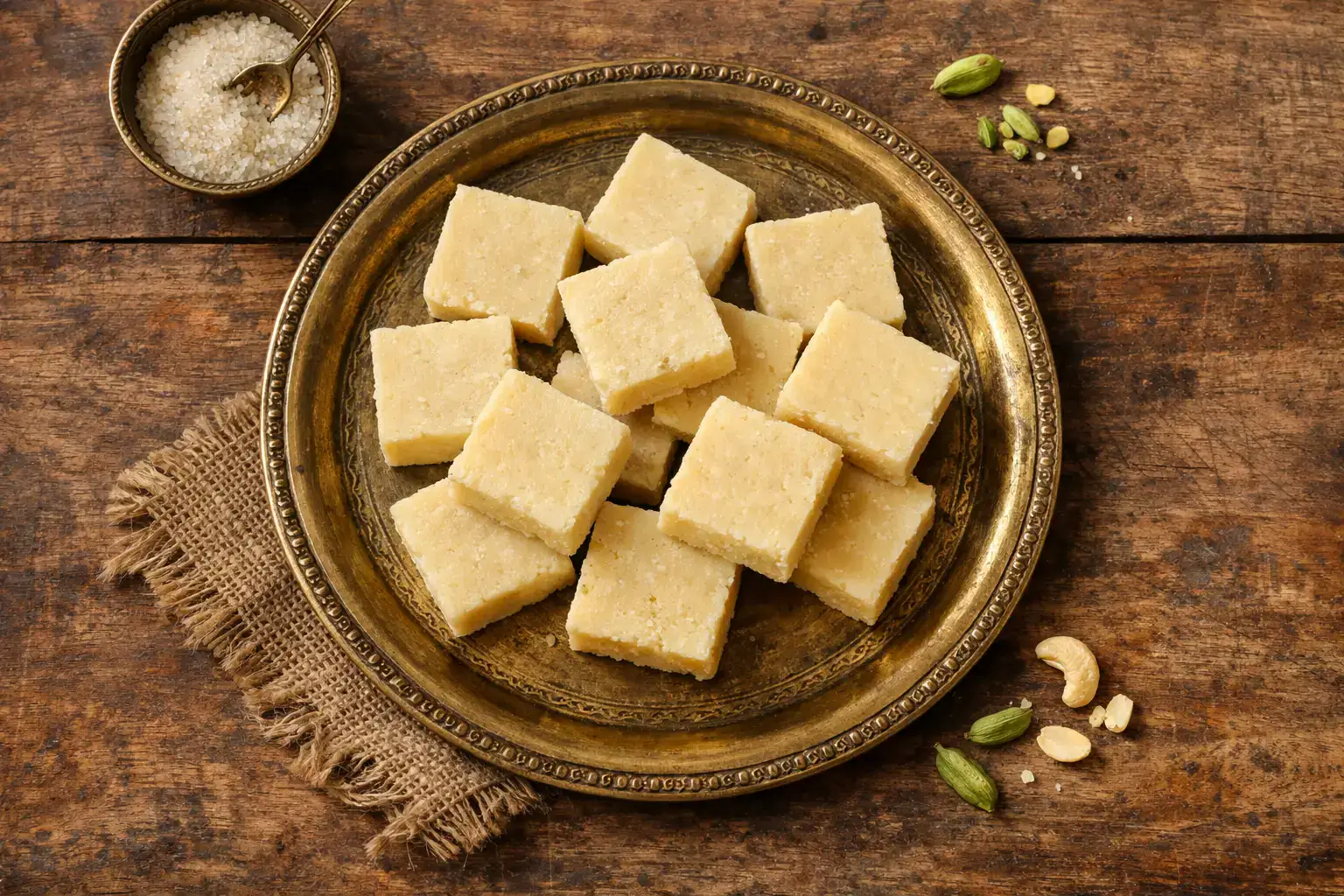
A beloved Indian milk sweet made from khoa (evaporated milk solids), sugar, and ghee with a rich fudge-like texture and concentrated dairy nutrients.
Quick Nutrition Facts
Per 1 Piece (44g)
| Nutrient | Amount |
|---|---|
| Calories | 125 kcal |
| Protein | 2.4g |
| Carbohydrates | 17.3g |
| Fiber | 0.1g |
| Sugars | 13.2g |
| Fat | 5.1g |
| Saturated Fat | 2.9g |
| Calcium | 65mg |
| Cholesterol | 16mg |
| Sodium | 28mg |
Macronutrient Breakdown
 ChatGPT
  Claude
  AI Mode
  Perplexity
NUTRITIONIST INSIGHT
Plain burfi provides 148mg calcium per 100g from concentrated milk solids (khoa), making it one of the more nutrient-dense Indian sweets. However, with 30g sugar per 100g, portion control is essential. One small piece (44g) delivers the sweetness without exceeding the WHO's 25g daily added sugar limit.
Myth Busters
MYTH #1: Burfi Is Pure Sugar with No Nutrients
TRUTH: While high in sugar, burfi made from khoa provides concentrated dairy nutrients including calcium (148mg/100g), protein (5.4g/100g), and riboflavin. It is not nutritionally equivalent to candy.
MYTH #2: Eating Burfi Always Causes Diabetes
TRUTH: Diabetes is caused by chronic excess calorie and sugar intake, not a single food. India's diabetes epidemic relates to overall dietary patterns and decreasing physical activity, not occasional sweet consumption. Moderation is key.
MYTH #3: Homemade Burfi Is Much Healthier Than Store-Bought
TRUTH: Homemade and packaged burfi have similar calorie and sugar content. The main difference is preservatives and freshness. Both contain concentrated milk solids and sugar as primary ingredients. Portion control matters regardless of source.
MYTH #4: Burfi Is a Good Post-Workout Snack
TRUTH: Despite quick-releasing carbs, burfi's high saturated fat (6.6g/100g) slows absorption. A banana or dates provide faster glycogen replenishment with less fat. Burfi lacks the protein-to-carb ratio needed for optimal recovery.
MYTH #5: Sugar-Free Burfi Has No Calories
TRUTH: Sugar-free versions still contain khoa (concentrated milk fat) and often use sugar alcohols. They typically have 200-240 kcal per 100g vs 285 for regular. The WHO recommends reducing all free sugars, but calorie awareness matters too.
NutriScore by Health Goals
| Health Goal | NutriScore | Why This Score? |
|---|---|---|
| Weight Loss |  | 285 kcal/100g with 30g sugar and minimal fiber. High calorie density makes portion control difficult. Limit to half a piece or avoid. |
| Muscle Gain | | Only 5.4g protein per 100g with high sugar and saturated fat. Poor protein-to-calorie ratio for muscle building. |
| Diabetes Management |  | High sugar (30g/100g) and high glycemic load. Excess sugar consumption is linked to insulin resistance and T2DM risk in Indian populations. Avoid or limit to small portions after protein-rich meals. |
| PCOS Management | | High sugar spikes insulin, worsening PCOS symptoms. Avoid regular consumption; choose protein-rich alternatives instead. |
| Pregnancy Nutrition |  | Provides calcium (148mg/100g) beneficial for fetal bone development. However, excess sugar during pregnancy increases gestational diabetes risk. Limit to 1 small piece occasionally. |
| Viral/Flu Recovery | | Quick energy from simple carbs. Calcium and protein from milk solids support recovery. Acceptable in small amounts when appetite is low. |
PERSONALIZED NUTRITION
Track your meals with NutriScan for personalized NutriScores based on your specific health goals!
Blood Sugar Response to Plain Burfi
Understanding how plain burfi affects your blood glucose can help you make informed decisions about portion sizes and timing.
Typical Glucose Response Curve
This chart shows typical blood glucose response for general healthy individuals. Individual responses may vary. Not medical advice.
How to Flatten the Spike
Pairing high-sugar foods with protein or healthy fat slows glucose absorption and reduces the peak blood sugar level:
- 🥜 Handful of almonds or walnuts - Healthy fats and protein slow sugar absorption
- 🥛 Glass of buttermilk (chaas) - Protein and probiotics aid digestion
- 🫘 Eat after a dal or paneer meal - Protein-rich base reduces glycemic impact
- 🚶 Take a 15-minute walk after eating - Light activity helps lower blood sugar peaks
This combination not only reduces the glucose spike but also extends energy release, keeping you more stable after indulging.
Cultural Significance
Burfi is one of India's most iconic sweets (mithai), with roots tracing back centuries to the subcontinent's rich dairy traditions.
In India:
- Central to festivals like Diwali, Raksha Bandhan, Eid, and Holi celebrations
- Offered to deities in temples and distributed as prasad (blessed food)
- Exchanged as gifts during weddings, births, and auspicious occasions
- Haldiram's, founded in 1937 in Bikaner, popularized packaged mithai across India and globally
Global Impact:
- Indian diaspora has made burfi available worldwide in specialty stores
- Part of the INR 1.5 lakh crore Indian sweets market
- Varieties include kaju barfi, pista barfi, coconut barfi, and besan barfi
- Modern adaptations use sugar-free, vegan, and protein-enriched formulations
Compare & Substitute
Burfi vs Similar Indian Sweets (Per 100g)
| Nutrient | Plain Burfi | Kaju Katli | Gulab Jamun | Rasgulla |
|---|---|---|---|---|
| Calories | 285 kcal | 490 kcal | 325 kcal | 186 kcal |
| Carbs | 40g | 50g | 45g | 35g |
| Fiber | 0.2g | 0.5g | 0.1g | 0g |
| Protein | 5.4g | 8g | 3.5g | 4g |
| Fat | 11.3g | 25g | 15g | 4g |
| Sugar | 30g | 42g | 38g | 30g |
| Calcium | 148mg | 35mg | 80mg | 120mg |
| Best For | Calcium, moderate calorie treat | Rich nutty flavor, celebrations | Syrup-soaked indulgence | Lower calorie sweet option |
Frequently Asked Questions
How many calories are in Haldiram's Plain Burfi?
1 piece (44g) of Haldiram's Plain Burfi contains approximately 125 calories. Per 100g, it provides 285 calories with 40g carbohydrates, 11.3g fat, and 5.4g protein.
Per 100g breakdown: 56% calories from carbs, 36% from fat, and 8% from protein.
Is burfi good for weight loss?
No, burfi is not ideal for weight loss. At 285 calories per 100g with 30g sugar and minimal fiber (0.2g), it offers high calorie density without satiety.
If you must indulge: Limit to half a piece (22g, ~63 calories), eat after a protein-rich meal, and track with NutriScan app to stay within your daily calorie target.
Can diabetics eat burfi?
Diabetics should limit or avoid burfi due to its high sugar content (30g/100g) and high glycemic load. The concentrated sugar causes rapid blood glucose spikes.
Tips if consuming:
- Eat a small portion (20-25g) only after a protein-rich meal
- Never eat on an empty stomach
- Monitor blood sugar 2 hours after consuming
- Choose sugar-free variants when available
What is burfi made of?
Plain burfi is made from 3 primary ingredients: khoa (evaporated milk solids), sugar, and ghee (clarified butter). Khoa is prepared by slow-cooking milk until most moisture evaporates, concentrating the nutrients. Some recipes add cardamom for flavor.
How much burfi can I eat per day?
General guidelines:
- Healthy adults: 1 small piece (44g, 125 calories) occasionally, not daily
- Weight loss: Half a piece or skip entirely
- Diabetes/PCOS: Avoid or limit to 20g maximum, with protein
- Pregnancy: 1 small piece occasionally for calcium, but monitor sugar intake
The WHO recommends keeping added sugar below 25g/day. One piece of burfi contains ~13g added sugar, over half that limit.
Is burfi better than chocolate?
Per 100g, plain burfi (285 kcal) has fewer calories than milk chocolate (535 kcal) and provides more calcium. However, dark chocolate offers antioxidants that burfi lacks. Both should be occasional treats.


Similar Nutritious Foods
4505 Chicharrones Classic Chili Salt
7 Eleven Japan Crispy Corn Cheese
Explore More Nutrition Tools & Resources
AI Calorie Counter App - Snap a Photo, Get Macros
AI Nutritionist App That Reads Your Logged Meals
Best Protein Supplements for Women
Bulking Meal Plan App That Sets Your Surplus
ChatGPT Calorie Counter Alternative That Keeps the Total
ChatGPT Diet Plan Alternative That Tracks What You Eat
ChatGPT Weight Loss Coach Alternative With a Food Log
Fast Food Calorie Counter App That Reads the Tray
Free Calorie Tracker App with AI Photo Scans | NutriScan
Indian Diet Plan App With Veg and Non Veg Meals
Indian Food Calorie Calculator - Get Instant Nutrition Facts for Desi Meals — 2026
Intermittent Fasting for Women, Timer and Meal Log App
Intermittent Fasting Tracker App - Free Fasting Timer
Macro Tracker App That Fills the Numbers From a Photo
Mediterranean Diet Meal Plan App That Counts the Oil
Micronutrient Tracker App for Vitamins and Minerals
MyFitnessPal Alternative That Stays Free | NutriScan
NutriScore App: A Free Grade on Every Meal | NutriScan
Nutrition Label Scanner App for the Amount You Ate
Second Trimester Protein Guide
Vegetarian Meal Plan App With a Protein Target
Voice Calorie Counter - Speak to Track Meals Hands-Free
Water and Calorie Tracker App - Free Water Log