Har Gow: Calories, Nutrition and Health Benefits
Translucent Cantonese shrimp dumplings - a dim sum classic prized for its delicate wrapper and succulent filling, offering lean protein in every bite.
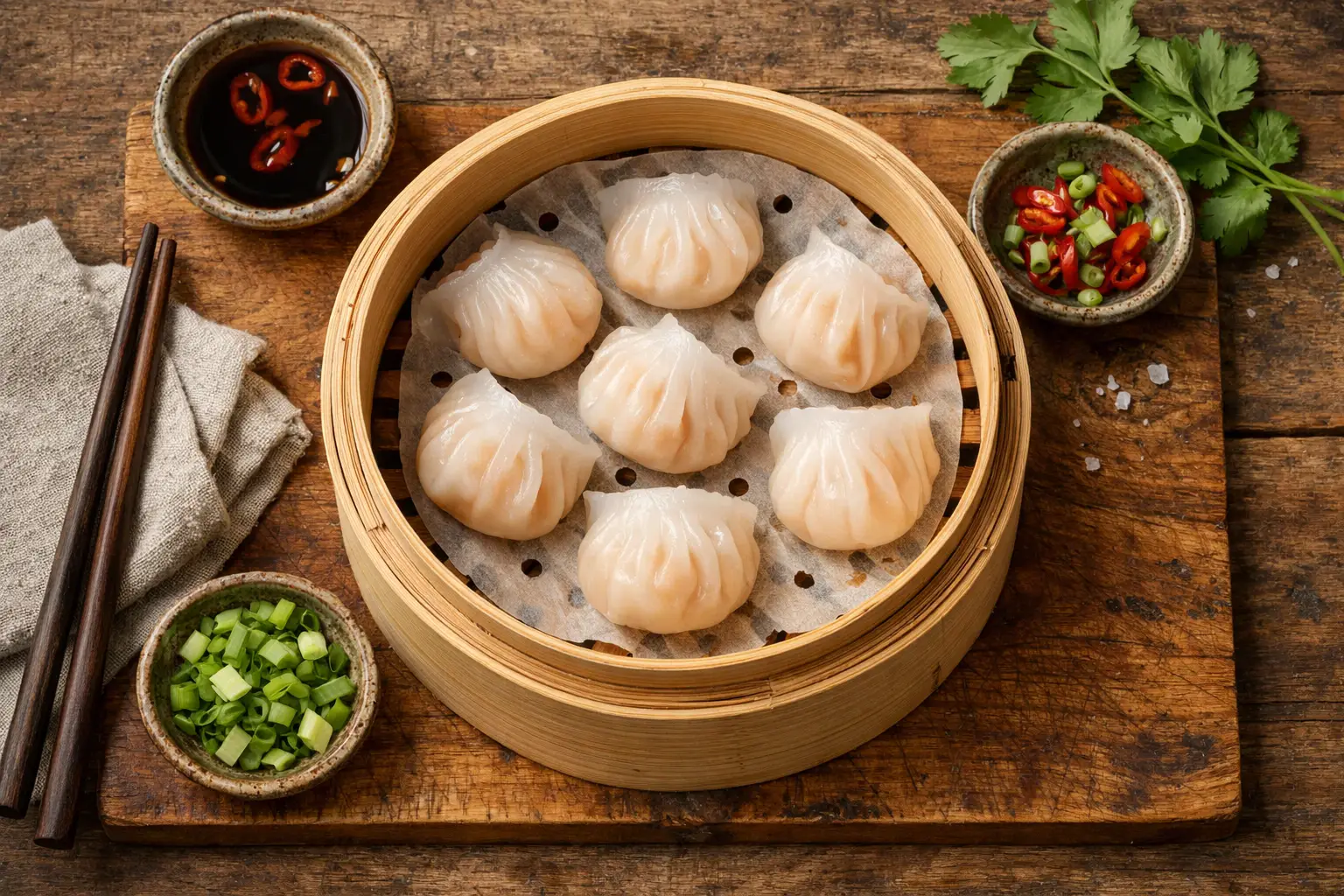
Quick Nutrition Facts
Per 3 Dumplings (75g)
| Nutrient | Amount |
|---|---|
| Calories | 135 kcal |
| Protein | 9g |
| Carbohydrates | 15g |
| Fiber | 0.5g |
| Sugars | 0.5g |
| Fat | 3g |
| Sodium | 320mg |
| Selenium | 18mcg |
| Cholesterol | 55mg |
| Omega-3 | 150mg |
Macronutrient Breakdown
 ChatGPT
  Claude
  AI Mode
  Perplexity
NUTRITIONIST INSIGHT
Har gow is one of the best dim sum choices for protein seekers - shrimp provides complete protein plus selenium and omega-3 fatty acids. The steaming method preserves nutrients without adding oil.
Myth Busters
MYTH #1: All Dim Sum Is Unhealthy
TRUTH: Steamed options like har gow are significantly healthier than fried varieties. At 135 calories per 3 pieces with 9g protein, har gow provides quality nutrition from shrimp including selenium and omega-3s.
MYTH #2: Har Gow Is Too High in Cholesterol
TRUTH: While shrimp contains cholesterol (55mg per serving), dietary cholesterol has less impact on blood cholesterol than previously thought. The omega-3s in shrimp actually support heart health.
MYTH #3: Shrimp Dumplings Cause Blood Sugar Spikes
TRUTH: Har gow has a moderate glycemic response. The protein from shrimp slows carbohydrate absorption. Studies on Chinese foods show protein-rich options have lower glycemic impact than rice-based dishes.
MYTH #4: Pregnant Women Should Avoid Shrimp Dim Sum
TRUTH: Shrimp is a low-mercury seafood safe for pregnancy. FDA recommends 2-3 servings of low-mercury seafood weekly during pregnancy for omega-3 benefits. Just ensure har gow is freshly steamed and thoroughly cooked.
MYTH #5: Har Gow Has No Nutritional Value
TRUTH: Each serving provides 9g complete protein, 18mcg selenium (33% DV), omega-3 fatty acids, and vitamin B12. Shrimp is recognized as a nutrient-dense food by Harvard nutrition researchers.
NutriScore by Health Goals
| Health Goal | NutriScore | Why This Score? |
|---|---|---|
| Weight Loss |  | Only 45 calories per dumpling with 3g protein. Steamed method adds no extra fat. Limit to 3-4 pieces. |
| Muscle Gain |  | Excellent protein quality from shrimp (9g per serving). Complete amino acid profile supports muscle synthesis. |
| Diabetes Management | | Moderate carbs (15g) with protein to slow absorption. Chinese protein-rich foods show lower glycemic response. |
| PCOS Management | | Low sugar, moderate carbs, high protein. Better choice than rice-heavy dim sum options. |
| Pregnancy Nutrition | | Shrimp is a low-mercury seafood rich in omega-3s, selenium, and protein essential for fetal development. |
| Viral/Flu Recovery | | Easy to digest, provides protein for immune function. Selenium supports antioxidant defenses. |
PERSONALIZED NUTRITION
Track your meals with NutriScan for personalized NutriScores based on your specific health goals!
Blood Sugar Response to Har Gow
Understanding how har gow affects your blood glucose can help you make informed dim sum choices.
Typical Glucose Response Curve
This chart shows typical blood glucose response for general healthy individuals. Individual responses may vary. Not medical advice.
How to Flatten the Spike
Pairing carbohydrates with protein and fat slows glucose absorption:
- Steamed vegetables - Add choy sum or gai lan for fiber
- Hot tea - Oolong or pu-erh tea may help glucose metabolism
- Limit rice dishes - Skip congee or fried rice to control total carbs
- Vinegar dipping - Acidity may slow glucose absorption
This combination reduces blood sugar variability while enjoying your dim sum experience.
Cultural Significance
Har gow (sometimes spelled ha gow or ha gau) originated in Guangzhou teahouses in the early 20th century and has become the gold standard for judging a dim sum chef's skill.
In Cantonese Cuisine:
- A chef's mastery is often measured by har gow technique
- Wrapper should be translucent with exactly 7-10 pleats
- Traditionally served in bamboo steamers of 3 pieces
- Part of "yum cha" culture - drinking tea with dim sum
Global Spread:
- Found in Chinese restaurants worldwide, from Hong Kong to San Francisco
- Symbol of Cantonese culinary craftsmanship
- Often featured in dim sum eating competitions
- Increasingly available frozen for home preparation
Compare & Substitute
Har Gow vs Other Dim Sum (Per 3 Pieces)
| Nutrient | Har Gow | Siu Mai | Spring Roll (fried) | Char Siu Bao |
|---|---|---|---|---|
| Calories | 135 kcal | 174 kcal | 210 kcal | 240 kcal |
| Carbs | 15g | 12g | 24g | 35g |
| Fiber | 0.5g | 0.5g | 1g | 1g |
| Protein | 9g | 12g | 6g | 8g |
| Fat | 3g | 8g | 10g | 6g |
| Sodium | 320mg | 380mg | 420mg | 350mg |
| Best For | Weight loss, protein | Muscle gain | Occasional treat | Energy needs |
Frequently Asked Questions
How many calories are in har gow?
Three har gow dumplings (75g) contain approximately 135 calories. A single dumpling is about 45 calories, making har gow one of the lighter dim sum options.
Per-piece breakdown: 45 calories, 3g protein, 5g carbs, 1g fat.
Is har gow healthy?
Har gow is among the healthiest dim sum choices when eaten in moderation.
Health advantages:
- Steamed, not fried (no added cooking oil)
- High-quality protein from shrimp
- Contains selenium and omega-3 fatty acids
- Lower calories than most dim sum
Watch out for: Sodium content (320mg per serving) and portion control at dim sum restaurants.
Can diabetics eat har gow?
Diabetics can enjoy har gow as part of a balanced meal. With 15g carbs and 9g protein per 3-piece serving, it has a moderate glycemic impact.
Tips for diabetics:
- Limit to 3-4 dumplings per meal
- Pair with steamed vegetables
- Avoid rice and sweet dim sum
- Check blood sugar response after eating
Is har gow good for weight loss?
Yes, har gow can fit into a weight loss diet when portion-controlled.
Weight loss benefits:
- Only 45 calories per dumpling
- 3g protein per piece promotes satiety
- Steamed preparation adds no extra fat
- Better than fried alternatives
Limit to 3-4 pieces and fill up on steamed vegetables instead of additional carb-heavy dim sum.
What is har gow made of?
Traditional har gow consists of:
Wrapper: Wheat starch and tapioca starch mixture creates the signature translucent appearance. Contains no eggs.
Filling: Whole shrimp (preferably fresh), bamboo shoots for crunch, seasoned with sesame oil, white pepper, sugar, and sometimes a small amount of pork fat for richness.
How much protein is in har gow?
Three har gow dumplings provide 9g of complete protein from shrimp. This includes all essential amino acids needed for muscle maintenance and repair.
For muscle building, combine with other protein-rich dim sum like siu mai or chicken feet for a higher protein meal.


Similar Nutritious Foods
4505 Chicharrones Classic Chili Salt
7 Eleven Japan Crispy Corn Cheese
Explore More Nutrition Tools & Resources
AI Calorie Counter App - Snap a Photo, Get Macros
AI Nutritionist App That Reads Your Logged Meals
Best Protein Supplements for Women
Bulking Meal Plan App That Sets Your Surplus
ChatGPT Calorie Counter Alternative That Keeps the Total
ChatGPT Diet Plan Alternative That Tracks What You Eat
ChatGPT Weight Loss Coach Alternative With a Food Log
Fast Food Calorie Counter App That Reads the Tray
Free Calorie Tracker App with AI Photo Scans | NutriScan
Indian Diet Plan App With Veg and Non Veg Meals
Indian Food Calorie Calculator - Get Instant Nutrition Facts for Desi Meals — 2026
Intermittent Fasting for Women, Timer and Meal Log App
Intermittent Fasting Tracker App - Free Fasting Timer
Macro Tracker App That Fills the Numbers From a Photo
Mediterranean Diet Meal Plan App That Counts the Oil
Micronutrient Tracker App for Vitamins and Minerals
MyFitnessPal Alternative That Stays Free | NutriScan
NutriScore App: A Free Grade on Every Meal | NutriScan
Nutrition Label Scanner App for the Amount You Ate
Second Trimester Protein Guide
Vegetarian Meal Plan App With a Protein Target
Voice Calorie Counter - Speak to Track Meals Hands-Free
Water and Calorie Tracker App - Free Water Log