Harissa Paste: Calories, Nutrition and Health Benefits
Fiery North African chili paste packed with metabolism-boosting capsaicin, antioxidants, and bold flavor for every dish.
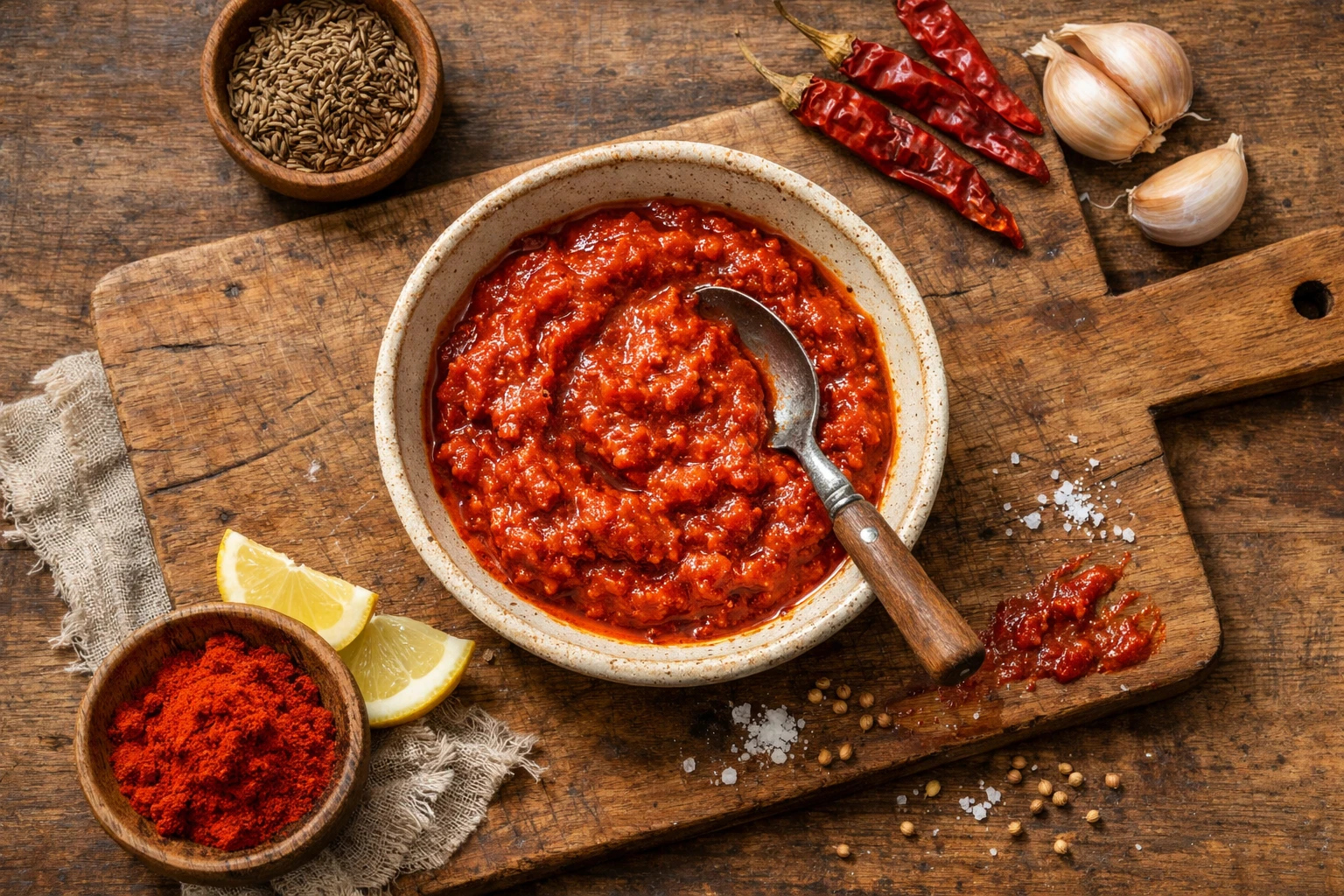
Quick Nutrition Facts
Per 1 Tablespoon (15g)
| Nutrient | Amount |
|---|---|
| Calories | 54 kcal |
| Protein | 1g |
| Carbohydrates | 4g |
| Fiber | 1g |
| Sugars | 1g |
| Fat | 3g |
| Vitamin C | 15mg |
| Vitamin A | 320 IU |
| Iron | 0.5mg |
| Sodium | 180mg |
Macronutrient Breakdown
 ChatGPT
  Claude
  AI Mode
  Perplexity
NUTRITIONIST INSIGHT
Harissa's capsaicin content can increase energy expenditure and enhance fat oxidation, especially when consumed regularly. The spice blend provides vitamin C (15% DV) and antioxidants from chili peppers while adding intense flavor with minimal calories.
Myth Busters
MYTH #1: Spicy Foods Like Harissa Damage Your Stomach
TRUTH: Moderate harissa consumption is safe for most people. Capsaicin actually has gastroprotective properties and may reduce ulcer risk. Only avoid if you have active GERD or gastritis. Start with small amounts (1 tsp) to assess tolerance.
MYTH #2: Harissa Is Too High in Sodium to Be Healthy
TRUTH: While harissa contains 180mg sodium per tablespoon, most recipes use only 1-2 teaspoons. This adds flavor intensity without excessive sodium. Choose low-sodium brands or make homemade harissa with controlled salt levels.
MYTH #3: Spicy Foods Slow Your Metabolism
TRUTH: The opposite is true. Capsaicin in harissa boosts thermogenesis and increases energy expenditure, helping burn more calories. Regular consumption may support modest weight management when combined with healthy eating.
MYTH #4: Harissa Has No Nutritional Value
TRUTH: Harissa provides substantial vitamin C (15% DV per tablespoon), vitamin A from red peppers, and anti-inflammatory antioxidants. The olive oil base adds healthy fats, and the spice blend offers various phytonutrients.
MYTH #5: Pregnant Women Should Avoid Harissa Completely
TRUTH: Moderate harissa is safe during pregnancy for most women. The vitamin C and iron support maternal health. However, excessive spicy food may worsen heartburn common in pregnancy. Use 1 tsp per meal and avoid if you experience reflux.
NutriScore by Health Goals
| Health Goal | NutriScore | Why This Score? |
|---|---|---|
| Weight Loss |  | Only 54 calories per serving, capsaicin boosts metabolism and fat oxidation. Use 1-2 tsp per meal. |
| Muscle Gain |  | Minimal protein but excellent flavor enhancer for lean proteins. Anti-inflammatory properties support recovery. Use liberally on grilled meats. |
| Diabetes Management | | Low carbs (4g per tbsp), minimal impact on blood sugar. Capsaicin may improve insulin sensitivity. Safe in 1-2 tsp portions. |
| PCOS Management | | Anti-inflammatory compounds support hormone balance. Low sugar, capsaicin aids metabolism. Use 1-2 tsp daily. |
| Pregnancy Nutrition | | Vitamin C supports immunity and iron absorption. Iron aids maternal health. Use moderately. |
| Viral/Flu Recovery | | High vitamin C boosts immunity, capsaicin clears congestion, anti-inflammatory properties support healing. Use 1 tsp in warm soups. |
PERSONALIZED NUTRITION
Track your meals with NutriScan for personalized NutriScores based on your specific health goals! Use our Online Macro Calculator to find your daily nutrition targets.
Blood Sugar Response to Harissa
Harissa has minimal impact on blood glucose due to its low carbohydrate content and the presence of capsaicin.
Typical Glucose Response Curve
*This chart shows typical blood glucose response for general healthy individuals. Individual responses may vary. Not medical advice.*
How to Use Harissa for Stable Blood Sugar
Harissa works best as a flavor enhancer paired with protein and healthy fats:
- 🍗 Grilled chicken or fish - Adds flavor without carbs
- 🥗 Roasted vegetables with olive oil - Enhances nutrients, minimal glucose impact
- 🍳 Eggs with harissa - Protein-rich breakfast with stable energy
- 🥜 Hummus with harissa swirl - Fiber and protein combination
This pairing strategy keeps blood sugar stable while delivering bold North African flavors and metabolic benefits.
Cultural Significance
Harissa originated in Tunisia centuries ago, becoming a cornerstone of North African and Middle Eastern cuisine.
In Tunisia and North Africa:
- Essential condiment served with couscous, tagines, and grilled meats
- Traditional preparation involves sun-drying peppers and stone-grinding spices
- Each family has unique recipes passed through generations
- Used in Maghrebi Jewish and Arab cuisines across Morocco, Algeria, Libya
Global Impact:
- Predicted #1 ethnic cuisine trend for 2026
- Featured in modern fusion cooking worldwide
- Available in various heat levels from mild to extra hot
- Shelf-stable paste or powder forms make it accessible globally
Compare & Substitute
Harissa vs Similar Spicy Condiments (Per 100g)
| Nutrient | 🌶️ Harissa Paste | 🌶️ Sriracha | 🌶️ Sambal Oelek | 🌶️ Gochujang |
|---|---|---|---|---|
| Calories | 360 kcal | 100 kcal | 40 kcal | 240 kcal |
| Carbs | 27g | 23g | 8g | 52g |
| Fiber | 7g | 1g | 2g | 2g |
| Protein | 7g | 2g | 2g | 6g |
| Fat | 20g | 1g | 0.5g | 1g |
| Sodium | 1200mg | 1600mg | 1400mg | 3200mg |
| Vitamin C | 100mg | 30mg | 45mg | 12mg |
| Best For | Middle Eastern dishes | Asian fusion, low-fat cooking | Indonesian, fresh heat | Korean BBQ, fermented |
Frequently Asked Questions
Is harissa paste good for weight loss?
Yes, harissa supports weight loss as a low-calorie flavor enhancer. At 54 calories per tablespoon (most use 1-2 tsp), it adds bold taste without excess calories. Capsaicin boosts metabolism and fat oxidation by 50-100 calories daily with regular consumption. Use 1-2 tsp per meal on proteins, vegetables, or in marinades.
Best practices: Replace high-calorie sauces with harissa; use in grilled dishes; avoid brands with added sugar.
Can diabetics eat harissa?
Diabetics can safely enjoy harissa. With only 4g carbs per tablespoon and minimal glycemic impact, it won't spike blood sugar. Capsaicin may improve insulin sensitivity over time.
Tips for diabetics:
- Use 1-2 tsp per serving (1-2g carbs); pair with protein and vegetables; choose versions without added sugars; monitor individual response.
Harissa adds flavor without compromising blood sugar control. Always consult your healthcare provider for personalized advice.
What are the main health benefits of harissa?
Key Benefits:
- Metabolism Boost: Capsaicin increases energy expenditure and fat burning
- Rich in Antioxidants: Vitamin C and carotenoids fight inflammation
- Low-Calorie Flavor: Adds intensity without excess calories (54 per tbsp)
- Immune Support: Vitamin C (15% DV) strengthens immunity
- Anti-Inflammatory: Capsaicin and spices reduce inflammation
- Digestive Health: May protect stomach lining when consumed moderately
How spicy is harissa paste?
Harissa ranges from medium to hot depending on chili types used. Traditional Tunisian harissa uses dried red peppers with moderate heat (1,000-5,000 Scoville units). Commercial brands vary widely from mild to extra hot.
Heat management:
- Start with 1 tsp and adjust to taste; mix with yogurt or olive oil to mellow heat; choose "mild" versions for lower tolerance; homemade allows heat control.
The capsaicin that creates heat also provides metabolic benefits, so finding your ideal spice level maximizes both flavor and health advantages.
Is harissa healthy?
Yes, harissa is a healthy condiment when consumed in moderation. It provides vitamin C (15% DV per tbsp), vitamin A, antioxidants, and anti-inflammatory compounds with minimal calories and sugar. The olive oil base offers healthy fats.
Choose quality brands: Look for harissa with olive oil as primary fat; avoid versions with excessive sodium (>200mg per tbsp); check for added sugars; homemade versions offer freshest nutrition.
Harissa is far healthier than mayo-based sauces or cream-heavy dressings while delivering superior flavor.
What is harissa paste made of?
Traditional harissa contains roasted red peppers, hot chili peppers (often baklouti or serrano), garlic, cumin, coriander, caraway seeds, olive oil, and salt. Tunisian recipes may include tomato paste; some add lemon juice or rose petals.
Ingredient variations:
- Tunisia: baklouti peppers, caraway dominant
- Morocco: smoked paprika, more cumin
- Modern: chipotle for smoke, preserved lemon
Quality depends on pepper type and olive oil content. Homemade harissa allows customization of heat level and spice balance for optimal flavor and nutrition.




Similar Nutritious Condiments
4505 Chicharrones Classic Chili Salt
7 Eleven Japan Crispy Corn Cheese
Explore More Nutrition Tools & Resources
AI Calorie Counter App - Snap a Photo, Get Macros
AI Nutritionist App That Reads Your Logged Meals
Best Protein Supplements for Women
Bulking Meal Plan App That Sets Your Surplus
ChatGPT Calorie Counter Alternative That Keeps the Total
ChatGPT Diet Plan Alternative That Tracks What You Eat
ChatGPT Weight Loss Coach Alternative With a Food Log
Fast Food Calorie Counter App That Reads the Tray
Free Calorie Tracker App with AI Photo Scans | NutriScan
Indian Diet Plan App With Veg and Non Veg Meals
Indian Food Calorie Calculator - Get Instant Nutrition Facts for Desi Meals — 2026
Intermittent Fasting for Women, Timer and Meal Log App
Intermittent Fasting Tracker App - Free Fasting Timer
Macro Tracker App That Fills the Numbers From a Photo
Mediterranean Diet Meal Plan App That Counts the Oil
Micronutrient Tracker App for Vitamins and Minerals
MyFitnessPal Alternative That Stays Free | NutriScan
NutriScore App: A Free Grade on Every Meal | NutriScan
Nutrition Label Scanner App for the Amount You Ate
Second Trimester Protein Guide
Vegetarian Meal Plan App With a Protein Target
Voice Calorie Counter - Speak to Track Meals Hands-Free
Water and Calorie Tracker App - Free Water Log